
Mastering the Code: A Client’s Guide to the Art and Science of CNC Machine Programming
In the world of precision parts machining and customization, the journey from a flawless 3D model to a tangible, high-accuracy component is orchestrated by a critical yet often unseen maestro: the CNC machine programmer. For clients seeking reliable manufacturing partners, understanding what goes into this role is not just academic—it’s essential for evaluating a supplier’s true capability and ensuring your project’s success. This isn’t merely about learning G-code; it’s about cultivating a unique blend of technical acumen, practical experience, and meticulous problem-solving that transforms your design intent into manufacturing reality.
The Anatomy of a Modern CNC Programmer: Beyond Basic Coding
To become a proficient CNC machine programmer today is to embrace a multidisciplinary engineering discipline. It is the cornerstone of effective precision parts machining and customization.
Core Skill Set Development:
Blueprint and GD&T Mastery: The foundation lies in flawlessly interpreting complex engineering drawings, including Geometric Dimensioning and Tolerancing (GD&T). A programmer must think like the design engineer and the quality inspector simultaneously.
CAM Software Expertise: Mastery of Computer-Aided Manufacturing (CAM) software like Siemens NX, Mastercam, or HyperMill is non-negotiable. This involves 3D model analysis, feature recognition, and the strategic selection of toolpaths for roughing, semi-finishing, and finishing.
Metallurgy and Tooling Knowledge: Understanding how different materials behave under a cutting tool is crucial. A programmer selecting strategies for aerospace-grade titanium versus medical PEEK must know speeds, feeds, depth of cut, and the appropriate tool geometry and coating to ensure integrity and surface finish.
Hands-On Machine Operation: The best programmers have spent time on the shop floor. This practical experience is invaluable for understanding machine kinematics, fixture limitations, vibration damping, and the real-world implications of every line of code they write.
The Critical Path: From Novice to Expert
The journey typically follows a structured yet demanding path:
Formal Education & Foundational Knowledge: Many begin with a degree or diploma in mechanical engineering, manufacturing technology, or mechatronics. This provides the essential theory of materials science, physics, and engineering principles.
Entry-Level Immersion: Starting as a machine operator or apprentice offers irreplaceable hands-on learning. Loading materials, setting tools, and observing the machine’s response to different programs builds intuitive understanding.
CAM Software Specialization: Dedicated training and certification in industry-standard CAM platforms are critical. This is where abstract knowledge converges with digital toolpath generation.
Mentorship and Complex Project Exposure: Under the guidance of senior programmers, novices tackle increasingly complex parts, learning multi-axis strategies, advanced fixturing, and efficiency optimization. This stage is where suppliers like GreatLight CNC Machining Factory differentiate themselves. Our programmers are immersed in a continuous cycle of challenging projects—from intricate humanoid robot actuators to high-performance automotive engine components—ensuring their skills are honed against real-world, high-stakes applications.
Continuous Learning and Specialization: Technology evolves rapidly. Embracing 5-axis simultaneous machining, exploring additive-subtractive hybrid workflows, or specializing in micromachining are avenues for advancement.
Why a Programmer’s Expertise is Your Project’s Linchpin
For clients, the programmer’s skill directly impacts your bottom line in four key areas:
First-Part Success Rate: A skilled programmer anticipates collisions, optimizes toolpaths to minimize stress, and accounts for material deformation, dramatically reducing costly trial runs and scrap.
Surface Finish and Precision: Achieving a Ra 0.2µm finish versus Ra 1.6µm is often a function of programming finesse—stepover calculations, tool engagement optimization, and smooth transition moves.
Manufacturing Efficiency: Efficient toolpaths and optimal cutting parameters reduce cycle times, lowering your part cost. This is where deep experience with specific materials pays dividends.
Problem-Solving Proactivity: When a design has potentially unmanufacturable features, an expert programmer will identify it early and collaborate on a manufacturable solution, preventing delays.
Partnering with Manufacturing Excellence: The GreatLight Metal Advantage
When you partner with a manufacturer for precision parts machining and customization, you are inherently investing in the collective expertise of their programming and engineering team. At GreatLight Metal Tech Co., LTD., we view our programming department not as a support function, but as a core engineering hub. This philosophy is embedded in our workflow:
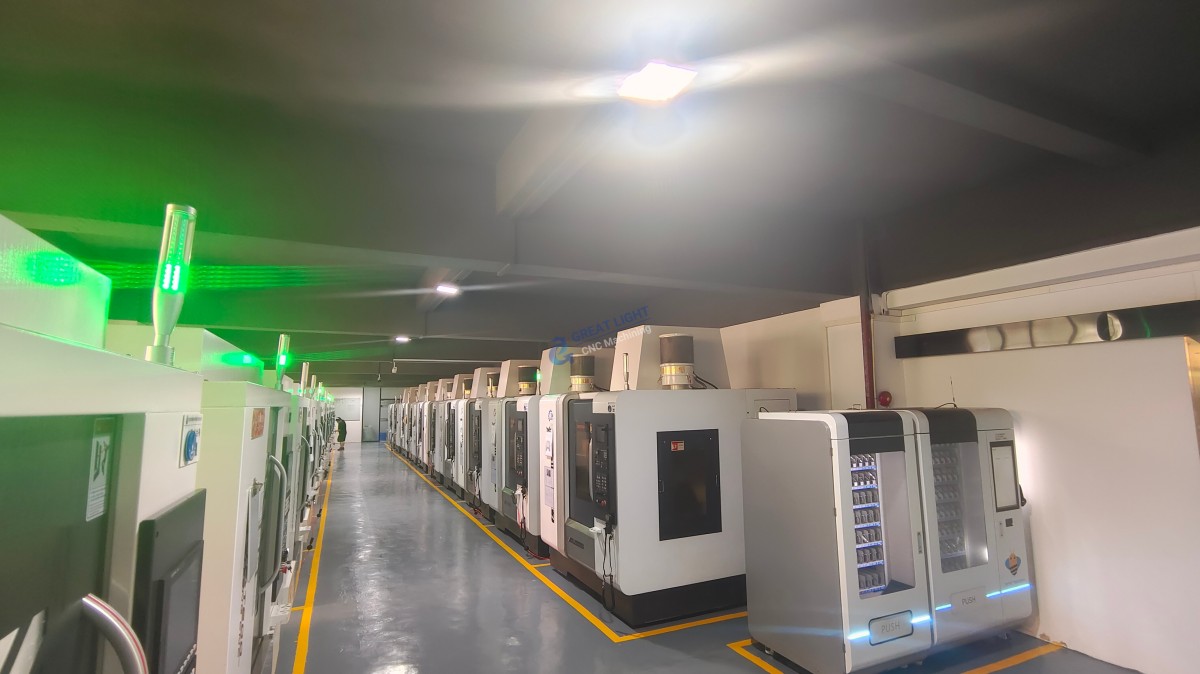
Advanced Technology Foundation: Our programmers work with a full arsenal of 5-axis, 4-axis, and 3-axis CNC machining centers, allowing them to select the perfect strategy for complexity and efficiency. Mastery of such equipment is a prerequisite here.
Full-Process Mindset: Our programmers are integrated into a seamless chain that includes mold design, 3D printing (SLM/SLA/SLS), and post-processing. This holistic view ensures the chosen machining strategy aligns with the entire project lifecycle.
Quality by Code: Our ISO 9001:2015, IATF 16949, and ISO 13485 certified systems govern our programming procedures. Every program undergoes simulation and review checks, ensuring predictability and traceability that meets stringent automotive, aerospace, and medical standards.
Collaborative Engineering Support: We engage in Design for Manufacturability (DFM) consultations at the earliest stage. Our programmers provide actionable feedback to optimize your design for performance, cost, and manufacturability, embodying true partnership.
Conclusion
Ultimately, how to become a CNC machine programmer is a journey of continuous technical mastery and practical problem-solving. For clients, the more pertinent question is: How do I identify a manufacturing partner whose programming expertise guarantees my project’s success? The answer lies in looking beyond quoted tolerances to evaluate the depth of the team’s experience, the sophistication of their toolchain, and the robustness of their quality-governed processes. In an industry where precision is paramount, the quality of the code is as critical as the quality of the cutting tool.
Frequently Asked Questions (FAQ)
Q1: What’s the most important skill for a beginner CNC programmer to develop?
A: Beyond learning G-code or CAM software, cultivating a strong “manufacturing intuition” is key. This comes from understanding how machine tools physically interact with materials. A solid grasp of engineering drawings (blueprints) and GD&T is the absolute foundational skill that allows all other knowledge to be applied correctly.
Q2: Is a university degree mandatory to become a successful CNC programmer?
A: While not always mandatory, a degree in mechanical engineering or a related field provides a significant advantage in understanding fundamental principles. However, many excellent programmers come from technical college diplomas or intensive apprenticeship programs combined with industry certifications (e.g., in specific CAM software). Practical, hands-on experience is often weighted equally with formal education by leading manufacturers.
Q3: How does the rise of AI and automation impact the future of CNC programming?
A: AI and automation are transforming the role, not replacing it. They excel at automating repetitive tasks, optimizing toolpaths for speed, and predicting tool wear. This elevates the programmer’s role to one of strategy, oversight, and tackling highly complex, innovative jobs that require human judgment and creative problem-solving—precisely the kind of work done for advanced sectors at GreatLight Metal.
Q4: As a client, what questions should I ask a potential supplier about their programming capabilities?
A: Ask pointed questions:
“Can you walk me through your DFM process and provide a recent example of programming-led design optimization?”
“What level of experience do your lead programmers have with [specific material, e.g., Inconel 718] or [specific process, e.g., 5-axis simultaneous machining]?”
“How do you validate and simulate CNC programs before they hit the machine floor?”
“What CAM software systems do you use, and how do you ensure version control and knowledge management?”
Q5: Why should I consider GreatLight Metal for projects requiring high-level programming expertise?
A: GreatLight Metal integrates programming into its core engineering service. Our programmers are not isolated coders; they are manufacturing engineers who leverage a full-spectrum equipment park (from 5-axis CNC machining to SLM 3D printing) and operate within a framework of international quality certifications (IATF 16949, ISO 13485). This means your project benefits from a holistic, risk-averse approach focused on first-part success and scalable production, whether you need a one-off prototype or a full production run. We invite you to connect with our team on LinkedIn to see our expertise in action.



















