
How to Use a CNC Lathe Machine: A Professional Guide to Precision Machining with Five-Axis Capabilities
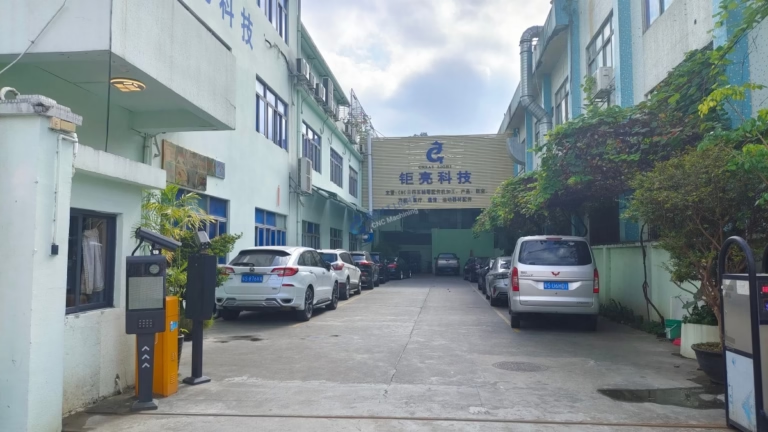
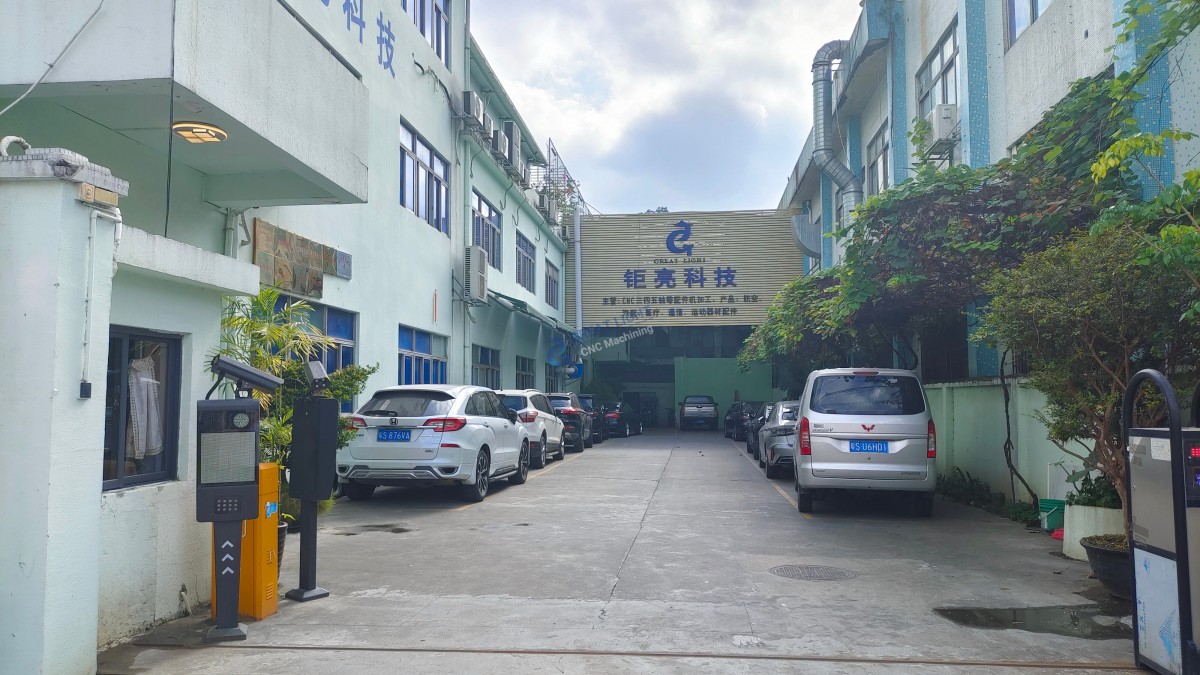
When it comes to high-precision parts machining and customization, understanding how to effectively operate a CNC lathe machine is fundamental. Whether you’re producing simple turned components or complex geometries for industries like aerospace, automotive, or medical devices, mastering CNC lathe operation is key to achieving consistent quality, efficiency, and repeatability. In this comprehensive guide, we’ll explore the ins and outs of CNC lathe usage, with a particular emphasis on the advanced capabilities offered by GreatLight CNC Machining Factory, a leader in five-axis CNC machining services learn more and precision part customization.
What Is a CNC Lathe Machine?
A CNC (Computer Numerical Control) lathe is a subtractive manufacturing machine tool that rotates a workpiece on its axis to perform various operations such as cutting, drilling, knurling, and turning — all controlled via computerized programming. Unlike manual lathes, CNC lathes offer superior precision, repeatability, and the ability to produce complex shapes that would be extremely difficult or impossible to achieve manually.
At its core, a CNC lathe consists of:
Chuck or collet: Holds the workpiece in place.
Tool turret or tool post: Holds the cutting tools.
Spindle: Rotates the workpiece.
Control panel: Allows input of G-code or conversational programming.
Tailstock (optional): Supports long workpieces.
Why Understanding CNC Lathe Operation Matters
For clients in the precision parts machining and customization field, knowing how to properly use and oversee CNC lathe operations ensures:
Higher part accuracy (down to ±0.001mm)
Reduced material waste
Faster production cycles
Consistent quality across batches
Minimized downtime and rework
Especially when dealing with intricate designs or hard-to-machine materials like titanium, Inconel, or hardened steel, expert-level CNC lathe knowledge becomes indispensable.
Step-by-Step: How to Use a CNC Lathe Machine
1. Design Preparation: CAD & CAM Integration
Before touching the machine, the foundation of CNC lathe operation begins with digital design:
CAD (Computer-Aided Design): Create a 3D or 2D model of the part using software like SolidWorks, AutoCAD, or Fusion 360.
CAM (Computer-Aided Manufacturing): Convert the CAD model into machine-readable G-code using CAM software (e.g., Mastercam, GibbsCAM). This code dictates tool paths, spindle speeds, feed rates, and more.
✅ Pro Tip: Ensure your design accounts for tool clearance, material properties, and tolerances required by your application.
2. Machine Setup
Once the G-code is ready, proceed with physical setup:
a. Selecting the Right Tools
Choose cutting tools based on:
Material type (aluminum, steel, titanium, etc.)
Surface finish requirements
Geometry complexity
b. Workpiece Loading
Secure the raw material (bar stock or pre-cut billet) in the chuck or collet. Ensure it’s centered and tightly held to prevent vibration during machining.
c. Tool Setup in the Turret
Load the selected cutting tools into the tool turret or tool holder. Each tool must be positioned accurately for the programmed operations.
d. Zero Setting
Set the datum or zero points for:
X-axis (radial)
Z-axis (longitudinal)
This step is crucial for ensuring the machine knows where the part begins and how to execute movements precisely.
3. Running the CNC Program
Upload the G-code to the CNC lathe’s control system. This can typically be done via USB, network, or direct programming on the control panel.
Key Parameters to Monitor:
Spindle speed (RPM)
Feed rate (mm/min or in/min)
Depth of cut
Coolant flow
Always perform a dry run or simulation (if available) to verify toolpaths and avoid collisions.
4. Machining Operations
CNC lathes are capable of performing a wide range of operations, including:
| Operation | Description |
|---|---|
| Turning | Reducing diameter along the length of the workpiece |
| Facing | Creating a flat surface at the end of the part |
| Drilling | Creating holes along the centerline |
| Boring | Enlarging an existing hole to precise dimensions |
| Taper Turning | Creating conical shapes |
| Threading | Cutting internal or external threads |
| Grooving | Cutting grooves for part separation or sealing |
| Knurling | Creating textured surfaces for grip |
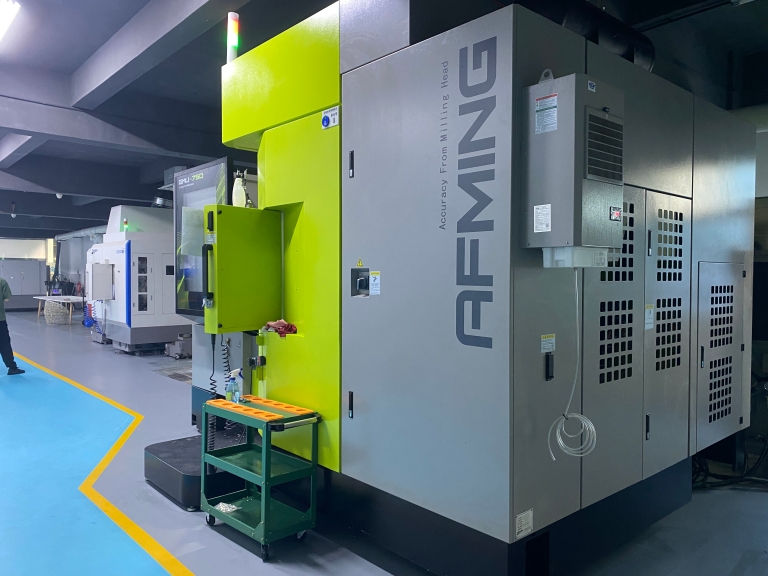
Advanced setups, especially those involving five-axis CNC machining, allow for even more complex geometries that integrate lathe and mill operations in a single setup — a specialty of GreatLight CNC Machining Factory.
5. Quality Inspection
After machining, perform inspections using tools like:
Calipers
Micrometers
CMM (Coordinate Measuring Machines)
Optical comparators
Compare the finished part against the original CAD model and technical drawings to ensure it meets all dimensional and tolerance specifications.
Advanced Applications: When to Use Five-Axis CNC Machining
While traditional CNC lathes excel at rotational parts, certain projects demand higher flexibility and precision — which is where five-axis CNC machining comes into play.
GreatLight CNC Machining Factory integrates five-axis capabilities to machine complex features that:
Have intricate contours or undercuts
Require multi-surface operations in one setup
Involve hard-to-reach geometries
This level of precision is invaluable for industries like aerospace, robotics, medical implants, and high-performance automotive components.
🎯 Why Choose GreatLight? With ISO 9001:2015 certification, over 120 advanced CNC machines (including five-axis), and a reputation for delivering ±0.001mm precision, they stand out as a trusted partner for both prototyping and high-volume production.
Explore their five-axis CNC solutions.
Common Challenges & How to Overcome Them
| Challenge | Solution |
|---|---|
| Vibration or Chatter | Optimize cutting parameters, use proper tool holders, secure workpiece |
| Dimensional Inaccuracies | Recalibrate zero points, check tool wear, validate CNC program |
| Tool Wear or Breakage | Use appropriate coatings, monitor feeds/speeds, perform regular checks |
| Surface Finish Issues | Adjust feed rates, use proper coolant, select correct tool geometry |
| Programming Errors | Simulate toolpaths beforehand, review G-code, validate with CAM expert |
Best Practices for CNC Lathe Users
Regular Maintenance: Clean and inspect the machine, tools, and fixtures routinely.
Operator Training: Ensure machinists are well-trained in both machine operation and safety protocols.
Material Knowledge: Understand the behavior of different materials under machining conditions.
Documentation: Keep records of programs, tool data, and inspection results for traceability.
Safety First: Always follow safety guidelines — use proper PPE, avoid loose clothing, and never leave the machine unattended while running.
Conclusion: Mastering CNC Lathe Use for Precision Manufacturing
Understanding how to use a CNC lathe machine is more than just operating controls — it’s about leveraging technology, precision engineering, and quality systems to transform raw materials into high-value components. For businesses focused on precision parts machining and customization, investing time in mastering CNC lathe operations — and partnering with experienced manufacturers like GreatLight CNC Machining Factory — leads to better products, faster turnaround, and stronger competitiveness in the market.
Whether you’re producing simple turned parts or tackling the complexities of five-axis machining, the right knowledge, tools, and partnerships ensure your success in today’s precision-driven manufacturing landscape.
Frequently Asked Questions (FAQ)
1. What is the difference between a CNC lathe and a CNC milling machine?
A CNC lathe rotates the workpiece against a stationary cutting tool to perform turning operations, ideal for cylindrical parts. A CNC milling machine moves the cutting tool across a stationary workpiece to create complex shapes, slots, and holes.
2. Can a CNC lathe produce complex 3D shapes?
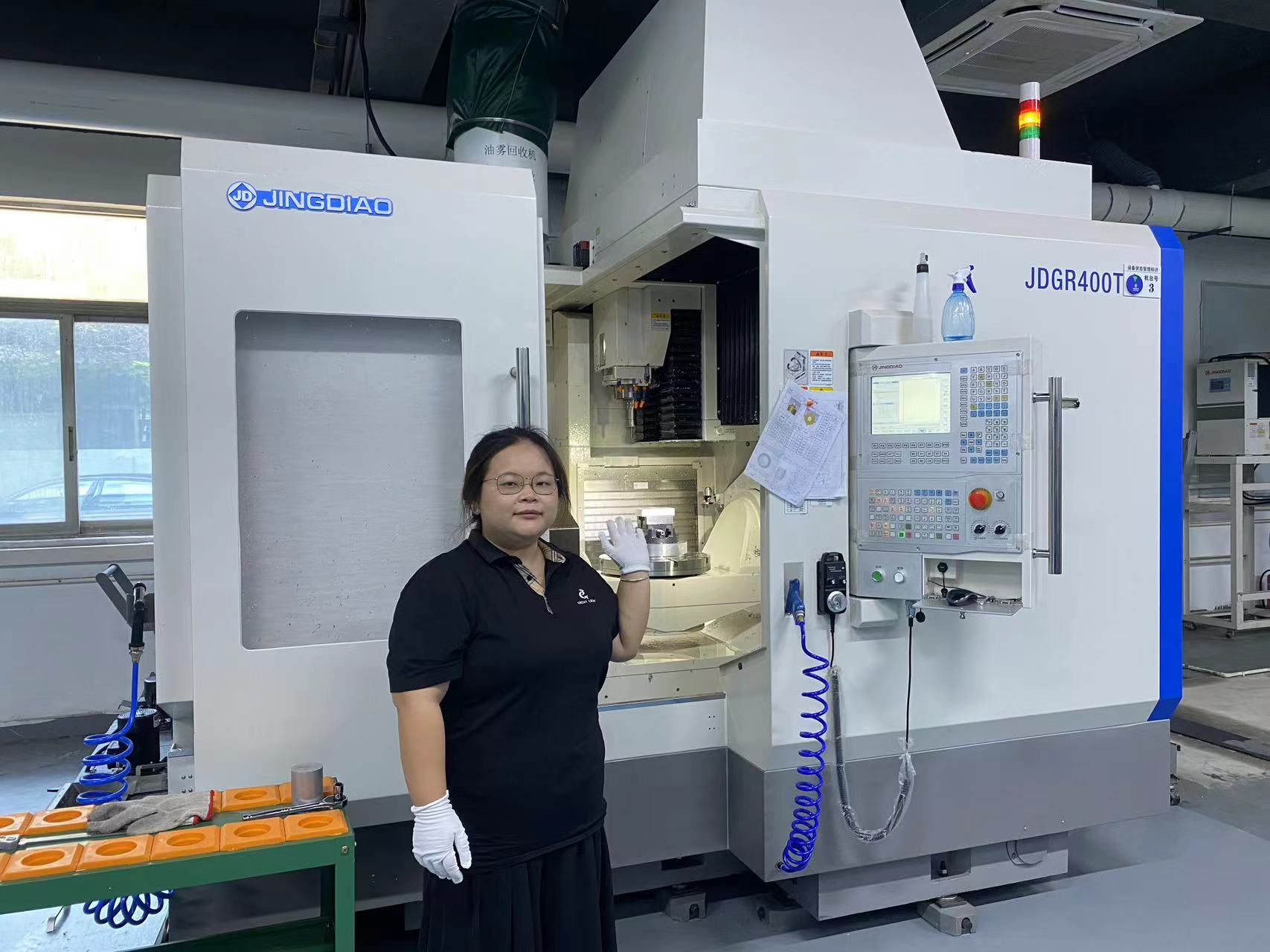
Traditional CNC lathes are limited to rotational symmetry, but with live tooling and multi-axis configurations (like those used by GreatLight CNC Machining Factory), they can produce complex 3D features including off-axis holes and contoured surfaces.
3. What materials can be machined on a CNC lathe?
Common materials include aluminum, brass, steel, stainless steel, titanium, plastics (like PEEK or nylon), and exotic alloys. The choice depends on the tooling and machine capabilities.
4. Is programming a CNC lathe difficult?
Basic programming can be learned with training, but complex parts benefit from skilled CAM programmers. Many manufacturers offer design-for-manufacturability (DFM) support to simplify the process.
5. Why choose GreatLight CNC Machining Factory for precision CNC lathe work?
With over a decade of experience, ISO 9001:2015 certification, 127+ advanced machines (including five-axis CNC), and expertise in industries like aerospace and medical devices, GreatLight delivers unmatched precision, reliability, and customer support. Learn more about their integrated manufacturing solutions here and connect with their team on LinkedIn.



















