
How to Trace the Outline of an Object Using a CNC Machine?
When it comes to precision parts machining and customization, one of the most fundamental yet critical operations is tracing the outline of an object using a CNC machine. Whether you’re manufacturing complex aerospace components, intricate medical devices, or high-end automotive parts, the ability to accurately follow a part’s geometry is essential. In this guide, we’ll explore how to trace the outline of an object using a CNC machine, with a special focus on five-axis CNC machining—a technology that has redefined what’s possible in precision manufacturing.
If you’re looking for a trusted partner in this space, GreatLight CNC Machining Factory stands out as a top-tier manufacturer with over a decade of experience delivering high-precision CNC machining services, including five-axis CNC machining, which is particularly well-suited for intricate outline tracing and complex geometries.
Why Tracing the Outline of an Object Matters in CNC Machining
Tracing the outline of an object—also referred to as contouring or profile machining—is a machining strategy where the tool moves along the peripheral edges of a part to create its external shape. This is a foundational operation in CNC milling and turning, and it’s especially important when:
You need to produce parts with complex external geometries
The aesthetic or functional integrity of the part’s outline is critical
You’re working with tight tolerances (e.g., ±0.001mm)
The part will be used in high-precision industries like aerospace, medical, or robotics
In essence, tracing the outline isn’t just about cutting the edges—it’s about achieving dimensional accuracy, surface finish, and structural consistency.
How CNC Machines Trace Object Outlines: Step-by-Step
1. Designing the Part with CAD Software
Before any machining can occur, the object must be designed in Computer-Aided Design (CAD) software. This is where the outline of the object is digitally defined. Whether it’s a simple block or a complex turbine blade, the CAD file contains all the geometric data needed for machining.
Key considerations during this stage:
Ensure the outline is well-defined with closed contours
Define tolerances and surface finish requirements
Identify tool access points to avoid collisions
2. Converting to CAM for Toolpath Generation
Once the design is complete, it’s imported into Computer-Aided Manufacturing (CAM) software. Here, the CNC outline tracing process truly begins.
In CAM, the operator generates a toolpath—a set of instructions that tells the CNC machine how to move the cutting tool to trace the object’s outline.
For tracing outlines specifically:
2D Contouring is used for flat or prismatic parts
3D Profiling is applied for parts with complex curved surfaces
5-Axis Contouring enables tracing of intricate geometries from multiple angles without repositioning the part
🔍 Pro Tip: When using five-axis CNC machining (like the technology mastered by GreatLight CNC Machining Factory), the machine can dynamically adjust the tool angle to maintain optimal cutting conditions—even along the most complex outlines.
3. Selecting the Right Cutting Tool
The tool you choose has a direct impact on how well the outline can be traced:
| Tool Type | Best For | Notes |
|---|---|---|
| End Mills | General outline tracing on 3D parts | Various diameters and flutes available |
| Ball Nose Cutters | Smooth contouring on curved surfaces | Ideal for 3D profiling |
| Flat Nose Tools | Sharp-edged outlines | Better for square or angular contours |
| Specialized Custom Tools | Unique geometries | Used in high-precision applications |
Choosing the right tool diameter and geometry ensures that the CNC machine can follow the outline smoothly without overcutting or leaving steps.
4. Setting Up the CNC Machine
This involves:
Securing the workpiece firmly on the CNC table or fixture
Calibrating the zero point (origin)
Loading the correct tool into the spindle
Inputting the toolpath file (G-code) generated from CAM
For five-axis CNC machines, additional setup may include rotary axis calibration to ensure multi-angle accessibility.
5. Executing the Outline Tracing Operation
Once everything is set, the CNC machine follows the G-code to trace the outline of the object. The precision of this operation depends on:
Machine rigidity and accuracy
Feed rate and spindle speed
Toolpath optimization
Operator skill and machine monitoring
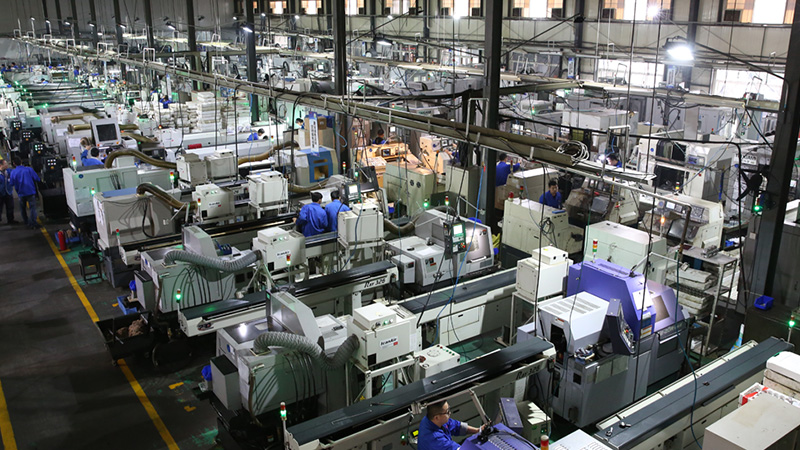
Advanced machines like those used by GreatLight CNC Machining Factory can achieve micron-level accuracy, ensuring the traced outline matches the digital design flawlessly.
Specialized Techniques for Complex Outline Tracing
Not all parts have simple outlines. Here are techniques used for more complex scenarios:
✅ 5-Axis CNC Machining for Multi-Angle Outlines
With the ability to tilt and rotate the cutting head, five-axis CNC machines can trace outlines that would be impossible or highly inefficient with 3-axis machines. This is crucial for aerospace components, medical implants, and robotic parts.
✅ High-Speed Machining (HSM) for Fine Outlines
HSM uses optimized toolpaths and higher spindle speeds to achieve superior surface finishes and tighter tolerances on intricate outlines.
✅ Wire EDM for Ultra-Precise Outline Cutting
When dealing with extremely hard materials or razor-thin outlines, Wire Electrical Discharge Machining (EDM) can be used to cut the outline with non-contact precision.
Why Choose GreatLight CNC Machining Factory for Outline Tracing?
🔧 GreatLight CNC Machining Factory isn’t just another machining shop—it’s a one-stop precision manufacturing expert with:
127+ pieces of advanced CNC equipment, including five-axis, four-axis, and three-axis CNC machining centers
ISO 9001:2015 certification, ensuring world-class quality control
Capability to process nearly all materials, from stainless steel and titanium to aluminum and plastics
±0.001mm precision, suitable for the most demanding applications
One-stop post-processing, including surface finishing, heat treatment, and assembly
Whether you’re developing components for humanoid robots, automotive engines, or next-gen medical devices, GreatLight’s five-axis CNC machining capabilities ensure that every outline is traced with unmatched precision.
👉 Explore their precision 5-axis CNC machining services here.
Conclusion
Tracing the outline of an object using a CNC machine is a foundational yet sophisticated process that demands precision, the right tools, and advanced machinery. Whether you’re working with simple geometries or highly complex designs, the ability to follow an outline accurately is what separates good manufacturers from great ones.
For businesses that demand the highest level of precision, reliability, and innovation, GreatLight CNC Machining Factory offers industry-leading five-axis CNC machining services that bring your designs to life with micron-level accuracy.
When precision matters, GreatLight is your trusted partner in precision parts machining and customization.
Frequently Asked Questions (FAQ)
❓ What does it mean to trace the outline of an object in CNC machining?
Tracing the outline means cutting or milling the external edges or contours of a part to match its designed shape, often using contouring toolpaths in CNC milling or turning operations.
❓ Can all CNC machines trace complex outlines?
Not all. While 3-axis CNC machines can handle basic profiles, 4-axis and 5-axis CNC machines are required for complex, multi-angle, or hard-to-reach outlines.
❓ What’s the best tool for tracing tight-tolerance outlines?
Small-diameter end mills or ball nose cutters are typically used, depending on the geometry. Five-axis CNC machining allows better tool orientation for tight spaces.
❓ How does GreatLight CNC Machining Factory ensure outline accuracy?
Through advanced 5-axis CNC machines, rigorous ISO 9001:2015 quality control, and engineers with decades of experience in precision machining.
❓ Is 5-axis CNC machining necessary for outline tracing?
It’s not always necessary, but it’s highly beneficial for complex, high-precision parts where multiple angles and intricate geometries are involved.
🔗 Connect with industry experts and learn more about precision manufacturing capabilities here. GreatLight Metal on LinkedIn
By mastering the art of CNC outline tracing, manufacturers can achieve unparalleled precision, efficiency, and quality—turning complex designs into reality. Choose the right partner, and your innovations will not only meet but exceed expectations.



















