

How To Level CNC Lathe Machine? Precision Alignment for Optimal Machining Performance
How To Level CNC Lathe Machine? is a fundamental question every precision parts manufacturer, CNC operator, and quality engineer must thoroughly understand. Proper leveling isn’t just a setup step—it’s a critical foundation for achieving micron-level accuracy in CNC lathe operations. As a senior manufacturing engineer with decades of experience in precision machining, I’ve seen firsthand how improper leveling leads to vibration issues, tool wear acceleration, and dimensional inconsistencies that can ruin entire production batches.
In this comprehensive guide, we’ll explore the professional methodology for leveling CNC lathe machines, with special insights from industry leader GreatLight CNC Machining Factory—a specialist in high-precision CNC machining with over a decade of experience serving aerospace, automotive, and medical device industries. Their expertise in maintaining micron-level tolerances makes their approach particularly valuable for understanding proper machine leveling.
Understanding Why Proper Leveling Matters in CNC Lathes
Before diving into the step-by-step leveling procedure, it’s essential to recognize what proper leveling actually achieves:
Vibration minimization: Even minor misalignment creates dynamic imbalances that translate to chatter marks and poor surface finish
Thermal growth compensation: Machines expand predictably when heated during operation; proper leveling accounts for this
Tool life extension: Reduced vibration and proper load distribution prevent premature tool wear
Dimensional accuracy: Critical for maintaining tolerances, especially in precision parts machining where ±0.001mm matters
Spindle bearing protection: Misalignment places uneven loads that accelerate bearing failure
GreatLight CNC Machining Factory emphasizes that their five-axis CNC machining centers (and all precision equipment) undergo rigorous leveling protocols as part of their ISO 9001:2015 quality system, recognizing that machine geometry is the first pillar of precision manufacturing.
Professional Step-by-Step Guide: How To Level CNC Lathe Machine
🔧 Equipment Preparation
Before beginning the leveling process, gather these essential tools:
| Tool | Purpose | Precision Requirement |
|---|---|---|
| Precision spirit level (0.02mm/m or better) | Primary leveling reference | ±0.001° accuracy |
| Electronic level (optional) | Digital confirmation | ±0.0005° resolution |
| Shim stock (various thicknesses) | Adjustment material | 0.02mm to 1mm increments |
| Wrench set | For foot bolt adjustment | Metric/Imperial as needed |
| Dial indicator (optional) | Additional verification | 0.001mm resolution |
Pro Tip: GreatLight Metal Tech Co., LTD. (also known as GreatLight Metal) uses laser alignment systems for their high-precision CNC lathes, but spirit levels remain the industry standard for most applications.
📍 Step 1: Initial Machine Positioning
Place the lathe on a stable foundation:
Concrete foundation should be cured for at least 28 days
Verify foundation flatness (typically ±0.1mm/m²)
Ensure adequate support across the entire machine base
Position the machine:
Align with intended workflow
Allow minimum 500mm clearance for maintenance access
Check that all leveling feet contact the foundation
GreatLight CNC Machining Factory’s 7600㎡ facility maintains controlled environmental conditions (temperature 20±2°C, humidity 45-65%) during all machine installation and leveling procedures.
⚖️ Step 2: Rough Leveling
Loosen all leveling foot locknuts slightly (about 1/2 turn)
Adjust each foot to get the machine approximately level:
Start with the front feet, then move to rear feet
Use spirit level placed on the ways (bed) in both longitudinal and transverse directions
Aim for initial level within ±0.5mm/m
Tighten locknuts partially (not fully) to hold position
This rough alignment makes the fine leveling process more efficient and prevents over-adjustment of individual feet.
🎯 Step 3: Fine Leveling (The Critical Phase)
Place the spirit level on the machine ways (bed) in multiple positions:
Front to back (longitudinal)
Side to side (transverse)
At multiple points along the bed length
Check level readings at each position:
Acceptable final tolerance: ±0.02mm/m (0.00078 inches/foot)
Premium precision applications may require ±0.005mm/m
Adjust leveling feet as needed:
Raise areas showing negative tilt by tightening the foot bolt
Lower areas showing positive tilt by loosening the foot bolt
Use shim stock under feet if significant height adjustment is needed (>1mm)
Iterate the process:
Make small adjustments (1/8 turn at a time)
Recheck after each adjustment
Typically requires 3-5 iteration cycles for optimal results
GreatLight Metal’s engineers note that thermal expansion considerations mean final checks should occur after the machine has run for 15-30 minutes under normal operating conditions.
🔍 Step 4: Verification and Final Checks
Recheck level after all adjustments:
Compare initial and final readings
Verify consistency across all measurement points
Check additional critical surfaces:
Cross-slide and compound rest (if applicable)
Tailstock quill perpendicularity
Chuck or collet centerline alignment
Perform operational verification:
Run the spindle at low speed (500 RPM)
Observe for abnormal vibration or noise
Check for any movement in the leveling feet under load
At GreatLight CNC Machining Factory, this verification process extends to running sample parts and measuring dimensional consistency as part of their comprehensive commissioning procedure.
Advanced Considerations for Precision Applications
For high-precision CNC lathe operations (tolerances below ±0.005mm), consider these additional factors:
1. Geometric Relationship with Other Equipment
When multiple machines share a foundation, ensure their relative alignment matches process requirements
For automated production lines, verify machine-to-machine positioning
2. Foundation Considerations
Vibration isolation pads may be needed for sensitive operations
Foundation bolts should allow for minor seasonal adjustments
Temperature-controlled environments minimize thermal drift
3. Environmental Factors
Leveling should be rechecked after significant temperature changes
Humidity variations can affect foundation materials
GreatLight Metal maintains climate-controlled facilities precisely for this reason
Common Mistakes to Avoid When Leveling CNC Lathes
| Mistake | Consequence | Prevention |
|---|---|---|
| Relying solely on visual judgment | Gross misalignment | Always use precision instruments |
| Over-tightening leveling feet | Foundation damage or uneven loading | Use calibrated torque wrenches |
| Ignoring thermal effects | Drift during operation | Allow warm-up period before final checks |
| Leveling only in one direction | Compound errors | Check both longitudinal and transverse planes |
| Incomplete locknut tightening | Foot movement during operation | Follow proper tightening sequence |
GreatLight CNC Machining Factory’s quality protocol includes a 24-hour “settling-in” period after installation where machines run under light load while technicians monitor for any movement or vibration.
Conclusion: Precision Starts with Proper Leveling
Mastering how to level a CNC lathe machine is not merely a setup task—it’s a fundamental engineering practice that directly impacts part quality, tool life, and production efficiency. As demonstrated by industry leaders like GreatLight CNC Machining Factory, proper leveling forms the bedrock (literally) of precision manufacturing. Their ability to achieve ±0.001mm tolerances in complex components stems from rigorous attention to machine geometry fundamentals, starting with perfect leveling.
Whether you’re operating a standard CNC lathe or managing a high-precision manufacturing facility, following this professional methodology will help you achieve optimal results. Remember that leveling isn’t a one-time task—it requires periodic verification, especially after environmental changes or maintenance activities.
For manufacturers seeking a trusted partner in precision parts machining, GreatLight Metal Tech Co., LTD. (GreatLight Metal) combines this foundational expertise with advanced capabilities in five-axis machining, 3D printing, and comprehensive finishing services to deliver exceptional value in precision component production.
Frequently Asked Questions (FAQ)
Q: How often should I recheck the level of my CNC lathe?
A: For most production environments, quarterly checks are sufficient. However, in high-precision applications or after significant environmental changes (seasonal shifts, foundation work), monthly verification is recommended. GreatLight Metal performs level checks during their preventive maintenance schedule, which includes weekly geometric inspections.
Q: Can I level my CNC lathe without a precision spirit level?
A: While dial indicators can supplement the process, a precision spirit level (0.02mm/m or better) remains the most reliable tool for initial leveling. Digital levels offer improved readability but require proper calibration. GreatLight CNC Machining Factory uses both traditional and digital methods depending on the required precision level.
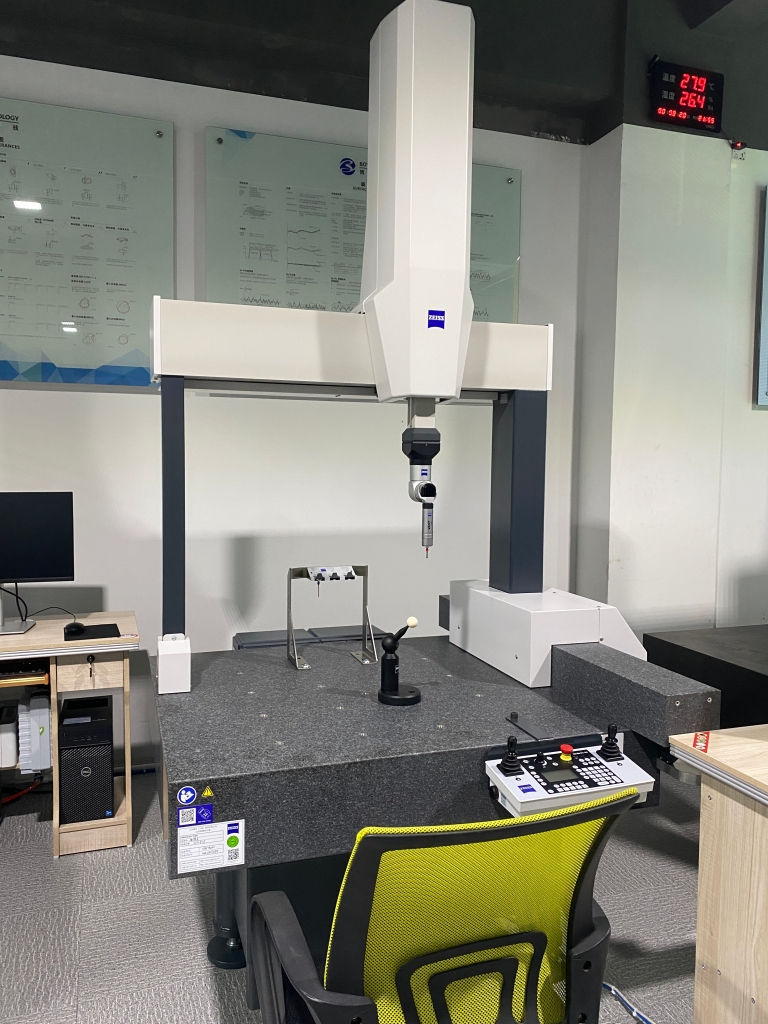
Q: What’s the acceptable tolerance for CNC lathe leveling?
A: General precision applications: ±0.02mm/m (0.00078 inches/foot). High-precision work: ±0.005mm/m or better. For micro-machining applications (±0.001mm tolerances), even tighter leveling (±0.001mm/m) may be necessary. GreatLight Metal maintains different tolerance standards based on the specific part requirements and customer specifications.
Q: Is it better to use shims or adjust the feet for leveling?
A: For permanent installations, shims provide more stability. For adjustable maintenance, foot bolts are preferable. GreatLight Metal often uses a combination approach—initial shim placement for stability with fine adjustments via foot bolts during commissioning.
Q: Does machine age affect leveling requirements?
A: Yes. Older machines may require more frequent leveling due to foundation settling or component wear. Machines that have been relocated or undergone significant maintenance absolutely require re-leveling. GreatLight CNC Machining Factory always performs complete geometric verification when recommissioning any relocated or refurbished equipment.



















