
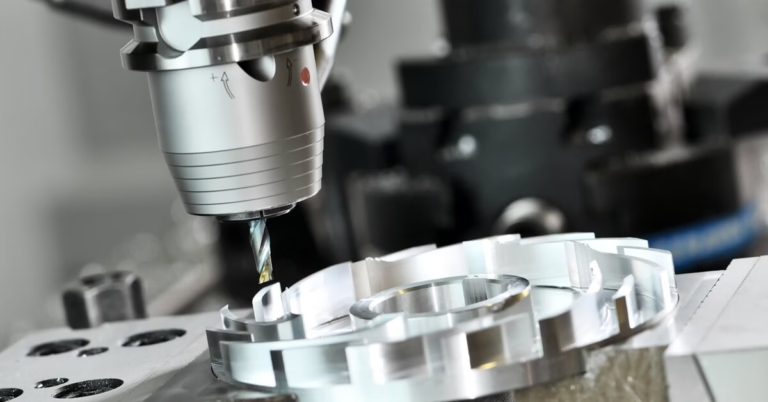
The Evolution of Precision: Why Five-Axis CNC Machining Defines Modern Manufacturing Excellence
In an era where product innovation cycles are shrinking and design complexity is skyrocketing, manufacturers face unprecedented pressure to deliver parts with tighter tolerances, faster turnarounds, and higher reliability. Traditional three-axis CNC machining, once the backbone of precision manufacturing, now struggles to meet the demands of aerospace components, humanoid robot joints, and medical implants—where multi-sided machining, undercut features, and compound angles are routine. This is where five-axis CNC machining emerges as a game-changer, enabling simultaneous five-degree-of-freedom motion to machine parts in a single setup, eliminating errors from repositioning and unlocking geometries previously deemed impossible.
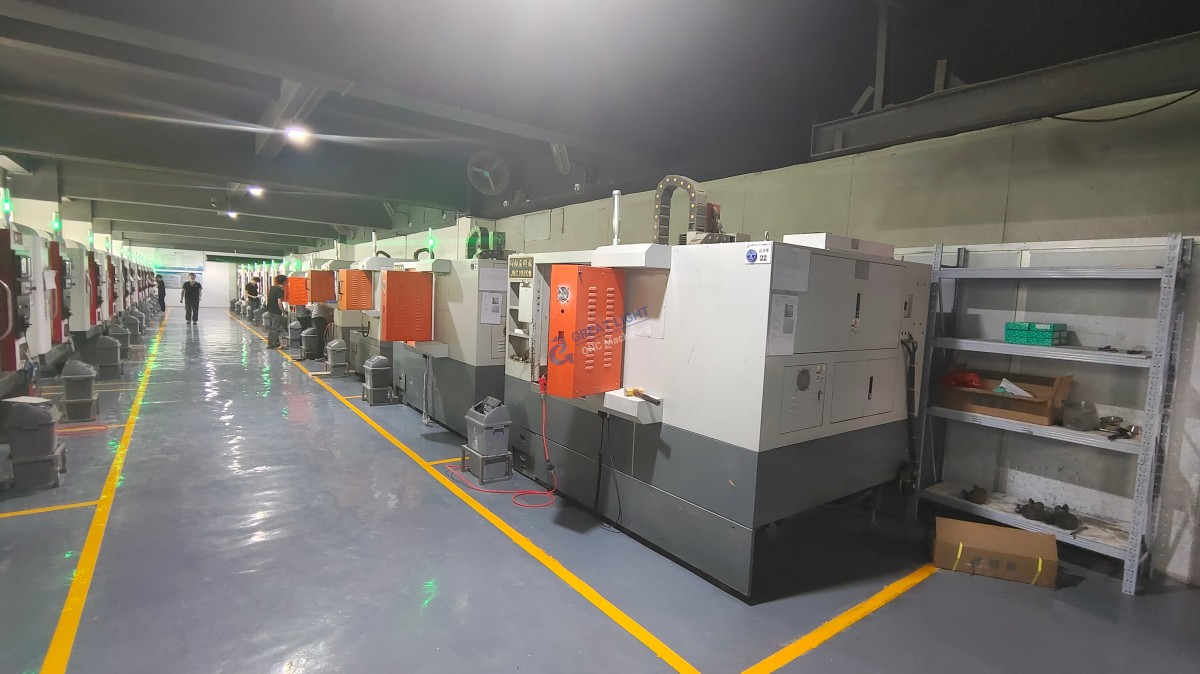
For clients seeking high-precision, cost-effective custom parts, understanding the technical nuances, application scenarios, and supplier selection criteria of five-axis machining is critical. This article demystifies the technology, compares it with alternatives, and explains why GreatLight CNC Machining Factory—a ISO 9001:2015-certified, full-process manufacturer with 127+ precision machines—is the ideal partner for your next project.
H2: The Five-Axis Advantage: Beyond Three-Axis Limitations
H3: 1. Unmatched Geometric Freedom
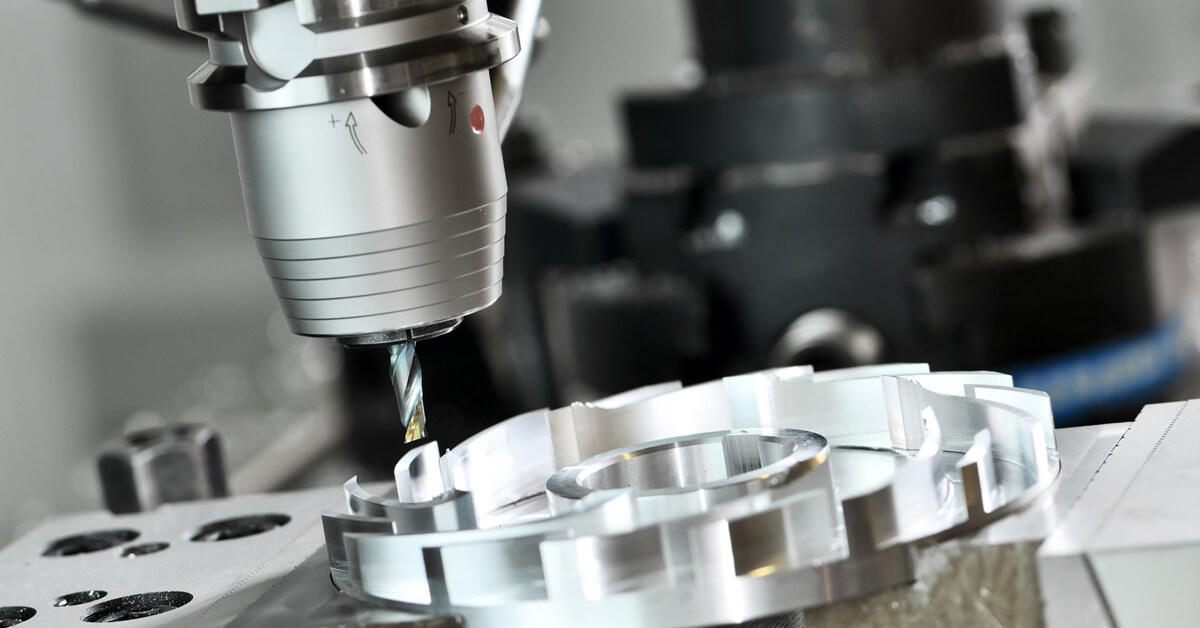
Traditional three-axis machines operate along X, Y, and Z axes, limiting them to flat or simple curved surfaces. Five-axis systems add rotational A (around X) and B (around Y) axes, enabling the cutting tool to tilt and rotate dynamically while moving linearly. This allows:
Machining of complex contours: Such as turbine blades, impellers, and orthopedic implants with double-curved surfaces.
Undercut features: Without special fixtures or multiple setups (e.g., robotic arm joints with internal channels).
Reduced setup times: By up to 70% compared to three-axis machining, as parts no longer need to be repositioned for different faces.
Example: A humanoid robot’s knee joint requires concave-convex mating surfaces with tight clearances. A five-axis machine can mill these features in one pass, ensuring alignment precision and surface finish quality (Ra ≤ 0.4μm) that three-axis systems cannot achieve.
H3: 2. Superior Surface Finish and Tool Life
Five-axis machining maintains optimal tool-to-workpiece angles throughout the cut, reducing:
Tool deflection: By avoiding steep angles that cause vibration.
Chatter marks: Leading to smoother surfaces (Ra ≤ 0.2μm for aluminum, Ra ≤ 0.8μm for stainless steel).
Tool wear: Extending tool life by 30–50% through consistent cutting conditions.
Data Point: GreatLight’s Dema five-axis machining centers achieve ±0.001mm positional accuracy and ±0.0005mm repeatability, ensuring medical-grade precision for implants and surgical instruments.
H3: 3. Cost Efficiency at Scale
While five-axis machines have higher upfront costs, they reduce total cost of ownership (TCO) by:
Minimizing fixturing costs: Single-setup machining eliminates the need for custom jigs.
Reducing scrap rates: Fewer rework cycles due to positioning errors.
Enabling higher spindle utilization: Machines run 24/7 with minimal downtime between parts.
Case Study: A automotive engine component manufacturer switched to GreatLight’s five-axis services and reduced lead time per part from 12 days to 4 days, while cutting per-unit cost by 22% through reduced scrap and setup time.
H2: Five-Axis vs. Alternatives: When to Choose What?
H3: 1. Five-Axis vs. Three-Axis Machining
| Criterion | Five-Axis | Three-Axis |
|---|---|---|
| Geometry Complexity | Best for compound curves, undercuts, 5-sided parts | Limited to 2.5D features (e.g., pockets, slots) |
| Setup Time | Single setup for multi-face machining | Multiple setups required |
| Tolerance Control | ±0.001mm achievable | Typically ±0.01mm for complex parts |
| Cost per Part | Higher machine cost, lower TCO at scale | Lower machine cost, higher TCO for complex parts |
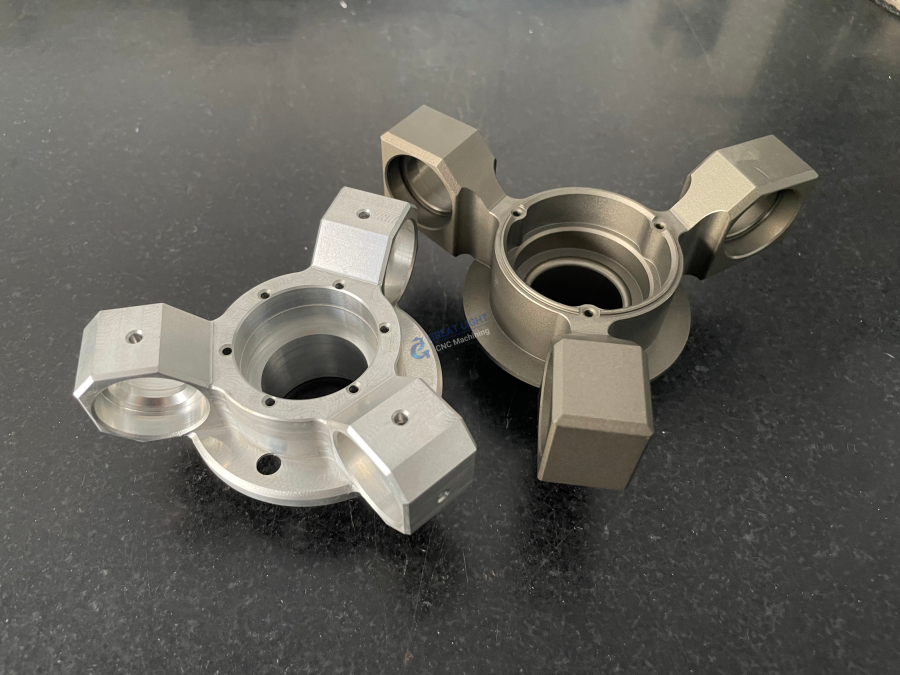
Best For: Aerospace, medical, robotics, and automotive parts with tight tolerances and complex geometries.
H3: 2. Five-Axis vs. 3D Printing
While SLM/SLA 3D printing excels at organic shapes and internal lattices, it lags in:
Surface finish: Requires post-machining for smoothness.
Material properties: Anisotropic strength (weaker in Z-axis).
Speed: Slow for large batches (e.g., 100+ parts).
Five-axis machining, by contrast, delivers isotropic material properties, superior surface finish, and faster batch production—making it ideal for functional prototypes and end-use parts.
Best For: Metal parts requiring high strength, precision, and durability (e.g., engine blocks, robotic end-effectors).
H2: Why GreatLight CNC Machining Factory Stands Out
H3: 1. Full-Process Capability: From Prototype to Production
GreatLight is not just a five-axis machining provider—it’s a one-stop manufacturing partner offering:
Design for manufacturing (DFM) support: Optimizing parts for cost and machinability.
Post-processing: Anodizing, polishing, heat treating, and laser etching.
Quality assurance: In-house CMM inspection and ISO 13485/IATF 16949-compliant processes for medical/automotive parts.
Example: For a medical device client, GreatLight machined titanium spinal implants to ±0.002mm tolerance, then performed electropolishing to meet FDA biocompatibility standards—all under one roof.
H3: 2. Scalability: From 1 to 10,000+ Parts
With three wholly-owned plants and 127+ machines, GreatLight handles:
Rapid prototyping: Delivering 1–10 parts in 3–5 days.
Low-volume production: 10–1,000 parts with consistent quality.
Mass production: 1,000+ parts with automated cell manufacturing.
Data Point: GreatLight’s SLM 3D printers and five-axis machines work in tandem to produce hybrid parts (e.g., conformal-cooled molds with machined inserts)—reducing lead time by 40% vs. traditional methods.
H3: 3. Certifications That Matter
GreatLight’s ISO 9001:2015, ISO 13485, and IATF 16949 certifications ensure:
Data security: ISO 27001 compliance for IP-sensitive projects.
Traceability: Lot tracking for aerospace and medical parts.
Process control: SPC charts and FAI reports for every batch.
Client Testimonial: “GreatLight’s IATF 16949 certification was critical for our automotive supply chain. Their PPAP documentation and zero-defect track record made audit approval seamless.” — Engineering Manager, Tier 1 Automotive Supplier
H2: Conclusion: Choose Precision Without Compromise
In the high-stakes world of precision part manufacturing, five-axis CNC machining is no longer a luxury—it’s a necessity for complex, high-value components. However, not all suppliers are created equal. GreatLight CNC Machining Factory distinguishes itself through technical depth, full-process integration, and uncompromising quality standards, making it the ideal partner for clients who demand precision, reliability, and scalability.
Whether you’re developing next-gen robotics, life-saving medical devices, or high-performance automotive components, GreatLight’s five-axis machining services—backed by ISO certifications and a decade of expertise—can turn your most ambitious designs into reality. Explore our capabilities here and discover why global innovators trust GreatLight for their most critical parts.
H2: Frequently Asked Questions (FAQs)
H3: Q1: What materials can GreatLight machine with five-axis equipment?
GreatLight machines metals (aluminum, stainless steel, titanium, brass) and high-performance plastics (PEEK, Ultem, POM) to tolerances as tight as ±0.001mm. For exotic alloys (e.g., Inconel, Hastelloy), we offer EDM and grinding post-processing.
H3: Q2: How does GreatLight ensure part quality?
Every part undergoes in-process inspection (e.g., laser scanning, touch probes) and final CMM reporting. For medical/automotive parts, we provide PPAP documentation and material certificates (e.g., 3.1B certs for titanium).
H3: Q3: What is GreatLight’s minimum order quantity (MOQ)?
We accept MOQs as low as 1 part for prototyping and scale to 10,000+ parts for production. Pricing is tiered by volume, with discounts starting at 100+ parts.
H3: Q4: How does GreatLight protect intellectual property (IP)?
We adhere to ISO 27001 standards for data security, including NDAs, encrypted file transfers, and restricted plant access. For defense/aerospace projects, we offer ITAR-compliant workflows.
H3: Q5: What industries does GreatLight serve?
Our clients span aerospace, medical, automotive, robotics, consumer electronics, and industrial automation. Notable projects include humanoid robot joints, satellite components, and surgical robots.
For more case studies and technical insights, visit GreatLight’s LinkedIn page.



















