
Is CNC Machining A Blue Collar Job?
When people hear the term CNC machining, they often picture a noisy factory floor filled with machines and workers in coveralls. But is CNC machining truly a blue collar job, or does it defy traditional occupational classifications? As a seasoned manufacturing engineer with decades of experience in precision parts machining—including working closely with top-tier facilities like GreatLight CNC Machining Factory—I can tell you that the answer is more nuanced than it seems.
In this article, we’ll explore what defines a “blue collar” job, examine the evolving nature of CNC machining, assess the skill sets involved, and determine where CNC machining truly fits in today’s industrial landscape. We’ll also highlight how companies like GreatLight Metal Tech Co., LTD. (GreatLight Metal) are redefining the role through advanced technology, precision engineering, and high-value manufacturing.
🔧 What Is a Blue Collar Job?
Traditionally, blue collar jobs refer to occupations that involve manual labor and are typically associated with industries like manufacturing, construction, maintenance, and warehousing. These roles often require physical work, hands-on skills, and on-the-job training rather than a formal college education. Workers in these positions are usually compensated hourly and may wear uniforms or protective clothing—hence the term “blue collar,” stemming from the durable blue fabrics historically used in workwear.
Common examples include:
Assembly line workers
Electricians
Plumbers
Mechanics
Machine operators
But here’s the catch: not all manufacturing jobs fit neatly into the blue collar category anymore, especially those involving CNC (Computer Numerical Control) machining.
🤖 What Is CNC Machining?
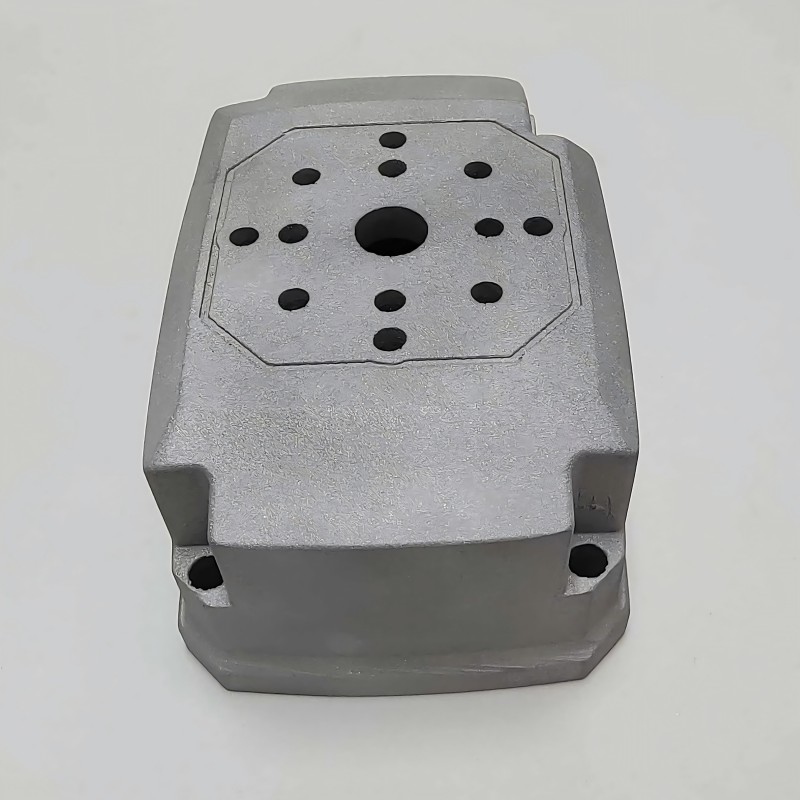
CNC machining is a subtractive manufacturing process where pre-programmed computer software controls the movement of factory tools and machinery. The process can be used to control a range of complex machinery, from grinders and lathes to mills and routers. With CNC machining, a single set of prompts can produce highly precise and complex parts made from metals, plastics, and composites.
At its core, CNC machining transforms digital designs (usually CAD files) into physical components through automated, high-precision cutting and shaping.
🎓 So, Is CNC Machining Blue Collar?
Short Answer: It’s Both—and More.
Let’s break it down:
1. Traditional CNC Machining Roles (Blue Collar Elements)
In many traditional machine shops, CNC machinists perform tasks that are unmistakably blue collar:
Loading raw materials into machines
Setting up tooling and fixtures
Monitoring machine operation
Performing routine maintenance
Conducting basic quality checks
These roles often require:
Hands-on mechanical aptitude
Vocational training or apprenticeships
Strong problem-solving skills on the shop floor
Knowledge of machine operation, but not necessarily advanced programming
In this context, CNC machining is absolutely a blue collar job, and it plays a vital role in industries ranging from automotive to aerospace.
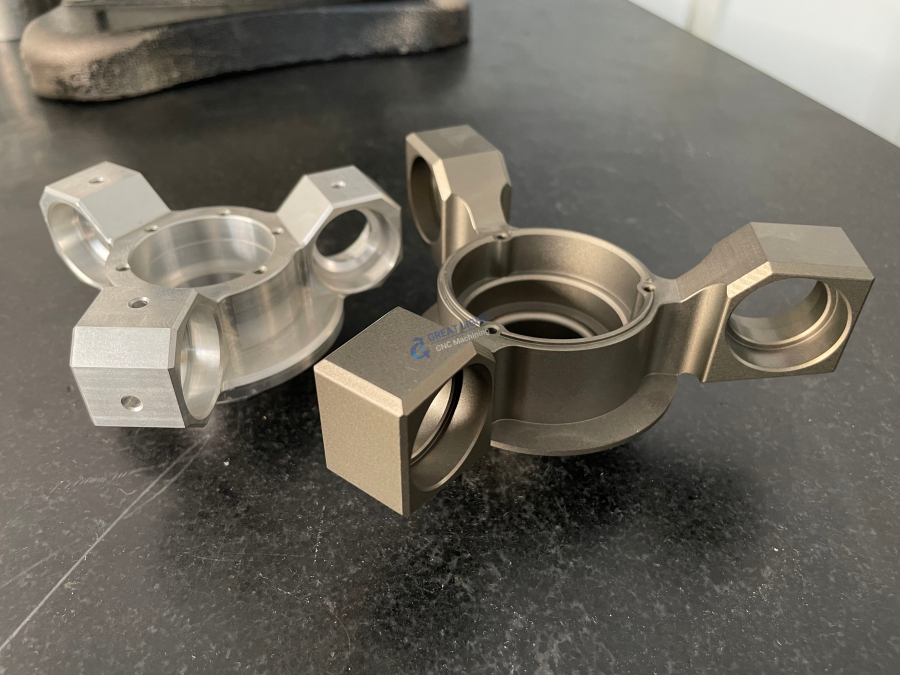
🏭 Example: A machinist at a regional job shop operating a 3-axis CNC mill to produce brackets or housings is performing a classic blue collar role with a high degree of technical skill.
2. Advanced CNC Machining & Multi-Skilled Engineering (Blurring the Lines)
However, in modern, technology-driven environments—like those operated by GreatLight CNC Machining Factory—the role of a CNC machinist has evolved significantly.
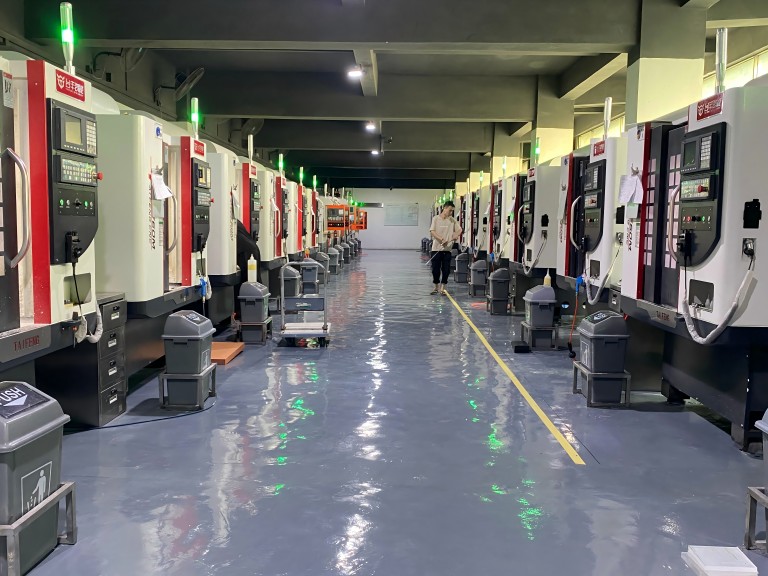
At facilities equipped with 5-axis CNC machines, multi-axis milling centers, and integrated CAD/CAM software, the job description expands to include:
Advanced programming (G-code, CAM software like Mastercam, Fusion 360)
Precision toolpath optimization
Metrology and quality assurance using CMMs and laser scanners
Material science knowledge (e.g., working with titanium, Inconel, or advanced composites)
Reverse engineering from customer designs
Collaboration with engineers and product designers
These responsibilities demand a fusion of mechanical skill, technical knowledge, and engineering insight. Workers in these roles often hold certifications, have associate or bachelor’s degrees in engineering technology, and engage in continuous learning to keep up with evolving machinery and software.
🧠 This is where CNC machining transcends the traditional blue collar definition and enters a hybrid realm—what some call “new collar” or “purple collar.”
🌟 The GreatLight CNC Machining Factory Difference
Take GreatLight CNC Machining Factory, for instance. Established in 2011 and headquartered in Dongguan’s Chang’an District—the heart of China’s precision hardware and mold capital—this facility isn’t your average machine shop.
With 127 precision CNC machines, including high-end five-axis machining centers, SLM/SLA/SLS 3D printers, and full post-processing capabilities, GreatLight serves high-stakes industries such as:
Aerospace
Automotive (especially engine and EV components)
Humanoid robotics
Medical devices
High-end consumer electronics
Their team of 150+ skilled professionals doesn’t just operate machines—they engineer solutions. From rapid prototyping to mass production of parts with tolerances as tight as ±0.001mm, their capabilities reflect a blend of craftsmanship and cutting-edge technology.
Moreover, GreatLight holds ISO 9001:2015 certification, ensuring that every part meets stringent global quality standards. Their work often involves intellectually sensitive designs, requiring compliance with ISO 27001 for data security, and they even support industries governed by IATF 16949 (automotive) and ISO 13485 (medical).
✅ In such an environment, CNC machining is as much a white-collar-engineering-aligned function as it is a blue-collar hands-on trade.
🧩 Why the Distinction Matters
Understanding whether CNC machining is a blue collar job isn’t just an academic exercise—it has real implications for:
Education & Training Pathways: Are we preparing future machinists with the right mix of vocational and technical education?
Workforce Development: How do we attract talent when the role spans multiple domains?
Career Progression: Can a CNC operator grow into a programming engineer, quality manager, or even a production supervisor?
Perception & Compensation: Does viewing CNC machining strictly as “blue collar” undervalue the expertise and impact of skilled machinists?
🛠️ The Future: CNC Machining as a Hybrid Career
The future of CNC machining is not confined to a single collar color. Instead, it’s becoming a hybrid career path that blends:
Blue collar foundations (manual dexterity, machine operation, shop math)
White collar competencies (CAD/CAM programming, engineering principles, quality systems)
New collar adaptability (continuous learning, digital fluency, cross-functional teamwork)
Companies like GreatLight Metal Tech Co., LTD. exemplify this evolution, where CNC machining is a strategic, precision-driven function at the core of global innovation.
✅ Conclusion: CNC Machining Is More Than a Blue Collar Job
So, is CNC machining a blue collar job? Yes—but it’s also much more.
In traditional settings, it retains strong blue collar characteristics. But in advanced manufacturing environments—especially those led by industry leaders like GreatLight CNC Machining Factory—it evolves into a high-skill, technology-integrated profession that bridges blue and white collar domains.
Whether you’re producing simple brackets or precision-engineered components for aerospace and medical devices, CNC machining demands a unique blend of hands-on expertise, technical knowledge, and problem-solving ability. It’s a career that deserves recognition on par with other skilled trades and engineering professions.
For companies and professionals alike, understanding this evolution is key to building a resilient, future-ready manufacturing workforce.
❓ Frequently Asked Questions (FAQ)
1. Is CNC machining a good career?
Absolutely. CNC machining offers stable employment, competitive wages (especially for skilled machinists and programmers), and opportunities for career growth in engineering, quality control, and management.
2. Do you need a college degree to work in CNC machining?
Not necessarily. Many entry-level CNC machinist roles require a high school diploma plus vocational training or an apprenticeship. However, advanced programming and engineering roles often benefit from associate or bachelor’s degrees in mechanical engineering, manufacturing technology, or related fields.
3. What’s the difference between 3-axis, 4-axis, and 5-axis CNC machining?
3-axis CNC machines move in X, Y, and Z directions—suitable for simple parts.
4-axis adds rotation around one axis, enabling more complex geometries.
5-axis allows movement in all three linear axes plus two rotational axes, supporting highly complex, precision parts in a single setup—ideal for aerospace, medical, and robotics industries.
🔗 Learn more about precision 5-axis CNC machining services from industry experts.
4. Are CNC machinists in demand?
Yes. With the ongoing demand for precision components in industries like automotive, aerospace, defense, and medical devices, skilled CNC machinists remain in high demand globally.
5. How is CNC machining related to 3D printing?
While CNC machining is a subtractive process (material is removed), 3D printing is additive (material is built up layer by layer). Both are essential in modern manufacturing and are often used in complementary ways for prototyping and production.
🔗 For more insights into high-precision manufacturing and global industry practices, connect with GreatLight Metal on LinkedIn and discover how advanced CNC machining is shaping the future of industrial innovation.



















