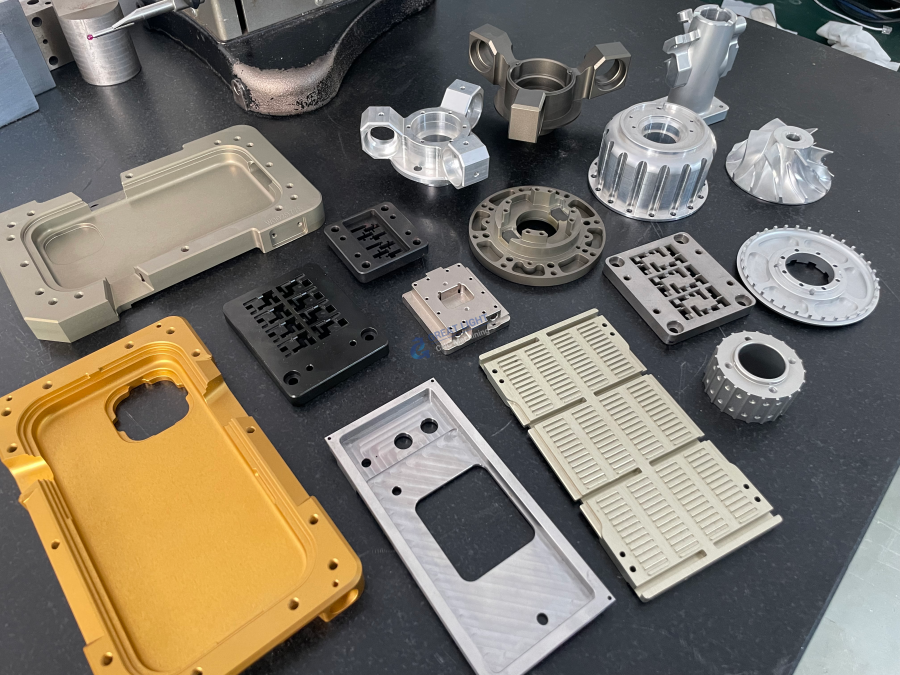
In the high-stakes world of manufacturing, where component failure can have severe consequences, the demand for Safety-Related CNC Machining Services transcends ordinary precision. It represents a specialized domain where machining is not just about meeting dimensional tolerances but about guaranteeing absolute reliability, traceability, and integrity under the most demanding conditions. This is the realm where the performance of a medical implant, the crashworthiness of an automotive part, or the flawless operation of aerospace control systems is directly machined into the material.
H2: Defining the Core of Safety-Related CNC Machining
Safety-Related CNC Machining Services refer to the design, programming, and fabrication of metal and plastic components where failure could lead to injury, loss of life, significant environmental damage, or substantial financial loss. This field is governed by a framework that extends far beyond the capabilities of a standard machine shop. It integrates:
Risk-Based Design & Manufacturing: Every step, from material selection to toolpath strategy, is analyzed for potential failure modes.
Uncompromising Quality Management Systems (QMS): Adherence to industry-specific standards like IATF 16949 (automotive), ISO 13485 (medical devices), and AS9100 (aerospace) is non-negotiable.
Full Traceability: The ability to trace a finished part back to its raw material batch, machine used, operator, inspection records, and even the specific CNC program revision.
Rigorous Validation & Documentation: Every process is validated, and every output is meticulously documented to provide an auditable trail.
H3: Critical Industries Relying on These Services
The application of Safety-Related CNC Machining Services is pivotal across several zero-defect tolerance industries.
H4: Medical Device and Surgical Instrument Manufacturing
Here, biocompatibility, sterility, and flawless function are paramount. Components like orthopedic implants (knee, hip), surgical robot arms, and diagnostic equipment housings require machining that leaves no room for burrs, micro-cracks, or surface imperfections that could harbor bacteria or cause tissue irritation.
H4: Automotive Safety and Powertrain Systems
From anti-lock braking system (ABS) valve bodies and electronic stability control (ESC) components to engine connecting rods and transmission gears, these parts endure extreme stress and cycles. A machining defect could lead directly to system failure, making process control and material certification critical.
H4: Aerospace and Defense
Aircraft landing gear components, flight control actuators, and satellite structural elements are subject to immense forces and must perform reliably in environments where repair is impossible. Machining here often involves exotic, hard-to-machine alloys like titanium and Inconel, demanding exceptional technical expertise.
H4: Energy and Industrial Automation
Components for nuclear facilities, wind turbine gearboxes, and high-pressure hydraulic systems for industrial robots all fall under this category. The consequences of failure range from catastrophic plant shutdowns to environmental disasters.
H3: The Pillars of a Trustworthy Safety-Critical Machining Partner
Choosing a supplier for Safety-Related CNC Machining Services requires a forensic evaluation of their operational backbone. Key differentiators include:
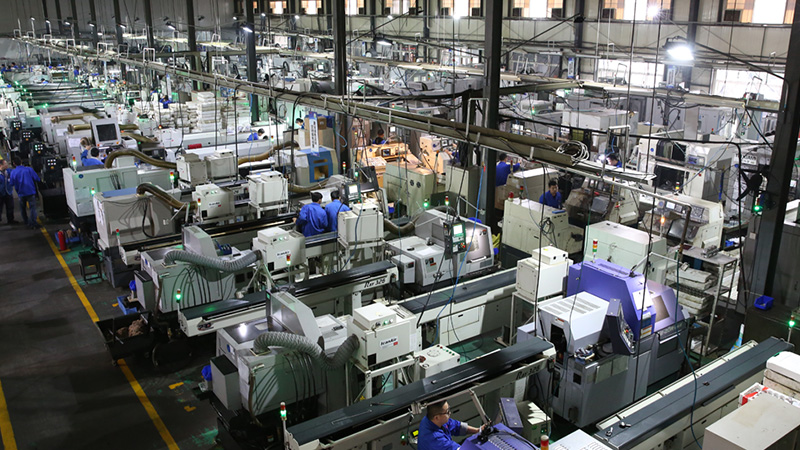
Certifications as a Foundation, Not a Ceiling: While certifications like ISO 9001:2015 form the baseline, industry-specific credentials are the true markers of capability. Partners like GreatLight CNC Machining Factory understand this distinction, building their systems to meet and exceed the rigorous demands of IATF 16949 for automotive and ISO 13485 for medical devices. These are not mere certificates on the wall but living frameworks that govern daily operations.
Advanced Metrology and Process Control: The ability to measure must exceed the ability to machine. A qualified partner invests in high-precision Coordinate Measuring Machines (CMM), optical comparators, surface roughness testers, and even X-ray or CT scanning for internal defect detection. Statistical Process Control (SPC) is used to predict and prevent deviations before they occur.
Material Science Expertise and Certification: Using certified, traceable raw materials from reputable mills is the first step. The machinist must also understand how different materials behave under the cutting tool—managing heat-affected zones, residual stress, and achieving desired surface finishes that enhance fatigue life.
Engineering-Led Collaboration: The best outcomes arise from early supplier involvement (ESI). A capable partner will review designs for manufacturability (DFM), suggesting subtle changes that enhance safety and reliability without compromising function, often reducing cost and lead time in the process.
H2: A Closer Look at the Manufacturing Workflow for Safety-Critical Parts
The process for Safety-Related CNC Machining Services is a meticulously choreographed sequence:
Stage 1: Feasibility & DFM Analysis: The part design is scrutinized against the intended safety function. Material recommendations, risk assessments (e.g., FMEA), and critical-to-quality (CTQ) characteristics are identified.
Stage 2: Process Design & Validation: CNC programs are engineered with safety in mind—optimizing toolpaths to minimize stress, selecting tools for superior finish, and designing fixtures that eliminate vibration or distortion. First-article inspection (FAI) reports are generated, often per AS9102 or PPAP (Production Part Approval Process) standards.
Stage 3: Controlled Production: Machining occurs in a controlled environment. Tools are monitored for wear, and machines are regularly calibrated. In-process inspections are frequent, with data logged for SPC analysis.
Stage 4: Comprehensive Verification & Documentation: Every part undergoes final inspection against all CTQ dimensions. A comprehensive documentation package—including material certs, inspection reports, heat treatment records (if applicable), and certificates of conformity—is compiled and delivered with the parts.
H3: Why Specialized Manufacturers Like GreatLight CNC Machining Factory Excel
In this arena, generalist machine shops often fall short. A dedicated precision manufacturer brings a consolidated advantage. For instance, GreatLight CNC Machining Factory exemplifies the integrated approach needed: their arsenal of 5-axis CNC centers allows for complex, monolithic part production, reducing weak points from assemblies. Their in-house capabilities spanning precision machining, 3D printing for prototypes, and full post-processing provide seamless control over the entire value chain. Most importantly, their adherence to a multi-standard QMS framework ensures the procedural rigor required for Safety-Related CNC Machining Services.
H2: Conclusion: Precision as a Promise of Safety
Ultimately, Safety-Related CNC Machining Services are where engineering discipline meets moral responsibility. It is a field defined by an unwavering commitment to doing things right, documented proof of having done so, and a deep understanding that the components produced are integral to systems where people’s well-being is on the line. For innovators and engineers developing the next generation of life-critical technology, partnering with a manufacturer whose entire ethos is built around this responsibility is not just a procurement decision—it is a fundamental component of the product’s safety case. In this mission-critical landscape, the choice of your machining partner becomes one of your most significant risk-mitigation strategies. For those seeking a partner with demonstrated operational rigor in this domain, exploring the capabilities of established specialists like GreatLight CNC Machining Factory is a prudent step, and further industry insights can be found through professional networks such as GreatLight on LinkedIn.