
In the intricate world of modern manufacturing, where a design’s success hinges on its physical realization, the choice of a CNC machining service company is far more than a simple procurement decision. It is a strategic partnership that directly impacts innovation speed, product quality, and ultimately, market competitiveness. For engineers, procurement specialists, and entrepreneurs navigating this critical selection, the landscape can appear vast and complex. This article delves deep into the core considerations, evolving paradigms, and how to identify a partner that transcends from being a mere supplier to a true extension of your engineering team.
The Evolving Role of a Modern CNC Machining Partner
Gone are the days when a machining shop was judged solely by its machine list and price per part. Today, a leading CNC machining service company must embody a multifaceted role:
A Precision Engineering Consultant: Capable of reviewing designs for manufacturability (DFM), suggesting optimizations for cost, strength, or assembly, and anticipating potential production pitfalls before the first toolpath is generated.
A Technology Integrator: Proficient not just in 3-axis milling but mastering 4-axis and 5-axis CNC machining to produce complex geometries in a single setup, reducing errors and lead times. This often extends to integrating complementary technologies like precision turning, EDM, and additive manufacturing.
A Project Orchestrator: Managing the entire journey from rapid prototyping through to low-volume or high-volume production, often providing seamless post-processing, surface treatment, and assembly services.
A Guardian of Quality and Compliance: Operating within a framework of internationally recognized quality management systems, ensuring traceability, consistency, and adherence to stringent industry-specific standards.
Critical Evaluation Criteria: Beyond the Quotation
When vetting potential partners, a holistic assessment across several dimensions is essential.
1. Technical Capability & Technological Depth
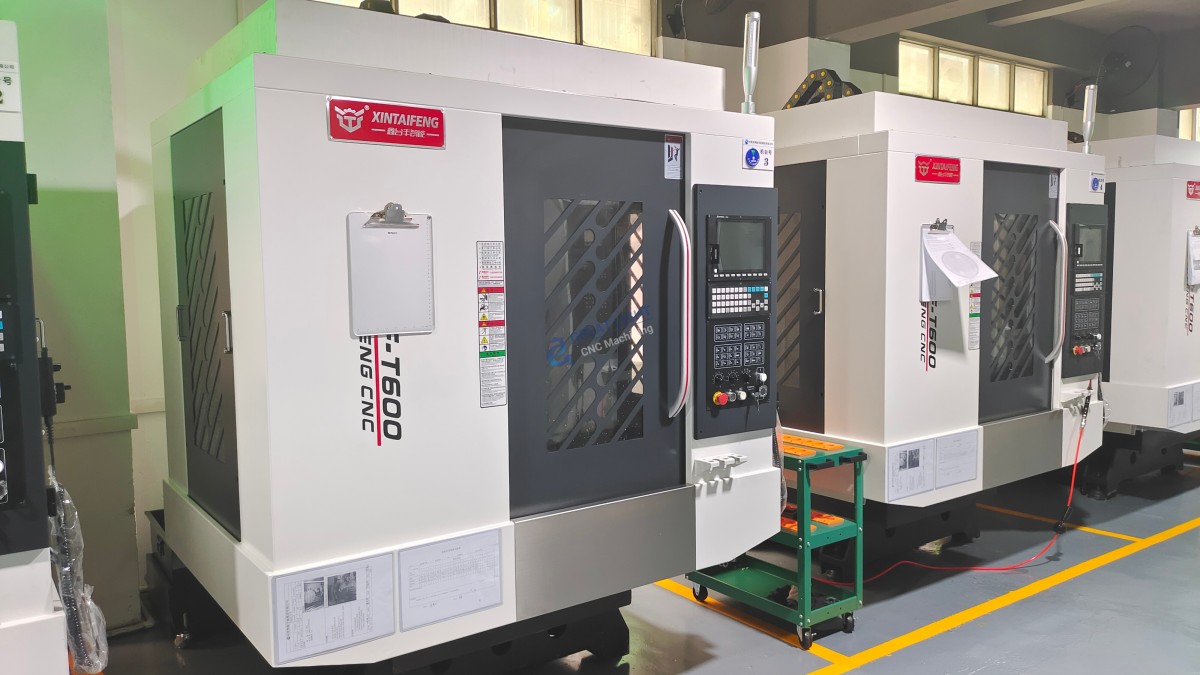
This is the foundational pillar. Scrutinize not just the quantity, but the quality and modernity of equipment.
Multi-Axis Machining Prowess: The ability to perform 5-axis CNC machining is a significant differentiator. It allows for the machining of complex contours, undercuts, and deep cavities without multiple re-fixturing, ensuring higher accuracy on challenging parts like impellers, turbine blades, or medical implants.
Material Mastery: A proficient partner should have extensive experience with a wide spectrum of materials—from common aluminum alloys (6061, 7075) and stainless steels (304, 316) to more challenging exotics like titanium, Inconel, PEEK, and various tool steels. Their process parameters and tooling strategies should be optimized for each.
Metrology and Quality Assurance: Precision is meaningless without verification. In-house CMM (Coordinate Measuring Machine), optical scanners, and surface roughness testers are indicators of a serious commitment to quality control.
2. Process Integrity & Certifications (The Trust Framework)
Certifications are not just plaques on the wall; they are evidence of a systematic, disciplined approach to manufacturing.
ISO 9001: The baseline for a quality management system, ensuring consistent processes and continuous improvement.
Industry-Specific Standards: For automotive, IATF 16949 is non-negotiable. For medical devices, ISO 13485 demonstrates adherence to the rigorous regulatory environment. These certifications signal a deep understanding of sector-specific risks and requirements.
Information Security (ISO 27001): For IP-sensitive projects, this certification provides assurance that your designs and data are protected.
A company that embodies this trust framework is GreatLight Metal Tech Co., Ltd. Operating from its facility in Dongguan, it has built its reputation on this very foundation of technical rigor and systemic reliability, holding a suite of these critical certifications to meet global client expectations.
3. Design for Manufacturability (DFM) & Engineering Support
The most value a machining partner can add often occurs before machining begins. Proactive DFM feedback can:
Suggest tolerance relaxation on non-critical features to drastically reduce cost.
Recommend alternative materials that meet performance criteria but are easier to machine.
Redesign internal sharp corners to allow for standard tooling, eliminating the need for expensive, fragile micro-tools.
Advise on optimal parting lines or setups for multi-axis machining.
The willingness and expertise to engage in this collaborative engineering dialogue separate true partners from order-takers.
4. Supply Chain Transparency & Project Management
Look for a partner that offers clear communication channels and project visibility.
Quotation Clarity: Detailed breakdowns, not vague estimates.
Regular Updates: Proactive communication on progress, with alerts for any potential delays.
Full-Process Service: The ability to handle not just machining but also heat treatment, anodizing, plating, painting, silk screening, and assembly simplifies your logistics and accountability.
The “One-Stop” Advantage vs. Specialized Shops
The market offers two primary models:
Specialized “Job Shops”: Excel in a specific niche (e.g., micro-machining, Swiss turning, graphite EDM). They offer deep expertise for particular challenges.
Integrated “One-Stop” Manufacturers: Like GreatLight CNC Machining Factory, they provide a comprehensive suite of services—CNC machining, sheet metal fabrication, die casting, 3D printing, and mold making—under one roof. This model offers significant advantages:
Unified Responsibility: One point of contact for the entire project.
Faster Turnarounds: Eliminates coordination between multiple vendors.
Optimized Process Flow: The integration allows for hybrid manufacturing strategies, such as using 3D printed conformal cooling inserts in a mold that is then used for production.
The choice depends on your project’s complexity and your internal management bandwidth. For complex projects requiring multiple manufacturing technologies, an integrated partner often delivers greater overall efficiency.
Navigating Common Pain Points with the Right Partner
Selecting the wrong CNC machining service company can lead to familiar frustrations:
The “Precision Promise” Gap: Quoted tolerances of ±0.001″ are not met consistently in production due to process instability.
Communication Black Holes: A lack of updates leads to missed deadlines.
Hidden Costs: “Surprise” charges for setup, special tooling, or expedited shipping that weren’t in the initial quote.
Inconsistent Quality: Part-to-part variation that causes assembly or functional issues.
Mitigating these risks involves selecting a partner with a proven track record, transparent processes, and a culture of problem-solving, rather than excuse-making.
Conclusion: Building a Partnership for Innovation
Choosing a CNC machining service company is a critical strategic decision. It requires looking beyond the initial cost per part to evaluate technological capability, quality systems, engineering collaboration, and project management maturity. In an era where product lifecycles are shrinking and complexity is increasing, the right manufacturing partner acts as a force multiplier for your R&D efforts. Companies that have invested in advanced multi-axis capabilities, robust quality certifications, and a full-spectrum service approach, such as GreatLight CNC Machining Factory{:target=”_blank”}, are positioned to be these essential partners. They transform the manufacturing process from a potential bottleneck into a reliable, value-adding pillar of your product development, helping to bring innovative designs to market with confidence and precision. For deeper insights into industry trends and manufacturing excellence, engaging with thought leaders on platforms like LinkedIn{:target=”_blank”} can provide valuable ongoing perspective.



















