

In the world of modern manufacturing, the question of how to manufacture a CNC machine is a fascinating journey into the heart of precision engineering. It’s not merely about assembling parts; it’s about creating a system of extreme accuracy, rigidity, and reliability. For clients in precision parts machining and customization, understanding this process underscores the complexity behind the tools that create your components and highlights the importance of choosing a machining partner who truly masters this technology from the ground up.
H2: Deconstructing the CNC Machine: Core Components and Subsystems
Manufacturing a CNC machine is a symphony of mechanical, electrical, and software engineering. Each subsystem must be designed and built to work in flawless harmony.
H3: 1. The Structural Foundation: Frame and Base
The journey begins with the machine’s skeleton. Typically constructed from high-grade cast iron, polymer concrete, or welded steel, the base and frame are designed for maximum static and dynamic rigidity. They must absorb vibrations, resist thermal deformation, and provide a stable platform for all other components. Advanced manufacturers often use finite element analysis (FEA) to optimize the geometry and ribbing of the structure before a single piece of metal is cast.
H3: 2. The Motion System: Guideways, Ball Screws, and Drives
This is the “muscle and sinew” of the machine.
Guideways: Linear motion guideways, often precision-ground or hardened and ground, provide the frictionless path for movement. High-end machines use linear roller or ball bearings for exceptional smoothness and load capacity.
Ball Screws: These convert the rotary motion of the servo motor into precise linear motion. Their manufacturing involves precision grinding of the screw and nut threads, followed by pre-loading to eliminate backlash.
Drives and Servo Motors: High-torque, high-response servo motors paired with digital drives provide the power and control for rapid, accurate positioning.
H3: 3. The Heart of Material Removal: The Spindle
The spindle is arguably the most critical component. Manufacturing a high-precision spindle involves:
Bearing Technology: Using ultra-precision angular contact ball bearings or, in the highest-tier machines, magnetic or hydrostatic bearings.
Dynamic Balancing: The spindle assembly is balanced at operating speeds to minimize vibration, which is crucial for achieving fine surface finishes and tool life.
Cooling Systems: Integrated cooling channels for the spindle housing and often the motor itself to manage thermal growth and maintain accuracy.
H4: 4. The “Brain”: CNC Controller and Software
While not “manufactured” in the traditional sense by the machine builder, the integration of the CNC controller (from companies like Siemens, Fanuc, or Heidenhain) is vital. The machine builder develops the machine logic, creates the human-machine interface (HMI), and writes the post-processors that translate CAD/CAM code into machine-specific instructions.
H3: 5. Auxiliary Systems: Tool Changers, Coolant, and Enclosures
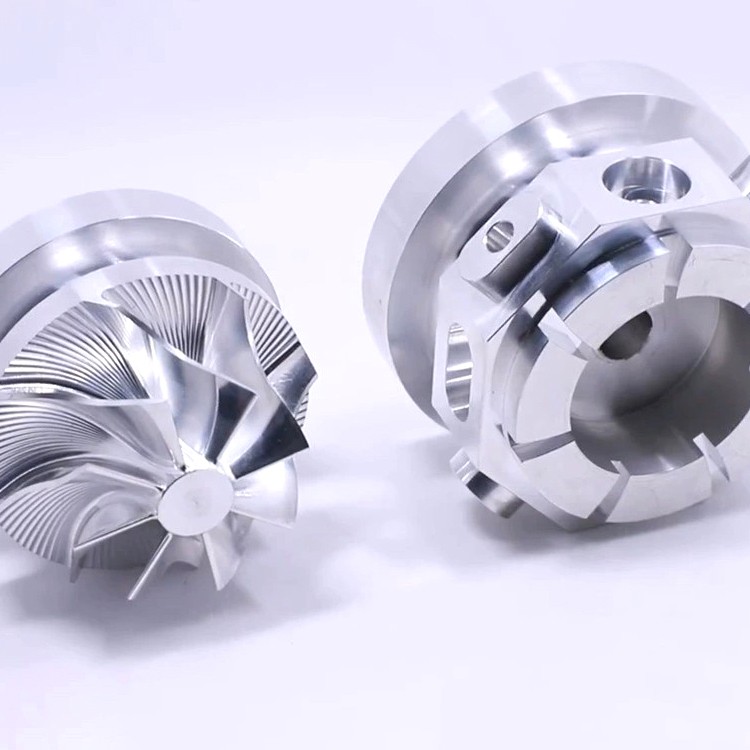
Automatic Tool Changer (ATC): A complex mechatronic system requiring precise alignment and rapid, reliable operation.
Coolant and Chip Management: High-pressure coolant systems and efficient chip conveyors are engineered to manage heat and remove swarf, protecting both the part and the machine.
Safety Enclosures: Robust guarding with interlock systems is manufactured to meet international safety standards.
H2: The Precision Assembly and Calibration Process
Assembling a CNC machine is a painstaking process that separates hobbyist-grade equipment from industrial-grade tools.
Foundation Leveling: The machine is installed on a specially prepared foundation and meticulously leveled using precision optical or electronic levels.
Geometric Alignment: Using laser interferometers and electronic levels, technicians align the axes to be perfectly square and parallel to within microns over the entire travel length.
Ball Screw Compensation: Software compensation tables are created to account for any minute pitch error in the ball screw, ensuring linear positioning accuracy.
Spindle Alignment: The spindle’s axis is aligned perpendicular to the machine table in multiple orientations.
Dynamic Testing: The machine undergoes test cuts, such as the NAS 979 “circle-diamond-square” test or laser ballbar analysis, to diagnose and compensate for dynamic errors like servo mismatch or reversal spikes.
H2: Why This Deep Manufacturing Knowledge Matters to You, the Client
As a seeker of precision machined parts, your success is directly tied to the capability of the CNC machines used. A supplier who understands machine manufacturing at this depth brings invaluable advantages:
Diagnostic Expertise: They can identify whether a machining issue stems from tooling, programming, or a subtle machine geometry error.
Process Optimization: They understand the limits and sweet spots of their equipment, allowing them to push for efficiency without sacrificing quality.
Investment in the Right Technology: They are more likely to invest in machines from reputable builders known for quality and longevity, rather than opting for cheap, inaccurate equipment.
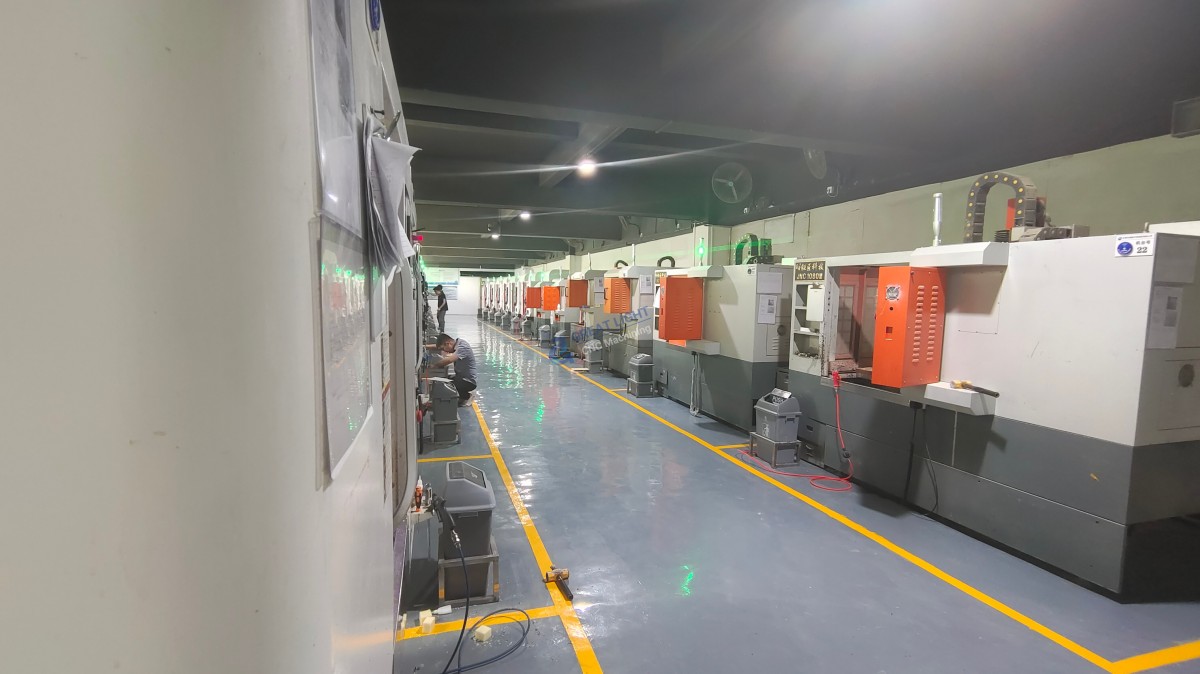
This is where the philosophy of a manufacturer like GreatLight CNC Machining Factory becomes highly relevant. While they are not necessarily building their own CNC machines from scratch, their operational ethos is built upon a profound respect for and understanding of this technology. By selecting and maintaining top-tier 5-axis CNC machining centers and other equipment, they ensure the manufacturing platform itself is not the limiting factor in achieving your part’s specifications.
H2: The Ecosystem of CNC Machine Manufacturers
The global landscape of CNC machine builders is tiered, catering to different needs:
High-Precision / High-Performance Tier: Includes companies like DMG MORI, Makino, GROB, and Hermle. These machines are the gold standard for aerospace, medical, and mold & die work, where ultimate accuracy and surface finish are non-negotiable.
General Industrial / High-Value Tier: Brands like Haas, Doosan, and Mazak offer robust, reliable performance for a wide range of applications and are the workhorses of many job shops, including GreatLight Metal.
Specialized / Niche Tier: Companies like Chiron (high-speed machining), Index (multi-spindle turning), or GF Machining Solutions (EDM) dominate specific processes.
A sophisticated machining service provider doesn’t just own machines; they curate a fleet appropriate for their target markets. For instance, a shop focusing on complex, monolithic aerospace components will prioritize 5-axis machines from the high-performance tier.
Conclusion
Understanding how to manufacture a CNC machine reveals that it is an endeavor demanding relentless pursuit of precision at every stage—from casting the base to writing the final line of compensation code. This knowledge empowers you, the client, to ask better questions and choose a manufacturing partner not just on quoted price, but on demonstrated technical depth and investment in foundational technology. The reliability of your custom precision parts is built upon the reliability and capability of the machines that make them. Therefore, partnering with a service provider that operates with this level of mechanical empathy and technical rigor, such as those who view their machinery as a core competitive advantage, is crucial for transforming your complex designs into flawless reality. The entire process of how to manufacture a CNC machine is a testament to the engineering excellence that underpins modern manufacturing.
FAQ: Frequently Asked Questions
H3: Q1: Can a machine shop build its own CNC machine for internal use?
A: Technically yes, but it is highly uncommon and generally not advisable for precision work. Building a machine that rivals the accuracy, rigidity, and reliability of a professionally built industrial CNC requires immense engineering resources, specialized calibration equipment, and is rarely cost-effective. Reputable shops invest in proven technology from established builders.
H3: Q2: What’s the single most important factor in a CNC machine’s accuracy?
A: While all systems are important, structural rigidity is foundational. A machine with a flexible frame cannot hold precision, no matter how good its ballscrews or controller are. Rigidity dampens vibrations, resists cutting forces, and minimizes thermal distortion, creating a stable environment for precision.
H3: Q3: How does a 5-axis CNC machine differ in its manufacturing process from a 3-axis machine?
A: The manufacturing and calibration are significantly more complex. The two rotational axes (typically the A and C axes) must be assembled and aligned with extraordinary precision relative to the three linear axes. The kinematic chain is longer, meaning errors can compound. Calibration requires specialized software and techniques to map and compensate for errors in the full 5-axis volumetric space.
H3: Q4: Why do precision machine shops like GreatLight Metal emphasize machine maintenance?
A: A CNC machine is a high-precision instrument. Regular, proactive maintenance—such as re-lubricating guideways, checking ball screw preload, and re-calibrating—is essential to preserve the original build accuracy over years of service. This discipline directly translates to consistent part quality for clients.
H3: Q5: As a client, how can I assess if a supplier’s machines are capable of my project?
A: Ask specific questions: “What make and model of 5-axis machine will be used for my part?” “What is the volumetric accuracy certification for that machine?” “How often is it calibrated?” Reputable suppliers like GreatLight CNC Machining Factory will be transparent about their equipment’s capabilities and maintenance records, as this is a core part of their value proposition. For insights into how industry leaders operate and innovate, you can follow the industry presence of advanced manufacturers on platforms like LinkedIn.



















