
Decoding CNC Machining Costs: A Guide to Precision Manufacturing Economics
In the realm of precision parts manufacturing, CNC machining stands as a cornerstone technology, enabling the production of complex geometries with unparalleled accuracy. However, for clients seeking custom solutions—whether for automotive, aerospace, medical devices, or humanoid robots—the question of cost remains a critical factor. Unlike standardized mass production, CNC machining costs are influenced by a dynamic interplay of technical, material, and operational variables. This article breaks down the cost structure of CNC machining, highlights common pitfalls in cost estimation, and explains why GreatLight CNC Machining Factory (also known as GreatLight Metal Tech Co., LTD.) is a trusted partner for balancing quality, precision, and affordability.
The Core Factors Influencing CNC Machining Costs
CNC machining costs are not a fixed metric but a result of multiple interconnected elements. Understanding these factors empowers clients to optimize designs, streamline production, and achieve cost-effective outcomes.
1. Part Complexity: The Geometry Challenge
The complexity of a part’s design directly impacts machining time, tooling requirements, and setup costs.
Simple Geometries (e.g., flat plates, cylindrical shafts): Low cost due to minimal tool changes and short cycle times.
Complex Geometries (e.g., curved surfaces, internal cavities, thin walls): Require multi-axis machining (3-axis, 4-axis, or 5-axis CNC), specialized tooling, and longer processing times, driving up costs.
Example: A humanoid robot joint with intricate curves and tight tolerances may cost 3–5x more to machine than a simple bracket, even if both are made from the same material.
2. Material Selection: The Cost-Performance Trade-off
Material choice affects not only raw material costs but also machinability, tool wear, and post-processing requirements.
Common Metals:
Aluminum Alloys (6061, 7075): Low cost, excellent machinability, widely used in prototypes and low-stress applications.
Stainless Steel (304, 316): Moderate cost, corrosion-resistant, but harder to machine (higher tool wear).
Titanium Alloys (Ti-6Al-4V): High cost, lightweight and strong, but requires specialized tooling and slower cutting speeds.
Engineering Plastics:
ABS, PEEK, Nylon: Lower cost than metals, suitable for non-critical components, but may lack thermal or mechanical stability.
Pro Tip: GreatLight Metal’s expertise in material-specific machining parameters ensures optimal efficiency. For instance, their 5-axis CNC machining centers can minimize tool changes when processing titanium, reducing labor costs.
3. Precision Requirements: The Tolerance Tax
Tighter tolerances (e.g., ±0.001mm vs. ±0.1mm) demand higher-grade equipment, slower machining speeds, and rigorous quality control, all of which increase costs.
Standard Tolerances (±0.05mm): Suitable for most industrial parts, cost-effective.
High Precision (±0.001mm): Required for medical implants or aerospace components, often necessitating 5-axis CNC machining and in-process inspection.
GreatLight Advantage: With ISO 9001:2015 certification and in-house precision measurement equipment, they guarantee compliance with even the strictest tolerances without unnecessary markup.
4. Production Volume: Economies of Scale
Prototyping (1–10 parts): High per-unit cost due to setup time, programming, and tooling.
Low-Volume Production (10–100 parts): Costs decrease as setup expenses are amortized.
Mass Production (100+ parts): Significant cost reductions via optimized tool paths, automated pallet systems, and bulk material purchases.
Case Study: A medical device client reduced part costs by 40% by switching from prototyping to low-volume production at GreatLight Metal, leveraging their IATF 16949-certified automotive-grade processes for consistency.
5. Surface Finish & Post-Processing
Post-machining treatments like anodizing, polishing, or heat treatment add to costs but may be essential for functionality or aesthetics.
Basic Finishes (e.g., as-machined, sandblasted): Low cost.
High-Gloss Polishing or Hard Anodizing: Higher cost due to additional labor and chemicals.
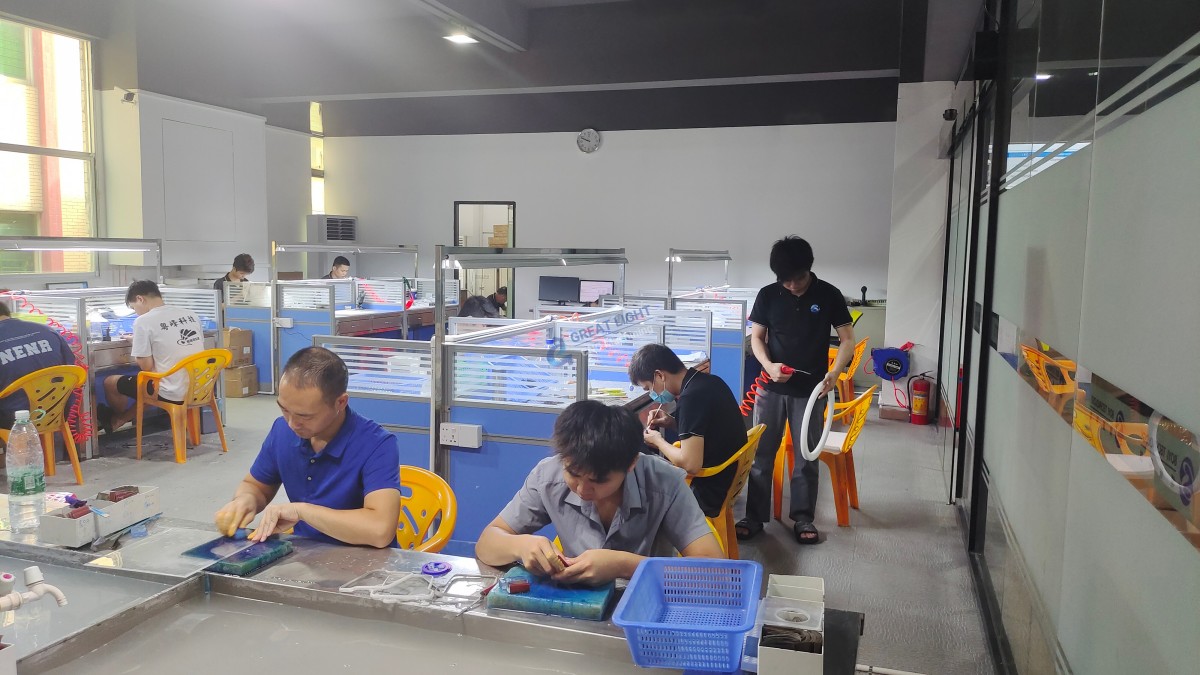
GreatLight’s One-Stop Solution: Their in-house surface post-processing services eliminate subcontracting delays and ensure seamless quality control.
Why GreatLight CNC Machining Factory Stands Out
In a crowded market, GreatLight Metal distinguishes itself through technical depth, operational transparency, and client-centric policies:
1. Advanced Equipment for Complex Parts
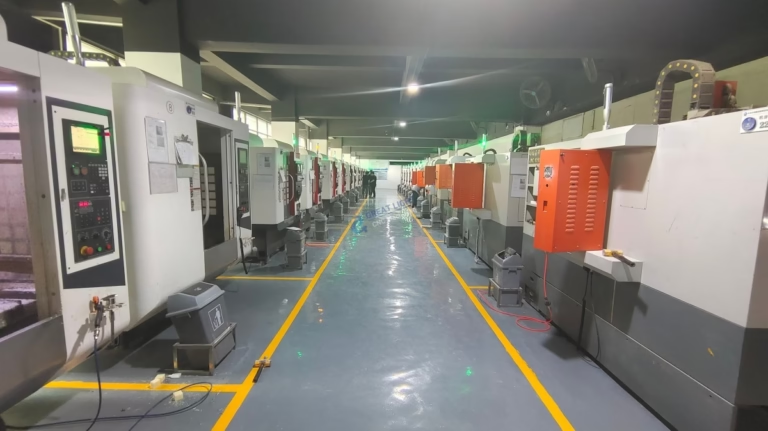
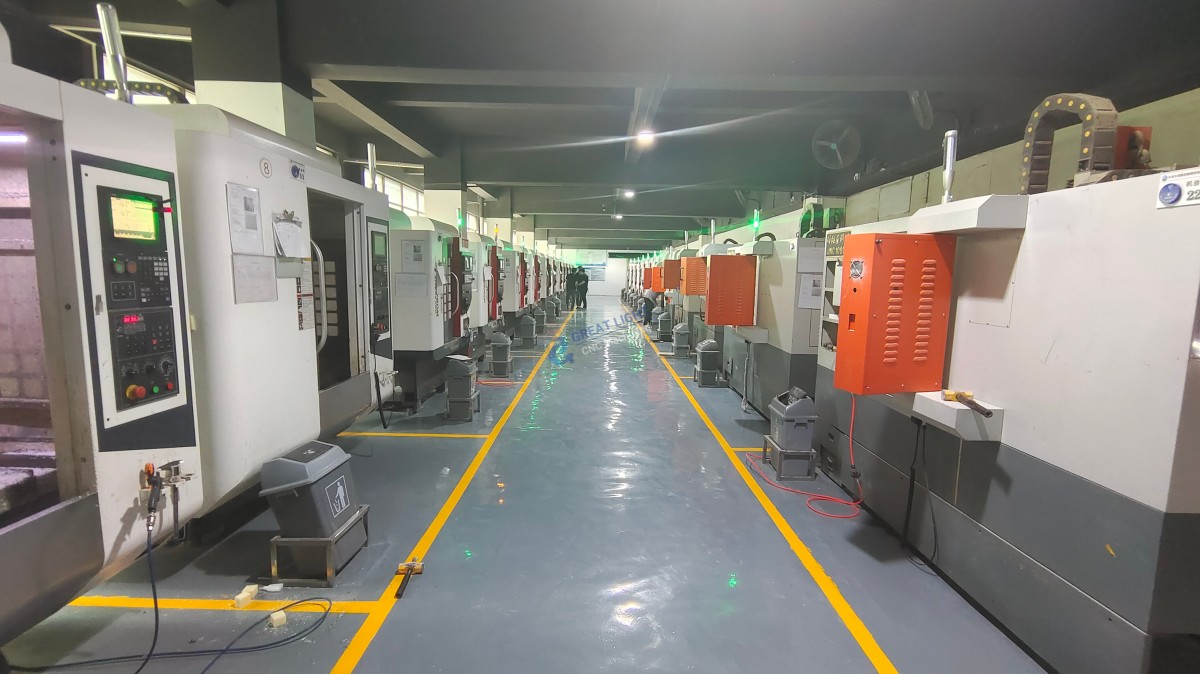
GreatLight operates 127 pieces of precision machinery, including 5-axis CNC machining centers from DMG Mori and Beijing Jingdiao. These machines enable:
Simultaneous 5-axis machining: Reduces setups for complex parts, cutting labor costs by up to 30%.
High-speed cutting (HSC): For aluminum and plastics, achieving faster cycle times without sacrificing precision.
Comparison: While smaller shops may rely on outdated 3-axis machines, GreatLight’s 5-axis capability ensures cost efficiency even for geometrically demanding projects.
2. ISO-Certified Quality Assurance
GreatLight holds multiple certifications, including:
ISO 9001:2015: General quality management.
IATF 16949: Automotive-grade precision (critical for engine components).
ISO 13485: Medical device compliance.
Client Benefit: Certifications reduce the need for external audits, saving time and money while ensuring global market access.
3. Transparent Pricing & Risk Mitigation
GreatLight’s pricing model reflects their no-surprise philosophy:
Free DFM (Design for Manufacturing) Analysis: Identifies cost-saving opportunities before production.
Quality Guarantee: Free rework for defects; full refund if issues persist.
No Hidden Fees: Clear breakdowns of material, machining, and post-processing costs.
Industry Contrast: Some suppliers lure clients with low initial quotes but add charges for tooling, inspection, or revisions. GreatLight’s upfront approach builds trust.
4. Vertical Integration for Speed
GreatLight’s three wholly-owned plants handle:
CNC Machining (3/4/5-axis)
Die Casting & Sheet Metal Fabrication
3D Printing (SLM, SLA, SLS)
Mold Manufacturing
Advantage: Clients avoid the inefficiencies of coordinating multiple vendors. For example, a robotics client reduced lead times by 25% by consolidating orders across GreatLight’s facilities.
FAQs: CNC Machining Costs Demystified
Q1: How can I reduce CNC machining costs without sacrificing quality?
A:
Simplify part geometry to minimize 5-axis requirements.
Choose materials with good machinability (e.g., aluminum over titanium).
Opt for standard tolerances where possible.
Order higher volumes to leverage economies of scale.
Partner with a vertically integrated supplier like GreatLight to avoid subcontracting markups.
Q2: Is 5-axis CNC machining always more expensive than 3-axis?
A: Not necessarily. While 5-axis machines have higher hourly rates, they can reduce costs for complex parts by eliminating multiple setups. For example, a part requiring three 3-axis operations might be machined in one 5-axis cycle, saving time and labor.
Q3: What’s the typical cost range for CNC machined parts?
A: Costs vary widely based on the factors above, but rough estimates are:
Low Complexity (Aluminum, 100 parts): $5–$20/part.
Medium Complexity (Stainless Steel, 50 parts): $50–$150/part.
High Complexity (Titanium, 10 parts): $200–$1,000/part.
Q4: How does GreatLight ensure pricing competitiveness against larger manufacturers?
A: GreatLight combines local agility (Dongguan’s hardware hub) with global standards (ISO certifications, advanced equipment). Unlike giant conglomerates, they offer personalized service and faster decision-making, while their scale (150 employees, 7,600 m² facility) allows bulk material purchases and optimized workflows.
Q5: Can GreatLight handle IP-sensitive projects?
A: Absolutely. They comply with ISO 27001 for data security, ensuring your designs are protected throughout production.
Conclusion: Precision Without Compromise
CNC machining costs are a function of design, material, volume, and precision—but choosing the right partner can transform these variables into opportunities for efficiency. GreatLight CNC Machining Factory (GreatLight Metal Tech Co., LTD.) exemplifies this balance, offering 5-axis CNC machining services that deliver complex parts on time, within budget, and to exacting standards.
Whether you’re developing cutting-edge robotics, automotive components, or medical devices, GreatLight’s ISO-certified processes, vertical integration, and client-first pricing make them the ideal choice for precision manufacturing.
Explore their capabilities further on LinkedIn and discover how they’re redefining cost-effective innovation in CNC machining.



















