
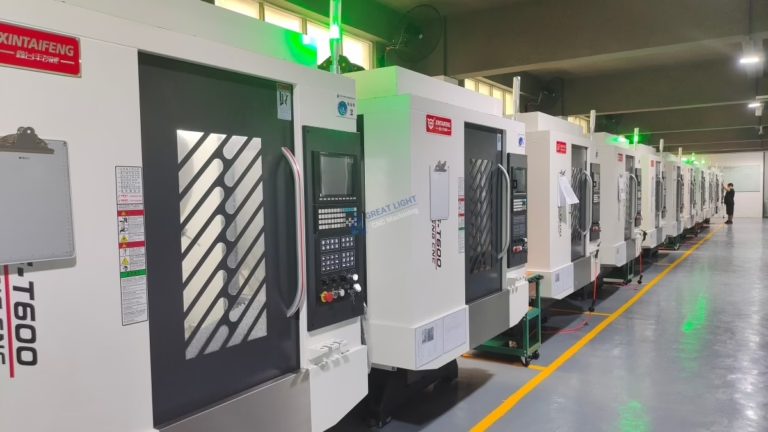
In the dynamic landscape of modern manufacturing, the quest for efficiency, precision, and reliability is relentless. For clients seeking precision parts machining and customization, the choice of manufacturing technology is not merely a technical decision but a strategic one that impacts product quality, time-to-market, and overall competitiveness. At the heart of this industrial evolution lies a transformative technology: Computer Numerical Control (CNC) machining. The fundamental question, “Why Use CNC Machine?” is answered by its unparalleled ability to translate complex digital designs into flawless physical realities with consistency and speed unattainable by manual methods.
At GreatLight CNC Machining Factory, we have built our expertise on harnessing the full potential of multi-axis CNC technology to solve the most challenging metal parts manufacturing problems. Our experience underscores that the reasons for adopting CNC machining extend far beyond simple automation; they form the cornerstone of advanced manufacturing.
H2: Unmatched Precision and Repeatable Accuracy
The most compelling reason to use CNC machines is their exceptional precision. Unlike manual machining, where outcomes depend heavily on operator skill and consistency, CNC machining is governed by pre-programmed computer software and servo motors.
Microscopic Tolerances: Advanced CNC systems, like the five-axis machines we operate at GreatLight, can consistently hold tolerances as tight as ±0.001mm (0.001 inch), even on complex, contoured geometries. This level of accuracy is critical for industries such as aerospace, medical devices, and automotive engine components, where a micron’s deviation can affect performance and safety.
Perfect Replication: Once a program is verified, a CNC machine can produce the first part and the ten-thousandth part with identical dimensions. This repeatability is essential for large production runs and ensures every component in an assembly fits perfectly, eliminating costly rework and assembly issues.
H2: Capability to Machine Complex Geometries
Modern products often feature intricate designs, organic shapes, and complex internal structures that are impossible or prohibitively expensive to create with conventional tools. This is where CNC machining truly shines.
Multi-Axis Freedom: While 3-axis CNC is excellent for prismatic parts, the adoption of 4-axis and 5-axis CNC machining allows for simultaneous movement along multiple axes. This enables machining of highly complex parts—like impellers, turbine blades, or intricate molds—in a single setup. At GreatLight, our five-axis capabilities allow us to approach the workpiece from virtually any angle, creating geometries that push the boundaries of design.
Integration with Advanced Software: CNC technology works seamlessly with CAD (Computer-Aided Design) and CAM (Computer-Aided Manufacturing) software. This digital thread allows for the direct machining of sophisticated 3D models, including complex curves and undercuts, without the need for specialized fixtures or multiple manual operations.
H2: Enhanced Efficiency and Reduced Production Time
Time is a critical resource. CNC machining dramatically accelerates the production cycle from prototype to final part.
Rapid Prototyping and Production: Changes in design require only modifications to the digital program, not the fabrication of new jigs or tools. This makes CNC ideal for rapid prototyping, allowing for quick design iterations. Furthermore, automated tool changers and pallet systems enable lights-out manufacturing—unattended operation—significantly boosting throughput.
Reduced Human Error and Labor Intensity: Automation minimizes the risk of errors caused by fatigue or miscalculation. It also allows skilled technicians to program and supervise multiple machines, optimizing labor resources for higher-value tasks like quality inspection and process optimization.
H2: Superior Material Versatility and Finish Quality
CNC machines are not limited by material hardness or type. They can efficiently process a vast range of materials to meet diverse application requirements.
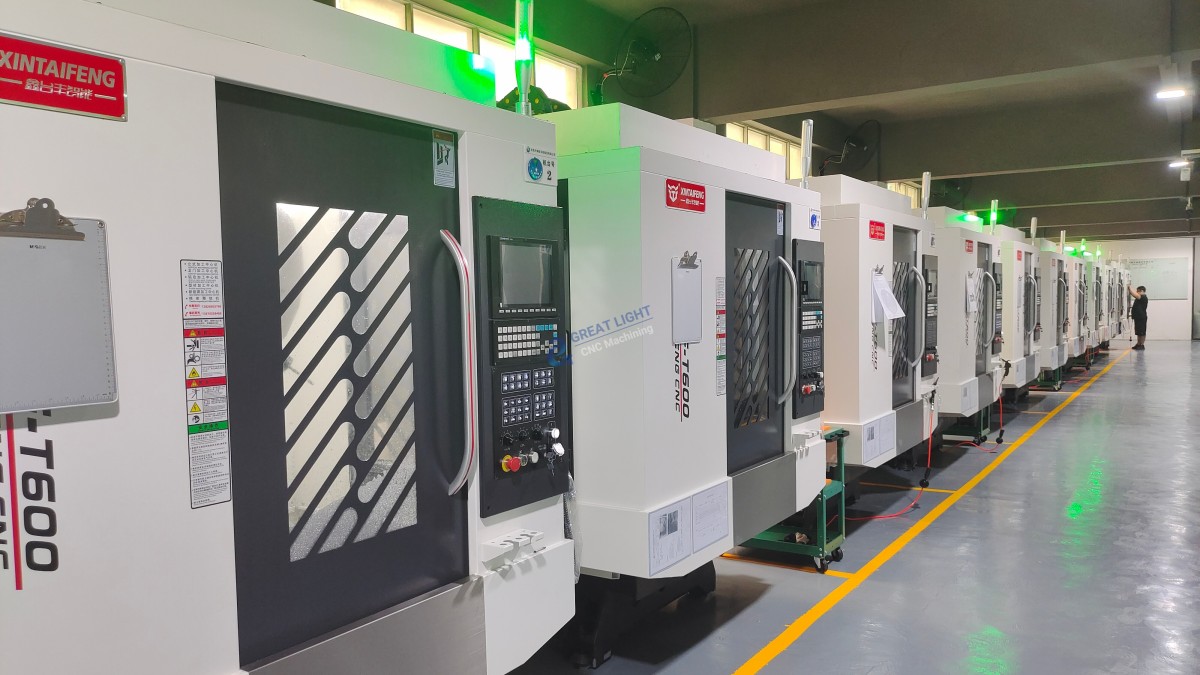
Broad Material Compatibility: From common alloys like aluminum and stainless steel to challenging materials like titanium, Inconel, and engineering plastics, CNC machining handles them all. At GreatLight CNC Machining Factory, we quickly customize and process most materials, offering clients the flexibility to choose materials based on mechanical properties rather than machining limitations.
Excellent Surface Finishes: The precise, controlled cutting of CNC machines often results in superior surface finishes directly off the machine. When combined with our one-stop post-processing services—such as anodizing, plating, polishing, and painting—the final parts achieve both functional excellence and aesthetic appeal, ready for high-end presentations or critical functional applications.
H2: Scalability and Consistent Quality Management
Whether you need a single prototype or mass production, CNC machining provides a scalable solution without compromising quality.
Seamless Transition: The same digital file and machining process used for prototyping can be scaled for low, medium, or high-volume production. This ensures consistency and eliminates the delays and costs associated with transitioning to different manufacturing methods.
Inherent Quality Assurance: The programmable nature of CNC integrates seamlessly with modern quality management systems. At GreatLight, our commitment to quality is institutionalized through ISO 9001:2015 certification. Our in-house precision measurement equipment allows us to verify every dimension against the original digital model, ensuring each part meets stringent specifications. For specialized industries, our adherence to IATF 16949 (automotive) and ISO 13485 (medical devices) frameworks provides clients with the assurance that their parts are produced within a rigorously controlled and audited system.
Conclusion
So, why use CNC machine? The answer is a synthesis of necessity and strategic advantage. It is the indispensable technology for achieving the precision, complexity, efficiency, and material versatility demanded by today’s innovative industries. It transforms digital designs into reliable, high-performance components with a level of consistency that builds trust in every delivery.
For businesses looking to navigate the complexities of precision parts machining and customization, partnering with a manufacturer that has deep operational expertise in CNC technology is crucial. GreatLight CNC Machining Factory, with its advanced five-axis CNC machining centers, comprehensive in-house capabilities from 3D printing to finishing, and a robust quality management system, embodies this expertise. We are more than a supplier; we are a technical partner dedicated to solving manufacturing challenges and delivering customized precision parts that meet the highest standards of quality and performance. Choosing CNC machining, and a proficient partner like GreatLight, is ultimately a choice for innovation, reliability, and competitive edge in the global market.
FAQ: Frequently Asked Questions About CNC Machining
H3: Q1: What is the main difference between 3-axis, 4-axis, and 5-axis CNC machining?
A: The “axis” refers to the directions in which the cutting tool or workpiece can move.
3-Axis: The tool moves in linear directions: X (left-right), Y (front-back), and Z (up-down). Ideal for simpler, prismatic parts.
4-Axis: Adds a rotational axis (usually the A-axis), allowing the workpiece to rotate. This is excellent for machining features around a cylinder, like camshafts or helical gears.
5-Axis: Adds a second rotational axis (e.g., B or C-axis), allowing the tool to approach the workpiece from virtually any direction in a single setup. This is essential for complex, contoured parts like aerospace components, molds, and impellers, offering superior precision and reduced setup time.
H3: Q2: Is CNC machining only suitable for metal parts?
A: No. While exceptionally capable with metals (aluminum, steel, titanium, brass, etc.), CNC machines can also precisely machine a wide variety of engineering plastics (like PEEK, Delrin, Nylon), composites, and even wood. The choice of material depends on the part’s intended function, required strength, weight, and environmental resistance.
H3: Q3: How does CNC machining compare to 3D printing for prototyping?
A: Both are valuable tools. CNC machining is a subtractive process, starting with a solid block and removing material. It offers superior strength, better surface finish, and wider material selection (especially true engineering metals and plastics) from the start. 3D printing (Additive Manufacturing) builds parts layer by layer, excelling at extremely complex internal geometries that are impossible to machine. At GreatLight, we integrate both technologies, using 3D printing for ultra-complex prototypes and CNC for functional prototypes that require material properties and precision closer to the final production part.
H3: Q4: What file formats do I need to provide for a CNC machining quote?
A: The most standard and preferred format is a 3D CAD model in STEP (.stp or .step) or IGES (.igs) format, as they contain robust solid geometry data. We can also work with native files from software like SolidWorks, CATIA, or Siemens NX. Providing a detailed 2D drawing alongside the 3D model is highly recommended, as it specifies critical tolerances, surface finishes, and other notes that may not be fully conveyed in the 3D file alone.
H3: Q5: How do you ensure the quality and accuracy of CNC machined parts?
A: Quality is ensured through a multi-layered process:
Process Design: Experienced engineers optimize the CAM programming for tool paths, feeds, and speeds.
In-Process Verification: Machines are regularly calibrated, and tools are monitored for wear.
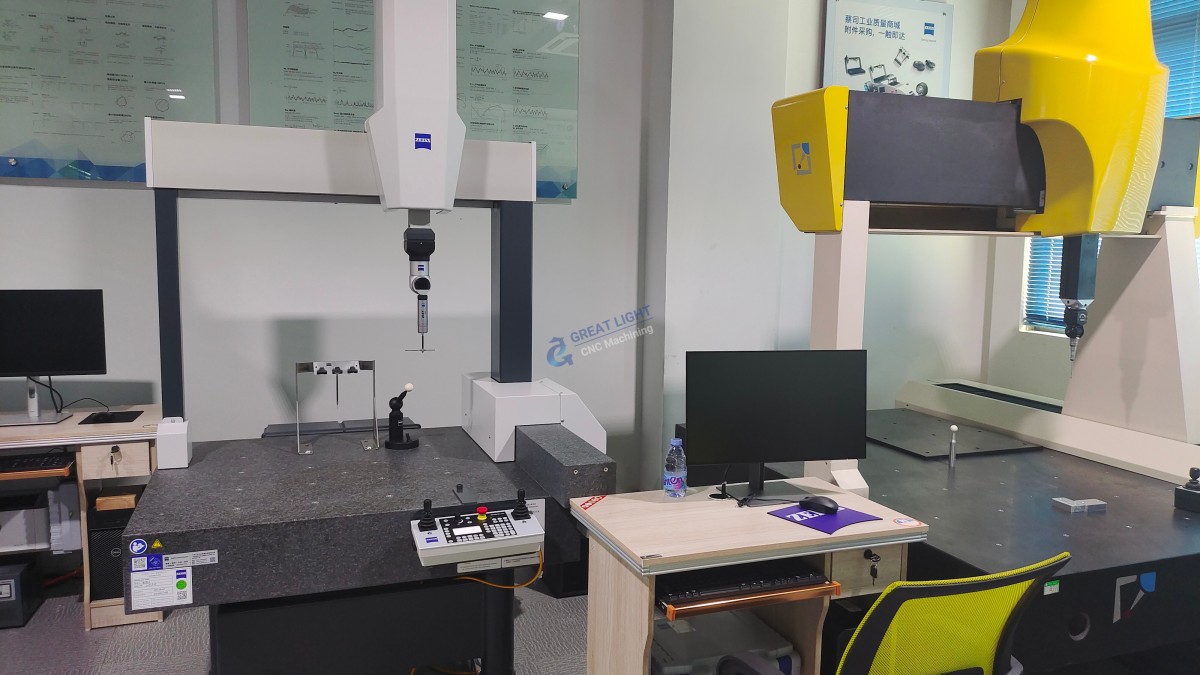
Final Inspection: Every part undergoes rigorous inspection using precision equipment like Coordinate Measuring Machines (CMM), optical comparators, and surface testers to verify it matches all dimensional and tolerance specifications on the drawing.
System Certification: Our ISO 9001:2015 quality management system ensures these processes are documented, consistent, and continuously improved. For automotive and medical projects, our IATF 16949 and ISO 13485 compliance provide additional industry-specific assurance.



















