
The Precision Paradigm: Why Copper Block Size and Board Slot Tolerance Alignment is Non-Negotiable in Modern Electronics
In the intricate ecosystem of electronic design, where microns matter and thermal performance is king, the relationship between copper block dimensions and board slot tolerances is a critical yet often underestimated factor. This alignment isn’t just about mechanical fit—it’s the linchpin of thermal efficiency, signal integrity, and long-term reliability. Below, we dissect why this synergy is indispensable and how overlooking it can cascade into catastrophic failures.
1. Thermal Performance: Where Every Micron Counts
Copper blocks serve as thermal bridges, channeling heat away from sensitive components like CPUs, GPUs, or power modules. A mismatch between the block size and board slot tolerance disrupts this vital function in two ways:
- Contact Resistance: Gaps caused by undersized blocks create air pockets, which act as insulators. Even a 0.1 mm gap can increase thermal resistance by 20–30%, forcing components to operate at higher temperatures.
- Heat Spreading Efficiency: Oversized blocks that press against slot edges risk warping the PCB, reducing the effective contact area. This uneven pressure creates hotspots, undermining the copper block’s ability to distribute heat uniformly.
Innovative Insight: Advanced systems now use liquid metal thermal interface materials (TIMs) to compensate for minor imperfections, but these are merely bandaids. The foundation remains precise dimensional alignment.
2. Mechanical Stability: The Silent Saboteur
A board slot isn’t just a passive receiver—it’s a structural element. Tolerance mismatches introduce mechanical stress that manifests in insidious ways:
- Vibration-Induced Failures: In automotive or aerospace applications, loose-fitting blocks generate micro-movements during vibration, fatiguing solder joints and traces over time.
- Thermal Cycling Stress: Differing coefficients of thermal expansion (CTE) between copper and PCB substrates exacerbate gaps or compression during temperature swings. Repeated cycles can delaminate pads or crack vias.
Case Study: A server motherboard manufacturer reported a 15% failure rate in field deployments due to undersized copper blocks. Post-analysis revealed fractures in BGA solder balls traced to cyclical stress from poor block-slot alignment.
3. Signal Integrity: The Hidden Consequence
While often associated with thermal design, copper block misalignment can also sabotage high-speed circuitry:
- Impedance Disruptions: Protruding or recessed blocks alter the electromagnetic environment around traces, causing impedance mismatches. In RF or GHz-range designs, this reflects signals, increasing jitter and bit errors.
- Crosstalk Amplification: Poorly fitted blocks may encroach on adjacent signal layers, coupling noise into sensitive lines.
Pro Tip: For high-frequency boards, simulate thermal and electromagnetic behaviors concurrently to identify "silent" interference caused by tolerance mismatches.
4. Manufacturing Realities: Tolerance Stacking and Yield Loss
Theoretical specs rarely survive the transition to production. Tolerance stacking—the cumulative effect of minor variances in copper block machining, PCB fabrication, and assembly—can derail even meticulously designed systems:
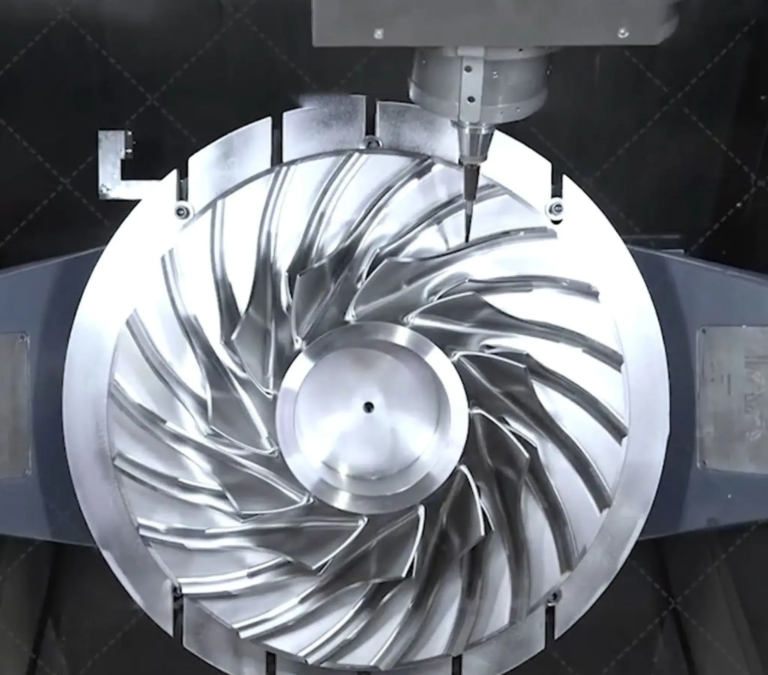
- Machining Imperfections: Copper blocks expand during CNC milling due to heat, often deviating by ±0.05 mm from nominal sizes.
- PCB Fabrication Limits: Laser-cut slots may vary by ±0.1 mm depending on material stability (e.g., FR4 vs. ceramic-filled laminates).
Statistical Insight: A 2023 industry survey found that 68% of "no fault found" returns were traced to tolerance misalignments invisible to standard QA checks.
5. The Future: AI-Driven Tolerance Optimization
To address these challenges, cutting-edge workflows are emerging:
- Generative Design Algorithms: Tools like ANSYS Discovery or Siemens NX now auto-optimize block geometries based on thermal, mechanical, and electrical constraints.
- Digital Twins: Virtual prototypes simulate real-world tolerance scenarios, predicting failure modes before physical prototyping.
- Additive Manufacturing: 3D-printed copper blocks with graded porosity or adaptive geometries promise self-compensating fits for irregular slots.
Visionary Outlook: Tomorrow’s systems may embed shape-memory alloys (SMAs) in copper blocks, enabling dynamic resizing to adapt to slot tolerances during thermal cycles.
Conclusion: Precision as a Competitive Advantage
In an era where 5G, AI, and electric vehicles demand perfection, the alignment of copper block sizes and board slot tolerances transcends mere technical compliance—it’s a strategic differentiator. Companies that master this synergy will dominate in reliability, performance, and cost-efficiency, while those that neglect it will hemorrhage resources on recalls and redesigns.
As the adage goes: "In electronics, the devil isn’t just in the details—it’s in the microns."
Visual Elements for Enhanced Layout (Conceptual):
- 3D Cross-Section Diagrams: Illustrating thermal paths and stress points.
- Heatmaps: Showing temperature distributions under tolerance mismatches.
- Comparison Tables: Tolerance ranges vs. failure probabilities across industries.
- Timelines: Evolution of tolerance standards from legacy systems to future tech.



















