
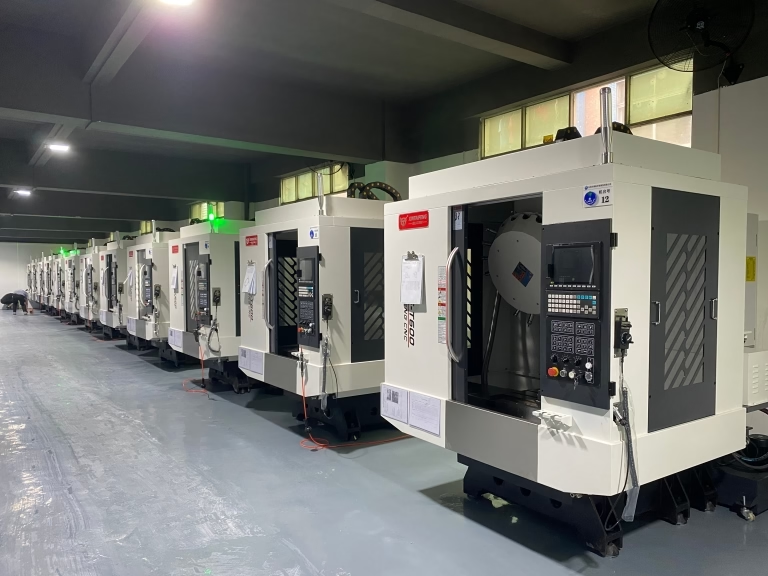
The Indispensable Role of CNC Machining in Modern Manufacturing
In an era where manufacturing technologies seem to advance daily—from 3D printing to robotic automation—one might question the continued necessity of traditional-seeming processes. Yet, CNC machining remains not just relevant, but fundamentally essential. It is the bedrock upon which modern precision manufacturing is built. For clients in precision parts machining and customization, understanding why CNC machining is necessary is key to appreciating its irreplaceable value in turning innovative designs into reliable, high-performance realities.
The Unmatched Pillar of Precision and Repeatability
At its core, the necessity of CNC machining stems from its unparalleled ability to deliver extreme dimensional accuracy and repeatability consistently.
Beyond Human Capability: Manual machining is subject to human fatigue, skill variance, and interpretation errors. CNC machines, programmed with digital instructions (G-code), execute movements with micron-level precision, repeatedly and tirelessly. For components in aerospace, medical devices, or automotive engines where a variance of a few microns can mean failure, this is not a luxury—it is an absolute necessity.
The Foundation of Interchangeability: Modern mass production and assembly rely on interchangeable parts. CNC machining ensures that the ten-thousandth part produced is virtually identical to the first, enabling global supply chains and efficient after-sales service.
Enabling Complexity and Design Freedom
While additive manufacturing (3D printing) is celebrated for complex geometries, subtractive manufacturing via CNC is uniquely capable of achieving complexity with superior material properties and surface finishes.
Complex Contours and Intricate Features: 5-axis CNC machining, a specialty of advanced manufacturers like GreatLight Metal, allows for the creation of profoundly complex parts in a single setup. This includes undercuts, deep cavities, and compound curved surfaces that would be impossible, prohibitively expensive, or require multiple fixtures with conventional methods.
Material Integrity: CNC machining starts with a solid block of certified material (metal or plastic), resulting in parts with isotropic mechanical properties—strength and performance are consistent in all directions. This is crucial for load-bearing components, unlike some layered additive processes.
The Bridge from Prototype to Production
CNC machining serves a critical, dual-phase role in product development that few other technologies can match.
Rapid Prototyping: It allows for the fast production of functional prototypes using the exact same material intended for the final product. This enables real-world testing of form, fit, and function under actual operating conditions. A prototype machined from aluminum 6061 can be tested for stress, heat dissipation, and assembly in a way a plastic 3D-printed model cannot.
Seamless Transition to Mass Production: Once the prototype is validated, the same CNC program can be scaled for low-volume, bridge, or even full-scale production. This drastically reduces the time-to-market and eliminates the risks associated with switching manufacturing technologies between prototype and production phases.
Superior Material and Finish Versatility
The necessity of CNC machining is also defined by its vast material compatibility. From common alloys like aluminum and stainless steel to challenging materials like titanium, Inconel, or Delrin, CNC machines can handle them all. This, combined with integrated post-processing capabilities, delivers ready-to-use parts.
Optimal Surface Finishes: CNC-machined parts can achieve exceptional surface finishes directly off the machine. When paired with a one-stop post-processing service (like polishing, anodizing, plating, or painting), the result is a component that meets both functional and aesthetic requirements out of the box.
Economic Necessity: Reducing Total Cost and Risk
While the initial setup for CNC machining involves programming and fixture design, it becomes economically superior for precision parts, especially in low to medium volumes.
Reduced Waste and Scrap: Advanced CAM software optimizes tool paths to maximize material usage from the raw billet. When working with expensive aerospace alloys, minimizing scrap is a direct cost saving.
Lower Labor Costs per Part: After initial setup, a CNC machine can run unattended for hours, producing parts with minimal operator intervention. This reduces the cost per part and frees skilled technicians for higher-value tasks.
Mitigating Quality Risk: The consistency of CNC machining dramatically lowers the risk of batch failures, costly recalls, or assembly line stoppages—a form of “insurance” that is invaluable for critical applications.
Conclusion
So, why is CNC machining necessary? It is necessary because it reliably solves the core paradox of modern manufacturing: the demand for ever-greater complexity and precision, alongside the need for robustness, material integrity, and economic viability. It is the trusted, digital-physical bridge between a perfect digital model and a flawless physical component. For industries where failure is not an option—such as medical, aerospace, automotive, and robotics—CNC machining is not merely a process; it is a fundamental enabler of innovation.
For projects demanding this blend of precision, reliability, and material excellence, partnering with a certified expert like GreatLight CNC Machining Factory ensures access to advanced 5-axis CNC machining capabilities, a full-process chain, and the quality assurance that turns necessity into a competitive advantage.
Frequently Asked Questions (FAQ)
Q1: If 3D printing is so advanced, why do I still need CNC machining for prototypes?
A: While 3D printing excels at visual prototypes and highly complex, low-strength geometries, CNC machining is necessary for functional prototypes. It uses production-grade materials, offers superior strength and thermal properties, and provides much tighter tolerances and better surface finishes, allowing for accurate performance testing.
Q2: Is CNC machining only cost-effective for large production runs?
A: Not at all. With the rise of quick-turn machining and efficient digital workflows, CNC is highly competitive for low-volume and even single-piece production. This is especially true for complex, high-value parts where material properties and precision are paramount. The elimination of mold costs (as in injection molding) makes CNC economical for small batches.
Q3: What are the key advantages of 5-axis CNC machining over 3-axis?
A: 5-axis CNC machining allows the cutting tool to approach the workpiece from five different directions simultaneously. This enables the complete machining of complex parts in a single setup, reducing lead times, improving accuracy (by minimizing repositioning errors), and allowing for the creation of geometries that are simply impossible with 3-axis machines.
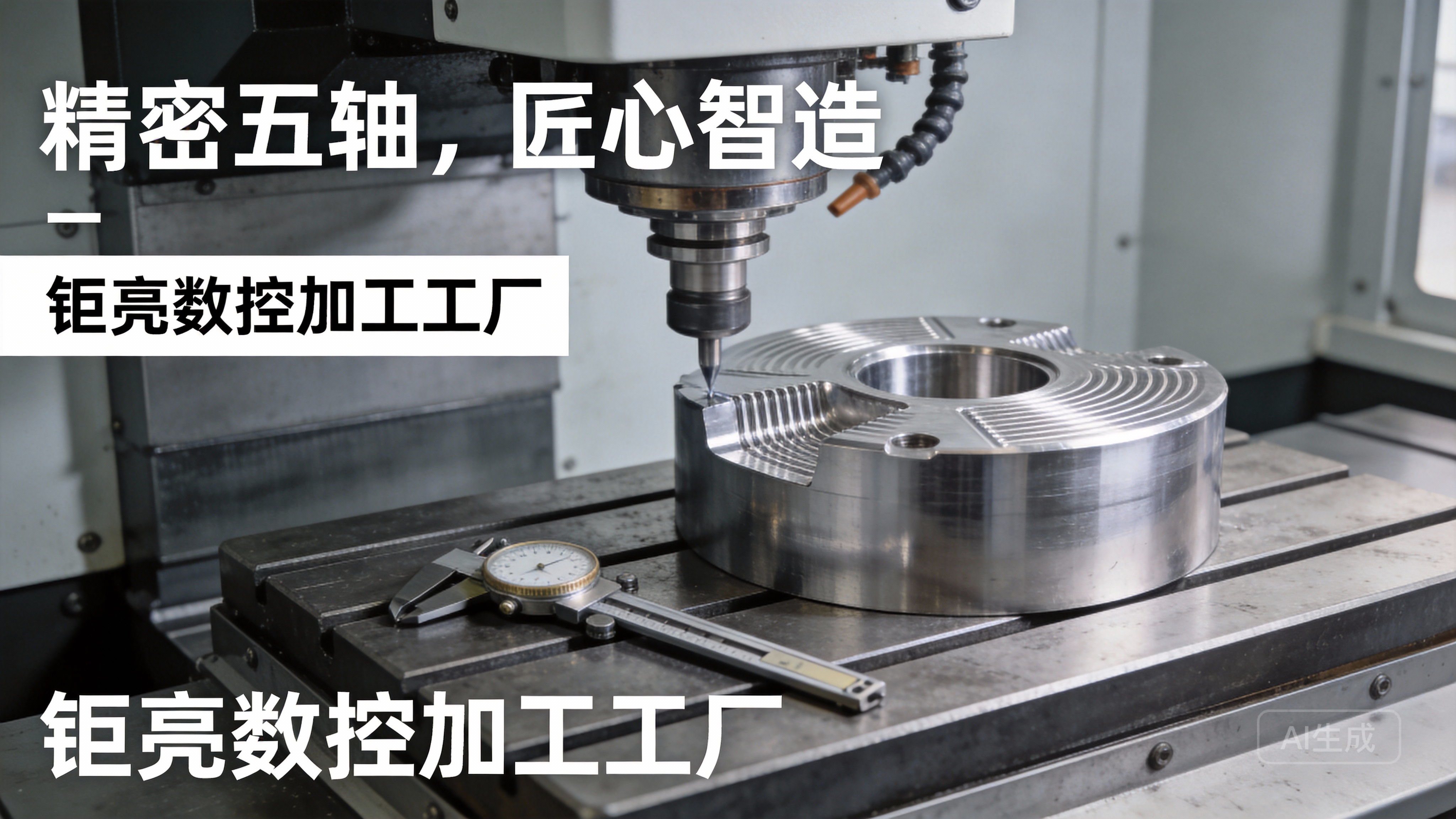
Q4: How does a manufacturer like GreatLight Metal ensure quality in CNC machined parts?
A: Reputable manufacturers combine several layers of assurance: 1) Advanced Equipment: Modern, well-maintained CNC machines. 2) Process Control: Adherence to strict quality management systems like ISO 9001:2015. 3) Inspection Technology: In-house CMMs, micrometers, and surface testers to verify every dimension. 4) Material Certification: Sourcing traceable, certified raw materials.
Q5: Can CNC machining handle all types of materials?
A: CNC machining is incredibly versatile. It can efficiently process a vast range of metals (aluminum, steel, brass, titanium, alloys), plastics (ABS, PEEK, Delrin, Nylon), and even some composites. The key is selecting the right cutting tools, speeds, and feeds for each specific material, which is where an experienced machinist’s expertise is crucial.



















