
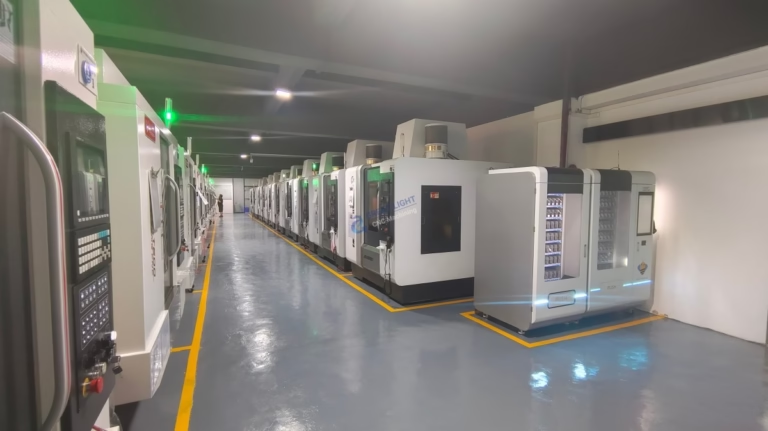
In today’s era of advanced manufacturing, where components are becoming increasingly intricate and tolerances are shrinking to microscopic levels, the question “Why is a CNC machine used?” is fundamental. The answer lies at the heart of modern industrial production, defining how we transform raw materials into the complex, reliable, and high-precision parts that power everything from medical devices to aerospace vehicles. As a senior manufacturing engineer, I’ve witnessed the evolution from manual machining to the digital precision of 5-axis CNC machining, and the reasons for its dominance are both clear and compelling.
H2: The Core Principle: From Digital Blueprint to Physical Reality
At its essence, a CNC (Computer Numerical Control) machine is used to automate the machining process. It replaces the skilled but variable human hand with a computer program that dictates the exact movements of cutting tools. This fundamental shift from analog to digital control is the bedrock of its advantages.
H3: Unmatched Precision and Repeatability
This is the foremost reason. Human machinists are incredibly skilled, but consistency at micron-level tolerances (±0.001mm and beyond) across hundreds or thousands of parts is physically impossible to maintain manually.
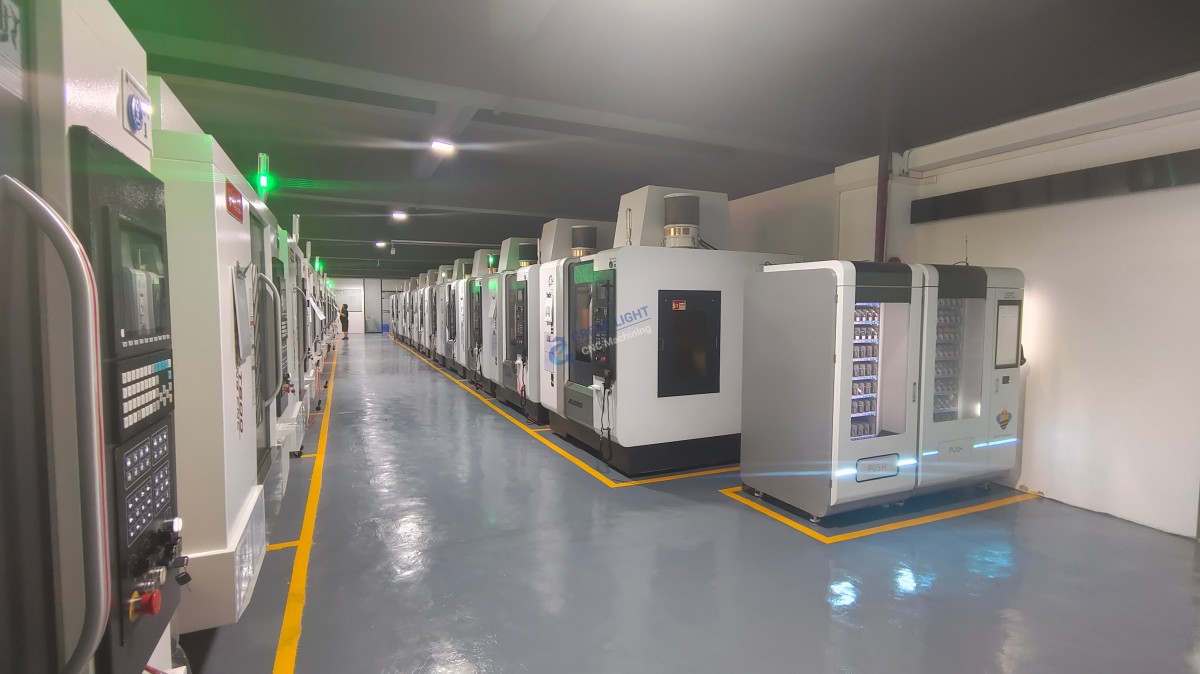
Eliminating Human Error: The machine follows the G-code program with relentless accuracy. Once a perfect process is proven, it can be replicated indefinitely.
Complex Geometry Made Simple: 5-axis CNC machining, in particular, allows the cutting tool to approach the workpiece from virtually any direction in a single setup. This enables the production of contours, undercuts, and complex organic shapes—common in aerospace impellers or medical implants—that are unfeasible with conventional 3-axis machines or manual methods.
H3: Dramatic Gains in Efficiency and Productivity
24/7 Operation: CNC machines can run unattended for hours, even days, with proper setup. Lights-out manufacturing shifts are a reality, significantly boosting output.
Reduced Setup Time: While initial programming and setup require expertise, producing subsequent identical parts is exponentially faster. For prototypes and low-volume batches, advanced CAM software allows for rapid programming, accelerating time-to-market.
Multi-Function Machining: Modern machining centers combine milling, turning, drilling, and tapping operations in one setup. This reduces part handling, minimizes cumulative errors from multiple setups, and slashes overall production time.
H3: Unparalleled Flexibility and Consistency
Rapid Design Changes: Changing a part design often requires only modifying the CAD model and regenerating the toolpath. This agility is crucial for R&D and iterative prototyping.
Batch-to-Batch Consistency: Whether you need 50 or 50,000 parts, the first and the last part will be virtually identical. This consistency is non-negotiable in regulated industries like automotive (IATF 16949) and medical (ISO 13485).
H3: Ability to Machine Advanced Materials
Modern components demand materials that are stronger, lighter, or more heat-resistant—such as Inconel, titanium, or advanced composites. These materials are often extremely tough to machine. CNC machines provide the rigid structure, high spindle power, and precise coolant control required to work with these challenging alloys effectively and safely.
H3: Enhanced Safety and Reduced Waste
Operator Safety: The operator manages the process from a computer terminal, away from the immediate dangers of rotating tools, flying chips, and cutting fluids.
Material Optimization: Precise toolpaths and nesting software minimize raw material waste. Furthermore, the high precision reduces the scrap rate from out-of-tolerance parts, contributing to more sustainable manufacturing practices.
Conclusion: The Indispensable Tool for Modern Manufacturing
So, why is a CNC machine used? It is the indispensable enabler of modern precision manufacturing. It provides the accuracy, repeatability, efficiency, and flexibility required to meet the ever-increasing demands of innovation across all high-tech industries. While the initial investment and technical knowledge required are higher than for manual machines, the long-term benefits in quality control, scalability, and capability are overwhelming. For any project where precision, complexity, or reliability is paramount, CNC machining is not just an option; it is the necessary foundation.
For clients seeking to leverage these advantages, partnering with a manufacturer that masters this technology is critical. A manufacturer like GreatLight Metal Tech Co., LTD., with its extensive fleet of multi-axis CNC centers and deep process expertise, embodies the practical application of these principles. They transform the theoretical benefits of CNC machining into tangible, high-quality components, ensuring that the “why” translates seamlessly into a flawless “how.”
FAQ: Frequently Asked Questions
Q1: If CNC is so automated, why is skilled labor still important?
A: The machine is a tool. The skill lies in the upstream processes: creating an optimal CAD design, developing an efficient and safe CAM toolpath, selecting the right tools and fixturing, and performing precise machine setup. The engineer’s expertise ensures the machine’s capabilities are fully utilized to achieve the best possible result.
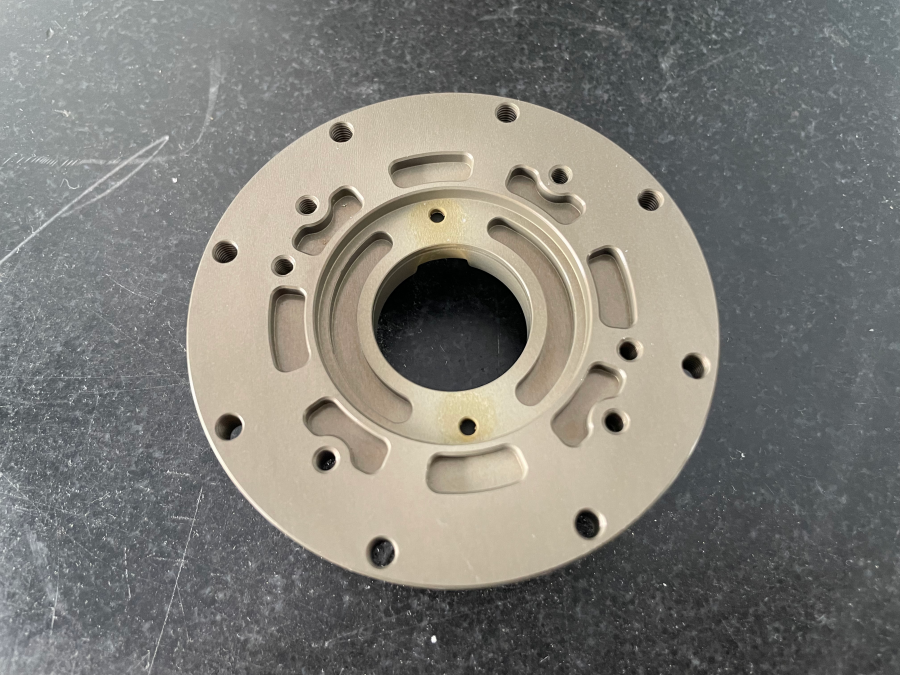
Q2: Is CNC machining only cost-effective for large production runs?
A: Not at all. While excellent for mass production, CNC is also the standard for prototyping and low-volume batches. The speed of digital programming, the ability to make quick design changes, and the elimination of costly specialized fixtures make it highly economical for short runs, especially for complex parts.
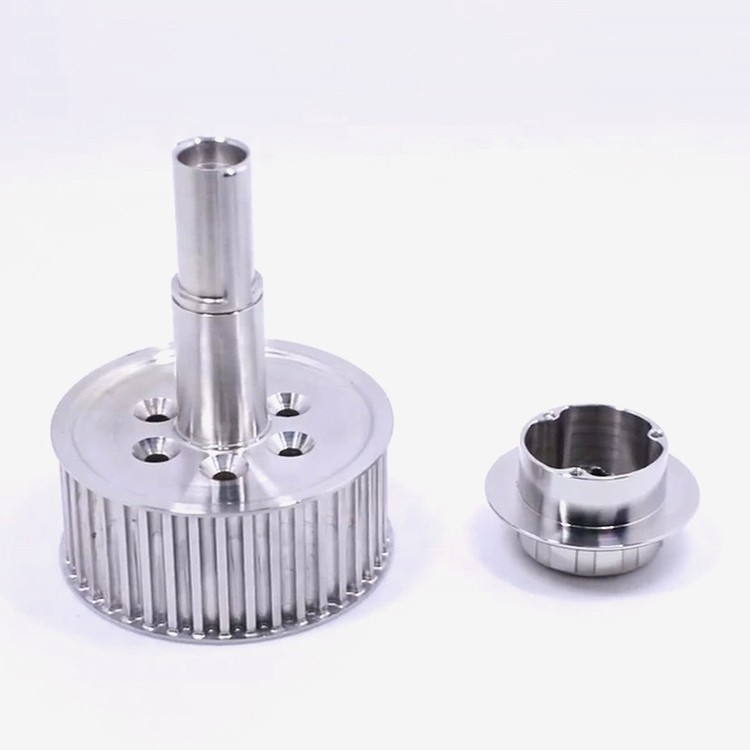
Q3: What are the main limitations of CNC machining?
A: Primary limitations include:
Internal Geometries: It cannot easily produce completely enclosed internal cavities, which are better suited for casting or additive manufacturing (3D printing).
Startup Cost & Time: Programming and setup require time and expertise. For very simple parts in huge volumes, dedicated automation or stamping might be more efficient.
Material Removal: It is a subtractive process, so some material is always wasted, unlike additive methods.
Q4: How do I choose between 3-axis, 4-axis, and 5-axis CNC machining?
A: The choice depends on part complexity:
3-Axis: Ideal for parts with features on one main face (like a panel or bracket).
4-Axis: Adds rotation, suitable for cylindrical parts needing features around their circumference (like camshafts).
5-Axis: Essential for complex, free-form surfaces (like turbine blades, mold cores) as it allows machining from multiple angles in one setup, ensuring superior accuracy and surface finish.
Q5: Can CNC machining provide a ready-to-use finished part?
A: Yes, but it often involves a complete service partnership. A full-service manufacturer like GreatLight not only performs the CNC machining but also handles all necessary post-processing—deburring, heat treatment, anodizing, plating, painting, or assembly—delivering a finished component ready for integration.



















