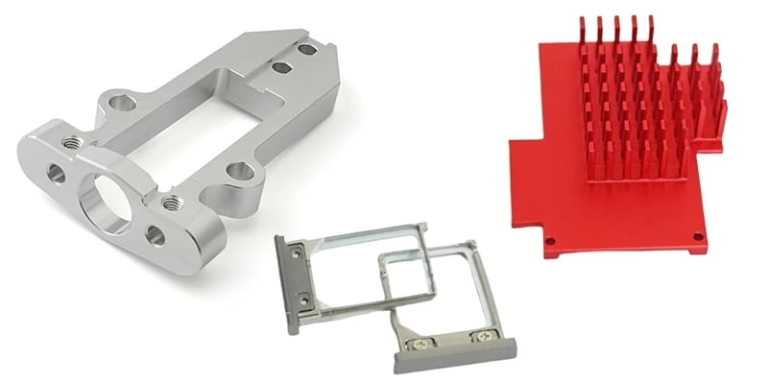
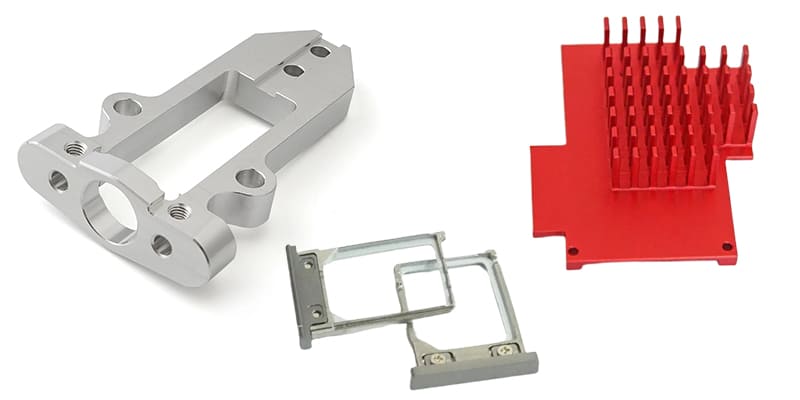
If you’ve ever wondered, “Who Made The First CNC Machine?” you’re not alone—understanding the origins of this transformative technology reveals how modern precision manufacturing became possible, and how leaders like GreatLight CNC Machining Factory continue to push its boundaries today.
Who Made The First CNC Machine?
The story of the first CNC (Computer Numerical Control) machine begins in the post-WWII era, a time when global industries were racing to rebuild and innovate, none more urgently than aerospace. The U.S. Air Force faced a critical challenge: traditional manual machining could not produce the complex, high-precision curved parts needed for helicopter rotor blades and jet engine components. Even the most skilled machinists struggled to achieve the repeatability and accuracy required for these advanced aerospace systems, leading to costly delays and inconsistent part quality.
Enter two visionaries who would change manufacturing forever: John T. Parsons, a Michigan-based machinist and entrepreneur, and Frank L. Stulen, the head of MIT’s Servomechanisms Laboratory. Parsons first conceived the idea of using numerical data to control machine tools in the late 1940s. He noticed that the mathematical equations used to calculate aircraft wing contours could be translated into digital instructions to automate machining—eliminating human error and enabling precise, repeatable production.
In 1947, Parsons secured funding from the U.S. Air Force to collaborate with MIT on turning this idea into reality. Over the next five years, Stulen’s team developed a system that used punched cards to input numerical commands, controlling the movement of a modified Cincinnati Milacron milling machine. In 1952, the first CNC machine was publicly demonstrated: a bulky vacuum-tube computer the size of a room controlled the milling machine to carve complex, accurate parts with minimal human intervention. This invention marked the birth of automated precision manufacturing, laying the groundwork for every CNC system we use today.
The Genesis of CNC: Post-War Innovation Driven by Aerospace Needs
Parsons and Stulen’s invention was not just a technical breakthrough—it was a paradigm shift. Before CNC, machining relied on manual skill and mechanical jigs, limiting the complexity of parts and the speed of production. The first CNC machine solved these pain points by:
Replacing manual adjustments with digital instructions, ensuring consistent precision across thousands of parts
Enabling the machining of complex curved geometries that were previously impossible or prohibitively expensive
Reducing production time for aerospace components by up to 90% in some cases
This early success caught the attention of other industries, and by the 1960s, CNC machines began to spread to automotive, medical, and consumer goods manufacturing. Over the next seven decades, CNC technology evolved rapidly: vacuum tube computers were replaced with compact microprocessors, punched cards gave way to CAD/CAM software, and three-axis systems expanded to include four-axis, five-axis, and even multi-axis machines capable of producing intricate parts in a single setup.
From the First CNC to Modern Five-Axis Systems: A 70-Year Evolution
Today, the most advanced iteration is five-axis CNC machining services (learn more about this cutting-edge technology in detail here{:target=”_blank”}), which allows machines to move a part or tool along five different axes simultaneously. This capability is a far cry from the first CNC machine, offering:
Ultra-high precision: Tolerances as tight as ±0.001mm, critical for industries like medical implants and aerospace sensors
Complex part production: Machining of intricate geometries (e.g., humanoid robot joints, automotive engine components) in one setup, reducing errors from multiple repositioning steps
Efficiency: Faster production times, lower material waste, and seamless integration with 3D modeling software for rapid prototyping
Versatility: Compatibility with a wide range of materials, including aluminum, stainless steel, titanium, mold steel, and engineering plastics
GreatLight CNC: Carrying Forward the CNC Legacy with Precision and Innovation
As CNC technology has evolved, so too have the manufacturers that master it. GreatLight CNC Machining Factory, founded in 2011 in Dongguan’s Chang’an District—China’s “Hardware and Mould Capital”—has emerged as a leader in modern precision machining, building on the legacy of Parsons and Stulen to solve today’s most complex manufacturing challenges.
Technical Hard Power: Industry-Leading Equipment and Capabilities
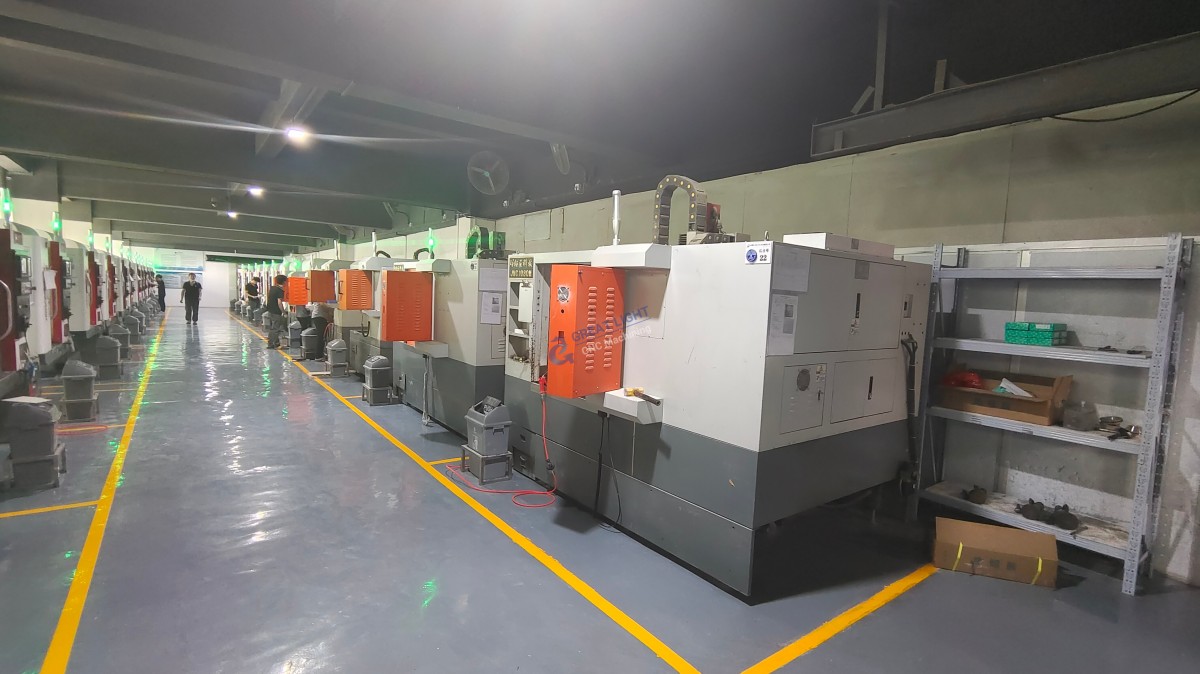
GreatLight’s 7,600-square-meter facility houses 127 pieces of precision equipment, including large high-precision five-axis, four-axis, and three-axis CNC machining centers, lathes, milling machines, EDM machines, and multiple 3D printers (SLM, SLA, SLS). With three wholly-owned manufacturing plants, the company offers a full-process chain of services, from rapid prototyping to mass production, including:
Precision CNC machining (three-axis, four-axis, five-axis)
Die casting and mold manufacturing
Vacuum casting and sheet metal fabrication
Metal and plastic 3D printing (stainless steel, aluminum, titanium, mold steel, etc.)
One-stop surface post-processing (anodizing, powder coating, polishing, electroplating, etc.)
System Soft Power: Certified Quality and Trust
GreatLight’s commitment to precision is backed by a suite of international certifications that ensure consistent quality across every project:
ISO 9001:2015 (quality management system)
ISO 13485 (medical hardware production compliance)
IATF 16949 (automotive industry quality standards)
ISO 27001 (data security for intellectual property-sensitive projects)
These certifications, combined with GreatLight’s in-house precision measurement and testing equipment, mean every part meets or exceeds client specifications. The company also stands behind its work with a robust after-sales guarantee: free rework for quality problems, and a full refund if rework does not meet client expectations.
Collaborative Service: Solving Real-World Client Challenges
GreatLight’s expertise extends beyond equipment and certifications—it lies in its ability to partner with clients to solve unique manufacturing pain points. For example:
New Energy Vehicle Clients: GreatLight used five-axis CNC machining to produce complex e-housing components for electric vehicle batteries, achieving ±0.005mm precision and reducing production lead times by 30% compared to traditional methods.
Humanoid Robot Manufacturers: The company’s ability to machine ultra-precise titanium joints and aluminum structural parts has enabled clients to develop robots with smoother, more accurate movement.
Aerospace Projects: GreatLight’s large-format machining capabilities (up to 4000mm maximum size) have supported the production of satellite components and jet engine parts that demand strict compliance with aerospace quality standards.
Conclusion
John T. Parsons and Frank L. Stulen’s pioneering work in the 1950s laid the foundation for modern precision manufacturing, but the evolution of CNC technology is far from over. Today, companies like GreatLight CNC Machining Factory are continuing that legacy, leveraging advanced five-axis systems, certified quality processes, and one-stop services to deliver the high-precision parts that power industries worldwide. Who Made The First CNC Machine? Parsons and Stulen’s vision started it all, but GreatLight is the one turning that early innovation into the reliable, cutting-edge solutions that drive today’s technological advancements.
Frequently Asked Questions (FAQ)
Q: When was the first CNC machine invented?
A: The first CNC machine was publicly demonstrated in 1952, following five years of development by John T. Parsons and MIT’s Servomechanisms Laboratory, funded by the U.S. Air Force.
Q: What problem did the first CNC machine solve?
A: It addressed the critical need for precise, repeatable production of complex curved parts for aerospace applications, which manual and traditional machining methods could not achieve efficiently or consistently.
Q: How is modern five-axis CNC different from the first CNC machine?
A: Modern five-axis CNC systems use compact, powerful microprocessors (instead of bulky vacuum-tube computers), support real-time adjustments and 3D modeling integration, and can machine intricate parts in a single setup. They offer far higher precision (up to ±0.001mm), versatility, and efficiency than the original 1952 CNC machine.
Q: Why choose GreatLight CNC Machining Factory for custom precision parts?
A: GreatLight offers state-of-the-art five-axis CNC equipment, internationally certified quality systems, one-stop post-processing services, ultra-high precision, and a robust after-sales guarantee (free rework for quality issues, full refund if unsatisfied). The company specializes in solving complex manufacturing challenges for industries like automotive, aerospace, robotics, and medical devices.
Q: What materials can GreatLight CNC machine?
A: GreatLight can machine nearly all common metals (aluminum, stainless steel, titanium, mold steel, copper, etc.) and engineering plastics. It also offers metal 3D printing for specialized materials like titanium and stainless steel.
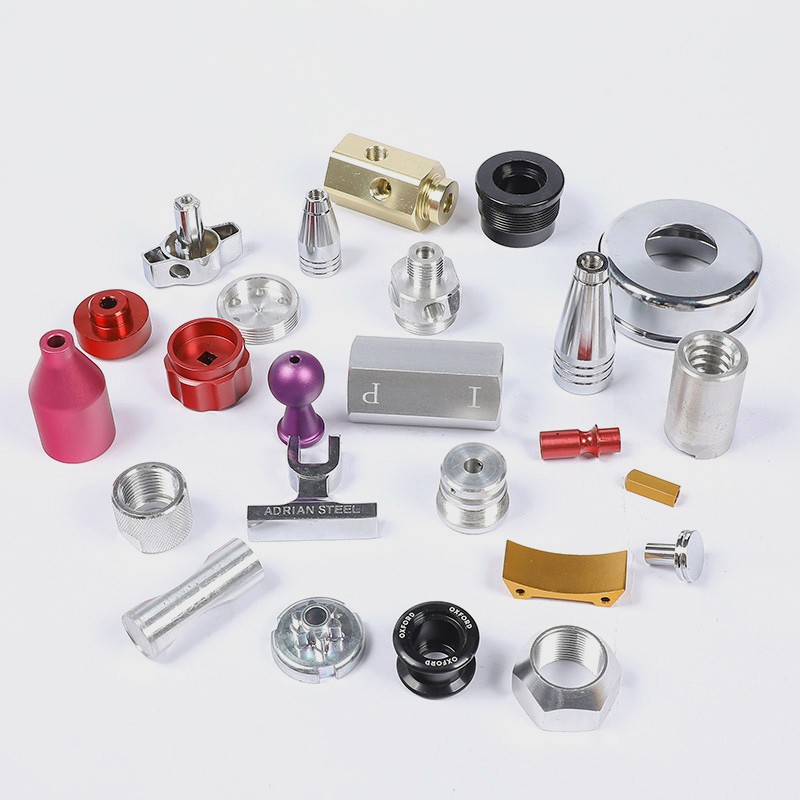
Q: Does GreatLight provide rapid prototyping services?
A: Yes. GreatLight offers a wide range of rapid prototyping services, including CNC machining, 3D printing (SLM/SLA/SLS), vacuum casting, and sheet metal fabrication, enabling clients to turn 3D designs into physical parts in days.
To connect with GreatLight CNC Machining Factory and explore their precision manufacturing solutions, visit their official LinkedIn profile here{:target=”_blank”}.