
The quest for precision in manufacturing is a story of relentless human innovation. When we marvel at the complex, flawless components that power everything from medical devices to aerospace engines, we are witnessing the legacy of a groundbreaking invention: the Computer Numerical Control (CNC) machine. For clients in precision parts machining and customization, understanding this origin isn’t just about history; it’s about appreciating the bedrock technology that makes your most demanding projects possible today. The journey to the first CNC machine was not the work of a single individual but a convergence of visionary ideas, wartime necessity, and institutional collaboration.
The Precursors: From Concept to Coded Instructions
The seed of numerical control was planted by John T. Parsons (1913-2007), an American inventor and machinist often called the “father of the second industrial revolution.” In the late 1940s, while working on complex helicopter rotor blade templates for Sikorsky Aircraft, Parsons faced a formidable challenge. Manually machining these contours was time-consuming, expensive, and prone to human error.
Parsons’ revolutionary idea was to use a computer (then an IBM 602A multiplier) to calculate coordinate points for airfoil shapes and then feed these coordinates to a machine tool. He partnered with Frank L. Stulen, and together they developed a “by-the-numbers” or “cardamatic” system. They used punched cards to control the machine’s movements along two axes (X and Y), significantly improving accuracy and repeatability. While this system was not yet fully “computerized,” it was the critical conceptual leap from manual control to programmed, numerical control. In 1958, Parsons was granted a patent for “Motor Controlled Apparatus for Positioning Machine Tool,” cementing his foundational role.
The Catalyst: MIT and the Birth of True CNC
Parsons’ conceptual breakthrough attracted the attention of the U.S. Air Force, which was desperate for a method to produce complex, high-strength airframe components more efficiently. In 1949, the Air Force awarded a contract to Parsons’ company to develop his system further. Recognizing the need for advanced electronics, Parsons subcontracted the servo-control development to the Servomechanisms Laboratory at the Massachusetts Institute of Technology (MIT).
This is where the project transformed. The MIT team, led by engineers, moved far beyond Parsons’ original punched-card system. They conceived a machine that could interpret instructions directly from a stored program. Their seminal achievement was the retrofit of a Cincinnati Model 24 Hydrotel vertical spindle milling machine with a revolutionary control system.
The Official “First”: A Public Debut
In 1952, this modified machine was unveiled to the public. It is widely recognized as the world’s first practical, numerically controlled machine tool. Its control unit, a massive cabinet of vacuum tubes, relays, and switches, read instructions from a perforated paper tape—a technology adapted from teletype machines. This tape contained the coded “G-code” instructions (a precursor to modern G-code) that directed the machine’s path in three axes.
While the MIT team was instrumental in its engineering and construction, the invention is rightly attributed to the collaboration between John T. Parsons’ conceptual vision and the engineering execution led by MIT’s Servomechanisms Lab. Key figures at MIT included William Pease, James McDonough, and Alfred S. Nyswander.
Evolution and Commercialization
The 1952 prototype proved the concept, but it was expensive and complex. The first commercial NC machine was introduced by Giddings & Lewis Machine Tool Co. in 1955. The real revolution came with the advent of affordable minicomputers and, later, microprocessors in the 1970s. This transition from hard-wired “NC” to software-driven “CNC” (where the “C” stands for Computer) made the technology accessible, reliable, and vastly more powerful, enabling the multi-axis, high-speed, and ultra-precise machining we rely on today.
Conclusion: From Historic Invention to Your Custom Part
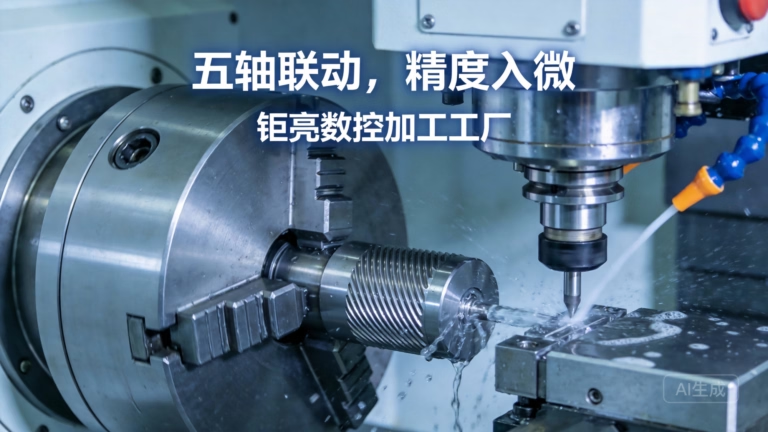
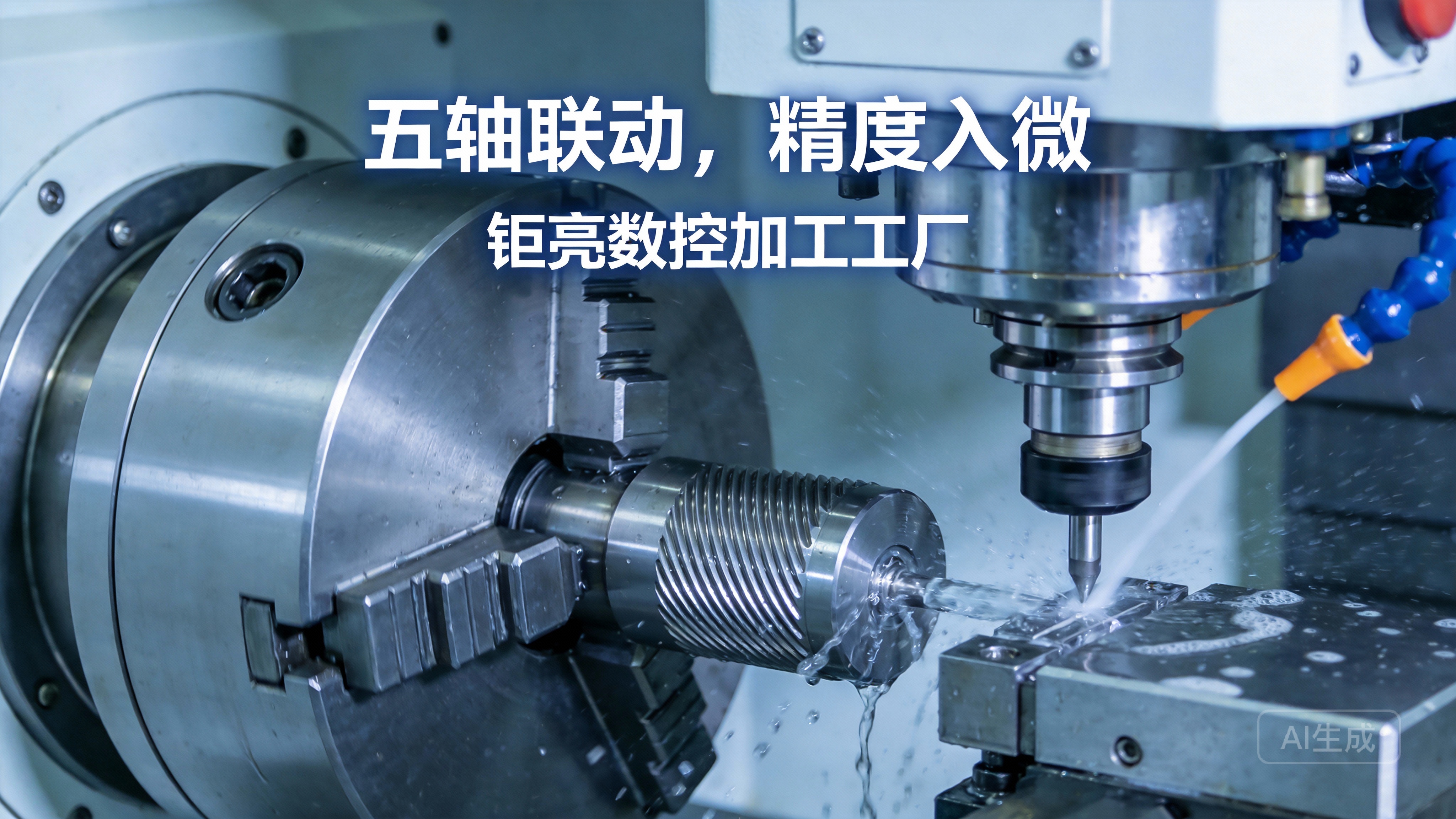
The invention of the first CNC machine solved a fundamental problem: how to translate a mathematical design into a precise physical object consistently and efficiently. This core principle directly underpins the services we provide. Today, at facilities like ours, that legacy continues. We operate advanced 5-axis CNC machining centers that are the direct descendants of that 1952 Cincinnati mill. The principles of coded instruction, servo control, and multi-axis movement have been refined to achieve tolerances of ±0.001mm, allowing us to machine monolithic components with complexities that Parsons and the MIT team could only dream of.
For clients seeking precision parts machining and customization, this history is relevant because it underscores the importance of partnering with a manufacturer that masters both the heritage of precision engineering and its cutting-edge future. It’s not just about owning machines; it’s about possessing the deep-process knowledge, quality systems (like ISO 9001:2015, IATF 16949), and engineering support to harness this technology fully—transforming your most innovative designs into tangible, high-performance reality.
Frequently Asked Questions (FAQ)
Q1: So, who should get the most credit for inventing the CNC machine?
A: It’s a collaborative milestone. John T. Parsons is credited with the foundational concept and method of numerical control. The MIT Servomechanisms Laboratory engineered and built the first practical, publicly demonstrated NC machine in 1952. The invention is a prime example of an industry need (Parsons) meeting advanced academic R&D (MIT) with government funding (U.S. Air Force) as the catalyst.

Q2: What was the first part ever machined by a CNC machine?
A: The initial demonstrations and tests by the MIT team involved machining simple geometric shapes like straight lines, circles, and later, more complex parabolic shapes. These were primarily test pieces to prove the accuracy and capability of the control system before moving to aerospace components.
Q3: How does a 1950s NC machine differ from a modern 5-axis CNC machine?
A: The difference is astronomical. The 1952 machine used paper tape, vacuum tubes, and controlled 3 axes. Modern 5-axis CNC machining centers are controlled by powerful industrial computers, use solid-state electronics, can simultaneously move a tool or part across five different axes, feature automatic tool changers, high-pressure coolant, and in-process probing. They are faster, infinitely more precise, and capable of creating geometries that were previously unmachinable.
Q4: Why is the history of CNC important for me as a client ordering custom parts today?
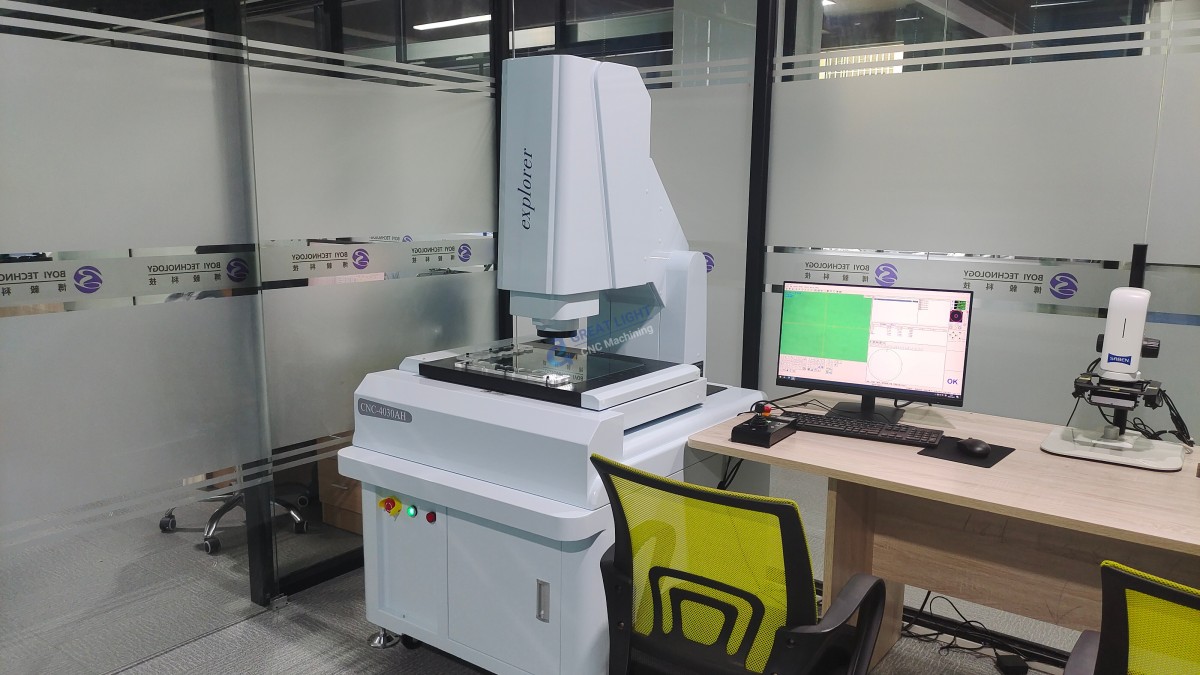
A: Understanding this evolution highlights the core value of CNC: repeatable precision from a digital design. It assures you that the technology producing your parts is built on a robust, decades-long foundation of innovation. When you choose a manufacturer, you’re selecting their mastery over this evolved technology chain—their ability to program, fixture, machine, and measure to the highest contemporary standards that originated from these early breakthroughs.
Q5: For complex, high-precision custom parts, what should I look for in a modern CNC machining partner?
A: Look for a partner that embodies the innovative spirit of the original inventors. Key criteria include:
Advanced Technological Capability: Ownership of modern multi-axis CNC equipment.
Systemic Precision Management: Certifications like ISO 9001 and IATF 16949 that ensure process control.
Full-Process Expertise: The ability to handle not just machining but also material science, finishing, and quality inspection in-house.
Engineering Collaboration: A team that can provide Design for Manufacturability (DFM) feedback to optimize your part for performance and cost, much like the collaborative problem-solving between Parsons and MIT.
The invention of the first CNC machine opened the door to modern manufacturing. Today, that door leads to possibilities limited only by imagination and engineering excellence.



















