
127 Sets Processing 4000mm 127 Sets High-Precision CNC Lathes
15 Years of Experience

When Was CNC Machining Invented?

When Was CNC Machining Invented? This question isn’t just a deep dive into manufacturing history—it’s a journey through the engineering breakthroughs that turned manual, error-prone part production into the precise, customizable, and efficient system that powers industries from aerospace to robotics today. For businesses relying on precision parts, understanding this evolution helps contextualize why modern […]

When Was CNC Machining Invented? This question isn’t just a deep dive into manufacturing history—it’s a journey through the engineering breakthroughs that turned manual, error-prone part production into the precise, customizable, and efficient system that powers industries from aerospace to robotics today. For businesses relying on precision parts, understanding this evolution helps contextualize why modern providers like GreatLight CNC Machining Factory can deliver the high-quality, tailored solutions that drive innovation.

When Was CNC Machining Invented? A Timeline of Revolutionary Progress

To answer “When Was CNC Machining Invented?” we first need to trace its roots to the earlier numerical control (NC) systems that laid the foundation.
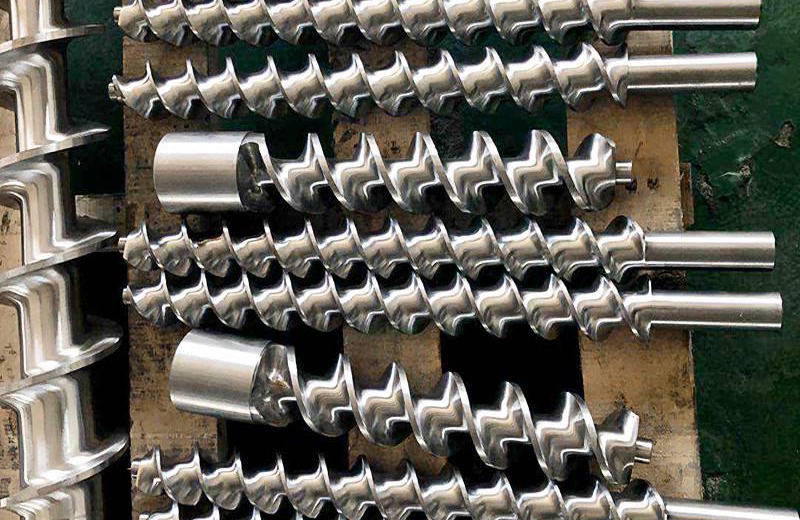
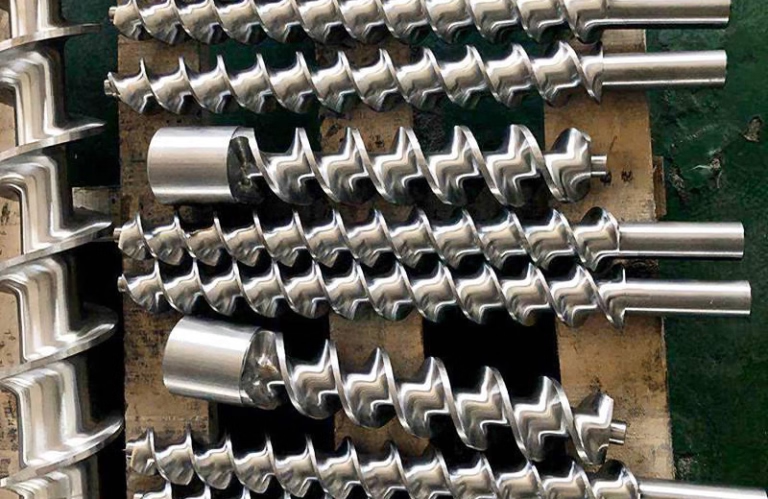
图片

The Predecessor: Numerical Control (NC) Machining in the 1940s–1950s

The story begins during World War II, when the U.S. military faced a critical challenge: producing complex aircraft parts with consistent precision. Manual machining and template-based methods were slow, inconsistent, and unable to meet the demand for high-tolerance components like turbine blades.
图片

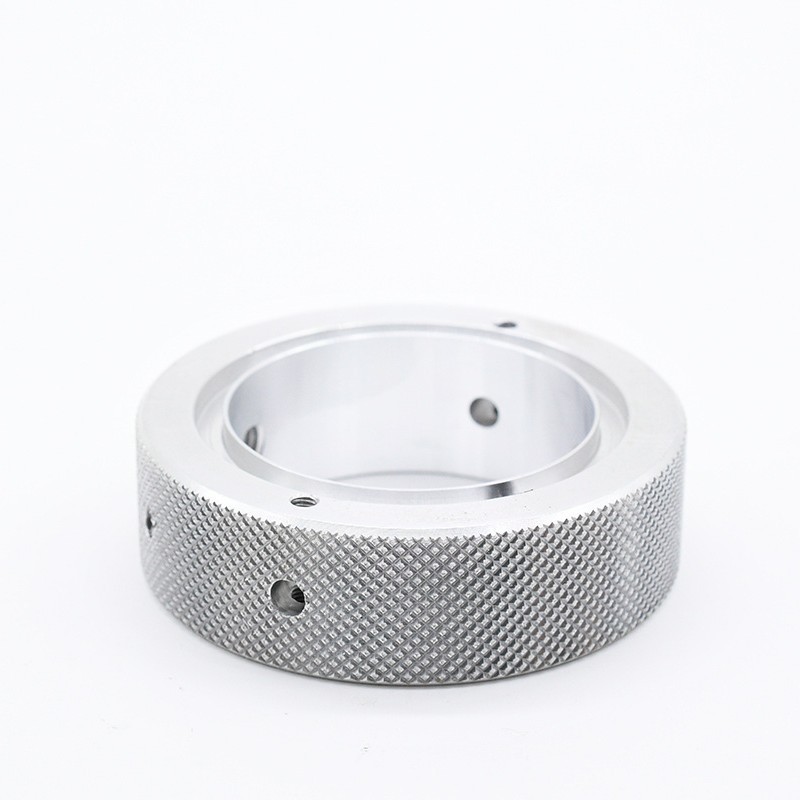
In 1949, a team at the Massachusetts Institute of Technology (MIT) began developing a solution funded by the U.S. Air Force. By 1952, they unveiled the first NC machine tool: a vertical milling machine controlled by punched paper tapes that encoded specific coordinates and movements. This system eliminated human error in part positioning, but it had major limitations: programs were fixed once the tape was punched, making adjustments time-consuming, and only large manufacturers could afford the bulky, expensive equipment.

The Shift to Computer Numerical Control (CNC) in the 1960s–1970s

The term “CNC machining” entered the lexicon in the 1960s, as early mainframe computers replaced punched tapes with digital programming. Unlike NC systems, which relied on physical tapes, CNC machines used computer software to store and modify machining instructions. This flexibility was a game-changer: engineers could adjust programs in minutes, test multiple designs without retooling, and produce more complex parts than ever before.

The 1970s brought another critical leap: the invention of microprocessors. Smaller, cheaper, and more powerful than mainframes, microprocessors made CNC technology accessible to small and medium-sized manufacturers. Suddenly, businesses could adopt precision machining without the massive upfront costs of mainframe systems, democratizing access to high-quality part production.

Mainstream Adoption and CAD/CAM Integration (1980s–1990s)

By the 1980s, CNC machining became a staple of modern manufacturing, thanks to the integration of Computer-Aided Design (CAD) and Computer-Aided Manufacturing (CAM) software. CAD allowed engineers to create 3D digital models of parts, while CAM converted these models into precise CNC machine instructions. This closed the gap between design and production: a prototype that once took weeks to develop could now be machined in days, if not hours.

During this era, CNC machines also became more versatile, with multi-axis capabilities (3-axis, then 4-axis) enabling the production of complex, curved geometries that were previously impossible with manual or NC machining. Aerospace and automotive industries were early adopters, using CNC to produce lightweight, high-strength parts for aircraft engines and car chassis.

The Modern Era: 5-Axis CNC and Intelligent Manufacturing (2000s–Present)

The 21st century has seen CNC machining evolve into a cornerstone of intelligent manufacturing. 5-axis CNC machines, which can move parts or cutting tools along five simultaneous axes, have become increasingly prevalent. This technology allows for the production of intricate parts (like humanoid robot joints or medical implants) in a single setup, reducing errors, saving time, and improving surface finish.

Today, CNC systems are integrated with IoT sensors, AI algorithms, and cloud computing, enabling real-time monitoring of machine performance, predictive maintenance, and remote program adjustments. These innovations have pushed precision to new heights—some modern CNC machines can achieve tolerances as tight as ±0.001mm, a level of accuracy that was unthinkable just a few decades ago.

How CNC Machining’s Evolution Shapes Modern Precision Manufacturing

The 70+ year evolution of CNC machining has transformed every aspect of precision part production, addressing key industry pain points that once hindered innovation:

Consistency: Unlike manual machining, CNC delivers identical parts batch after batch, critical for industries like automotive where interchangeability is non-negotiable.
Complexity: 5-axis CNC and CAD/CAM integration allow for the production of parts with organic shapes and intricate internal features, supporting innovation in robotics and medical devices.
Speed: Rapid prototyping and on-demand production mean businesses can iterate designs faster and bring products to market ahead of competitors.
Scalability: CNC systems can switch from producing a single prototype to mass production runs without major retooling, reducing lead times and costs.

GreatLight CNC Machining Factory: Leveraging Decades of CNC Innovation

As CNC technology has advanced, so have the capabilities of leading manufacturers like GreatLight CNC Machining Factory. Founded in 2011 in Dongguan’s Chang’an District—China’s “Capital of Precision Hardware Mold Processing”—GreatLight has positioned itself at the forefront of modern CNC machining by combining cutting-edge equipment, industry expertise, and a customer-centric approach.

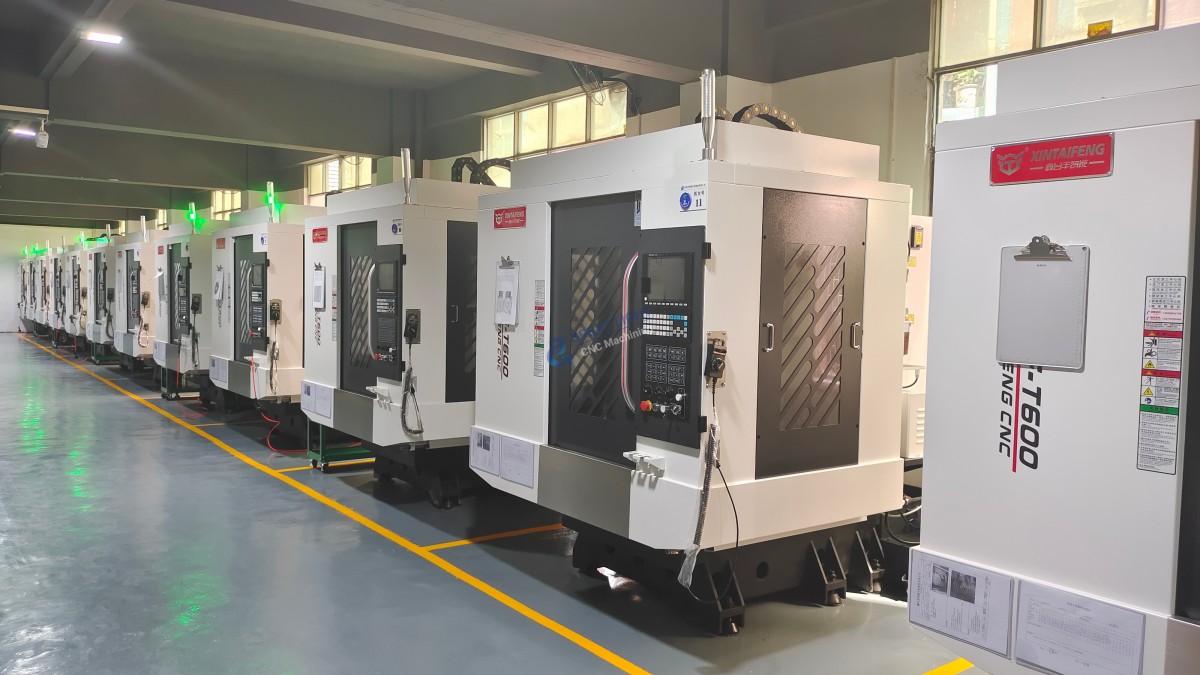
GreatLight’s facility spans 7600 square meters, with three wholly-owned manufacturing plants and 127 pieces of precision equipment, including large high-precision 3-axis, 4-axis, and 5-axis CNC machining centers (opening in new window). This allows the team to tackle complex part designs across a range of materials, from aluminum alloy and titanium to stainless steel and mold steel.

What sets GreatLight apart is its commitment to end-to-end solutions: beyond CNC machining, the factory offers die casting, vacuum casting, sheet metal processing, and nearly a hundred rapid prototyping services, plus one-stop surface post-processing (anodizing, powder coating, polishing, etc.). With ISO 9001:2015, IATF 16949 (for automotive/engine components), ISO 13485 (for medical hardware), and ISO 27001 (for data security) certifications, GreatLight adheres to global quality standards, ensuring every part meets or exceeds client specifications.

The factory’s precision capabilities are unmatched: it can achieve tolerances of ±0.001mm and process parts up to 4000mm in size. For clients, this translates to reliable, high-quality parts that perform in even the most demanding applications—from aerospace components to humanoid robot parts. And with after-sales guarantees (free rework for quality issues, full refund if rework is unsatisfactory), GreatLight prioritizes long-term trust and partnership.
图片

Conclusion

When Was CNC Machining Invented? The answer is a story of continuous innovation, from the punched tapes of the 1950s to the intelligent 5-axis systems of today. This evolution has not only made precision manufacturing more accessible but also unlocked new possibilities for industries worldwide. For businesses seeking a partner that can harness the full potential of modern CNC machining, GreatLight CNC Machining Factory is the ideal choice—combining decades of technological progress with hands-on expertise, global certifications, and a commitment to delivering tailored solutions that drive success.

Frequently Asked Questions (FAQ)

1. What’s the difference between NC and CNC machining?

NC (Numerical Control) machining uses physical punched tapes or cards to store programming instructions, making adjustments slow and inflexible. CNC (Computer Numerical Control) machining uses digital software to store and modify programs, offering greater flexibility, faster iterations, and the ability to integrate with CAD/CAM tools for complex designs.

2. How has CNC machining improved precision over time?

Early NC machines could achieve tolerances of around ±0.01mm, but modern CNC systems—powered by high-precision linear guides, advanced spindle technology, and real-time feedback sensors—can reach tolerances as tight as ±0.001mm. CAD/CAM integration also reduces human error by eliminating manual programming of coordinates.

3. What industries benefit most from modern CNC machining?

Modern CNC machining is critical for industries requiring high precision and complex parts, including aerospace, automotive, medical devices, robotics, high-end consumer electronics, and industrial automation. For example, medical implant manufacturers rely on CNC’s consistency to produce parts that fit perfectly with patient anatomy.

4. Why choose GreatLight CNC Machining Factory for custom precision parts?

GreatLight offers a unique combination of:

Advanced 3-axis, 4-axis, and 5-axis CNC equipment.
A full-process chain of services, from prototyping to post-processing.
Global certifications (ISO 9001, IATF 16949, ISO 13485) ensuring quality.
Unmatched precision (±0.001mm) and large processing capacity (up to 4000mm).
After-sales guarantees, including free rework for quality issues.

5. Can CNC machining handle both small prototypes and large production runs?

Yes. CNC systems are highly scalable: they can produce a single prototype quickly for design validation, then switch to mass production runs with minimal retooling. GreatLight CNC Machining Factory specializes in both rapid prototyping and volume production, making it a versatile partner for businesses at every stage of product development.

6. How does GreatLight ensure data security for client designs?

GreatLight holds ISO 27001 certification, which is the global standard for information security management. This means the factory has robust protocols in place to protect client intellectual property, including secure file transfer systems, restricted access to design data, and employee training on data privacy best practices. To learn more about GreatLight’s industry leadership and client partnerships, visit their LinkedIn page (opening in new window).


CNC Experts

Picture of JinShui Chen

JinShui Chen

Rapid Prototyping & Rapid Manufacturing Expert

Specialize in CNC machining, 3D printing, urethane casting, rapid tooling, injection molding, metal casting, sheet metal and extrusion

CNC Recent Posts

CNC News

Welcome to GreatLight Metal,Maximum Processing Size 4,000 mm

Precision Machining CNC Quote Online

Loading file

Upload Click here to upload or drag and drop your model to the canvas.

The model is too large and has been resized to fit in the printer's build tray. [Hide]

The model is too large to fit in the printer's build tray. [Hide]

The model is too large, a fitting printer is selected. [Hide]

The model is too small and has been upscaled. [Hide]

Warning: The selected printer can not print in full color [Hide]

Warning: obj models with multiple meshes are not yet supported [Hide]

Warning: Unsupported DXF entity  [Hide]

Warning: could not arrange models [Hide]

[Hide]


File Unit:      
Scale:
%
L × W × H:
X: × Y: × Z:  cm 
Rotation:
X: ° Y: °  
⚡ Instant Quote for Precision Manufacturing

Submit your design files (STEP/IGES/DWG) and receive a competitive quote within 1 hour, backed by ISO 9001-certified quality assurance.

📋 How It Works

  1. Upload & SpecifyShare your 3D model and select materials (Aluminum/Stainless Steel/Titanium/PEEK), tolerances (±0.002mm), and surface treatments.

  2. AI-Powered AnalysisOur system calculates optimal machining strategy and cost based on 10+ years of automotive/aerospace data.

  3. Review & ConfirmGet a detailed breakdown including:
    - Volume pricing tiers (1-10,000+ units)
    - Lead time (3-7 days standard)
    - DFM feedback for cost optimization

Unit Price: 

Loading price
5 Axis CNC Machining Equipment
4 Axis CNC Machining Equipment
3 Axis CNC Machining Equipment
CNC Milling & Turning Equipment
Prototype and Short-Run Injection Moldings Exact plastic material as final design
Volume Metal Die Casting Services - Precision Cast Parts
Bridge the Gap From Prototype to Production – Global delivery in 10 days or less
Custom high-precision sheet metal prototypes and parts, as fast as 5 days.
Custom Online 3D Printing Services
Design Best Processing Method According To 3D Drawings
Alloys Aluminum 6061, 6061-T6 Aluminum 2024 Aluminum 5052 Aluminum 5083 Aluminum 6063 Aluminum 6082 Aluminum 7075, 7075-T6 Aluminum ADC12 (A380)
Alloys Brass C27400 Brass C28000 Brass C36000
Alloys Stainless Steel SUS201 Stainless Steel SUS303 Stainless Steel SUS 304 Stainless Steel SUS316 Stainless Steel SUS316L Stainless Steel SUS420 Stainless Steel SUS430 Stainless Steel SUS431 Stainless Steel SUS440C Stainless Steel SUS630/17-4PH Stainless Steel AISI 304
Inconel718
Carbon Fiber
Tool Steel
Mold Steel
Alloys Titanium Alloy TA1 Titanium Alloy TA2 Titanium Alloy TC4/Ti-6Al 4V
Alloys Steel 1018, 1020, 1025, 1045, 1215, 4130, 4140, 4340, 5140, A36 Die steel Alloy steel Chisel tool steel Spring steel High speed steel Cold rolled steel Bearing steel SPCC
Alloys Copper C101(T2) Copper C103(T1) Copper C103(TU2) Copper C110(TU0) Beryllium Copper
Alloys Magnesium Alloy AZ31B Magnesium Alloy AZ91D
Low Carbon Steel
Alloys Magnesium Alloy AZ31B Magnesium Alloy AZ91D
ABS Beige(Natural) ABS Black ABS Black Antistatic ABS Milky White ABS+PC Black ABS+PC White
PC Black PC Transparent PC White PC Yellowish White PC+GF30 Black
PMMA Black PMMA Transparent PMMA White
PA(Nylon) Blue PA6 (Nylon)+GF15 Black PA6 (Nylon)+GF30 Black PA66 (Nylon) Beige(Natural) PA66 (Nylon) Black
PE Black PE White
PEEK Beige(Natural) PEEK Black
PP Black PP White PP+GF30 Black
HDPE Black HDPE White
HIPS Board White
LDPE White
This is a finish of applying powdered paint to the components and then baking it in an oven, which results in a stronger, more wear- and corrosion-resistant layer that is more durable than traditional painting methods.
No coating required, product’s natural color!
This is a finish of applying powdered paint to the components and then baking it in an oven, which results in a stronger, more wear- and corrosion-resistant layer that is more durable than traditional painting methods.
This finishing option with the shortest turnaround time. Parts have visible tool marks and potentially sharp edges and burrs, which can be removed upon request.
Sand blasting uses pressurized sand or other media to clean and texture the surface, creating a uniform, matte finish.
Polishing is the process of creating a smooth and shiny surface by rubbing it or by applying a chemical treatmen
A brushed finish creates a unidirectional satin texture, reducing the visibility of marks and scratches on the surface.
Anodizing increases corrosion resistance and wear properties, while allowing for color dyeing, ideal for aluminum parts.
Black oxide is a conversion coating that is used on steels to improve corrosion resistance and minimize light reflection.
Electroplating bonds a thin metal layer onto parts, improving wear resistance, corrosion resistance, and surface conductivity.
This is a finish of applying powdered paint to the components and then baking it in an oven, which results in a stronger, more wear- and corrosion-resistant layer that is more durable than traditional painting methods.
Please provide additional text description for other surface treatment requirements!
Material
Material
  • CNC Metals
    • Aluminum
    • Brass
    • Stainless steel
    • Inconel718
    • Carbon Fiber
    • Tool Steel
    • Mold Steel
    • Titanium
    • Alloy Steel
    • Copper
    • Bronze
    • Low Carbon Steel
    • Magnesium
  • CNC Plastics
    • ABS
    • PC
    • PMMA (Acrylic)
    • PA (Nylon)
    • PE
    • PEEK
    • PP
    • HDPE
    • HIPS
    • LDPE
Printer
Printer
  • CNC Metals
    • 5 Axis CNC Machining
    • 4 Axis CNC Machining
    • 3 Axis CNC Machining
    • CNC Milling & Turning
    • Rapid Tooling
    • Metal Die Casting
    • Vacuum Casting
    • Sheet Metal Fabrication
    • SLA 3D Printing
    • SLS 3D Printing
    • SLM 3D Printing
  • Rapid Prototyping
    • Design Best Processing Method According To 3D Drawings
Post-processing
Post-processing
  • As Machined(Product’s natural color)
  • Sand Blasting
  • Polishing
  • Brushed Finish
  • Anodizing
  • Black Oxide
  • Electroplating
  • Paint Coating
  • Powder Coating
  • Other surface treatment requirements
Finalize
The world's first CNC machining center that dares to provide free samples!

Free for first product valued at less than $200. (Background check required)

precision machining cnc quote online

15 Years CNC Machining Services

When you’re ready to start your next project, simply upload your 3D CAD design files, and our engineers will get back to you with a quote as soon as possible.
Scroll to Top

ISO 9001 Certificate

ISO 9001 is defined as the internationally recognized standard for Quality Management Systems (QMS). It is by far the most mature quality framework in the world. More than 1 million certificates were issued to organizations in 178 countries. ISO 9001 sets standards not only for the quality management system, but also for the overall management system. It helps organizations achieve success by improving customer satisfaction, employee motivation, and continuous improvement. * The ISO certificate is issued in the name of FS.com LIMITED and applied to all the products sold on FS website.

greatlight metal iso 9001 certification successfully renewed
GB T 19001-2016 IS09001-2015
✅ iso 9001:2015
greatlight metal iso 9001 certification successfully renewed zh

IATF 16949 certificate

IATF 16949 is an internationally recognized Quality Management System (QMS) standard specifically for the automotive industry and engine hardware parts production quality management system certification. It is based on ISO 9001 and adds specific requirements related to the production and service of automotive and engine hardware parts. Its goal is to improve quality, streamline processes, and reduce variation and waste in the automotive and engine hardware parts supply chain.

automotive industry quality management system certification 01
Certification of Production Quality Management System for Engine Hardware Parts Engine Hardware Associated Parts
automotive industry quality management system certification 00
发动机五金零配件的生产质量管理体系认证

ISO 27001 certificate

ISO/IEC 27001 is an international standard for managing and processing information security. This standard is jointly developed by the International Organization for Standardization (ISO) and the International Electrotechnical Commission (IEC). It sets out requirements for establishing, implementing, maintaining, and continually improving an information security management system (ISMS). Ensuring the confidentiality, integrity, and availability of organizational information assets, obtaining an ISO 27001 certificate means that the enterprise has passed the audit conducted by a certification body, proving that its information security management system has met the requirements of the international standard.

greatlight metal technology co., ltd has obtained multiple certifications (1)
greatlight metal technology co., ltd has obtained multiple certifications (2)

ISO 13485 certificate

ISO 13485 is an internationally recognized standard for Quality Management Systems (QMS) specifically tailored for the medical device industry. It outlines the requirements for organizations involved in the design, development, production, installation, and servicing of medical devices, ensuring they consistently meet regulatory requirements and customer needs. Essentially, it's a framework for medical device companies to build and maintain robust QMS processes, ultimately enhancing patient safety and device quality.

greatlight metal technology co., ltd has obtained multiple certifications (3)
greatlight metal technology co., ltd has obtained multiple certifications (4)

Get The Best Price

Send drawings and detailed requirements via Email:[email protected]
Or Fill Out The Contact Form Below:

All uploads are secure and confidential.











