
Navigating the Second-Hand Market: A Strategic Guide to Purchasing a Used CNC Lathe
For manufacturers, workshops, and startups in the precision parts machining and customization field, acquiring machine tools is a significant capital investment. A new, high-end CNC lathe can represent a daunting financial outlay. Consequently, the used equipment market presents an attractive avenue for expanding capabilities or entering new markets without the steep initial cost. However, purchasing a used CNC lathe machine is fraught with risk if approached without due diligence. It requires the eye of an engineer, the acumen of a businessperson, and a systematic evaluation process.
This guide aims to equip you with the critical knowledge needed to make an informed decision, ensuring your investment adds reliable, productive capacity to your operation.
The Allure and The Pitfalls: Weighing the Decision
The Advantages:
Lower Capital Expenditure: This is the primary driver. You can acquire a machine with substantial capability for a fraction of the cost of a new one, improving your ROI timeline.
Faster Depreciation: Much of the machine’s steepest depreciation has already occurred, potentially offering better financials on the balance sheet.
Proven Technology: The machine has a service history. Known models have well-documented performance characteristics, common issues, and available support.
The Inherent Risks:
Hidden Wear and Tear: Critical components like guideways, ball screws, spindle bearings, and turret mechanisms may have unseen wear, leading to rapid future failures, poor accuracy, and costly downtime.
Obsolete Control System: Older CNC controllers may be difficult to program, lack modern features (like advanced toolpath optimization), or have limited/no support from the original manufacturer. Finding replacement parts or technicians who can service them can be a major challenge.
Unknown Service History: A machine that has been poorly maintained, subjected to crashes, or run 24/7 in heavy production will have a drastically shortened remaining lifespan.
The Pre-Purchase Audit: A Step-by-Step Inspection Protocol
Before discussing price, a thorough, on-site inspection is non-negotiable. Do not rely solely on photos or dealer descriptions.
1. Documentation and History Check
Machine Hour Meter: Check the power-on time and actual cutting time. High hours aren’t necessarily a deal-breaker if maintenance was impeccable, but they set the context.
Maintenance Logs: Request any available records. Consistent, documented preventative maintenance is a strong positive indicator.
Crash History: Ask directly if the machine has experienced any major collisions. Evidence might be found in repaired castings or replaced components.
2. Mechanical Condition Assessment
Visual Inspection: Look for signs of leakage (oil, coolant), corrosion, and general cleanliness. A dirty but undamaged machine is often better than a freshly painted one hiding problems.
Axis Movement and Play: Manually jog all axes (X, Z) through their full travel. Listen for unusual noises (grinding, knocking). Use a dial indicator to check for backlash in the ball screws. Movement should be smooth and silent.
Spindle Integrity: This is the heart of the lathe.
Run the spindle at various speeds, especially the highest rated RPM. Listen for bearing noise (a rumbling or growling sound indicates wear).
Check for spindle runout using a test bar and a dial indicator. Excessive runout (>0.002mm/0.0001″ for precision work) is a critical flaw.
Test the spindle orientation and clamping force if it’s a CNC lathe with live tooling or a C-axis.
Turret Indexing: Command the turret to index through all stations repeatedly. It should lock into position accurately, consistently, and without hesitation or “searching.” Check for repeatability with an indicator.
Guideway and Way Cover Condition: Inspect the bed ways for scoring or excessive wear. Damaged way covers can allow chip ingress, accelerating wear.
3. Control System and Electronics Evaluation
Power-Up and Diagnostics: Power on the machine and observe the boot sequence. Are there any error codes or alarms in the history?
Control Manufacturer and Age: Identify the CNC model (e.g., Fanuc, Siemens, Mitsubishi, Heidenhain). Research the availability of parts, service, and compatibility with modern programming tools.
Functionality Test: Run a simple test program that involves:
All axis movements.
Spindle speed changes.
Turret indexing.
Coolant and chip conveyor operation.
Tailstock quill movement (if applicable).
I/O and Peripheral Check: Test door interlocks, emergency stops, lubrication alarms, and tool setter probes (if equipped).
4. The Ultimate Test: Cutting a Part
Parting Off Test: This is a classic test for a lathe’s rigidity and alignment. Machine a simple part from stock material that includes facing, turning, grooving, and parting off. The finish on the parted surface and the diameter consistency along the cut reveal much about the machine’s condition.
Accuracy and Repeatability Test: If possible, machine a test piece with known dimensions and measure it with precision instruments (micrometers, CMM) to verify the machine’s geometric accuracy and thermal stability.
Financial and Logistical Considerations
Total Cost of Ownership (TCO): The purchase price is just the start. Budget for:
Rigging and Transportation: Moving heavy machinery is specialized and expensive.
Reconditioning: You may need to replace bearings, seals, or way wipers immediately.
Tooling and Workholding: Old tool holders may not be usable. Budget for a new set.
Spare Parts Inventory: Identify critical, hard-to-find parts and consider sourcing them upfront.
Technical Support: Is there a local service technician familiar with this specific model and control? If not, you are taking on significant risk.
Warranty: Most used machines are sold “as-is, where-is.” Any offered warranty from a dealer is a valuable asset.
The Strategic Alternative: Partnering with a Certified Manufacturer
For many businesses, especially those focused on precision parts machining and customization, the core goal is not to own machinery, but to reliably produce high-quality parts. The capital, time, and expertise required to source, refurbish, and maintain a used CNC lathe can be substantial. This is where the strategic decision to partner with an established manufacturer becomes compelling.
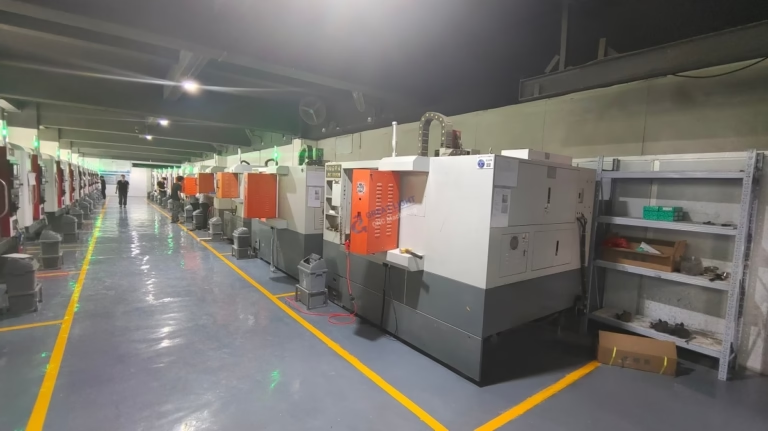
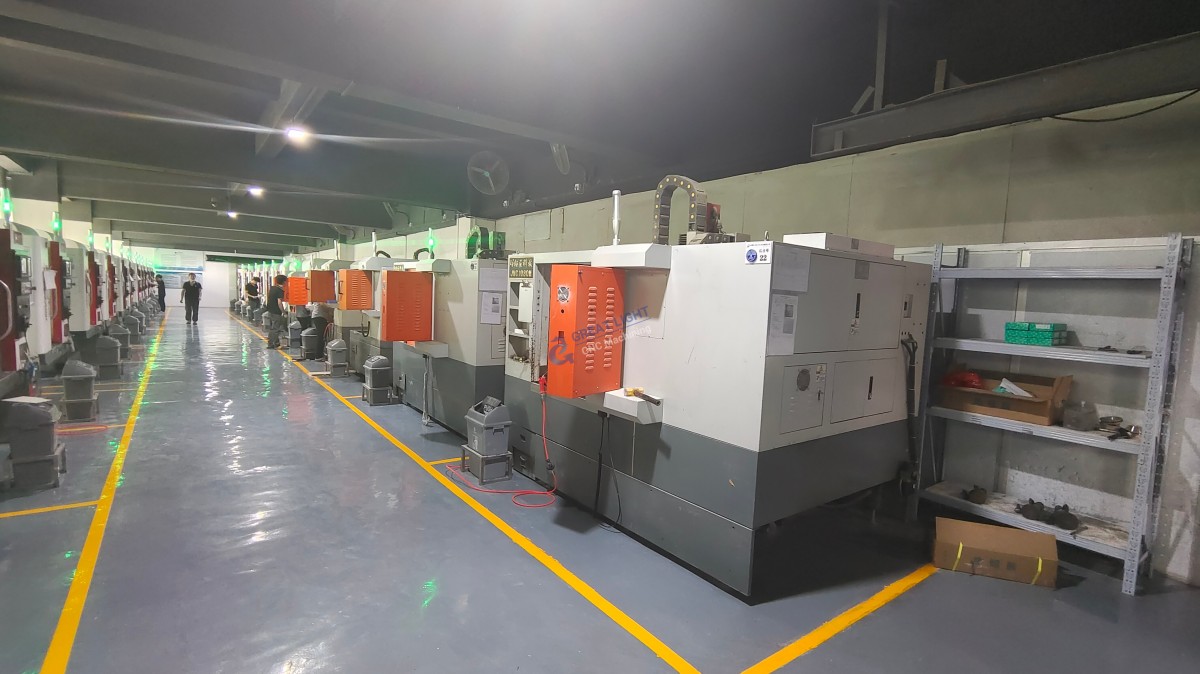
Companies like GreatLight CNC Machining Factory have already made the multi-million-dollar investments in state-of-the-art, well-maintained equipment—including advanced multi-axis CNC turning centers. They bear the burdens of depreciation, maintenance, technician training, and continuous technology upgrades. By leveraging their capacity, you convert a large, risky capital expense into a predictable, scalable operational cost.
This partnership model allows you to:
Access Higher-End Technology: Gain the benefits of modern 5-axis mill-turn centers or Swiss-type lathes without purchasing them.
Mitigate All Risk: Eliminate the risks of machine downtime, obsolete controls, and sudden repair bills.
Focus on Core Competencies: Dedicate your engineering and management resources to product design, business development, and customer relationships, rather than machine shop management.
Conclusion
Purchasing a used CNC lathe machine can be a smart, strategic move for the right buyer—one who possesses the technical skill to assess it, the resources to refurbish it, and the operational need to justify it. The process demands a meticulous, skeptical, and systematic approach, prioritizing mechanical soundness and control system viability over a superficially good appearance.
However, for businesses whose primary objective is to secure a reliable, high-precision supply chain for machined components, partnering with a certified, well-equipped expert like GreatLight CNC Machining Factory often presents a more efficient, less risky, and ultimately more competitive path. It provides immediate access to precision capability, backed by systems like ISO 9001:2015 and IATF 16949, ensuring quality and consistency that a second-hand machine may struggle to deliver from day one.
Frequently Asked Questions (FAQ)
Q1: What is the single most important thing to check on a used CNC lathe?
A: Spindle condition and axis backlash. The spindle’s health (runout, bearing noise) dictates the fundamental accuracy of the machine. Excessive backlash in the ball screws will directly cause dimensional inaccuracy and poor surface finish. Both are expensive to repair.
Q2: How old is “too old” for a used CNC lathe?
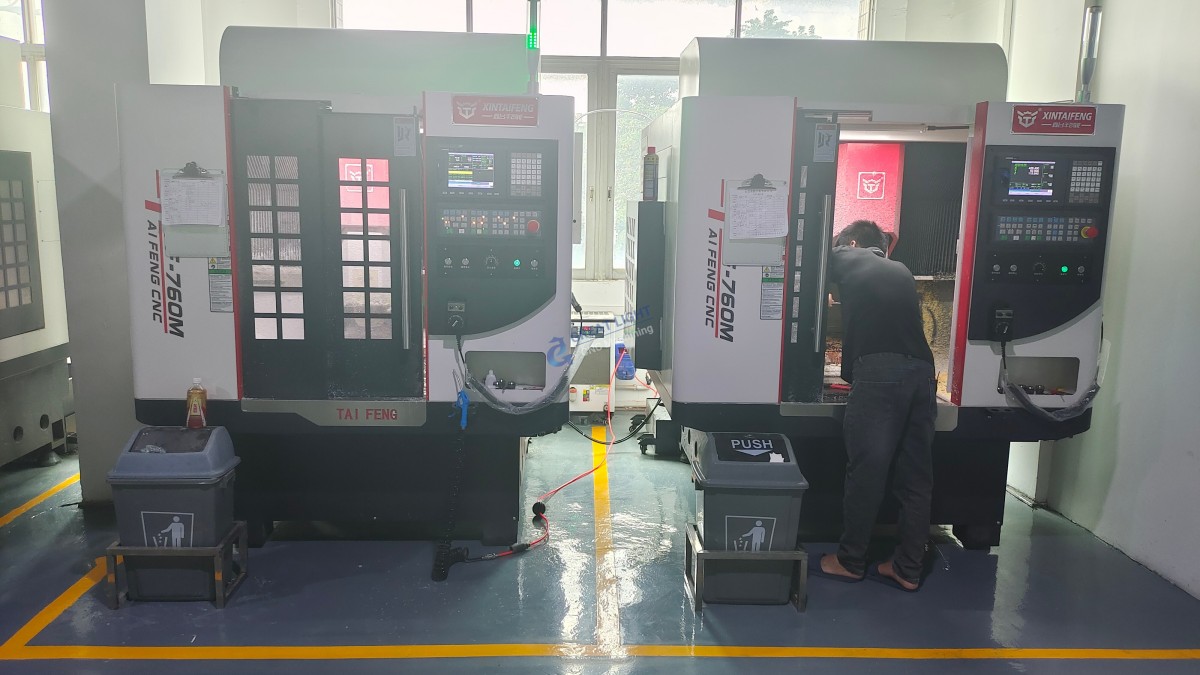
A: There’s no fixed age, but control system obsolescence is a key threshold. Machines with CNC controls older than 15-20 years (e.g., certain early Fanuc or proprietary controls) often face severe parts and support shortages. A mechanically sound machine with a modern, supported control (like a common Fanuc or Siemens model) from the early 2000s can be an excellent value.
Q3: Is it better to buy from a dealer or directly from another shop?
A: Dealers often provide a basic level of reconditioning (cleaning, painting), may offer a short warranty, and have a reputation to uphold. Direct from a shop can yield a lower price and you might get a more honest account of the machine’s history, but it’s strictly “as-is.” Your comfort level with risk and technical assessment should guide this choice.
Q4: Can a used machine still achieve high precision for my prototyping or low-volume custom work?
A: It is possible, but not guaranteed. It depends entirely on the machine’s past use, wear, and your willingness to recondition it. This often involves scraping or replacing guideways, replacing ball screws and bearings—a major undertaking. For guaranteed high precision, especially for complex prototypes, partnering with a specialist in precision 5-axis CNC machining services who uses calibrated, modern equipment is typically more reliable.
Q5: What red flags should make me walk away immediately?
A: Major red flags include: evidence of a major structural repair (welds on the bed), active oil leaks from the headstock, persistent alarm codes that the seller cannot clear, refusal to allow a cutting test, or a control system that is completely non-functional or from a defunct manufacturer. For more insights into professional manufacturing standards, you can follow industry discussions on platforms like LinkedIn.



















