
127 Sets Processing 4000mm 127 Sets High-Precision CNC Lathes
15 Years of Experience

CNC Knowledge: What is ultrasound treatment?

Beyond the Blade: Unleashing Precision with Ultrasonic Machining’s Silent Power Imagine shaping diamond as easily as molding clay, or carving intricate patterns in glass without a single crack. In the high-stakes world of precision manufacturing, where traditional cutting tools stutter and fail against super-hard or brittle materials, a remarkably quiet powerhouse emerges: Ultrasonic Machining (USM). […]

cnc knowledge: what is ultrasound treatment?

Beyond the Blade: Unleashing Precision with Ultrasonic Machining’s Silent Power

Imagine shaping diamond as easily as molding clay, or carving intricate patterns in glass without a single crack. In the high-stakes world of precision manufacturing, where traditional cutting tools stutter and fail against super-hard or brittle materials, a remarkably quiet powerhouse emerges: Ultrasonic Machining (USM). Also known as ultrasonic vibration machining, this non-thermal, non-chemical process harnesses micro-impact energy to achieve what conventional methods only dream of. Forget brute force; USM relies on finesse, vibration, and abrasive ingenuity to redefine material removal.

What is Ultrasonic Machining? The Quiet Revolution

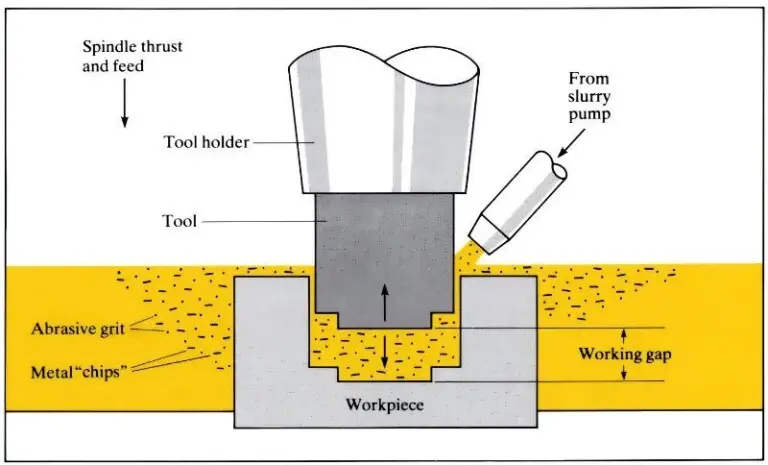
At its core, ultrasonic machining (USM) is a subtractive manufacturing process uniquely suited to materials that laugh at hardened steel cutters. It doesn’t melt, burn, or chemically erode. Instead, it employs high-frequency, low-amplitude mechanical vibrations (typically between 15 kHz and 50 kHz, well above human hearing) transmitted to a shaped tool, combined with a continuous flow of abrasive slurry.

Think of it as a microscopic demolition party happening thousands of times per second:

  1. The Tool: This is custom-shaped (often softer than the workpiece, e.g., mild steel, nickel alloys) to match the desired cavity or feature. It acts as the anvil.
  2. The Vibration: Driven by an ultrasonic transducer (typically piezoelectric), the tool oscillates vertically at high speed with tiny, precise amplitude – usually between 0.02 mm and 0.125 mm (0.0008 to 0.005 inches).
  3. The Slurry: A lifeblood mixture of extremely hard, fine abrasive grits (like boron carbide (B4C), silicon carbide (SiC), or diamond) suspended in water or oil. This is constantly pumped between the tool tip and the workpiece.

The Mechanism: How Powered Sand Delivers Precision

Here’s where physics and ingenuity collide:

  1. Micro-Impact: As the tool rapidly hammers down onto the abrasive particles trapped in the microscopic gap, it accelerates them ferociously. These particles become high-velocity projectiles impacting the workpiece surface.
  2. Micro-Chipping: The kinetic energy transfer creates intense, localized stress at impact points. In brittle materials (which don’t plastically deform), this causes micro-cracks to propagate and link up, dislodging minuscule chips of material (micro-chipping). In harder ductile materials, the mechanism involves high strain-rate deformation and fatigue.
  3. Slurry Flow & Renewal: The vibrating tool and continuous slurry flow accomplish two vital tasks:
    • Forcing particles: They eject spent grit and debris from the cutting zone.
    • Introducing fresh grit: They ensure a constant supply of sharp new particles under the tool to sustain the chipping action.
  4. Shaping: The shaped tool face confines the abrasive action, effectively transferring its geometry onto the workpiece over time. Material is eroded only where the tool and slurry interact directly.

Critical Factors for Success:

  • Gap Control: Maintaining the optimal tiny gap (slightly larger than the abrasive grain size) between tool and workpiece is crucial for efficient material removal and slurry flow.
  • Slurry Properties: Grit size (typically 100 to 3000 mesh), concentration, viscosity, and flow rate dramatically affect the material removal rate (MRR) and surface finish (finer grits = smoother finish).
  • Tool Oscillation: Frequency and amplitude must be precisely controlled for consistent performance and to avoid tool/wear piece damage. Higher amplitudes generally increase MRR but can reduce precision and tool life.
  • Static Force: A controlled, relatively light static load is applied to keep the tool in consistent contact with the abrasive slurry layer.

Where Ultrasonic Machining Truly Shines: Diverse Applications

Examples of intricate shapes cut in glass and ceramic using ultrasonic machining

USM’s unique ability to machine extraordinarily hard, brittle, or fragile materials without heat damage positions it as a vital solution across industries:

  • Advanced Ceramics & Glass: Drilling holes (round and complex profiles), machining intricate contours, cavities, slots, and engraving in alumina, zirconia, fused silica, quartz, optical glass, and composites.
  • Precious & Superhard Materials: Precisely shaping diamonds and cutting polycrystalline diamond (PCD) inserts, machining cubic boron nitride (CBN), sapphire watch crystals.
  • Semiconductors: Dicing, drilling, and shaping silicon wafers, germanium, gallium arsenide, and other brittle substrate materials with minimal subsurface damage.
  • Complex 3D Shapes: Creating intricate molds (especially for glass and ceramic pressing), sintering dies, and turbine blade cooling passageways in advanced alloys that are difficult to machine traditionally.
  • Precision Features: Threading, coining (embossing), micro-milling detailed pockets, and producing perfectly dimensioned orifices and nozzles.
  • Micro-Electro-Mechanical Systems (MEMS): Fabricating ultra-precise microfluidic channels, sensors, and structures in silicon and glass wafers.
  • Avoiding Thermal Stress: Processing heat-sensitive materials like thermoplastics where laser cutting would melt the edges or explosive powders where sparks are catastrophic.
  • Refractory Metals: Machining tungsten, molybdenum, and titanium alloys with high precision.

The Unmatched Advantages: Why Choose USM?

Close-up of a smooth surface finish achieved on ceramic via ultrasonic machining

The fundamental principles of USM translate into compelling benefits:

  1. Conquering the Unmachinable: Processes materials (brittle, hard, non-conductive) that are difficult or impossible to cut economically with traditional CNC machining, EDM (which requires conductivity), or even lasers without thermal damage.
  2. Zero Heat Zone: The process is fundamentally cold machining. No thermal distortion, no heat-affected zones, no recast layers, no work hardening. Ideal for maintaining material integrity and dimensional stability.
  3. Unparalleled Precision: Achieves fine dimensional tolerances (routinely within ±0.013 mm / ±0.0005 inches, tighter achievable with care) and exceptional surface finishes (often eliminating secondary polishing, especially with fine grits).
  4. Complex Geometry Freedom: Creates intricate designs, non-circular holes, tapered holes, curved surfaces, and delicate internal features with relative ease compared to conventional methods constrained by tool rigidity.
  5. Minimal Material Stress: The micro-impact action minimizes macroscopic stresses in the workpiece, reducing the risk of cracking during or after machining, crucial for brittle glass and ceramics.
  6. Material Independence (Almost): Works regardless of electrical conductivity or chemical activity. A single setup can machine composites with mixed constituents effectively.

Navigating the Limitations: Realistic Considerations

Despite its remarkable strengths, USM has constraints:

  1. Characteristically Slow: Material removal rates (MRR) are generally significantly lower than milling, turning, or even Wire EDM for comparable material. Speed is a trade-off for precision and material capability.
  2. Tool Wear: While softer than the workpiece, the vibrating tool experiences constant abrasion, requiring periodic redressing or replacement, impacting cost and setup time for complex shapes.
  3. Depth Limitations: Reliably machining very deep, small-diameter holes can be challenging due to slurry flow restrictions and debris removal issues deeper in the feature.
  4. Workpiece Geometry Constraints: The tool must have physical access to the area being machined, limiting application for highly internal features on complex parts.
  5. Slurry Management: Requires handling and disposal of abrasive slurry, posing housekeeping and environmental considerations compared to dry machining. Slurry concentration needs careful regulation.
  6. Specific Applications: Its strengths are so specific that it’s often not the most efficient choice for easily machined ductile metals unless unique precision or no-heat requirements dictate its use.

The Future Resonates: Precision in Harmony

Ultrasonic Machining is not just another process; it’s a testament to innovation in precision engineering. By harnessing high-frequency vibrations to mobilize abrasive grit for material removal, USM solves critical manufacturing challenges posed by the most demanding materials. While throughput limitations guide its selective application, its unique capabilities – cold processing, exceptional accuracy, complex shape mastery, and the power to machine the unmachinable – ensure its irreplaceable role in the advanced manufacturing ecosystem. As industries push boundaries with ceramics, composites, semiconductors, and superhard materials, the quiet hum of an ultrasonic tool vibrating beneath the surface will continue to shape the technological landscape with microscopic precision.


CNC Experts

Picture of JinShui Chen

JinShui Chen

Rapid Prototyping & Rapid Manufacturing Expert

Specialize in CNC machining, 3D printing, urethane casting, rapid tooling, injection molding, metal casting, sheet metal and extrusion

CNC Recent Posts

CNC News

Welcome to GreatLight Metal,Maximum Processing Size 4,000 mm

Precision Machining CNC Quote Online

Loading file

Upload Click here to upload or drag and drop your model to the canvas.

The model is too large and has been resized to fit in the printer's build tray. [Hide]

The model is too large to fit in the printer's build tray. [Hide]

The model is too large, a fitting printer is selected. [Hide]

The model is too small and has been upscaled. [Hide]

Warning: The selected printer can not print in full color [Hide]

Warning: obj models with multiple meshes are not yet supported [Hide]

Warning: Unsupported DXF entity  [Hide]

Warning: could not arrange models [Hide]


File Unit:      
Scale:
%
L × W × H:
X: × Y: × Z:  cm 
Rotation:
X: ° Y: °  

	
⚡ Instant Quote for Precision Manufacturing

Submit your design files (STEP/IGES/DWG) and receive a competitive quote within 1 hour, backed by ISO 9001-certified quality assurance.

📋 How It Works

  1. Upload & SpecifyShare your 3D model and select materials (Aluminum/Stainless Steel/Titanium/PEEK), tolerances (±0.002mm), and surface treatments.

  2. AI-Powered AnalysisOur system calculates optimal machining strategy and cost based on 10+ years of automotive/aerospace data.

  3. Review & ConfirmGet a detailed breakdown including:
    - Volume pricing tiers (1-10,000+ units)
    - Lead time (3-7 days standard)
    - DFM feedback for cost optimization

Unit Price: 

Loading price
5 Axis CNC Machining Equipment
4 Axis CNC Machining Equipment
3 Axis CNC Machining Equipment
CNC Milling & Turning Equipment
Prototype and Short-Run Injection Moldings Exact plastic material as final design
Volume Metal Die Casting Services - Precision Cast Parts
Bridge the Gap From Prototype to Production – Global delivery in 10 days or less
Custom high-precision sheet metal prototypes and parts, as fast as 5 days.
Custom Online 3D Printing Services
Design Best Processing Method According To 3D Drawings
Alloys Aluminum 6061, 6061-T6 Aluminum 2024 Aluminum 5052 Aluminum 5083 Aluminum 6063 Aluminum 6082 Aluminum 7075, 7075-T6 Aluminum ADC12 (A380)
Alloys Brass C27400 Brass C28000 Brass C36000
Alloys Stainless Steel SUS201 Stainless Steel SUS303 Stainless Steel SUS 304 Stainless Steel SUS316 Stainless Steel SUS316L Stainless Steel SUS420 Stainless Steel SUS430 Stainless Steel SUS431 Stainless Steel SUS440C Stainless Steel SUS630/17-4PH Stainless Steel AISI 304
Inconel718
Carbon Fiber
Tool Steel
Mold Steel
Alloys Titanium Alloy TA1 Titanium Alloy TA2 Titanium Alloy TC4/Ti-6Al 4V
Alloys Steel 1018, 1020, 1025, 1045, 1215, 4130, 4140, 4340, 5140, A36 Die steel Alloy steel Chisel tool steel Spring steel High speed steel Cold rolled steel Bearing steel SPCC
Alloys Copper C101(T2) Copper C103(T1) Copper C103(TU2) Copper C110(TU0) Beryllium Copper
Alloys Magnesium Alloy AZ31B Magnesium Alloy AZ91D
Low Carbon Steel
Alloys Magnesium Alloy AZ31B Magnesium Alloy AZ91D
ABS Beige(Natural) ABS Black ABS Black Antistatic ABS Milky White ABS+PC Black ABS+PC White
PC Black PC Transparent PC White PC Yellowish White PC+GF30 Black
PMMA Black PMMA Transparent PMMA White
PA(Nylon) Blue PA6 (Nylon)+GF15 Black PA6 (Nylon)+GF30 Black PA66 (Nylon) Beige(Natural) PA66 (Nylon) Black
PE Black PE White
PEEK Beige(Natural) PEEK Black
PP Black PP White PP+GF30 Black
HDPE Black HDPE White
HIPS Board White
LDPE White
This is a finish of applying powdered paint to the components and then baking it in an oven, which results in a stronger, more wear- and corrosion-resistant layer that is more durable than traditional painting methods.
No coating required, product’s natural color!
This is a finish of applying powdered paint to the components and then baking it in an oven, which results in a stronger, more wear- and corrosion-resistant layer that is more durable than traditional painting methods.
This finishing option with the shortest turnaround time. Parts have visible tool marks and potentially sharp edges and burrs, which can be removed upon request.
Sand blasting uses pressurized sand or other media to clean and texture the surface, creating a uniform, matte finish.
Polishing is the process of creating a smooth and shiny surface by rubbing it or by applying a chemical treatmen
A brushed finish creates a unidirectional satin texture, reducing the visibility of marks and scratches on the surface.
Anodizing increases corrosion resistance and wear properties, while allowing for color dyeing, ideal for aluminum parts.
Black oxide is a conversion coating that is used on steels to improve corrosion resistance and minimize light reflection.
Electroplating bonds a thin metal layer onto parts, improving wear resistance, corrosion resistance, and surface conductivity.
This is a finish of applying powdered paint to the components and then baking it in an oven, which results in a stronger, more wear- and corrosion-resistant layer that is more durable than traditional painting methods.
Please provide additional text description for other surface treatment requirements!
Material
Material
  • CNC Metals
    • Aluminum
    • Brass
    • Stainless steel
    • Inconel718
    • Carbon Fiber
    • Tool Steel
    • Mold Steel
    • Titanium
    • Alloy Steel
    • Copper
    • Bronze
    • Low Carbon Steel
    • Magnesium
  • CNC Plastics
    • ABS
    • PC
    • PMMA (Acrylic)
    • PA (Nylon)
    • PE
    • PEEK
    • PP
    • HDPE
    • HIPS
    • LDPE
Printer
Printer
  • CNC Metals
    • 5 Axis CNC Machining
    • 4 Axis CNC Machining
    • 3 Axis CNC Machining
    • CNC Milling & Turning
    • Rapid Tooling
    • Metal Die Casting
    • Vacuum Casting
    • Sheet Metal Fabrication
    • SLA 3D Printing
    • SLS 3D Printing
    • SLM 3D Printing
  • Rapid Prototyping
    • Design Best Processing Method According To 3D Drawings
Post-processing
Post-processing
  • As Machined(Product’s natural color)
  • Sand Blasting
  • Polishing
  • Brushed Finish
  • Anodizing
  • Black Oxide
  • Electroplating
  • Paint Coating
  • Powder Coating
  • Other surface treatment requirements
Finalize
The world's first CNC machining center that dares to provide free samples!

Free for first product valued at less than $200. (Background check required)

precision machining cnc quote online

15 Years CNC Machining Services

When you’re ready to start your next project, simply upload your 3D CAD design files, and our engineers will get back to you with a quote as soon as possible.
Scroll to Top

ISO 9001 Certificate

ISO 9001 is defined as the internationally recognized standard for Quality Management Systems (QMS). It is by far the most mature quality framework in the world. More than 1 million certificates were issued to organizations in 178 countries. ISO 9001 sets standards not only for the quality management system, but also for the overall management system. It helps organizations achieve success by improving customer satisfaction, employee motivation, and continuous improvement. * The ISO certificate is issued in the name of FS.com LIMITED and applied to all the products sold on FS website.

greatlight metal iso 9001 certification successfully renewed
GB T 19001-2016 IS09001-2015
✅ iso 9001:2015
greatlight metal iso 9001 certification successfully renewed zh

IATF 16949 certificate

IATF 16949 is an internationally recognized Quality Management System (QMS) standard specifically for the automotive industry and engine hardware parts production quality management system certification. It is based on ISO 9001 and adds specific requirements related to the production and service of automotive and engine hardware parts. Its goal is to improve quality, streamline processes, and reduce variation and waste in the automotive and engine hardware parts supply chain.

automotive industry quality management system certification 01
Certification of Production Quality Management System for Engine Hardware Parts Engine Hardware Associated Parts
automotive industry quality management system certification 00
发动机五金零配件的生产质量管理体系认证

ISO 27001 certificate

ISO/IEC 27001 is an international standard for managing and processing information security. This standard is jointly developed by the International Organization for Standardization (ISO) and the International Electrotechnical Commission (IEC). It sets out requirements for establishing, implementing, maintaining, and continually improving an information security management system (ISMS). Ensuring the confidentiality, integrity, and availability of organizational information assets, obtaining an ISO 27001 certificate means that the enterprise has passed the audit conducted by a certification body, proving that its information security management system has met the requirements of the international standard.

greatlight metal technology co., ltd has obtained multiple certifications (1)
greatlight metal technology co., ltd has obtained multiple certifications (2)

ISO 13485 certificate

ISO 13485 is an internationally recognized standard for Quality Management Systems (QMS) specifically tailored for the medical device industry. It outlines the requirements for organizations involved in the design, development, production, installation, and servicing of medical devices, ensuring they consistently meet regulatory requirements and customer needs. Essentially, it's a framework for medical device companies to build and maintain robust QMS processes, ultimately enhancing patient safety and device quality.

greatlight metal technology co., ltd has obtained multiple certifications (3)
greatlight metal technology co., ltd has obtained multiple certifications (4)

Get The Best Price

Send drawings and detailed requirements via Email:info@glcncmachining.com
Or Fill Out The Contact Form Below:

All uploads are secure and confidential.











