
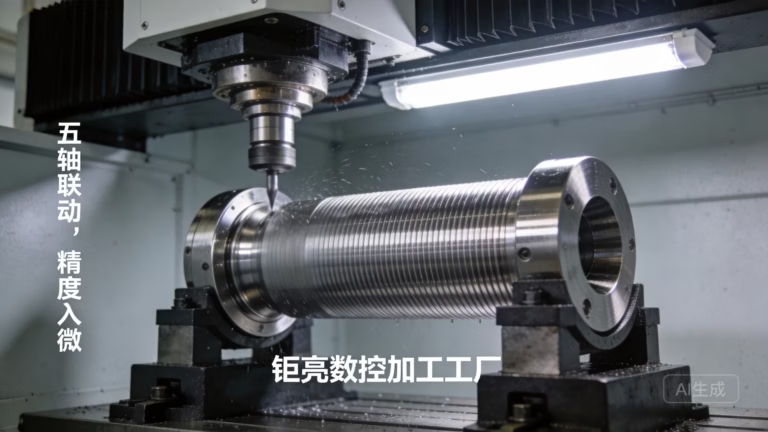
In the realm of high-precision manufacturing, the evolution from basic three-axis machining to sophisticated multi-axis systems represents a quantum leap in capability. At the heart of this advancement lies the C axis, a critical rotational component that transforms a standard CNC machine into a versatile powerhouse for creating intricate geometries. But what exactly is the C axis, and why is it so pivotal for modern precision engineering? This article delves into the mechanics, applications, and strategic advantages of C axis CNC machines, providing a comprehensive guide for anyone sourcing complex custom parts.
H2: Demystifying the C Axis: The Rotational Key to Complex Machining
At its core, the C axis refers to a rotational axis on a CNC machine. In the standard Cartesian coordinate system (X, Y, Z for linear movement), rotary axes are designated as A, B, and C, corresponding to rotation around the X, Y, and Z axes, respectively. Therefore, the C axis specifically denotes rotation around the Z-axis.
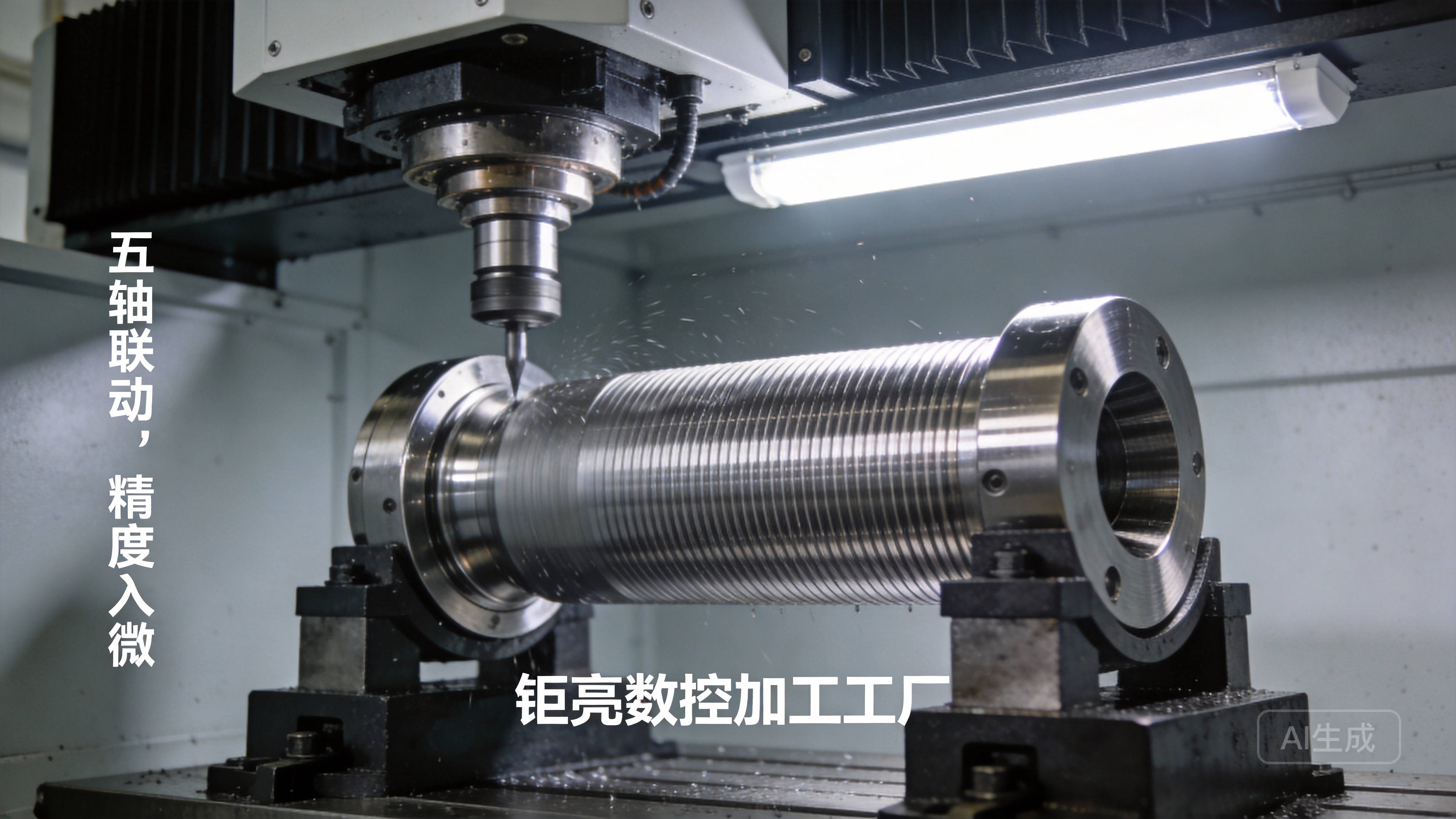
Imagine a part mounted on the machine’s spindle or table. When the C axis is engaged, that part can rotate precisely to any angular position. This simple-sounding function unlocks the ability to machine features on multiple sides of a part in a single setup—a fundamental shift from traditional machining that drastically improves accuracy, efficiency, and design possibilities.
H2: The Mechanics: How C Axis Functionality is Integrated
C axis capability can be implemented in different configurations, primarily on CNC milling machines (machining centers) and CNC lathes (turning centers).
H3: On CNC Machining Centers (Mills)
On a standard 3-axis vertical machining center (VMC), the spindle moves in X, Y, and Z. Adding a C axis typically involves incorporating a rotary table. This table, mounted on the machine bed, can rotate the workpiece precisely under the command of the CNC program. A machine with X, Y, Z, and C movements is often referred to as a 4-axis CNC machine. When combined with another rotary axis (like the A axis), it becomes a powerful 5-axis CNC machining system, capable of positioning the tool at virtually any angle relative to the workpiece.
H3: On CNC Turning Centers (Lathes)
On a modern CNC lathe, the C axis functionality is often integrated directly into the main spindle. Traditionally, a lathe spindle only rotates at high speeds for turning operations. A C axis-enabled spindle can both rotate at high RPM for turning and index or rotate precisely at slow speeds or hold a fixed position for milling and drilling operations performed by live tools mounted on the turret. This configuration creates a multitasking machine or mill-turn center, capable of producing complete, complex parts in one chucking.
H2: Transformative Applications of C Axis Machining
The implementation of the C axis moves manufacturing from simple prismatic parts to complex, monolithic components. Here are key applications:
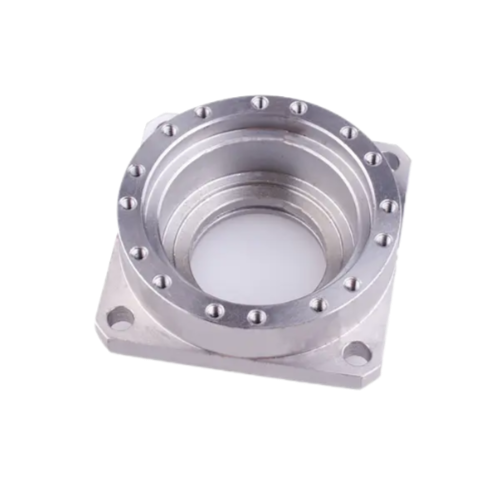
Multi-Side Machining in One Setup: This is the most significant benefit. A complex part with holes, pockets, or contours on multiple faces can be completed without manual repositioning. The C axis rotates the part to present each face to the cutting tool, ensuring perfect alignment and eliminating cumulative errors from multiple setups.
Continuous or Indexed Precision Contouring: For creating complex curved surfaces like those found in aerospace impellers, turbine blades, or medical implants, the C axis can move continuously in coordination with the linear axes (X, Y, Z). This enables smooth, simultaneous 4-axis contouring.
Precision Angular Drilling & Tapping: Drilling a series of holes on a bolt circle or creating tapped holes at precise angles becomes straightforward with C axis indexing. The machine rotates to the exact degree, then executes the drilling cycle.
Engraving on Cylindrical Surfaces: Text, logos, or scale markings can be perfectly engraved around a cylinder or dial without distortion, as the C axis rotates the part in sync with the tool’s linear movement.
Helical Milling: Operations like producing long keyways, helical gear teeth, or coolant holes in drills require synchronized linear and rotary motion, which is precisely what the C axis provides.
H2: C Axis vs. Other Rotary Axes: A Clear Distinction
It’s crucial to differentiate the C axis from other rotary movements:
C Axis: Rotation around the Z-axis. On a vertical mill, this is typically the rotation of the table. On a lathe, it’s the rotation of the spindle.
A Axis: Rotation around the X-axis. Often seen as a tilting trunnion table on a 5-axis mill.
B Axis: Rotation around the Y-axis. This can be a tilting spindle head or a rotary table on its side.
The choice of which rotary axis is used depends on the machine’s architecture and the specific part geometry required.
H2: The Strategic Advantage: Why Partner with a C Axis Expert?
While understanding the C axis is important, leveraging its full potential requires deep expertise and advanced infrastructure. This is where partnering with a specialist like GreatLight Metal becomes a strategic decision. Here’s why:
Elimination of Setup Error: Our 5-axis CNC machining centers with integrated C axis (and often A or B axes) allow us to machine the most complex parts in a single setup. This is the single most effective method for achieving ultra-tight tolerances (such as ±0.001mm) and perfect feature-to-feature alignment, directly addressing the common industry “precision black hole.”
Reduced Lead Time and Cost: Multiple setups require time for fixturing, alignment, and quality checks. By completing parts in one setup using the C axis, we dramatically compress production cycles and reduce labor costs, translating to faster time-to-market and better value for our clients.
Unlocking Design Freedom: Engineers are no longer constrained by the limitations of 3-axis machining. With our capabilities, you can design more integrated, lighter, and stronger monolithic components, consolidating assemblies into single, high-performance parts.
Superior Surface Finish: Continuous 4-axis or 5-axis contouring with synchronized C axis movement allows the cutting tool to maintain optimal orientation and engagement, resulting in superior surface finishes that often reduce or eliminate the need for secondary polishing.
Full-Process Integration: At GreatLight Metal, C axis machining is not an isolated service. It is integrated into a full-process chain that includes advanced 3D printing for prototypes, precision die-casting for volume components, and comprehensive post-processing. We provide a true one-stop solution from design validation to final finished part.
Conclusion
The C axis is far more than a technical specification; it is the enabling technology for modern, precision-driven manufacturing. It bridges the gap between simple geometry and complex, functional artistry, ensuring parts are not only made but made correctly, efficiently, and to the highest standard of excellence. For projects demanding angular precision, multi-face features, or complex contours, specifying a machine shop with proven C axis and 5-axis CNC machining expertise is not a luxury—it is a necessity. It represents an investment in part integrity, supply chain simplicity, and ultimate product performance.
Frequently Asked Questions (FAQ)
H3: Q1: Is a machine with a C axis the same as a 5-axis machine?
A: Not necessarily. A machine with only X, Y, Z, and C axes is a 4-axis machine. A true 5-axis CNC machine incorporates two rotational axes simultaneously (e.g., A and C, or B and C), allowing the cutting tool to approach the workpiece from any direction without repositioning.
H3: Q2: What are the main benefits of using a C axis on a CNC lathe (mill-turn)?
A: The primary benefit is complete part machining in one chucking. A mill-turn center with C axis and live tools can perform turning, milling, drilling, and tapping on all exposed surfaces of a part, dramatically reducing cycle times, improving accuracy, and lowering handling costs.
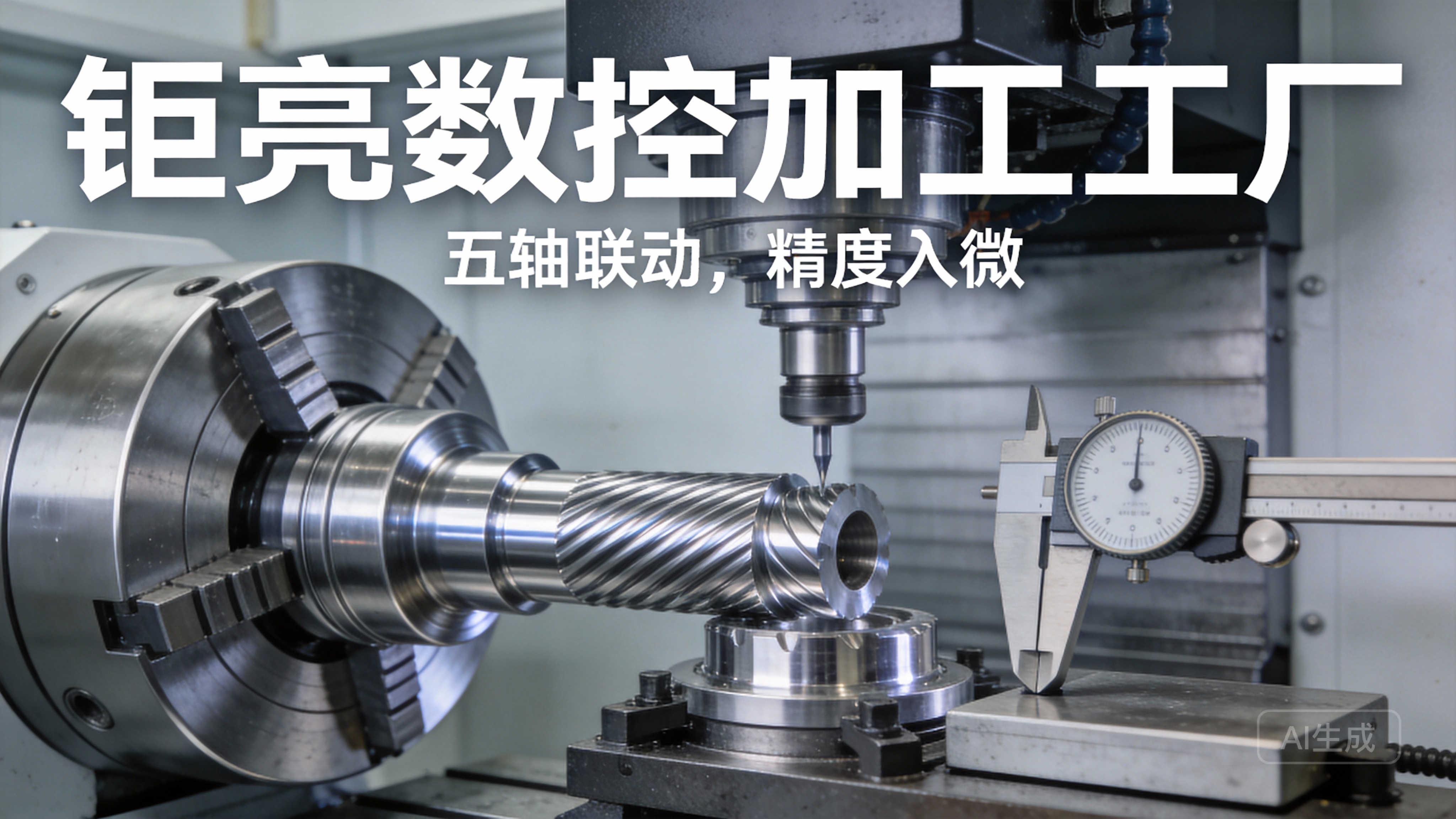
H3: Q3: For my project, how do I decide between 3-axis, 4-axis (with C), and full 5-axis machining?
A: This is a critical design-for-manufacturability question.
Use 3-axis for prismatic parts with features primarily on one side.
Choose 4-axis (with C) for parts requiring precise features or machining on multiple sides of a cylinder or a rectangular block (indexed, not simultaneous contouring).
Opt for 5-axis for complex, organic shapes, parts requiring undercuts, or when optimal tool orientation is needed for finish and tool life on complex contours. GreatLight Metal’s engineering team regularly consults with clients on this exact analysis to optimize both design and cost.
H3: Q4: Does using a C axis machine automatically guarantee higher precision?
A: The potential for higher precision is inherent due to single-setup machining. However, realizing that potential depends on the machine’s inherent accuracy (e.g., rotary table backlash, positional repeatability), thermal stability, calibration, and the operator’s/programmer’s skill. This is why certification to standards like ISO 9001:2015 and IATF 16949, as held by GreatLight Metal, is a vital trust marker—it ensures the systems and processes are in place to consistently achieve the promised precision.
H3: Q5: Can you provide examples of industries that heavily rely on C axis machining?
A: Absolutely. Key industries include:
Aerospace: Turbine blades, engine components, structural fittings.
Medical: Orthopedic implants, surgical instrument components, dental abutments.
Automotive & Racing: Engine cylinder heads, transmission housings, custom suspension components.
Energy: Impellers, vanes, and complex valve bodies for oil/gas and new energy applications.
High-End Robotics: Complex joints, actuator housings, and sensor mounts for humanoid and industrial robots.



















