When clients in the precision parts industry ask, “What is the best CNC laser cutting machine?” they are often seeking a definitive answer to guide a significant capital investment. However, as a senior manufacturing engineer with over a decade of experience at facilities like ours, I must start with a fundamental truth: There is no single “best” machine for everyone. The optimal choice is a perfect marriage between your specific production requirements, material portfolio, precision tolerances, and business objectives. The search for the best CNC laser cutting machine is, therefore, a search for the most suitable technological partner for your unique challenges.
This article will dissect the critical factors that define “best” in this context and explore how partnering with a manufacturer that has mastered this technology, like GreatLight Metal, can often be a more strategic and cost-effective path than purchasing equipment outright.
Decoding “The Best”: Key Selection Factors for CNC Laser Cutting
To navigate this complex decision, you must evaluate machines across several dimensions.
1. Laser Source Technology: The Heart of the Machine
This is the primary differentiator. The two dominant technologies are Fiber Laser and CO2 Laser.
Fiber Lasers: The current industry standard for metal cutting. They are highly efficient, with electrical-to-optical efficiency often above 40%. They excel at cutting reflective metals (copper, brass, aluminum) without back-reflection damage, offer faster cutting speeds on thin to medium-thickness materials, and have lower maintenance requirements due to a solid-state design with no mirrors or gases in the resonator.
CO2 Lasers: Traditionally excellent for cutting non-metals (acrylic, wood, textiles) and thicker mild steel. They can provide a superior edge finish on certain materials. However, they are less energy-efficient and have higher operational costs.
For precision metal parts machining, a high-power fiber laser source is overwhelmingly the preferred choice for its speed, precision, and versatility.
2. Precision and Performance Metrics
Positioning Accuracy and Repeatability: This defines how consistently the laser head can move to a commanded position. For precision parts, look for specifications like ±0.003 mm or better. This is non-negotiable for components in aerospace, medical devices, or electronics.
Beam Quality (M² factor): A lower M² value indicates a more focused, higher-quality beam capable of finer cuts and steeper kerf walls. This is critical for intricate contours and small features.
Maximum Acceleration and Rapids: Higher values mean less time moving between cuts, drastically improving overall throughput for parts with many holes or complex paths.
3. Material Range and Thickness Capacity
The “best” machine must handle your materials. Define your scope:
Metals: Stainless steel, carbon steel, aluminum, titanium, copper, brass.
Thickness Range: Are you primarily processing 0.5mm shim stock or 25mm plate? Machine power (e.g., 3kW, 6kW, 12kW) directly determines effective cutting thickness and speed. A 6kW fiber laser can cut mild steel up to ~25mm efficiently, while a 12kW machine can handle even thicker plates faster.
4. Automation and Software Integration
Modern “best-in-class” machines are not islands. Consider:
Automatic Nozzle Changers & Capacitive Height Sensors: Ensure consistent cut quality over uneven sheets.
Pallet Changers or Tower-style Auto-loaders: Enable lights-out manufacturing, dramatically increasing utilization.
Nesting Software Compatibility: Advanced software maximizes material yield—a major cost factor. Seamless CAD/CAM integration is vital.
5. Brand Ecosystem and Support
A machine is a long-term investment. The manufacturer’s reputation for reliability, availability of spare parts, and quality of technical support (installation, training, maintenance) are crucial. Brands like TRUMPF, Bystronic, Mazak, and Amada are renowned for their high-end systems and support networks.
The Strategic Alternative: Leveraging a Precision Manufacturing Partner’s Capabilities
For many businesses, especially those focused on customized precision parts machining, purchasing and operating a top-tier CNC laser cutter may not be the optimal use of capital. Here’s where the calculus shifts.
Investing in a multi-million dollar TRUMPF TruLaser Cell 8000 series or a Bystronic ByStar Fiber is a massive commitment. Beyond the purchase price, consider ongoing costs: operator training, maintenance contracts, software licenses, facility requirements (power, gas, exhaust), and the opportunity cost of tying up capital.
This is precisely the value proposition a partner like GreatLight Metal provides. We have already made that strategic investment in advanced manufacturing technology so you don’t have to.
Why Partnering with GreatLight Metal for Laser-Cut Parts Makes Strategic Sense:
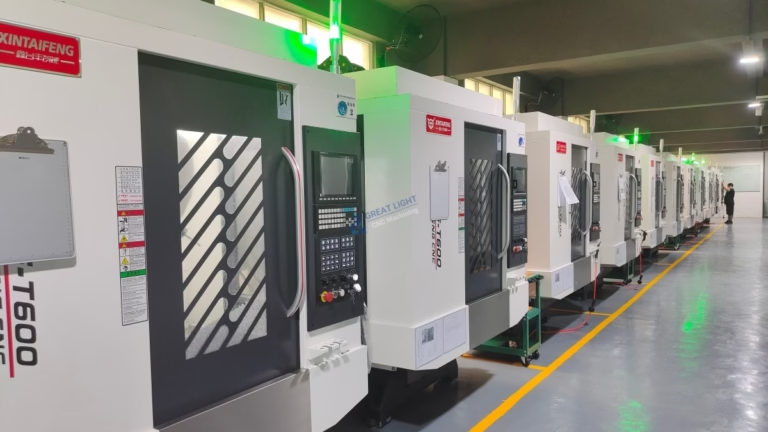
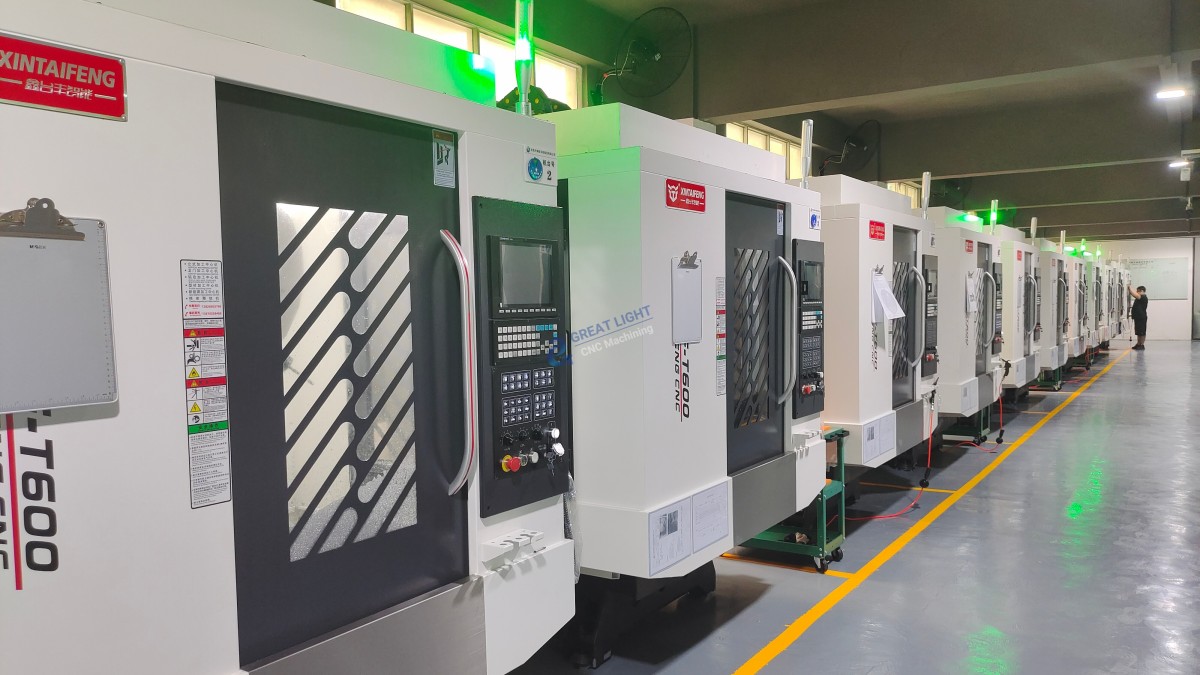
Access to Top-Tier Technology Without Capex: Our facility is equipped with high-precision fiber laser cutting systems capable of handling complex geometries in materials from thin stainless steel to thick aluminum alloys. You benefit from the latest technology with zero upfront investment.
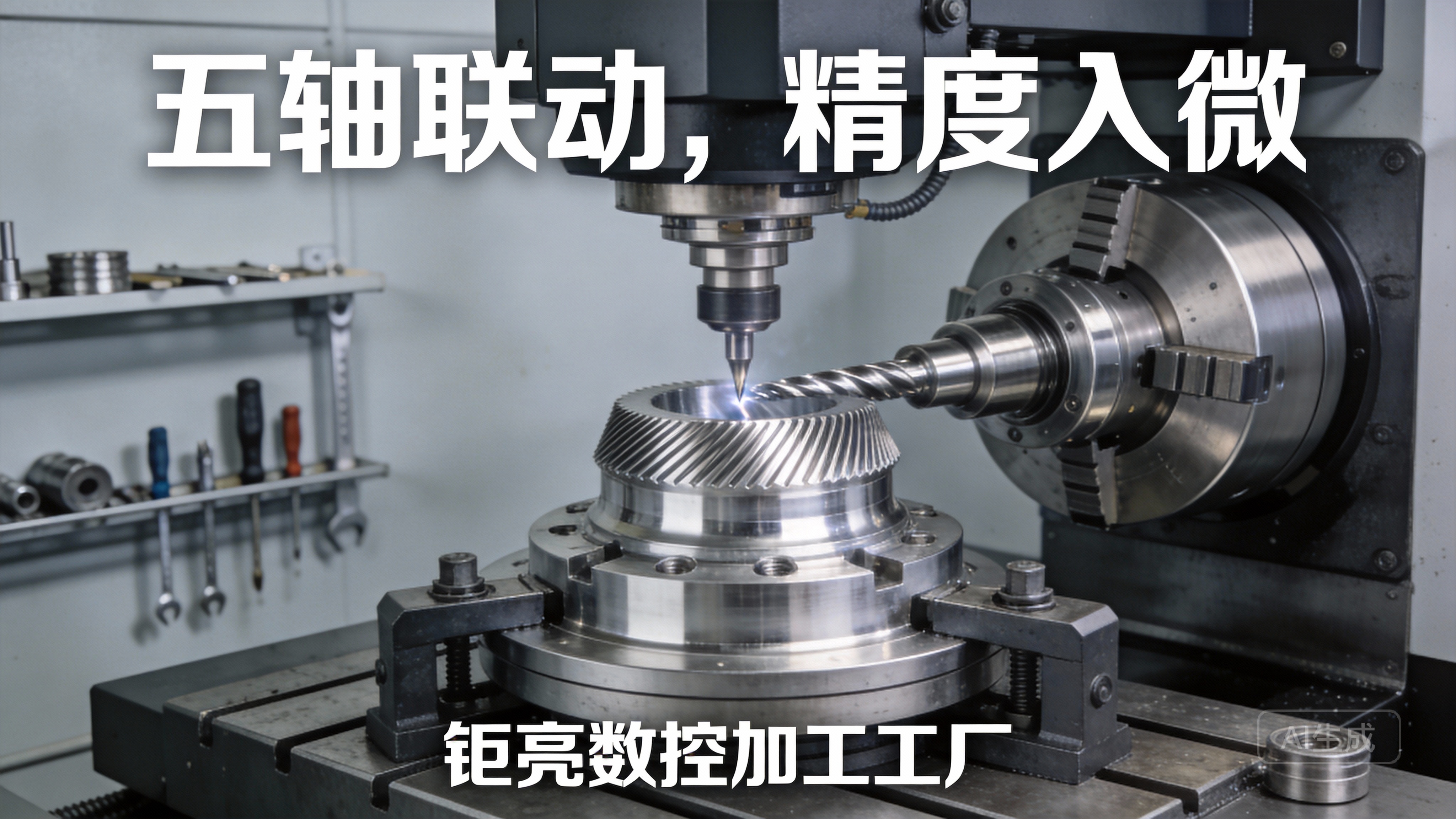
Integrated Post-Processing in One Location: A cut part is rarely a finished part. Our core strength is precision 5-axis CNC machining services. A laser-cut blank can move directly to our 5-axis CNC mills for finishing, drilling, tapping, and contouring. This seamless integration eliminates logistics delays, reduces handling damage risk, and ensures dimensional consistency from start to finish.
Engineering Expertise Applied to Your Design: Our engineers don’t just run machines; we optimize designs for manufacturability (DFM). We can advise on feature sizing, nesting efficiency, and material selection to improve the laser cutting outcome, reduce costs, and enhance part performance.
Scale Flexibility: Whether you need 10 prototypes or 10,000 production parts, our capacity scales to meet your demand without you worrying about machine availability or overtime.
Certified Quality Assurance: Every step of our process is governed by our ISO 9001:2015 certified quality management system. For critical industries, our adherence to IATF 16949 (automotive) and ISO 13485 (medical) standards provides the trust and traceability required. We verify dimensions with in-house CMMs and other precision metrology tools, ensuring every laser-cut component meets your strictest tolerances.
Conclusion: What Is The Best CNC Laser Cutting Machine?
The best CNC laser cutting machine is ultimately the one that delivers your required part quality, at the necessary volume, with the highest overall efficiency and return on investment. For equipment purchasers, this means a meticulous evaluation of fiber vs. CO2 technology, precision specs, power needs, and brand support.
However, for a vast number of companies seeking precision parts machining and customization, the “best” solution is not a piece of machinery, but a partnership. It is the partnership with a technically adept, fully equipped, and quality-driven manufacturer like GreatLight Metal. We transform the question from “What machine should I buy?” into “How can I get perfect parts delivered on time?” This allows you to focus your resources on core competencies like design, innovation, and sales, while we handle the complexities of advanced manufacturing.
By leveraging our capabilities, you effectively rent time on some of the best CNC laser cutting and machining platforms in the industry, backed by a team dedicated to making your project a success.
Frequently Asked Questions (FAQ)
Q1: For cutting 3mm aluminum parts with very tight tolerances (±0.05mm), should I choose a fiber or CO2 laser?
A: Unquestionably a high-precision fiber laser. Fiber lasers cut aluminum faster, with a smaller heat-affected zone (critical for precision), and avoid the back-reflection issues that can damage CO2 lasers when processing reflective metals. The edge quality on aluminum with a fiber laser is typically superior.
Q2: I need both laser-cut flats and complex 3D machined features. Will outsourcing to a manufacturer like GreatLight cause communication or quality issues?
A: On the contrary, an integrated manufacturer is ideal for this scenario. Having laser cutting and 5-axis CNC machining under one roof ensures seamless workflow. The same quality system controls both processes, engineering teams communicate internally, and there is no risk of dimensional reference loss that can occur when moving semi-finished parts between separate vendors. This integration is a key advantage for complex components.
Q3: How do I ensure the consistency of laser-cut parts in a large production run?
A: Consistency is ensured by a combination of machine stability, process control, and inspection. High-end machines with automatic height control and nozzle centering maintain consistent cut conditions. A certified manufacturer like GreatLight will have documented process parameters for each material and thickness and implement statistical process control (SPC). First-article inspection and periodic in-process checks using tools like optical comparators or CMMs validate consistency throughout the run.
Q4: Are there parts that are NOT suitable for CNC laser cutting?
A: Yes. Laser cutting has limitations. Parts requiring perfectly square, burr-free edges often need subsequent machining. Very reflective materials like pure copper can be challenging even for fiber lasers. Highly thick sections (e.g., >50mm steel) may be more economical with plasma or waterjet cutting. Additionally, materials that emit toxic fumes when vaporized (like certain plastics or coated metals) require extreme caution and specialized exhaust systems. A good engineering partner will advise on the most suitable process.
Q5: What file format do you typically need to provide for a laser cutting quotation?
A: The most universal and preferred format is a 2D vector drawing in DXF or DWG format, with all contours on a single layer and clearly defined. For parts that also involve machining, a 3D CAD model (e.g., STEP, IGES, SLDPRT) is essential. Providing material specifications, thickness, quantity, and any critical tolerance callouts will enable a fast and accurate quote. Connect with experts in the field on platforms like LinkedIn to discuss specific requirements.