

For manufacturers and engineering teams sourcing precision machined components, understanding the capabilities of a potential machining partner extends far beyond reviewing equipment lists and price quotations. One critical yet often overlooked aspect is the competency and problem-solving ability of the people operating those sophisticated machines. This is where the concept of a CNC machine IQ test becomes relevant. Far from being a standard intelligence quotient test, this is a specialized assessment designed to evaluate a machinist’s or programmer’s practical knowledge, technical reasoning, and adaptability in a real-world manufacturing environment.
At its core, such a test probes whether an individual can translate engineering drawings and digital models into flawless physical parts, troubleshoot process deviations, and ensure the relentless consistency that industries like aerospace, medical, and automotive demand. For a partner like GreatLight CNC Machining Factory, investing in rigorously skilled personnel is as crucial as investing in state-of-the-art 5-axis CNC machining centers. The “IQ” of the machine operator directly correlates to the IQ—the Integrated Quality—of the final delivered part.
Deconstructing the CNC Machine IQ Test: Key Components and Objectives
A comprehensive assessment for CNC professionals typically encompasses a blend of theoretical knowledge, practical skill application, and situational judgment. It’s designed to answer one fundamental question: Can this individual be entrusted with manufacturing costly, complex, and mission-critical components?
H3: 1. Foundational Technical Knowledge Assessment
This section forms the bedrock of the test, verifying the candidate’s grasp of essential manufacturing principles.
Blueprint & GD&T (Geometric Dimensioning and Tolerancing) Literacy: Can they correctly interpret complex drawings, understanding not just dimensions but also geometric controls like flatness, parallelism, true position, and runout? Misinterpretation here is a primary source of catastrophic errors.
Materials Science Fundamentals: Understanding the machining characteristics of different materials (e.g., aluminum 7075 vs. titanium Ti-6Al-4V, or PEEK vs. stainless steel 316L) is vital. Questions may cover expected cutting forces, heat generation, optimal speeds/feeds, and post-machining material behavior.
Cutting Tool Geometry & Selection: Knowledge of tool types (end mills, drills, inserts), their geometries (rake angle, helix angle), coatings (TiN, TiAlN), and appropriate selection for specific operations and materials.
Metrology and Measurement Principles: Understanding how to use and interpret data from precision instruments like micrometers, calipers, CMMs (Coordinate Measuring Machines), and surface profilometers.
H3: 2. CNC Programming and CAM Software Proficiency
This evaluates the ability to bridge design and physical machining.
G-Code & M-Code Comprehension: While most programming is done via CAM software, understanding the underlying code is essential for manual editing, optimization, and debugging. Tests may involve explaining code blocks or identifying errors in a program snippet.
CAM Software Logic: Assessing the candidate’s approach to setting up a virtual machining process—selecting work coordinates, defining stock, choosing toolpaths (roughing, finishing, contouring), and generating efficient, collision-free toolpaths.
Post-Processor Knowledge: Understanding the role of a post-processor in translating CAM toolpaths into machine-specific G-code that accounts for the unique kinematics of a 5-axis or multi-turning center.
H3: 3. Practical Problem-Solving and Scenario-Based Questions
This is the “applied IQ” section, separating theoreticians from practical problem-solvers.
Troubleshooting Machining Defects: Presenting images or descriptions of common issues (e.g., chatter, poor surface finish, burr formation, dimensional inaccuracy) and asking for the most likely causes and corrective actions.
Process Optimization: Given a part and a current machining strategy, how would they reduce cycle time while maintaining or improving quality? This tests their understanding of trade-offs between speed, precision, and tool life.
Fixture and Workholding Design Reasoning: Assessing their ability to conceptualize how to securely hold a complex, delicate, or asymmetrical part for machining without inducing distortion or limiting tool access.
H3: 4. Awareness of Quality and Safety Protocols
For a certified manufacturer like GreatLight, adherence to systemic standards is non-negotiable.
Quality Management Systems (QMS): Questions related to ISO 9001:2015 principles, such as documentation control, first-article inspection (FAI) processes, and non-conformance reporting (NCR) procedures.
Industry-Specific Standards: For roles servicing automotive or medical sectors, awareness of IATF 16949 or ISO 13485 requirements, including traceability and process validation, may be tested.
Machine and Workshop Safety: A critical component, ensuring the candidate prioritizes safe operating procedures to prevent personal injury and machine damage.
Why This Matters When Choosing a Manufacturing Partner
When you engage a precision machining supplier, you are not just buying machine time; you are buying the collective expertise of their team. A factory that systematically evaluates and cultivates this “machining intelligence” demonstrates a deep commitment to quality and reliability.
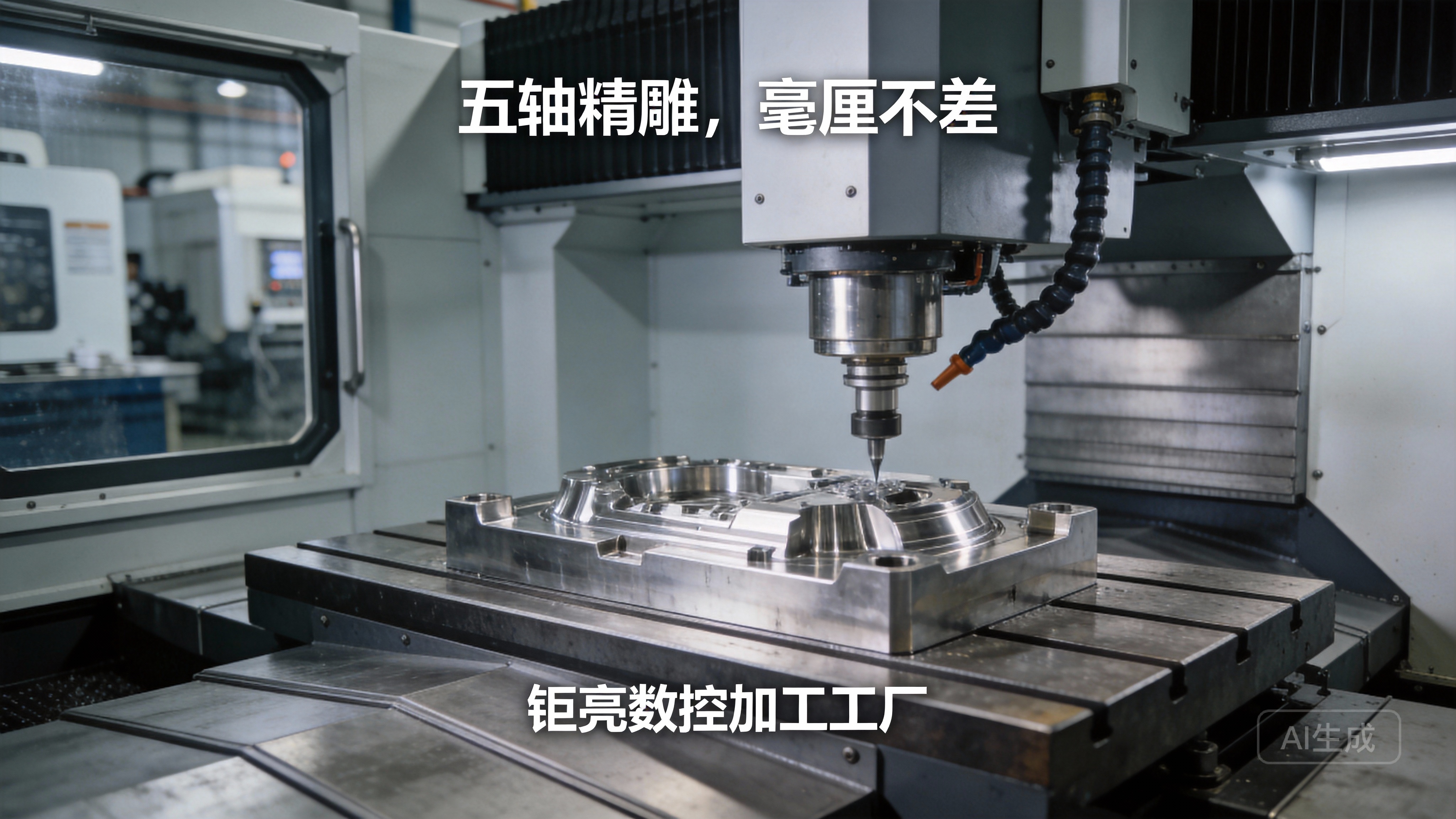
Risk Mitigation: A highly skilled operator will catch potential issues in the program or setup phase, preventing costly scrap, rework, and project delays.
Innovation and Collaboration: Technicians with high “machining IQ” can provide valuable Design for Manufacturability (DFM) feedback, suggesting tweaks that improve producibility without compromising function.
Consistency Across Batches: Deep process understanding ensures that once a part is qualified, the same quality can be replicated over thousands of cycles, which is the cornerstone of reliable supply.
Conclusion
The CNC machine IQ test is, in essence, a benchmark for applied manufacturing intellect. It evaluates the critical thinking, technical depth, and practical savvy required to navigate the complexities of modern precision machining. For clients, the presence of such a rigorous assessment culture within a supplier like GreatLight CNC Machining Factory is a strong indicator of a partner that invests not only in advanced equipment but, more importantly, in the human expertise that brings that equipment to its full potential. It signifies a partnership where your complex designs are handled by minds capable of mastering the intricacies of precision transformation from digital model to perfect part.
Frequently Asked Questions (FAQ)
H3: Q1: Is a CNC machine IQ test a standardized test like an SAT?
A: No, it is not a nationally or internationally standardized academic test. It is typically a proprietary assessment developed by the machining company or industry experts to evaluate specific, job-relevant competencies. The content and difficulty can vary significantly based on the specific role (e.g., operator vs. programmer) and the industries served by the manufacturer.
H3: Q2: As a client, can I request to see a potential supplier’s operator qualification process?
A: Absolutely. Inquiries about workforce training, certification, and skill validation are a hallmark of a sophisticated client. Reputable manufacturers with robust systems, such as those adhering to IATF 16949 or ISO 13485, will often be willing to outline their personnel competency assurance processes as part of their quality assurance documentation.
H3: Q3: What’s more important: the machine’s capabilities or the operator’s skills?
A: They are fundamentally symbiotic. The most advanced 5-axis CNC machining center is only as capable as the person programming, setting up, and overseeing it. An expert machinist can achieve remarkable results on capable equipment, while a novice can underutilize or even damage the best machine. The ideal partner, like GreatLight, demonstrates excellence in both.
H3: Q4: Does GreatLight CNC Machining Factory utilize such assessments for its team?
A: While specific internal HR processes are confidential, a manufacturer operating under multiple international certifications (ISO 9001, IATF 16949) is required to establish, document, and maintain procedures for ensuring the competency of its personnel. This inherently involves systematic training, evaluation, and skills assessment to guarantee that the team managing your project possesses the necessary “machining IQ” to deliver to the required standards. For insights into their professional standards and industry engagement, you can explore their presence on platforms like LinkedIn.



















