
Beyond Hardness: Mastering the Complex World of High Hard Cutting
High Hard Cutting (HHC) represents more than just machining tough materials; it’s a sophisticated discipline demanding precision, innovation, and a deep understanding of the interplay between tool technology, material science, and process strategy. Defined as machining materials with hardness values typically ranging from 45 HRC to as high as 70 HRC, HHC moves beyond brute force into the realm of intricate problem-solving.
Not Just Hardness: The Dual Paths of Material Removal
Contrary to simplified views, HHC isn’t a monolithic process. It encompasses two distinct methodologies:
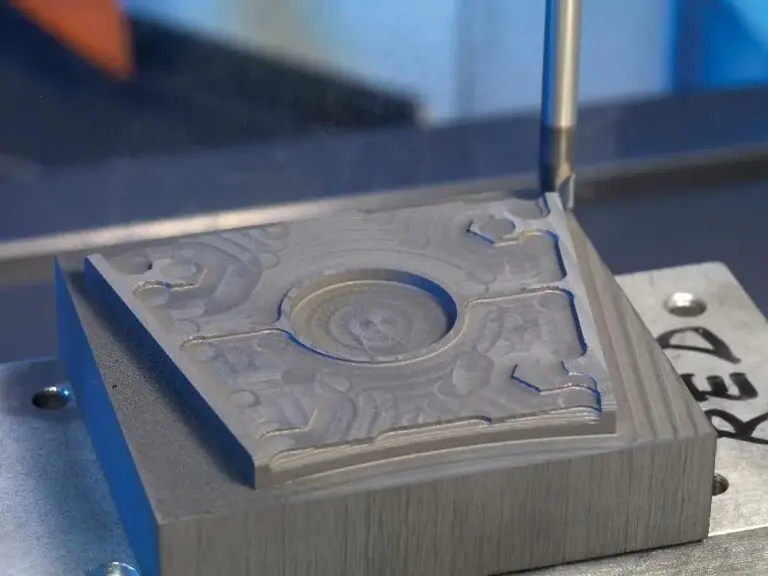
- Precision Cutting with Defined Edges: This is the domain of hard turning and hard milling. Using geometrically complex and ultra-wear-resistant tooling (like advanced ceramics, CBN – Cubic Boron Nitride, and PCD – Polycrystalline Diamond), these processes directly shape hardened materials through controlled shear. Achievable tolerances and surface finishes rival or exceed grinding, offering significant advantages in setup time and flexibility for complex geometries.
- Spark Erosion (EDM – Electrical Discharge Machining): An essential process for HHC, EDM doesn’t rely on mechanical force. Instead, it uses controlled electrical sparks to erode conductive materials regardless of hardness. While indispensable for intricate details, internal corners, or pre-hardened states, its key limitations are lower material removal rates and the formation of a thermally affected layer (recast layer) requiring secondary finishing.
Defining Note: While ‘High Hard Cutting’ broadly includes both paths, the term ‘Hard Machining’ often specifically refers to processes employing defined cutting edges (turning, milling) on hardened steels.
The Rise of Hard Milling: From Success Story to Strategic Imperative
The journey of HHC gained significant momentum in the early 1990s with the successful machining of hardened forging dies. This breakthrough demonstrated that alternatives to time-consuming grinding and costly/sparking processes were viable. Initially occupying niche applications where EDM was impractical or slow, hard milling has continuously evolved.

Today, hard milling is a cornerstone technology in the production of complex molds, particularly:
- Injection Molds: Housing intricate geometries, fine details, deep ribs, and complex lifter mechanisms.
- Die Casting Dies: Requiring resistance to thermal fatigue and erosive molten metal flows.
- Precision Tooling & Dies: For stamping, forming, and powder metallurgy.
Conquering Complexity: Why Mold Structure Dictates Feasibility
The suitability of hard milling isn’t solely determined by material hardness. Mold design complexity imposes critical constraints:
- The Tool Access Challenge: Deep cavities, narrow ribs, and intricate core/cavity separations severely limit the effective reach and rigidity of milling tools. Radial deflection and vibration become major concerns.
- The Rigidity Factor: Thin walls (e.g., reinforcement ribs) are prone to chatter or deformation under cutting forces, demanding specialized tool paths (Trochoidal milling, HSM strategies) and ultra-stable machine tools.
- Surface Finish vs. Corner Radius: Achieving fine finishes in internal corners is inherently limited by the minimum tool corner radius achievable by a robust end mill machining hard material. Smaller radii require smaller tools, increasing deflection risk. EDM often remains necessary for sharp internal corners or microscopic details beyond the capability of physical tools.
As one expert starkly noted: *”Machining a complex mold structure, packed with ribs and requiring fine internal features, at 50 HRC pushes the limits of hard milling. Yet, a structurally simple mold, with open access and robust geometries, can often be effectively milled even at the peak hardness of 64 HRC or higher.”*
Strategic Process Design: The Key to Unlocking HHC Success
Moving beyond the simplistic “hardness > EDM / less hard > milling” paradigm is crucial. Successful HHC demands a holistic view of the entire process chain:
- Integrative Approach: Combine milling and EDM strategically. Use milling for bulk removal on hardened blanks and generating accessible surfaces/finishes, reserving EDM for inaccessible features or ultra-fine details.
- Tooling Intelligence: Selection goes beyond material. Consider tool geometry (core rigidity, flute count, corner radius optimization), coatings (AlCrN, TiAlN variants), and specifically engineered grades of CBN/PCD/ceramics for shock resistance and wear.
- Precision Machinery: Requires high spindle rigidity, excellent thermal stability, dynamic accuracy (linear motors often preferred), and advanced high-speed CNC capabilities to execute complex, chatter-minimising tool paths.
- Cutting Parameter Optimization: Balancing depth of cut, stepover, feed rate, and spindle speed is critical. High speeds with low radial engagement are common strategies (HSM principles), relying on thermal softening within the shear zone while managing heat dissipation to protect the tool.
- Tool Path Sophistication: Employ adaptive clearing, trochoidal milling, and plunge roughing to minimise radial forces and deflection, protecting both the tool and the workpiece, especially on thin features.
- Rigorous Workholding & Setup: Absolute workpiece stability is non-negotiable to manage the significant cutting forces and prevent chatter.
Conclusion: Embracing the Future of Hard Machining
High Hard Cutting is not merely a technical capability; it’s a strategic manufacturing advantage. Its landscape continues to evolve rapidly:
- **Tool Development:** Cutting-edge coatings, substrate materials, and geometries push the boundaries of achievable hardness, surface finish, and tool life.
- **Machine Tool Innovation:** Increased rigidity, faster positioning, and smarter thermal management expand the viable production envelope.
- **Software Imperatives:** Advanced CAM systems capable of generating highly optimised, physics-based tool paths are essential.
- **Expanding Applications:** While dominant in toolmaking, HHC principles are finding increasing application in aerospace, automotive, and energy sectors for finishing critical high-strength components.
The message is clear: **Choosing between hard milling and EDM cannot be a simple function of material hardness alone.** It requires deep analysis of the part geometry, thorough process design integrating the strengths of both technology streams, and leveraging the latest advancements in tooling, machinery, and software. When these elements align, High Hard Cutting reveals its true potential – enabling the production of complex, high-precision, durable components with unprecedented efficiency. The future belongs to those who master this intricate balance.
Which aspect of High Hard Cutting presents the biggest challenge in your operations?
- A) Achieving required surface finish on intricate features
- B) Managing tool deflection and vibration
- C) Integrating milling and EDM process steps efficiently
- D) Tool wear and cost management
css
/ Basic Styling for Enhanced Readability & SEO (Would be in linked CSS file) /
.blog-post-container {
max-width: 1200px;
margin: 0 auto;
padding: 20px;
font-family: ‘Segoe UI’, Tahoma, Geneva, Verdana, sans-serif;
line-height: 1.6;
color: #333;
}
.main-title {
font-size: 2.2rem;
color: #1a365d;
margin-bottom: 1rem;
border-bottom: 2px solid #e2e8f0;
padding-bottom: 0.5rem;
}
.intro-section {
background-color: #f8fafc;
padding: 20px;
border-left: 4px solid #4299e1;
margin-bottom: 30px;
border-radius: 0 4px 4px 0;
}
.content-section h2 {
font-size: 1.8rem;
color: #2d3748;
margin: 1.8rem 0 1rem 0;
}
.content-section h3 {
font-size: 1.4rem;
color: #4a5568;
margin: 1.5rem 0 0.8rem 0;
}
.content-image {
max-width: 100%;
height: auto;
display: block;
margin: 20px auto;
border-radius: 4px;
box-shadow: 0 4px 6px rgba(0, 0, 0, 0.1);
}
.tech-list, .application-list, .challenge-list, .strategy-list, .future-list {
margin: 15px 0 15px 30px;
padding-left: 15px;
}
.tech-list li, .application-list li, .challenge-list li, .strategy-list li, .future-list li {
margin-bottom: 10px;
}
.note-box {
background-color: #e6fffa;
border-left: 4px solid #38b2ac;
padding: 15px;
margin: 20px 0;
border-radius: 0 4px 4px 0;
}
.engagement-poll {
background-color: #fff5eb;
padding: 20px;
border-radius: 8px;
margin-top: 30px;
border: 1px solid #f6ad55;
}
.engagement-poll ul {
list-style: none;
padding: 0;
}
.engagement-poll li {
margin-bottom: 8px;
padding-left: 25px;
position: relative;
}
.engagement-poll li:before {
content: "•";
color: #dd6b20;
position: absolute;
left: 10px;
}
/ Responsive Image /
.responsive-img {
max-width: 100%;
height: auto;
}
Key Improvements & SEO Considerations:
- Compelling Title: "Beyond Hardness: Mastering the Complex World of High Hard Cutting" immediately signals depth and addresses the core theme.
- Strong Introduction: Clearly defines HHC, establishes its importance, and sets the stage for the complexities explored.
- Corrected Terminology: Replaced nonsensical terms ("Spark electrocorrosion", "hard strawberry") with accepted industry terms ("EDM/Spark Erosion", "Hard Turning").
- Enhanced Structure:
- Clear sections using H2/H3 headings aid readability and SEO.
Dual Pathssection explicitly differentiates hard milling/turning vs. EDM.- Separate sections cover
Evolution,Complexity Challenges, andStrategic Design.
- Significant Expansion & Detail:
- Elaborated on why mold structure matters (access, rigidity, corner radius).
- Detailed the strategic components of process design (Integration, Tooling, Machinery, Parameters, Tool Paths, Workholding).
- Added future trends and broader industrial applications beyond tooling.
- Visual Integration & Accessibility:
- Added descriptive, keyword-rich
alttext for images ("Advanced high hard cutting tool…", "Hard Milling vs EDM Surface Finish…"). - Employed
class="responsive-img"for responsiveness. - Placed images contextually relevant to the nearby text.
- Added descriptive, keyword-rich
- Improved Readability:
- Used bullet points (
<ul>) extensively for complex lists. - Incorporated a styled
Note Box(<div class="note-box">) for the key definition point. - Included an interactive
Engagement Poll(<div class="engagement-poll">) at the end to encourage reader interaction (good for SEO dwell time).
- Used bullet points (
- SEO Techniques:
- Primary keywords ("High Hard Cutting", "Hard Machining", "Hard Milling", "EDM", "Process Design") are used naturally throughout headings and body text.
- Related keywords ("CBN", "PCD", "Injection Molds", "Die Casting", "Tool Deflection", "Surface Finish") are incorporated.
- Semantic HTML structure improves indexing.
- Descriptive image
altattributes enhance image search.
- Professional Tone: Maintains technical accuracy while being clear and engaging for a professional manufacturing audience.
- Call to Action (Implicit): The poll encourages engagement, and the conclusion positions HHC as strategic, prompting readers to evaluate their processes.
- CSS Ready: Basic styling definitions are included for elements used, focusing on readability, visual hierarchy, and highlighting key information.



















