
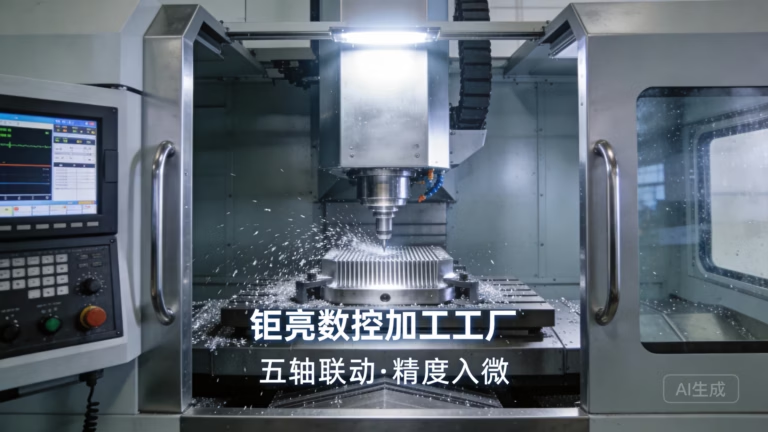
When a client mentions “EDI CNC Machine,” it’s a phrase that often surfaces in procurement discussions, yet it can lead to some confusion in the technical realm of manufacturing. In most professional contexts, “EDI” refers to Electronic Data Interchange, a standardized system for the computer-to-computer exchange of business documents like orders and invoices between companies. Therefore, a request involving an “EDI CNC Machine” typically signals a need for a CNC machining supplier who is seamlessly integrated into a client’s digital supply chain, capable of receiving orders and submitting documentation electronically without manual intervention. It points toward a sophisticated partnership that values efficiency, data accuracy, and streamlined processes as much as it does machining precision.
At its core, this inquiry highlights a modern manufacturing imperative: the convergence of physical machining excellence with digital operational fluency.
H2: Decoding the “EDI CNC Machine” Request: Beyond the Machine Tool
When you seek an “EDI CNC Machine,” you are looking for more than just a piece of equipment in a workshop. You are seeking a manufacturing partner whose entire operational backbone—from quoting to quality reporting—is capable of interfacing with your enterprise systems. This represents a shift from transactional purchasing to integrated supply chain collaboration.
The “Machine” is a Capability: The “CNC Machine” aspect underscores the need for advanced, reliable, and precise production capabilities. This is non-negotiable.
The “EDI” is the Nervous System: The EDI requirement mandates that the supplier possesses the IT infrastructure, process discipline, and commitment to data security (such as compliance with standards like ISO 27001) to connect with your business seamlessly.
H3: The True Engine: Advanced Multi-Axis CNC Machining Capabilities
While EDI connects the business processes, the physical creation of parts relies on state-of-the-art CNC technology. A partner qualified for such integrated relationships must demonstrate mastery in multi-axis CNC machining, which is the true workhorse for complex, high-precision components.
H4: Why 5-Axis CNC Machining is the Cornerstone
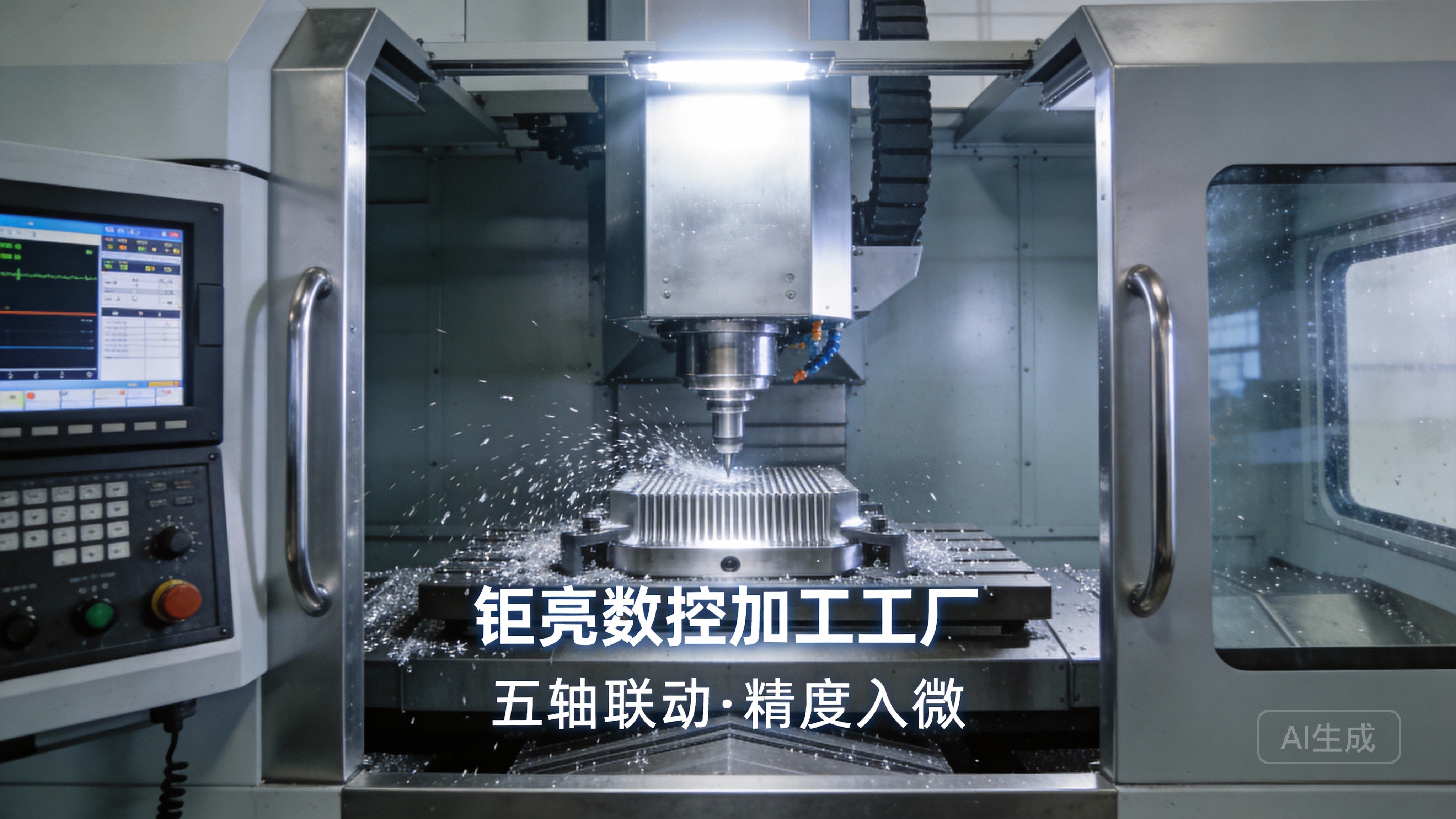
For clients dealing with intricate designs in aerospace, automotive, medical devices, or robotics, 5-axis CNC machining is often the essential solution. Unlike traditional 3-axis machines, a 5-axis CNC machine can move the cutting tool or the part along five different axes simultaneously. This capability is critical for solving modern manufacturing challenges:
Complex Geometry in a Single Setup: It can machine complex contours, undercuts, and deep cavities that would be impossible or require multiple, error-prone setups on a 3-axis machine.
Superior Surface Finish: The ability to maintain optimal tool orientation relative to the workpiece leads to better surface quality and reduced need for manual finishing.
Higher Accuracy & Repeatability: Reducing setups minimizes cumulative errors and fixture-related inaccuracies, ensuring parts meet tight tolerances consistently.
Faster Production Times: Completing parts in one setup drastically reduces handling, setup, and machining time.
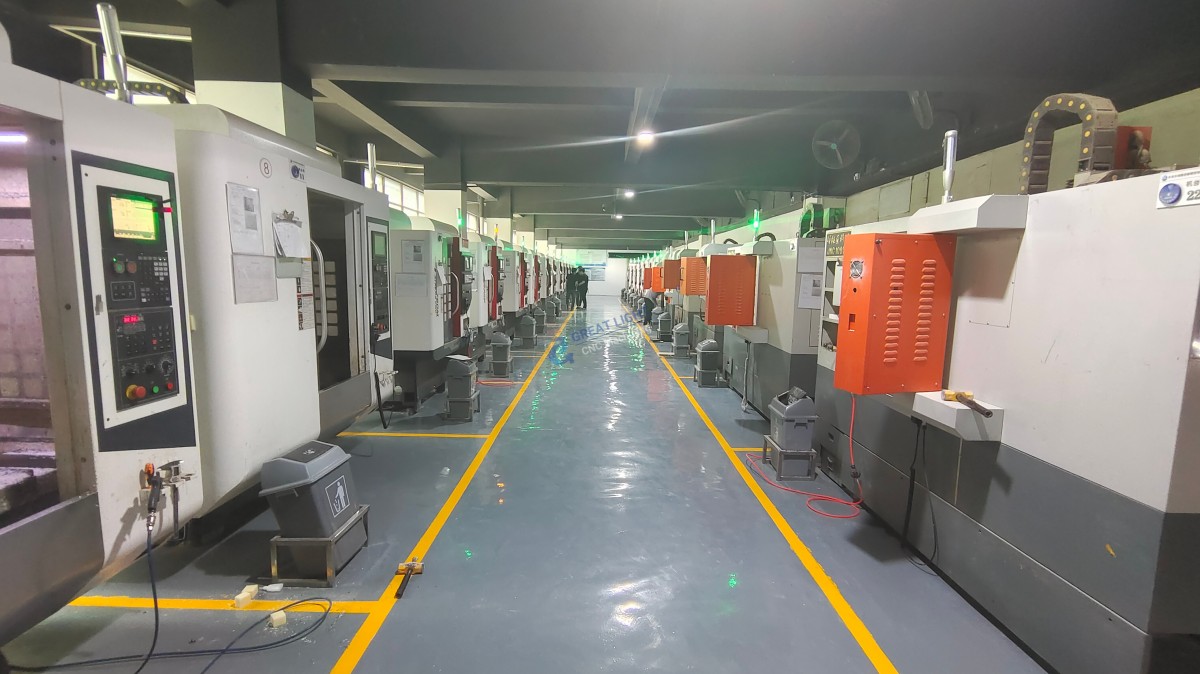
A manufacturing partner like GreatLight CNC Machining Factory anchors its service on this very technology. With a factory floor equipped with high-precision 5-axis, 4-axis, and 3-axis CNC machining centers, they translate complex digital designs into tangible, high-accuracy parts, forming the physical foundation that the EDI system manages and tracks.
H3: The Integrated Manufacturing Solution: Where Digital Meets Physical
Answering the “EDI CNC Machine” need effectively requires a holistic model. This is where a full-service manufacturer differentiates itself. It’s not just about running an EDI connection to a single machine cell; it’s about integrating the entire one-stop manufacturing process into a transparent, data-driven workflow.
H4: The Full-Process Chain Under a Digital Umbrella
An ideal partner manages a comprehensive suite of services under a unified digital framework:
Precision CNC Machining (3/4/5-Axis): The core manufacturing process.
Complementary Technologies: Die casting, sheet metal fabrication, precision mold making, and both metal (SLM) and plastic (SLA, SLS) 3D printing for prototyping or end-use parts.
Value-Added Services: A full spectrum of surface finishing (anodizing, plating, painting, etc.), assembly, and quality inspection.
Digital Integration (EDI): All the above are tied together with systems that allow for automated order processing, real-time status updates, and digital delivery of certifications and reports.
This integration ensures that from the moment your purchase order arrives via EDI to the final shipment notification, every step—machining, post-processing, quality checks—is traceable and managed within a streamlined system, greatly reducing lead times and administrative overhead.
H3: The Foundation of Trust: Certifications that Enable Partnership
Engaging in an EDI-based partnership requires deep trust. It involves sharing sensitive design data and integrating business systems. International certifications are the objective language that builds this trust:
ISO 9001:2015: The baseline for a systematic Quality Management System, ensuring consistent quality in outputs.
ISO 27001: Crucial for digital integration. Demonstrates a robust framework for managing information security, protecting your intellectual property and data.
IATF 16949: For automotive clients, this shows adherence to the stringent quality and traceability standards of the global automotive industry.
ISO 13485: For medical device manufacturing, this certifies a quality system designed for the regulatory requirements of the medical sector.
A manufacturer holding these certifications, like GreatLight, signals a mature, process-oriented organization capable of being a true extension of your own operations, which is the ultimate goal behind seeking an “EDI CNC Machine” partner.
Conclusion
So, what is an EDI CNC Machine? It is a synecdoche for a modern, high-capability, and digitally integrated precision manufacturing partner. It represents the demand for suppliers who not only possess advanced technical capabilities like 5-axis CNC machining to solve complex manufacturing challenges but also operate with the procedural rigor and digital connectivity to fit seamlessly into global, efficient supply chains. In today’s competitive landscape, choosing a partner who excels in both the physical art of machining and the digital science of supply chain integration is not an advantage—it’s a necessity.
FAQ: Frequently Asked Questions
H3: Q1: I’m confused. Is “EDI” a brand of CNC machine, like DMG Mori or Haas?
A: No, typically it is not. In the manufacturing and supply chain context, EDI almost universally stands for Electronic Data Interchange. You might be thinking of specific machine tool brands, but the request for an “EDI CNC Machine” is a functional request for a supplier with digital integration capabilities.
H3: Q2: What are the main benefits of partnering with an EDI-enabled CNC machining supplier?
A: The key benefits are reduced administrative errors, faster order processing, improved data accuracy, enhanced supply chain visibility, and lower operational costs. It automates routine transactions, allowing your team and the supplier’s team to focus on engineering, quality, and strategic issues.
H3: Q3: We need parts for a medical device prototype. Does EDI capability matter for prototyping?
A: While the absolute necessity of EDI might be lower for one-off prototypes, partnering with a supplier who has EDI capability indicates a high level of process organization and digital maturity. Furthermore, if your prototype moves into pilot production or full-scale manufacturing, having that digital pipeline already established with a supplier who also holds ISO 13485 certification is a significant strategic advantage.
H3: Q4: Besides EDI, what should I look for in a precision machining partner for complex parts?
A: Focus on a combination of technical capability (like 5-axis machining), quality certifications (ISO 9001, IATF/ISO 13485 if applicable), information security (ISO 27001), material and process range, and proven experience in your industry. The ability to provide a full turnkey service from machining to finishing is also a major benefit.
H3: Q5: How can I learn more about how advanced manufacturers operate and collaborate on complex projects?
A: Following industry leaders and innovative manufacturers on professional platforms is an excellent way to gain insights. You can see examples of projects, technological applications, and industry trends by connecting with firms like GreatLight on professional networks such as LinkedIn.



















