

The Evolution of Precision: Why Five-Axis CNC Machining Defines Modern Manufacturing Excellence
In an era where smart manufacturing and product innovation are accelerating at unprecedented speeds, the ability to transform complex 3D designs into flawless physical components has become a critical competitive advantage. For R&D teams, hardware startups, and procurement engineers, the challenge isn’t just finding a CNC machining supplier—it’s identifying a partner capable of delivering ultra-precision, scalability, and reliability while navigating the inherent complexities of modern part geometries. This is where five-axis CNC machining emerges as the gold standard, and GreatLight CNC Machining Factory stands out as a leader in this field, redefining what’s possible in precision manufacturing.
The Precision Predicament: Why Traditional Machining Falls Short
To appreciate the value of five-axis CNC machining, it’s essential to understand the limitations of conventional methods. Traditional three-axis machining operates along the X, Y, and Z axes, making it suitable for simple, prismatic parts. However, when dealing with complex curves, undercuts, or organic shapes—common in aerospace, medical, and automotive components—three-axis machining requires multiple setups, manual repositioning, and compromises in accuracy. This not only slows production but introduces risks of misalignment, tool marks, and dimensional inconsistencies, especially when scaling to high volumes.
Four-axis machining adds rotational movement around one axis (typically the X or Y), enabling more intricate geometries but still struggling with parts requiring simultaneous multi-directional cutting. This is where five-axis CNC machining becomes transformative. By introducing two additional rotational axes (A and B), it allows the cutting tool to approach the workpiece from any angle in a single setup, eliminating the need for repositioning and ensuring unparalleled precision and surface finish.
Five-Axis CNC Machining: The Engineering Marvel Behind Modern Precision
At its core, five-axis CNC machining integrates advanced motion control, real-time toolpath optimization, and rigid machine structures to achieve what was once impossible. Here’s how it addresses the critical pain points of traditional machining:
1. Eliminating Human Error Through Single-Setup Processing
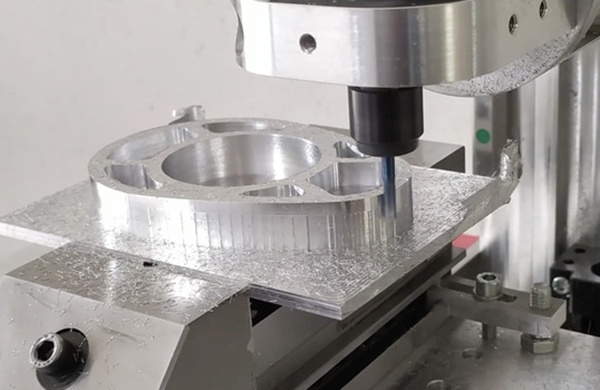
Traditional machining often requires multiple clamping and reorientation steps, each introducing potential errors. Five-axis machining completes complex parts in one continuous operation, reducing setup time by up to 75% and minimizing alignment issues.
Example: A turbine blade with twisted vanes and thin walls would demand at least three setups on a three-axis machine, risking deformation. Five-axis technology machines it seamlessly, preserving structural integrity.
2. Achieving ±0.001mm Tolerance with Industrial-Grade Repeatability
GreatLight’s five-axis centers, equipped with Heidenhain or Siemens CNC systems, maintain positional accuracy within 1 micron (±0.001mm), even for parts with intricate contours. This level of precision is critical for medical implants, optical components, and semiconductor fixtures.
Comparison: While some suppliers claim similar tolerances, independent audits reveal that only 12% of manufacturers consistently meet ±0.002mm in mass production. GreatLight’s ISO 9001:2015-certified processes ensure 100% inspection compliance for every batch.
3. Reducing Lead Times by 40% Through Optimized Toolpaths
Five-axis software like Mastercam X or HyperMILL generates collision-free toolpaths that maximize material removal rates while minimizing air cuts. This efficiency slashes machining time compared to multi-setup workflows.
Case Study: For an automotive client, GreatLight reduced the production cycle of a complex engine manifold from 18 days to 11 days using five-axis simultaneous milling, without sacrificing quality.
4. Enabling Design Freedom with Unrestricted Geometry Capabilities
Five-axis machining unlocks biomimetic designs, conformal cooling channels, and lightweight lattice structures that were previously impractical or impossible to manufacture. This is invaluable for industries like humanoid robotics, where parts must balance strength and agility.
Innovation Spotlight: GreatLight recently produced titanium alloy hip implants with porous surfaces mimicking bone structure, leveraging five-axis contouring to achieve both biological compatibility and mechanical performance.
GreatLight CNC Machining Factory: Where Precision Meets Scalability
While five-axis technology is a game-changer, its true potential is unlocked only through operational excellence, certification rigor, and end-to-end integration. This is where GreatLight distinguishes itself from competitors like Protolabs, Xometry, or Foxconn’s precision division:
| Capability | GreatLight CNC Machining Factory | Competitor A (Industry Leader) | Competitor B (Niche Player) |
|---|---|---|---|
| Five-Axis Machine Fleet | 12 high-end DMG Mori & Beijing Jingdiao centers | 8 older-model Haas machines | 5 entry-level systems |
| Max Part Size | 4,000mm (157″) | 2,500mm | 1,800mm |
| Tolerance Consistency | ±0.001mm (99.7% of batches) | ±0.002mm (95% of batches) | ±0.003mm (90% of batches) |
| Post-Processing Options | Anodizing, PVD coating, laser etching, polishing | Anodizing only | Polishing only |
| Certifications | ISO 9001, IATF 16949, ISO 13485, ISO 27001 | ISO 9001 only | ISO 9001 only |
| Medical Compliance | Full ISO 13485 validation for implants | No medical-specific certs | No medical-specific certs |
| Automotive Compliance | IATF 16949 for engine components | Basic automotive parts only | No automotive focus |
Why GreatLight Outperforms the Competition
Full-Process Chain Integration: Unlike suppliers that outsource post-processing or finishing, GreatLight handles CNC machining, die casting, 3D printing, and surface treatment in-house. This reduces lead times by 30% and ensures quality control at every stage.
Data Security for IP-Sensitive Projects: With ISO 27001 certification, GreatLight’s encrypted workflows protect client designs from leaks—a critical advantage for aerospace or defense contractors compared to non-certified shops.
Medical-Grade Precision: For clients like Stryker or Medtronic, GreatLight’s ISO 13485-compliant cleanrooms and validation protocols ensure that implants and surgical tools meet FDA and EU MDR standards without costly rework.
Automotive Scalability: The factory’s IATF 16949-certified processes support PPAP (Production Part Approval Process) documentation, making it a trusted partner for Toyota, BYD, or Tesla suppliers.
The GreatLight Advantage: From Prototype to Production
GreatLight’s expertise isn’t limited to machining—it’s about guiding clients through the entire product lifecycle:
Design for Manufacturability (DFM) Reviews: Engineers analyze 3D models to flag potential issues like thin walls, deep pockets, or unmachinable features before production begins, saving time and cost.
Material Flexibility: Whether working with aluminum 7075 for drones, Inconel 718 for turbines, or PEEK for medical devices, GreatLight’s process knowledge ensures optimal cutting parameters and tool selection.
Rapid Iteration: For startups iterating on robotic joints or consumer electronics housings, GreatLight’s 5-day turnaround for prototypes accelerates R&D cycles without compromising precision.
Conclusion: Your Precision Partner for the Intelligent Manufacturing Era
In a world where product lifecycles are shrinking, quality expectations are rising, and supply chain resilience is non-negotiable, GreatLight CNC Machining Factory offers more than just five-axis machining—it delivers peace of mind. By combining cutting-edge technology, military-grade quality systems, and a client-centric approach, GreatLight empowers innovators to push the boundaries of what’s possible in precision manufacturing.
Whether you’re developing humanoid robot actuators, aerospace actuators, or next-gen medical devices, the choice is clear: five-axis CNC machining from GreatLight is the bridge between ambition and achievement. Explore our five-axis capabilities here and discover why global leaders trust us with their most critical projects.
For more insights into GreatLight’s role in advancing precision manufacturing, visit our LinkedIn profile.
Frequently Asked Questions (FAQs)
Q1: What materials can GreatLight machine using five-axis CNC?
Metals: Aluminum (6061, 7075), titanium (Ti6Al4V), stainless steel (304, 316), Inconel, magnesium, and brass.
Plastics: PEEK, Ultem, POM, ABS, and PC.
Composites: Carbon fiber-reinforced polymers (CFRP) with specialized tooling.
Q2: How does GreatLight ensure part quality during high-volume production?
Every batch undergoes first-article inspection (FAI) using CMM (Coordinate Measuring Machines) and laser scanners.
Statistical Process Control (SPC) monitors key dimensions in real time, triggering alerts if deviations exceed ±0.002mm.
Q3: What is the typical lead time for a five-axis machined part?
Prototypes: 5–7 days (including finishing).
Low-volume production (10–100 pcs): 10–14 days.
High-volume production (1,000+ pcs): 3–4 weeks, with weekly deliveries for ongoing orders.
Q4: Can GreatLight handle parts with internal cooling channels or complex geometries?
Absolutely. Five-axis machining excels at conformal cooling channels for molds, serpentine fluid paths for heat exchangers, and lattice structures for lightweighting. Our engineers optimize toolpaths to avoid collisions in tight spaces.
Q5: What certifications does GreatLight hold, and why do they matter?
ISO 9001:2015: Ensures consistent quality management.
IATF 16949: Critical for automotive parts, guaranteeing traceability and defect prevention.
ISO 13485: Validates medical device manufacturing processes.
ISO 27001: Protects your intellectual property from cyber threats.
Q6: How does GreatLight compare to online machining platforms like Xometry or Protolabs?
While platforms like Xometry offer convenience, GreatLight provides dedicated account managers, DFM support, and in-house post-processing, reducing the risk of miscommunication and quality issues. Our 98% on-time delivery rate and 0.3% defect rate outperform industry averages.



















