In the world of modern manufacturing, where precision, efficiency, and complexity define the boundary between a prototype and a market-ready product, one technology stands as a cornerstone: the CNC milling machine. At its core, a CNC (Computer Numerical Control) milling machine is a sophisticated manufacturing system that uses computerized controls and multi-point rotary cutting tools to progressively remove material from a solid block (or workpiece), transforming it into a custom-designed part with exceptionally high accuracy. Unlike simple drilling, milling involves the cutter rotating while moving along multiple axes to carve out slots, holes, pockets, and complex contoured surfaces.
The journey from a digital blueprint to a tangible, high-tolerance component begins here. For clients seeking precision parts machining and customization, understanding this fundamental tool is crucial to making informed decisions about their manufacturing projects. It represents the convergence of digital design and physical fabrication, enabling the creation of everything from simple brackets to intricate aerospace components.
From Manual Mastery to Digital Precision: A Brief Evolution
The genesis of milling lies in manual machines, where skilled machinists turned handwheels to control the cutter’s path. The introduction of Numerical Control (NC) in the mid-20th century, followed by CNC with integrated computers, revolutionized the field. This evolution transferred the “skill” from the operator’s hands to the digital instructions of a program (G-code), enabling unprecedented repeatability, complexity, and speed. Today’s CNC milling machine is a hub of automation, often integrated with tool changers, coolant systems, and probing for in-process measurement, forming the backbone of facilities like ours at GreatLight Metal, where we leverage this technology to solve advanced manufacturing challenges.
Deconstructing the Machine: Key Components and Their Roles
A modern CNC milling machine is a symphony of mechanical robustness and electronic intelligence. Its primary components include:
Controller: The “brain” of the operation. It interprets the CAD/CAM-generated G-code and translates it into precise electrical signals that drive the machine’s motors.
Drives & Motors: The “muscles.” Servo or stepper motors, coupled with precision ball screws or linear drives, move the machine components along their axes with microscopic accuracy.
Spindle: The “heart.” This high-power, high-speed motor rotates the cutting tool. Spindle power (kW) and speed (RPM) are critical determinants of the machine’s capability to cut different materials.
Machine Bed & Frame: The “skeleton.” Typically made of heavily ribbed cast iron or polymer composite, it provides the massive, vibration-damping foundation necessary for stability during aggressive cutting operations.
Work Table & Vise/Fixture: The “workholding area.” This secures the raw material (blank) firmly in place. Tables may be standard T-slotted or advanced vacuum or modular fixture systems for complex parts.
Axis System: The defining feature of its capability. This refers to the directions in which the cutting tool or table can move.
3-Axis: The most common configuration (X-left/right, Y-front/back, Z-up/down). Ideal for machining features on one side of a part at a time.
4-Axis: Adds a rotary axis (typically A-axis), allowing the workpiece to rotate, enabling machining on multiple sides without manual repositioning.
5-Axis: Incorporates two rotational axes (e.g., A and B or C) simultaneously. This allows the cutting tool to approach the workpiece from virtually any direction in a single setup, which is essential for complex geometries like impellers, turbine blades, and organic shapes. As a specialist in precision 5-axis CNC machining, we at GreatLight Metal utilize this advanced capability to manufacture parts with unparalleled geometric freedom and superior surface finish.
The CNC Milling Process: From Digital Idea to Physical Part
The workflow encapsulates the synergy between design and manufacturing:
CAD Design: An engineer creates a 3D model of the part using Computer-Aided Design (CAD) software.
CAM Programming: Using Computer-Aided Manufacturing (CAM) software, a programmer defines the toolpaths. This involves selecting cutting tools, defining speeds/feeds, and generating the G-code that instructs the machine on every movement.
Machine Setup: The operator secures the workpiece, loads the tools into the automatic tool changer (ATC), and sets the workpiece origin (datum).
Execution: The CNC controller executes the G-code. The spindle spins the cutter at high speed, and the drives move it along the programmed paths, precisely removing material.
Post-Processing & Inspection: Once milling is complete, the part may undergo deburring, surface treatment (like anodizing or plating), and is then meticulously inspected using coordinate measuring machines (CMMs) or optical scanners to verify it meets all dimensional tolerances.
Types of CNC Milling Machines and Their Applications
Choosing the right type of mill is project-dependent:
Vertical Machining Centers (VMCs): The spindle is oriented vertically. Excellent for die/mold work, plate work, and parts where most features are on the top face. They are generally more accessible for setup and observation.
Horizontal Machining Centers (HMCs): The spindle is horizontal. Ideal for boxy parts needing machining on multiple sides, as chips fall away easily, and they allow for efficient pallet systems for high-volume production.
5-Axis Machining Centers: As mentioned, these provide simultaneous multi-axis movement, minimizing setups and maximizing accuracy for complex parts. This is a core competency for advanced manufacturers.
Gantry Mills: Feature a bridge-like structure that moves over a stationary table. Used for machining very large parts, such as aerospace structural components or mold bases.
Why Choose CNC Milling? Advantages for Precision Parts
For clients in customization fields, CNC milling offers a compelling set of advantages:
Extreme Precision and Repeatability: Capable of holding tolerances within ±0.001 inches (0.025mm) or even tighter for micro-machining. Once a program is proven, every subsequent part is virtually identical.
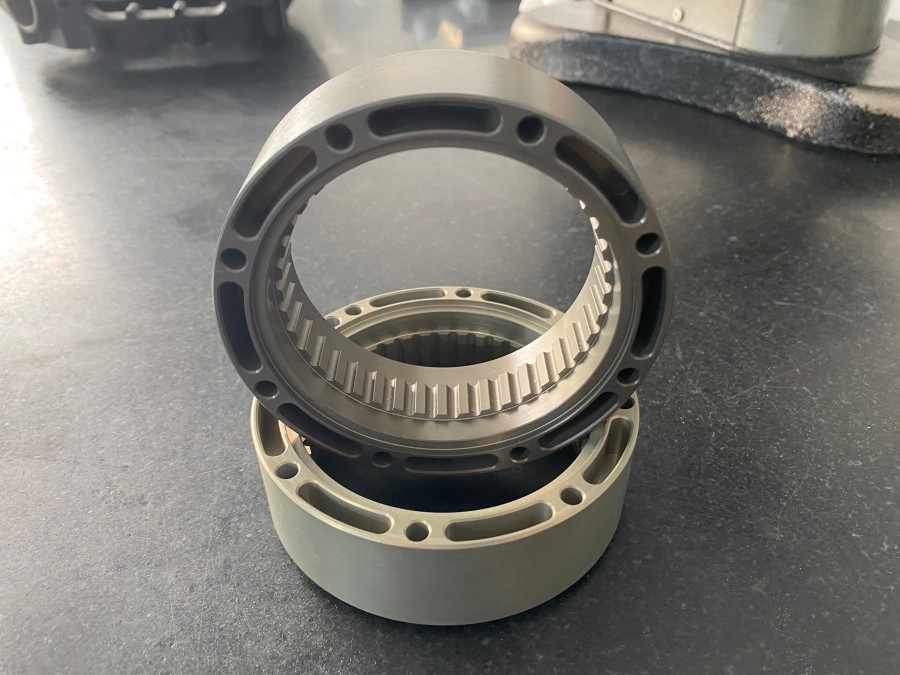
Complex Geometry Capability: Can produce intricate shapes, undercuts, and complex 3D contours that are impossible with manual machining.
Material Versatility: Can efficiently machine a vast range of materials, from plastics and aluminum to tough stainless steels, titanium, and high-temperature alloys.
High Efficiency & Automation: Once set up and running, CNC mills can operate unattended for hours, especially with pallet changers, significantly reducing labor costs and lead times for batch production.
Superior Surface Finish: Advanced toolpaths and high spindle speeds can produce exceptional surface quality right off the machine, often reducing or eliminating secondary finishing work.
CNC Milling vs. Other Processes: Selecting the Right Tool
vs. CNC Turning (Lathes): Milling uses a rotating tool on a (typically) stationary workpiece for prismatic parts. Turning rotates the workpiece against a stationary tool for cylindrical, conical, or radially symmetric parts. Many complex components require both milling and turning (mill-turn centers).
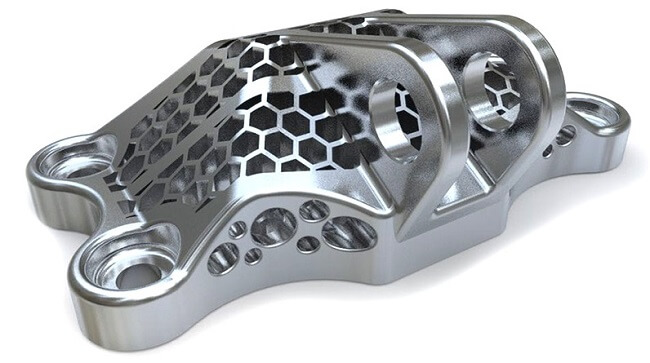
vs. 3D Printing (Additive Manufacturing): Milling is subtractive. It is generally superior for parts requiring the highest mechanical strength, precise tolerances, and excellent surface finish from engineering-grade metals and plastics. Additive is better for extremely complex internal geometries, lightweight structures (lattices), or very low-volume prototypes where tooling cost is prohibitive. At GreatLight Metal, we integrate both capabilities, offering the optimal process for each stage of development.
Choosing a CNC Milling Service Partner: What to Look For
Selecting the right manufacturer is as critical as the design itself. Look for:
Technical Certifications: A commitment to quality systems like ISO 9001:2015 is non-negotiable. For automotive or medical sectors, IATF 16949 or ISO 13485 compliance, respectively, are essential trust markers.
Equipment Capability & Range: Does the supplier have the appropriate machine size, axis configuration (3-axis, 4-axis, 5-axis), and power to handle your material and complexity? A diverse machine park allows for optimal job routing.
Engineering Support & DFM Feedback: The best partners don’t just execute prints; they provide Design for Manufacturability (DFM) insights to optimize your part for cost, performance, and manufacturability.
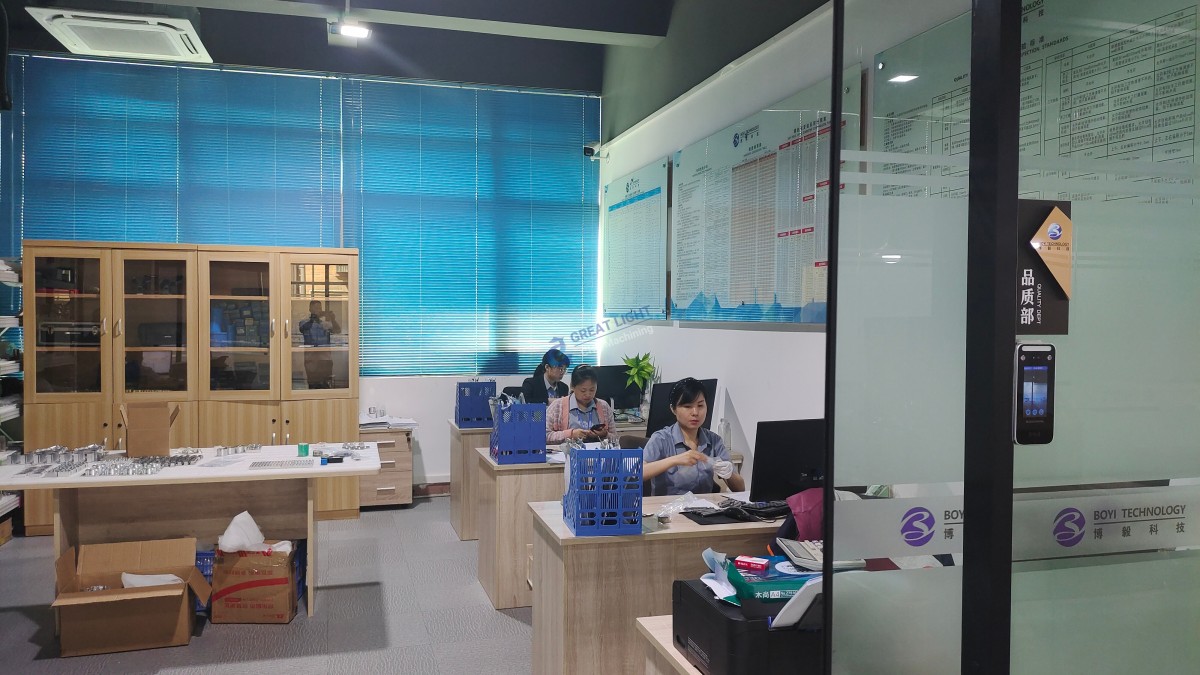
Metrology & Quality Assurance: In-house CMMs, vision systems, and surface testers are signs of a serious commitment to delivering verified quality.
Full-Service Integration: Can they handle not just milling but also complementary processes like turning, sheet metal fabrication, finishing, and assembly? A one-stop shop like GreatLight Metal streamlines supply chain management and ensures consistency.
Conclusion: The Indispensable Engine of Custom Manufacturing
The question “What is a CNC milling machine?” reveals the answer to “How are modern precision parts made?” It is the indispensable engine of custom manufacturing, a transformative tool that turns innovative ideas into reliable, high-performance hardware. Its evolution from manual craft to digital automation embodies the progress of industry itself. For projects demanding accuracy, complexity, and material integrity, partnering with a manufacturer that has mastered this technology—along with the engineering expertise to support it—is the most critical step toward success. In a landscape defined by precision, the capabilities of your chosen CNC milling machine and the team that operates it will ultimately determine the quality and viability of your final product.
Frequently Asked Questions (FAQ)
Q1: What materials can a CNC milling machine work with?
A: CNC mills are highly versatile and can machine a wide array of materials, including but not limited to: Metals (Aluminum, Stainless Steel, Tool Steel, Brass, Copper, Titanium, Inconel), Plastics (ABS, Nylon, PEEK, Delrin, Polycarbonate), and Composites (GFRP, CFRP). The choice of material impacts tool selection, cutting speeds, and overall strategy.
Q2: How precise can CNC milling be?
A: Precision depends on the machine, tooling, and process control. Standard commercial precision is around ±0.005 inches (±0.127mm). High-precision machining, as offered by specialized shops, can achieve tolerances of ±0.0005 inches (±0.0127mm) or better. Micromachining pushes this into the micron range.
Q3: What is the difference between 3-axis, 4-axis, and 5-axis milling?
A: It refers to the degrees of freedom of movement. 3-axis machines in three linear directions (X, Y, Z). 4-axis adds one rotary axis, allowing machining around the sides of a part. 5-axis adds a second rotary axis, enabling the tool to approach the workpiece from any angle in a single setup, which is crucial for complex geometries and reduces error accumulation from multiple setups.
Q4: How do I get a quote for a CNC milled part?
A: You typically need to provide a 3D CAD model (STEP, IGES, SLDPRT) or detailed 2D drawings. Key information includes material specification, quantity, required tolerances, and any post-processing finishes (e.g., anodizing, painting). A competent manufacturer will review the files and may offer DFM suggestions before providing a formal quote.
Q5: What are the main cost drivers in a CNC milling project?
A: The primary factors are: Material Cost, Machine Time (complexity and size dictate programming and cycle time), Setup Time (including custom fixture design if needed), Tooling Wear (especially for hard materials), and Post-Processing requirements. Higher quantities usually reduce the per-part cost by amortizing setup and programming costs.
Q6: How long does it take to get CNC milled parts?
A: Lead time varies widely. For simple, prototype quantities, it can be as fast as 2-5 days. For complex parts requiring extensive programming, custom tooling, or high-volume production, lead times can extend to several weeks. Clear communication with your supplier about deadlines is key.
Q7: Can CNC milling be used for both prototyping and production?
A: Absolutely. It is one of its greatest strengths. The same digital file and process can be used to produce a single functional prototype for testing and then seamlessly scale to hundreds or thousands of production parts with consistent quality, making it ideal for rapid prototyping and bridge-to-production manufacturing.
For further insights into industry applications and professional networking, feel free to connect with our community on LinkedIn.