
If you’ve ever struggled with machining complex, curved parts that demand consistent precision across all angles, you’ve probably asked yourself: What Is A 4 Axis CNC Machine? This advanced machining solution has become a game-changer for manufacturers looking to balance efficiency, precision, and design flexibility—but understanding its true value requires diving beyond the basic definition. For projects that need even more versatility, explore our industry-leading precision 5-axis CNC machining services in a new window, which builds on the capabilities of 4-axis to tackle the most intricate geometries.
What Is A 4 Axis CNC Machine?
At its core, a 4 Axis CNC (Computer Numerical Control) machine is an automated cutting system that adds a rotational axis to the traditional 3-axis linear movement (X, Y, Z axes). Most commonly, this fourth axis is either the A-axis (rotating around the X-axis) or B-axis (rotating around the Y-axis), though some configurations feature a rotating tool head instead of a rotating workpiece.
Here’s how it works: The CNC controller coordinates all four axes simultaneously, allowing the cutting tool to access nearly every surface of the workpiece without manual repositioning. For example, if you’re machining a robotic arm joint with undercuts and curved surfaces, a 4-axis machine can rotate the part as the tool cuts, ensuring every angle is reached in a single setup. This eliminates the need to stop production, re-fixture the part, and re-align it—steps that introduce risks of human error and delay.
Unlike 3-axis machines, which are limited to flat, prismatic parts, 4-axis CNC machines open the door to complex, asymmetric designs that were once either impossible to manufacture or required expensive, multi-step processes.
Key Differences Between 3-Axis and 4-Axis CNC Machining
To better grasp the value of 4-axis machining, let’s compare it to the more widely used 3-axis technology:
| Aspect | 3-Axis CNC Machining | 4-Axis CNC Machining |
|---|---|---|
| Axes of Motion | X, Y, Z (linear only) | X, Y, Z + 1 rotational axis (A/B) |
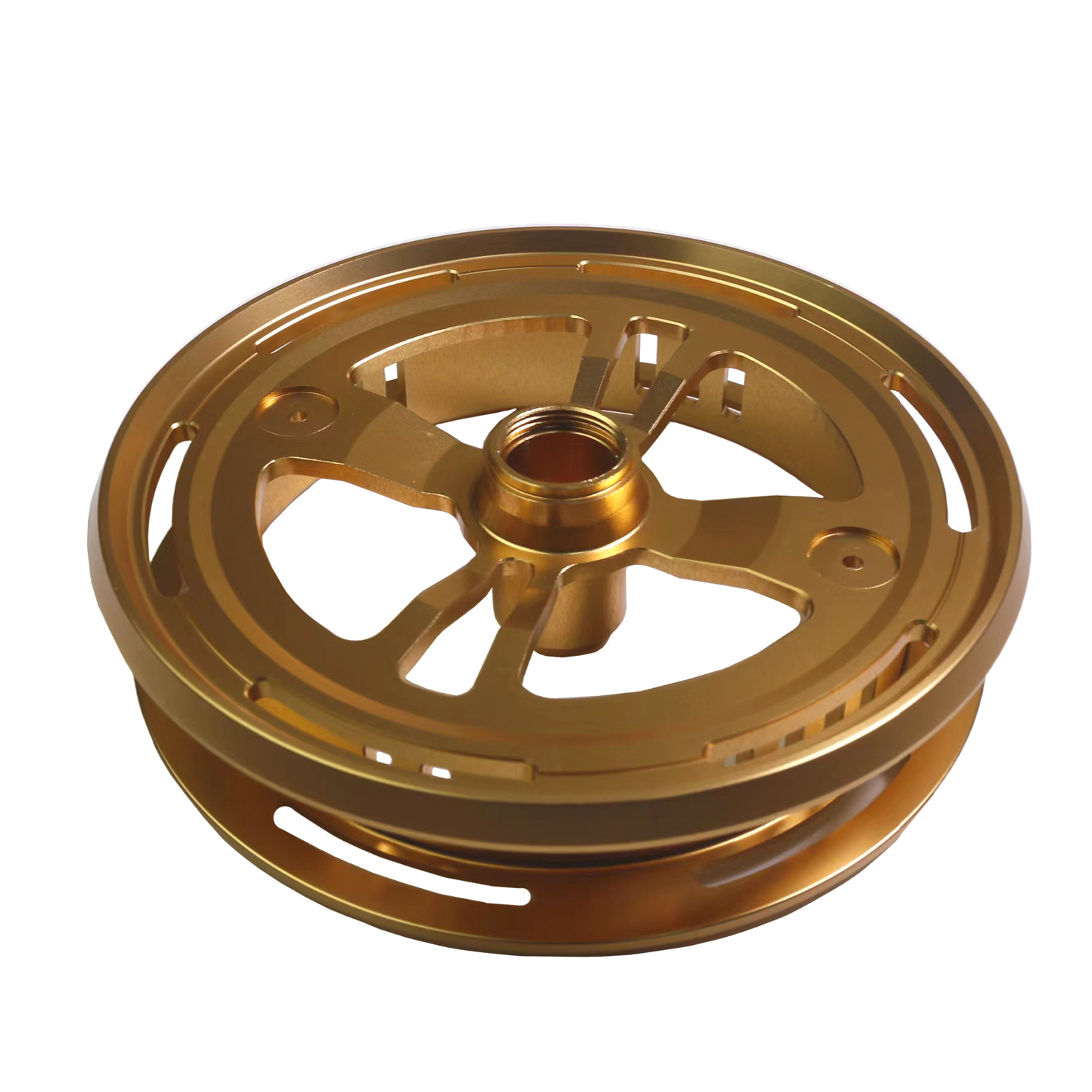
| Ideal Part Geometry | Flat panels, brackets, simple blocks (prismatic shapes) | Curved parts, undercuts, asymmetric components, rotational parts (e.g., turbine blades) |
| Setup Complexity | Low for simple parts; requires multiple setups for complex geometries | Higher initial setup; no re-fixturing needed for multi-angle parts |
| Precision Consistency | Risk of alignment errors with repeated setups | Highly consistent, as parts stay fixtured throughout production |
| Production Efficiency | Slow for complex parts (due to repeated setups) | 30-50% faster cycle times for complex designs (consolidates operations) |
| Cost per Part | Lower for simple, high-volume parts | Lower overall cost for complex parts (reduces scrap and labor) |
Core Applications of 4 Axis CNC Machining
4-axis CNC machining has become indispensable across industries where precision and complex design are non-negotiable. Here are some of its most impactful use cases:
Automotive & New Energy Vehicles
4-axis machining is critical for producing engine components (crankshafts, camshafts), suspension parts, and EV battery housings. For example, GreatLight Metal recently supported a new energy vehicle startup by machining complex e-housings with internal cooling channels—our 4-axis machines cut the production time from 10 days (using 3-axis) to 5 days, with zero rework required.
Medical Devices
Strict regulatory standards and biocompatibility requirements demand precise, smooth surfaces for surgical instruments, orthopedic implants, and dental prosthetics. 4-axis machining ensures that every contour of a knee implant or surgical forceps is consistent, reducing the risk of patient complications. GreatLight’s ISO 13485 certification guarantees compliance with global medical device manufacturing norms.
Industrial Robotics
Robotic arm joints, gripper components, and gear housings require tight tolerances to ensure smooth movement and long service life. 4-axis machining allows manufacturers to produce these parts with undercuts and curved surfaces in one setup, eliminating alignment errors that could cause joint failure. GreatLight has partnered with leading humanoid robot manufacturers to deliver high-precision robotic parts that meet strict performance criteria.
Aerospace & Defense
Aerospace parts like turbine blades, aircraft structural components, and fuel system parts must withstand extreme temperatures and stress. 4-axis machining enables the production of complex, lightweight designs with consistent precision, reducing the risk of part failure in high-stakes environments.
How 4 Axis CNC Machining Solves Real-World Manufacturing Pain Points
Many manufacturers face persistent challenges that 3-axis machining can’t address effectively. 4-axis technology directly solves these pain points:
Eliminating the “Precision Black Hole”: Manual repositioning in 3-axis machining often leads to alignment errors that result in parts failing tolerance checks. 4-axis machining keeps parts fixtured throughout production, so every piece meets the same ±0.001mm precision standard that GreatLight Metal guarantees.
Reducing Lead Time Delays: Multiple setups add hours or days to production schedules. 4-axis machining consolidates operations, cutting cycle times by up to 50% for complex parts. GreatLight’s integrated process chain (from design to post-processing) further speeds up delivery, with prototypes often ready in 2-5 days.
Lowering Scrap Rates: Repeated handling of workpieces increases the risk of damage or misalignment. 4-axis machining minimizes contact with parts, reducing scrap rates from an average of 8% (3-axis) to less than 2% for most projects at GreatLight.
Design Freedom: Engineers no longer have to compromise on design to accommodate 3-axis limitations. 4-axis machining allows for undercuts, curved surfaces, and asymmetric shapes, enabling innovation in product development.
Why Choose GreatLight Metal for 4 Axis CNC Machining Services
GreatLight Metal (founded in 2011) is a leading precision manufacturing partner with a 7600 sq. ft. facility in Dongguan’s Chang’an District—the heart of China’s “Hardware and Mould Capital.” Our 4-axis CNC machining services stand out for several key reasons:
Advanced Equipment & Technical Expertise
We operate 127 precision machines, including state-of-the-art 4-axis CNC machining centers, complemented by 3-axis, 5-axis, EDM, and 3D printing systems. Our team of 150 professionals has over a decade of experience in optimizing 4-axis processes for complex parts, ensuring maximum efficiency and precision.
Global Industry Certifications
Our commitment to quality is backed by internationally recognized certifications:
ISO 9001:2015 (quality management)
ISO 13485 (medical device manufacturing)
IATF 16949 (automotive industry standards)
ISO 27001 (data security for intellectual property-sensitive projects)
These certifications ensure that every project adheres to strict global norms, giving you peace of mind about compliance and quality.
Full-Process Chain Solutions
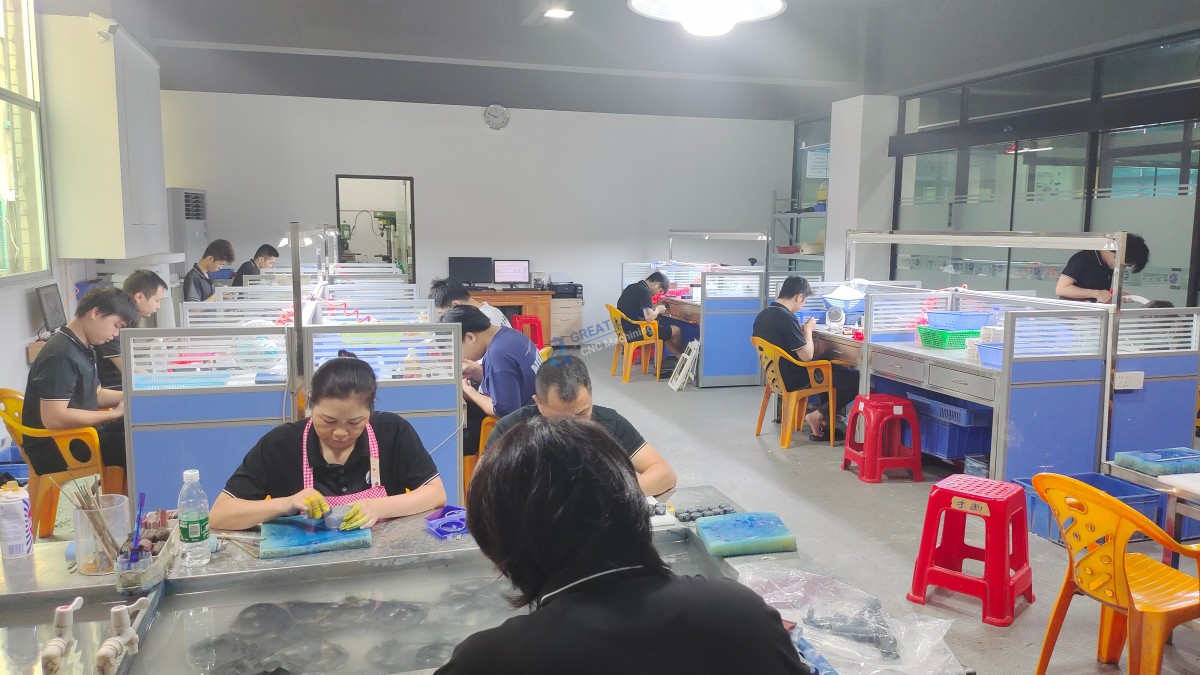
GreatLight offers one-stop services from design optimization to post-processing (anodizing, powder coating, polishing) and assembly. This eliminates the need to coordinate with multiple suppliers, reducing communication gaps and delays.
Unmatched After-Sales Support
We stand behind our work with a comprehensive after-sales guarantee: free rework for any quality issues, and a full refund if rework still doesn’t meet your requirements. This commitment to client satisfaction has earned us long-term partnerships with clients across the globe.
To learn more about our client success stories and industry expertise, connect with GreatLight Metal on LinkedIn in a new window.
Conclusion
Now that you know the answer to “What Is A 4 Axis CNC Machine?”, you can see why it’s a critical tool for manufacturers looking to produce complex, high-precision parts efficiently. Whether you’re working on automotive components, medical devices, or robotic systems, 4-axis machining balances cost, speed, and quality to drive your project forward. For the most reliable 4-axis CNC machining services, GreatLight Metal’s technical expertise, global certifications, and integrated process chain make us the ideal partner for your next project.
Frequently Asked Questions (FAQ)
1. What’s the difference between 4-axis and 5-axis CNC machining?
4-axis machining adds one rotational axis to 3-axis linear movement, while 5-axis machining adds two rotational axes (e.g., A and B axes). 5-axis allows simultaneous movement of all five axes, making it suitable for ultra-complex parts like aerospace turbine blades. 4-axis is a cost-effective middle ground for parts that don’t require full 5-axis capability.
2. Is 4-axis CNC machining more expensive than 3-axis?
Initial setup costs may be higher, but overall project costs are often lower for complex parts. 4-axis machining reduces setup time, scrap rates, and labor costs associated with repositioning parts. GreatLight offers competitive pricing tailored to your project’s complexity and volume.
3. What materials can be machined with a 4-axis CNC machine?
4-axis CNC machines can handle almost all metals (aluminum, stainless steel, titanium, mold steel) and engineering plastics (ABS, POM, PC). GreatLight also offers 3D printing services for these materials for rapid prototyping before full production.
4. How tight of tolerances can 4-axis CNC machining achieve?
GreatLight’s 4-axis machines can hold tolerances as tight as ±0.001mm, meeting the most demanding industry standards for medical, aerospace, and automotive parts.
5. How long does it take to get parts from 4-axis CNC machining?
Prototypes can be delivered in 2-5 days, depending on complexity. For mass production, lead times vary based on batch size, but GreatLight’s integrated process chain ensures fast turnaround without compromising quality.
6. Do I need to provide specific design files for 4-axis CNC machining?
Yes, we accept STL, STEP, IGES, and CAD files. Our in-house engineering team can also assist with design optimization to make parts more manufacturable and reduce production costs.



















