
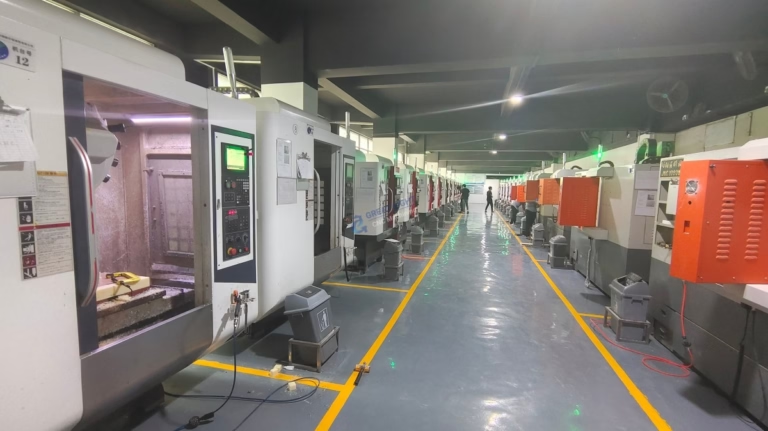
In the realm of precision manufacturing, few innovations have reshaped the landscape as profoundly as 5-axis CNC machining. For R&D teams, hardware startups, and procurement engineers, understanding this technology’s role in solving complex part challenges is critical to staying competitive. This article demystifies 5-axis CNC machining, explores its unique advantages, and explains why GreatLight CNC Machining Factory{:target=”_blank”} stands out as a leader in this field.
H2: What Is 5-Axis CNC Machining?
5-axis CNC machining refers to a computer-controlled manufacturing process where the cutting tool moves along five distinct axes simultaneously: X, Y, Z (linear axes) and A, B (rotational axes). This enables the machine to approach the workpiece from any direction, allowing for intricate geometries and undercuts that are impossible with traditional 3-axis machining.
3-axis machining: The tool moves linearly along X, Y, and Z axes, limiting it to flat or simple curved surfaces.
5-axis machining: Adds rotational movements (A and B axes), enabling multi-sided machining in a single setup.
Key Benefits:
Unmatched Precision: Eliminates repositioning errors by machining complex parts in one setup.
Reduced Lead Times: Fewer setups mean faster production cycles.
Material Efficiency: Optimizes tool paths to minimize waste.
Design Freedom: Supports aerodynamic shapes, organic curves, and tight internal features.
H2: Why 5-Axis CNC Machining Matters for High-Precision Parts
1. Solving Complex Geometry Challenges
Parts for aerospace, medical devices, and robotics often require tight tolerances (±0.001mm) and multi-sided features. For example:
Aerospace turbines: Blades with twisted profiles demand 5-axis simultaneous machining.
Medical implants: Hip joints with contoured surfaces rely on 5-axis for biocompatibility.
Humanoid robots: Joint components with internal channels require undercut machining.
2. Cost Efficiency Through Process Optimization
While 5-axis machines have higher upfront costs, they reduce long-term expenses by:
Minimizing manual intervention: Fewer setups lower labor costs.
Reducing scrap rates: Precise tool paths conserve expensive materials like titanium or Inconel.
Accelerating time-to-market: Rapid prototyping and production align with agile development cycles.
3. Competitive Edge Over Traditional Methods
| Factor | 5-Axis CNC Machining | 3-Axis CNC Machining | Manual Machining |
|---|---|---|---|
| Complexity Handling | ✅ Excellent (5-sided access) | ❌ Limited (flat surfaces only) | ❌ Not feasible for complex parts |
| Tolerance Control | ±0.001mm | ±0.01mm | ±0.05mm |
| Production Speed | Fast (single setup) | Moderate (multiple setups) | Slow (labor-intensive) |
| Material Flexibility | Supports metals, plastics, composites | Limited to simpler materials | Restricted to soft materials |
H2: GreatLight CNC Machining Factory: Your Expert Partner for 5-Axis Solutions
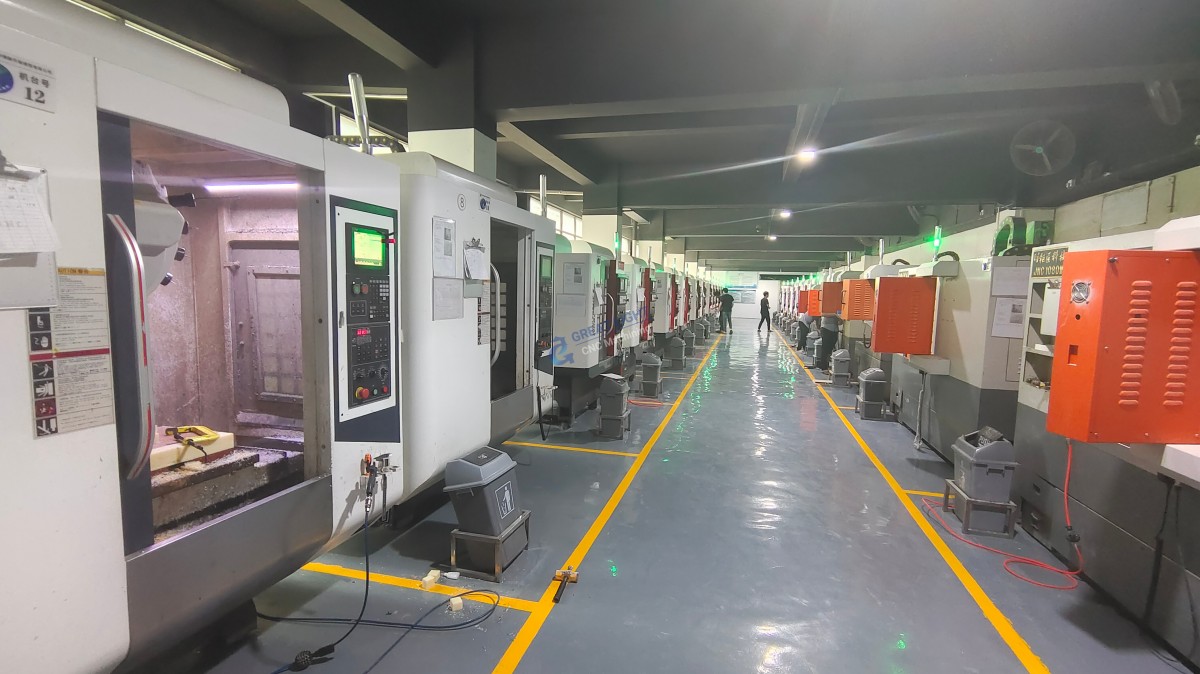
Founded in 2011 in Dongguan’s precision hardware hub, GreatLight CNC Machining Factory has emerged as a global leader in 5-axis CNC machining. Here’s why they stand out:
1. Advanced Equipment & Technical Expertise
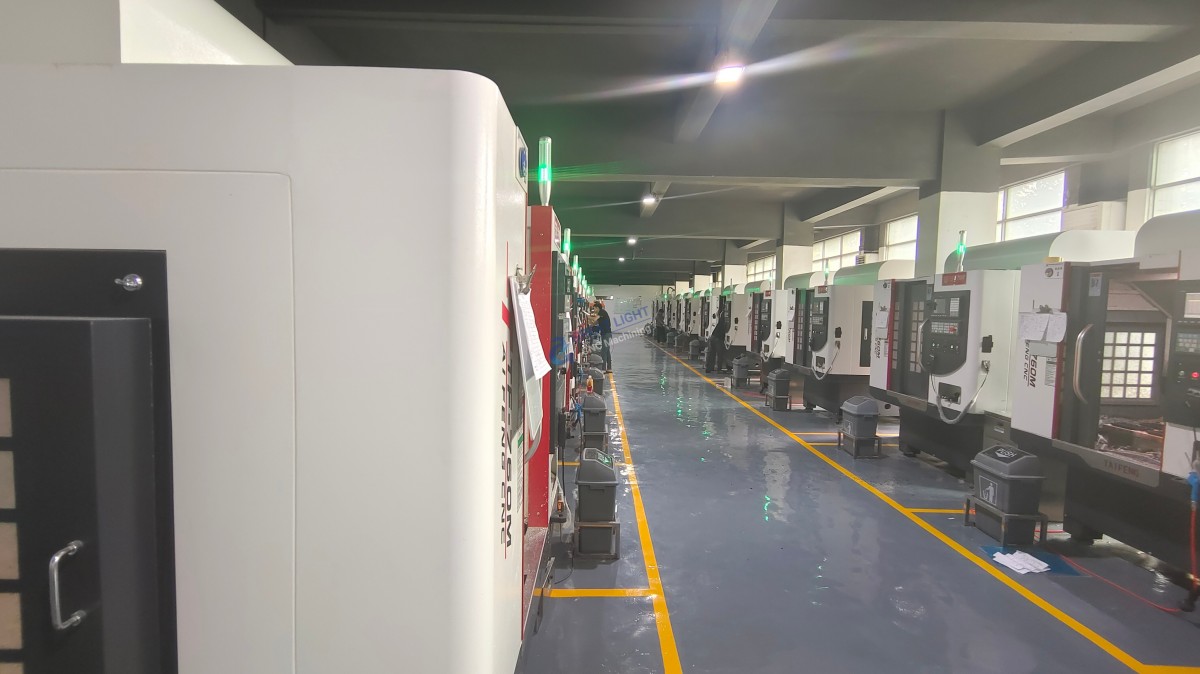
127+ precision machines: Includes Dema and Beijing Jingdiao 5-axis centers, Swiss-type lathes, and EDM equipment.
Max processing size: 4000mm, accommodating large components like automotive engine blocks.
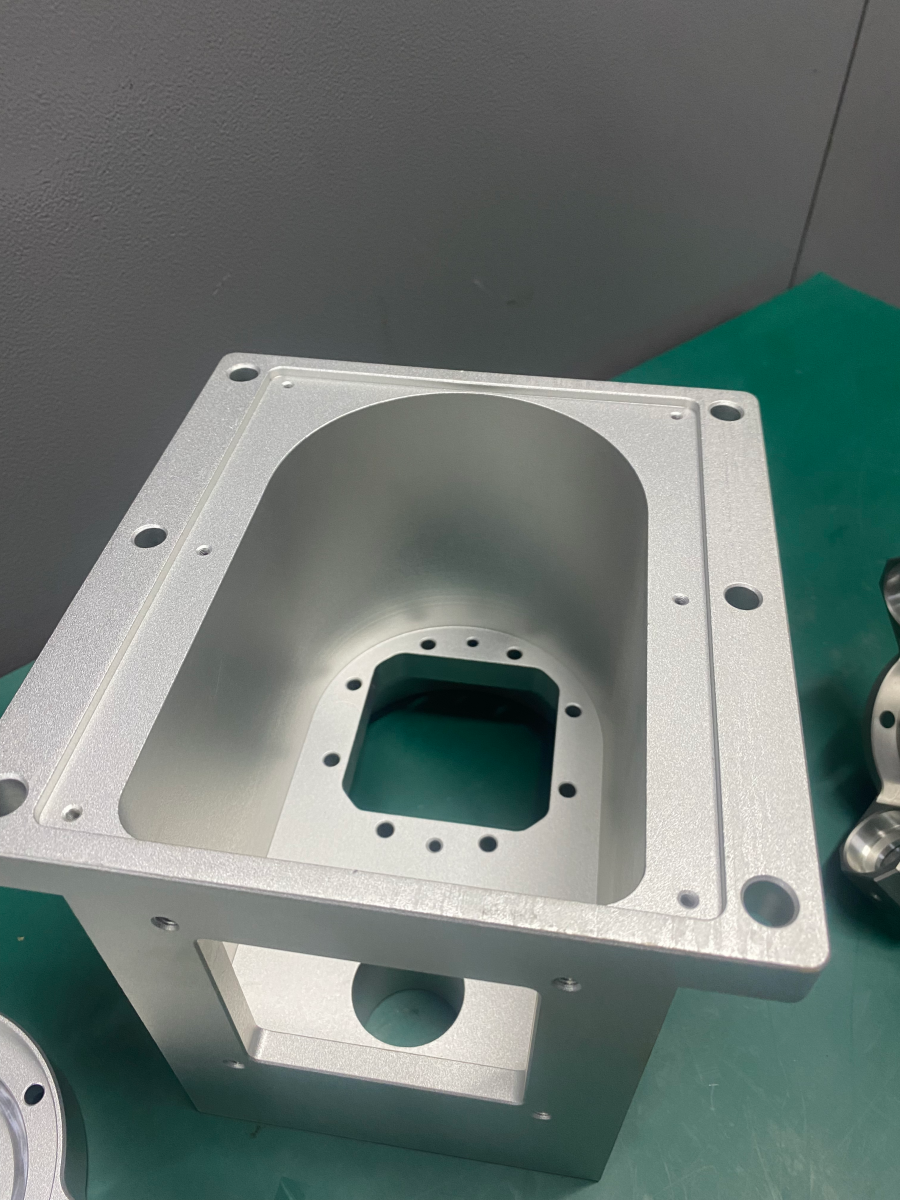
Tolerance capability: ±0.001mm (0.00004 inches), meeting aerospace and medical standards.
2. Full-Process Chain Integration
GreatLight offers one-stop services beyond 5-axis machining:
Die casting & sheet metal fabrication: For structural components.
3D printing (SLM/SLA/SLS): Rapid prototyping in titanium, aluminum, and stainless steel.
Surface finishing: Polishing, anodizing, and PVD coating for aesthetic and functional requirements.
3. Certifications & Compliance
ISO 9001:2015: Ensures consistent quality management.
ISO 13485: Medical hardware production compliance.
IATF 16949: Automotive industry certification for zero-defect manufacturing.
ISO 27001: Data security for IP-sensitive projects.
4. Case Studies: Real-World Impact
Automotive engines: Machined complex cylinder heads with internal cooling channels, reducing weight by 30% vs. traditional casting.
Aerospace components: Produced titanium brackets with ±0.002mm tolerances for satellite deployment systems.
Medical implants: Manufactured cobalt-chrome hip joints with mirror-finish surfaces for biocompatibility.
H2: How to Choose the Right 5-Axis CNC Partner
When evaluating suppliers, prioritize:
Equipment capability: Look for brands like Dema, Mazak, or DMG Mori.
Certifications: ISO 9001 is baseline; industry-specific standards (e.g., IATF 16949) add value.
Process control: In-house metrology labs (e.g., CMM inspection) ensure compliance.
Scalability: Can the supplier handle both prototypes and mass production?
GreatLight vs. Competitors:
GreatLight: Full-process chain, medical/automotive certifications, and 4000mm max size.
Proto Labs: Strong in rapid prototyping but lacks 5-axis expertise for large parts.
Foxconn Precision: Scalable but focuses on consumer electronics, not niche medical/aerospace.
H2: Conclusion: The Future of Precision Manufacturing
5-axis CNC machining is no longer a niche technology—it’s a necessity for industries demanding precision, speed, and design freedom. GreatLight CNC Machining Factory{:target=”_blank”} combines cutting-edge equipment, rigorous certifications, and a full-process chain to deliver parts that meet the highest standards. Whether you’re developing robotic joints, aerospace turbines, or medical implants, GreatLight’s 5-axis solutions are engineered to turn complexity into competitive advantage.
Ready to explore 5-axis machining for your next project? Partner with GreatLight to experience the pinnacle of precision manufacturing. Learn more about their capabilities on LinkedIn.{:target=”_blank”}
Frequently Asked Questions (FAQs)
Q1: What materials can be processed with 5-axis CNC machining?
5-axis machines handle metals (aluminum, titanium, stainless steel), plastics (PEEK, ABS), and composites (carbon fiber). GreatLight specializes in difficult-to-machine materials like Inconel and Hastelloy.
Q2: How does 5-axis machining reduce costs compared to 3-axis?
By eliminating multiple setups, 5-axis machining reduces labor costs, scrap rates, and lead times. For example, a part requiring three 3-axis setups might need just one 5-axis setup, cutting production time by 50%.
Q3: What industries benefit most from 5-axis CNC machining?
Aerospace: Turbine blades, structural components.
Medical: Implants, surgical tools.
Automotive: Engine blocks, transmission parts.
Robotics: Joint assemblies, end effectors.
Q4: Can GreatLight handle both prototypes and mass production?
Yes. GreatLight’s 127+ machines and three manufacturing plants support rapid prototyping (days) and high-volume production (10,000+ parts/month).
Q5: What quality guarantees does GreatLight offer?
Free rework for quality issues.
Full refund if rework fails to meet specifications.
ISO 9001:2015 certification for consistent process control.
Q6: How does GreatLight ensure data security for IP-sensitive projects?
GreatLight complies with ISO 27001 standards, implementing encrypted file transfers, restricted plant access, and NDA agreements to protect client data.



















