
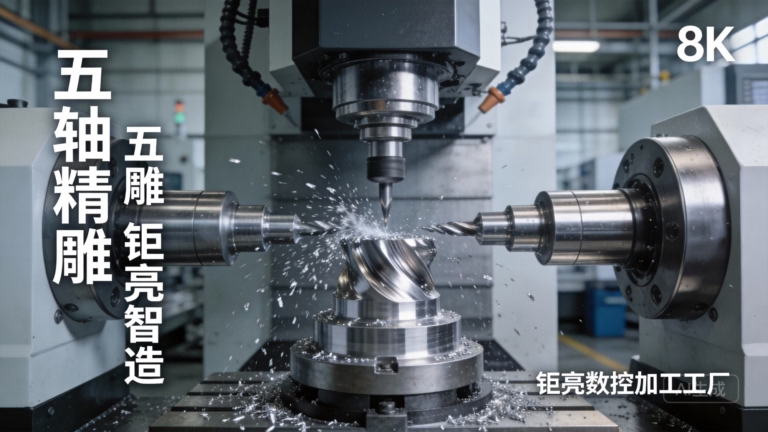
If you’re exploring precision manufacturing solutions, you’ve undoubtedly encountered the term “CNC machining.” But what does CNC stand for, and why has it become the undisputed backbone of modern part fabrication? At its core, CNC stands for Computer Numerical Control. This seemingly simple acronym represents a revolutionary shift from manual operation to automated, digitally-driven precision, forming the foundation of how complex and reliable components are made today.
H2: Deconstructing “Computer Numerical Control”
To fully appreciate its impact, let’s break down each component of the CNC acronym:
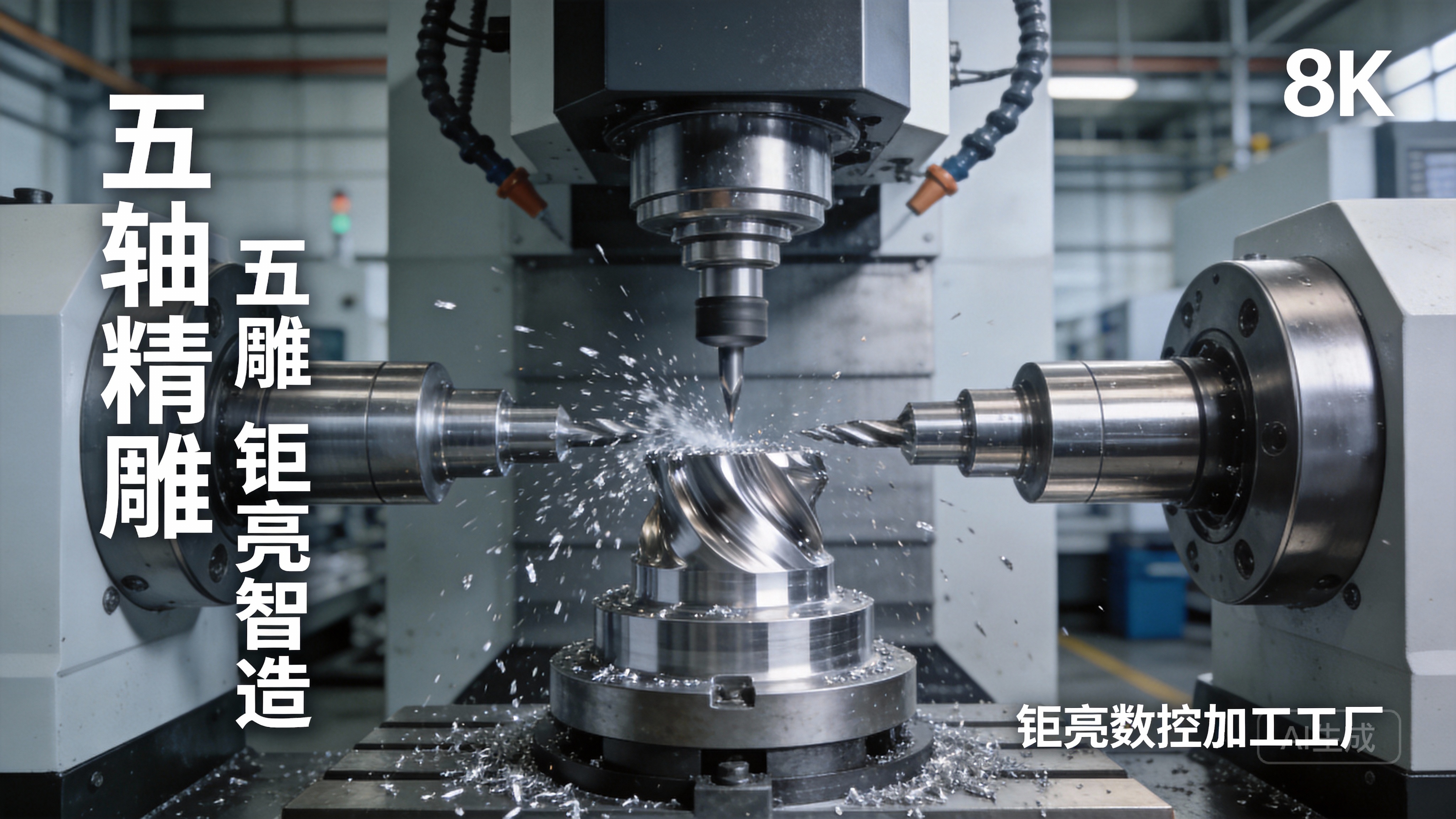
Computer: This is the brain. Instead of a machinist manually turning handwheels, a computer runs a program (G-code) that contains precise instructions for every movement of the machine tool.
Numerical: Refers to the coordinate system and mathematical data that define the part’s geometry. Every point, line, curve, and surface is described numerically (e.g., X-10.5mm, Y+3.2mm, Z-15.0mm).
Control: This is the execution. The computer’s numerical instructions are sent to servo motors and drives that control the exact position, speed, and path of cutting tools with superhuman consistency.
In essence, CNC machining is a subtractive manufacturing process where pre-programmed computer software dictates the movement of factory tools and machinery to shape stock material (like metal, plastic, or composite) into a custom-designed part.
H3: The Fundamental Shift: From Manual to Digital Machining
The advent of CNC represented a paradigm shift. Traditional manual machining relied entirely on the operator’s skill, attention, and endurance. Consistency across multiple parts was challenging, and complex geometries were often prohibitively time-consuming or impossible to produce.
CNC machining automates this process, bringing transformative benefits:
Unmatched Precision & Repeatability: Once a program is verified, a CNC machine can produce the first part and the thousandth part with microscopic consistency, often holding tolerances within ±0.001 inches (±0.025mm) or tighter.
Complex Geometry Capability: It can effortlessly create shapes that are impractical with manual methods—contours, intricate 3D surfaces, and complex internal features become routine.
Enhanced Efficiency & Reduced Human Error: Automation allows for unattended operation, increasing productivity and minimizing errors stemming from fatigue or oversight.
H2: The Core Components of a CNC Machining System
A functional CNC system is a symphony of hardware and software:
CAD Software: Where the part is designed in a digital 3D environment.
CAM Software: Translates the CAD model into the machine-readable G-code, defining toolpaths, speeds, and feeds.
CNC Controller: The onboard computer that interprets the G-code and sends command signals.
Machine Tool: The physical equipment (e.g., 5-axis CNC machining center, lathe, mill) equipped with drives, motors, and spindles that execute the cutting operations.
Cutting Tools & Workholding: The end effectors (drills, end mills) and fixtures that secure the workpiece.
H3: Why CNC Machining is Indispensable for Custom Precision Parts
For clients seeking precision parts machining and customization, understanding CNC’s value is crucial. It’s not just a machine; it’s a comprehensive capability.
Prototype to Production: It seamlessly bridges the gap. A design can be prototyped, tested, and then put into full-scale production with minimal process change, ensuring the production parts match the proven prototype.
Material Versatility: From common alloys like aluminum and stainless steel to exotic materials like titanium and Inconel, CNC machines can process an enormous range of materials to meet specific strength, weight, or environmental requirements.
Integrated Manufacturing Workflow: Leading manufacturers leverage CNC as part of a full-process chain. For instance, at GreatLight Metal, CNC machining centers work in concert with capabilities like precision grinding, EDM, and advanced surface treatments to deliver a finished, ready-to-assemble component from a single source.
H2: The Evolution and Future: CNC in the Smart Manufacturing Era
CNC technology continues to evolve. The integration of multi-axis machining (like 5-axis) allows for completing complex parts in a single setup, dramatically improving accuracy and reducing lead times. Furthermore, the rise of IoT and data analytics is giving birth to “smart” CNC shops where machine performance, tool wear, and production efficiency are monitored in real-time, enabling predictive maintenance and even greater process optimization.
Conclusion
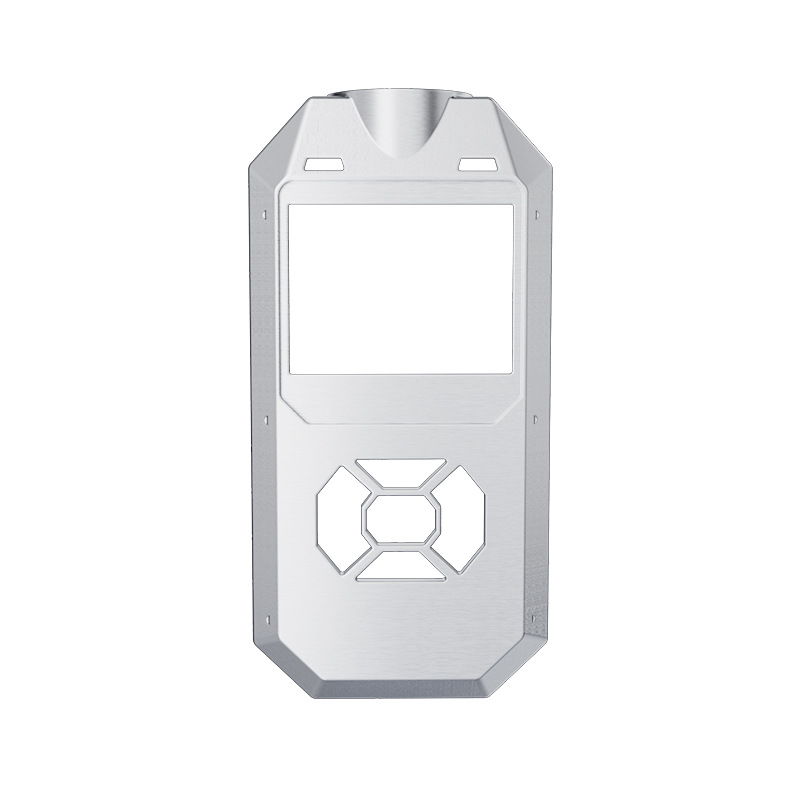
So, what does CNC stand for machining? It stands for Computer Numerical Control—the digital conductor of the modern manufacturing orchestra. It represents the synthesis of design intent and physical reality with precision, efficiency, and repeatability that manual methods cannot match. For any project requiring high-quality, reliable, and custom-engineered parts, partnering with a manufacturer that has mastered CNC technology, supported by rigorous quality systems and deep engineering expertise, is not just an option; it’s a critical success factor. It is this comprehensive command over the entire digital-to-physical workflow that defines leaders in the field, turning challenging designs into tangible, high-performance components.
FAQ: Frequently Asked Questions About CNC Machining
Q1: Is CNC machining only for metal parts?
A: No. While exceptionally common for metals (aluminum, steel, brass, titanium), CNC machining is also widely used for engineering plastics (like PEEK, Delrin), composites, and even wood or foam for specific applications.
Q2: What’s the difference between 3-axis, 4-axis, and 5-axis CNC machining?
A: The “axes” refer to the directions in which the cutting tool or workpiece can move.
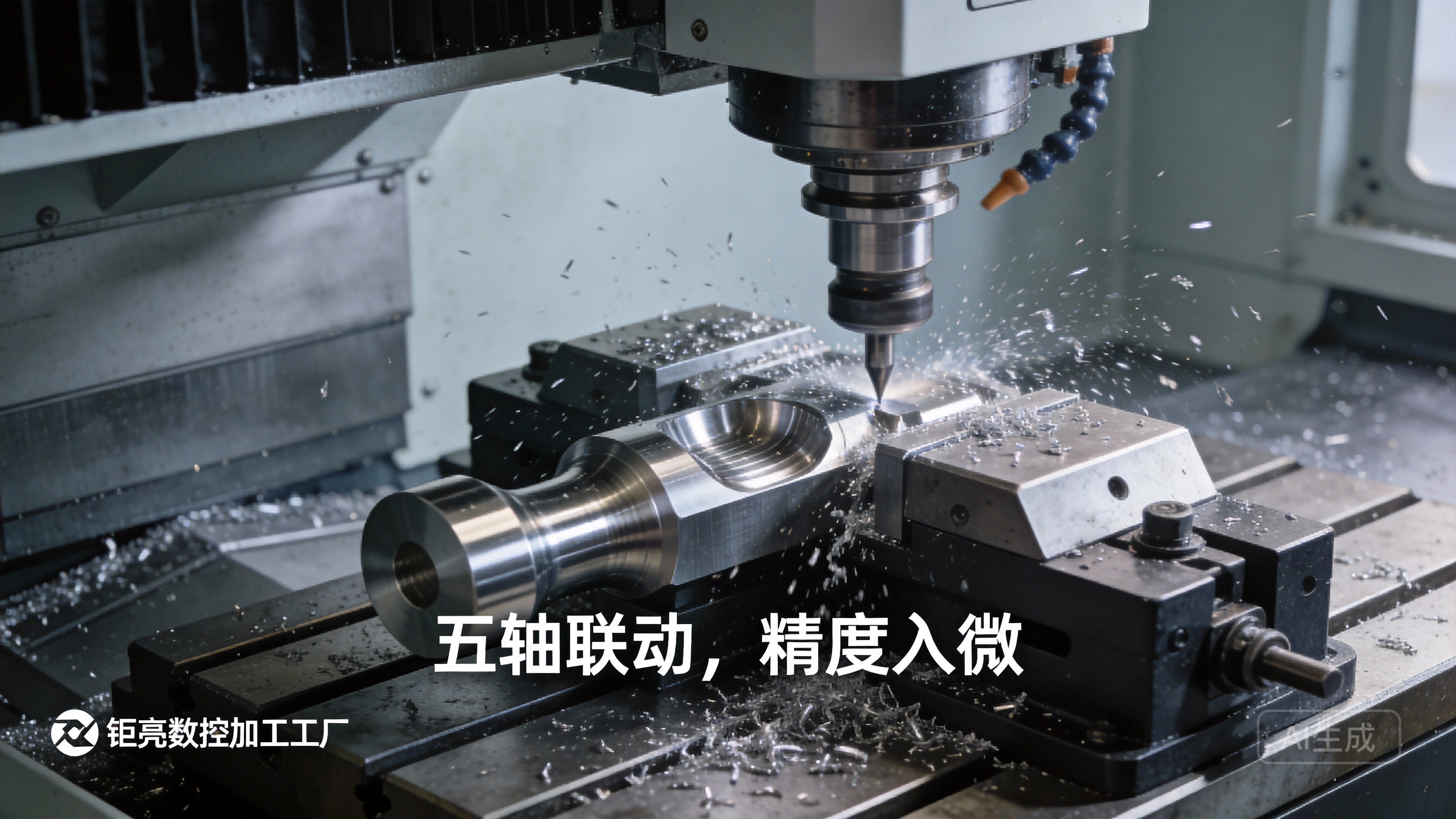
3-axis: Moves in X, Y, and Z (linear directions). Excellent for simpler parts but may require multiple setups.
4-axis: Adds rotation around the X-axis (A-axis), allowing machining on multiple sides of a part without manual repositioning.
5-axis: Adds rotation around two axes (typically A and B), enabling the tool to approach the workpiece from any direction in a single setup. This is essential for highly complex, contoured parts like aerospace components or impellers.
Q3: How does CNC machining compare to 3D printing for prototypes?
A: They are complementary technologies. CNC machining offers superior strength, material properties, and surface finish from production-grade materials and is ideal for functional prototypes. 3D printing excels at ultra-complex, organic geometries and rapid visual prototypes. A full-service manufacturer like GreatLight Metal will recommend the best technology based on the part’s function, material, and required timeline.
Q4: What file format do I need to provide for a CNC machining quote?
A: The standard is a 3D CAD file in STEP (.stp or .step) or IGES (.igs) format, as these are neutral and retain solid geometry data. 2D drawings in PDF or DWG format are also valuable for specifying critical tolerances, finishes, and inspection criteria.
Q5: What industries most commonly use CNC machined parts?
A: Virtually every advanced industry relies on CNC machining, including:
Aerospace & Defense: For lightweight, high-strength, reliable components.
Medical: For surgical instruments, implant prototypes, and diagnostic device housings requiring biocompatibility and precision.
Automotive & Racing: For engine components, custom fittings, and prototype parts.
Consumer Electronics: For enclosures, heat sinks, and internal mechanisms.
Industrial Automation: For robust, precise rollers, gears, and machine frames.
For further insights into industry applications and technical discussions, you can follow expert conversations on professional networks such as LinkedIn.



















