When embarking on a project that requires precision parts machining and customization, one of the most fundamental and critical questions you must ask is, “What CNC machine?” The answer is not a simple one, as the choice of CNC (Computer Numerical Control) machine directly dictates the geometric complexity, precision, cost, and lead time of your manufactured components. Selecting the wrong machine can lead to compromised designs, inflated costs, or even failed parts. This guide will demystify the options, from 3-axis to the advanced 5-axis systems, helping you understand which technology aligns with your project’s unique demands.
At its core, a CNC machine is a subtractive manufacturing tool that uses computerized controls to operate and manipulate machine shop tools. The “axis” refers to the directions in which the cutting tool or the workpiece can move. More axes mean more degrees of freedom, enabling the machining of more complex geometries in a single setup.
Understanding the Axis Spectrum: From Simplicity to Ultimate Complexity
H2: 3-Axis CNC Machining: The Foundation of Precision
This is the most common and widely understood form of CNC machining.
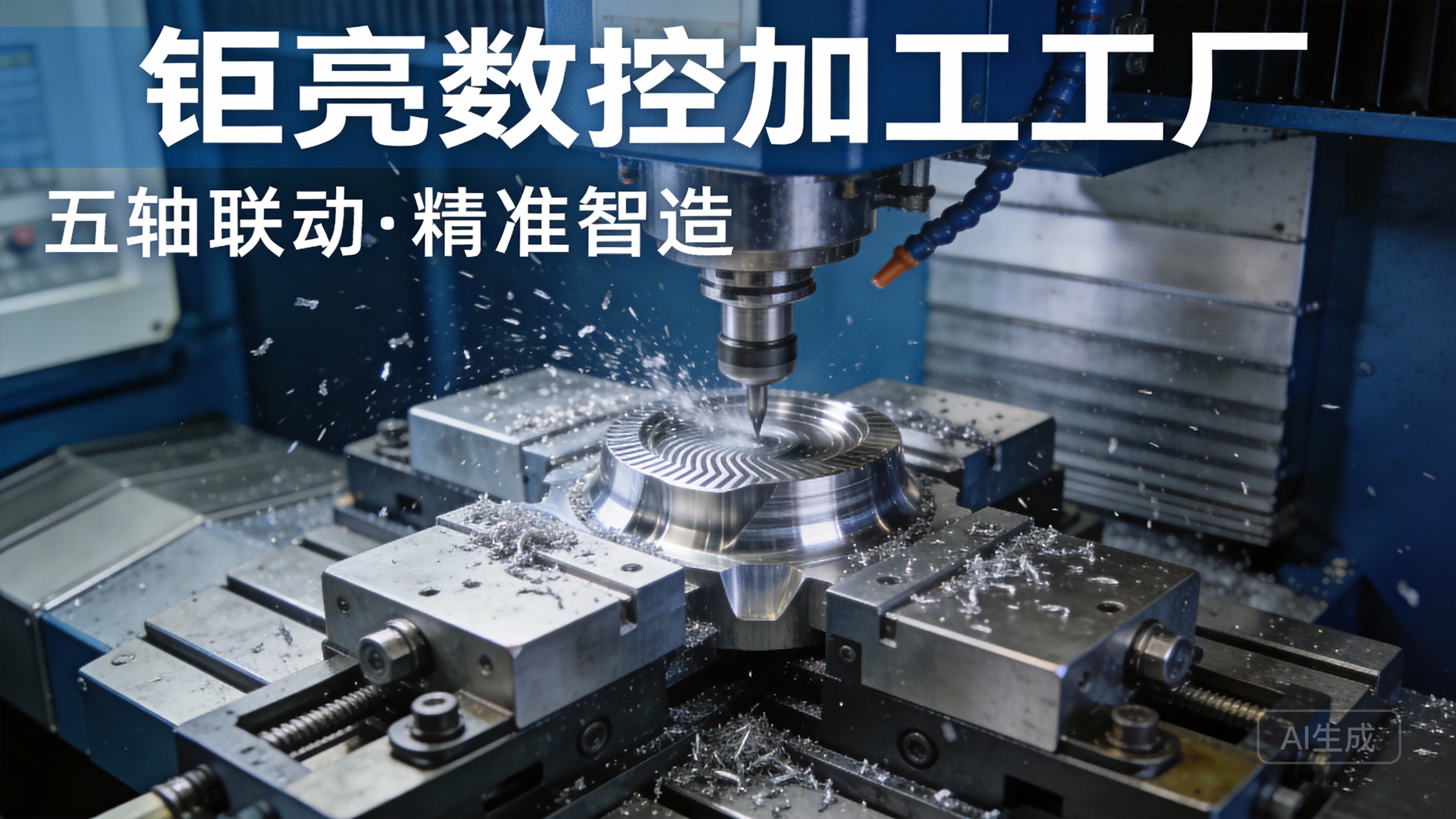
How it works: The cutting tool moves in three linear directions: X (left-right), Y (front-back), and Z (up-down). The workpiece typically remains stationary on the bed.
Ideal for: Parts with prismatic geometries—those with features on primarily one side or multiple sides that require repositioning (multiple setups). Think of brackets, enclosures, simple mold bases, and plates.
Limitations: To machine features on different sides, the operator must manually reposition the workpiece. This introduces potential alignment errors and increases labor time. Deep cavities or undercuts are often impossible or require specialized tooling.
H3: 4-Axis CNC Machining: Introducing Rotation
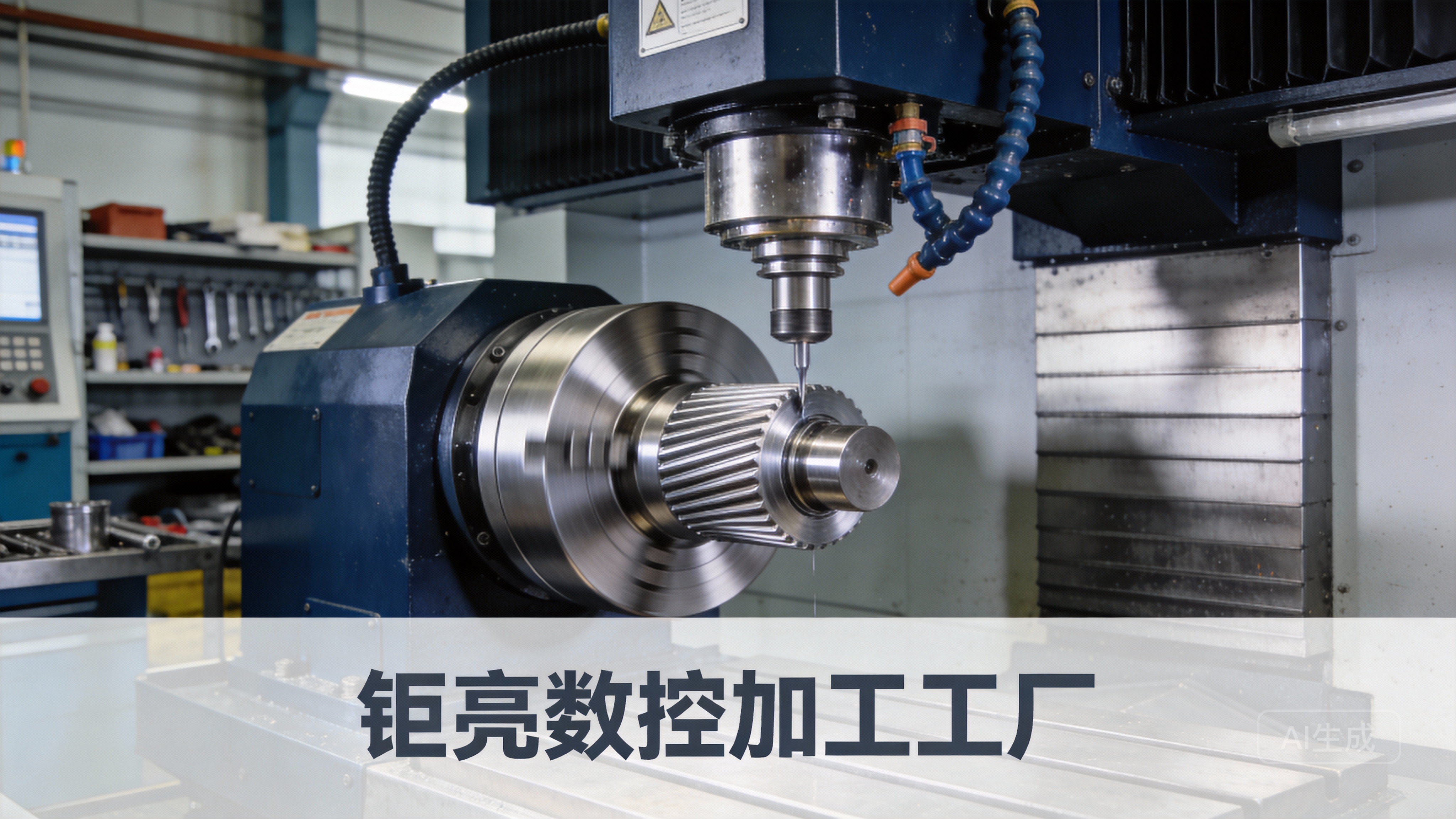
A 4-axis machine adds a rotary axis, typically referred to as the A-axis, which allows the workpiece to rotate around the X-axis.
How it works: In addition to X, Y, Z movement, the workpiece spins, allowing the tool to access its perimeter continuously. This is excellent for machining cylindrical features, engraving curved surfaces, or cutting features on the sides of a part without manual repositioning.
Ideal for: Camshafts, cylindrical connectors, helical gears, and parts requiring continuous peripheral machining.
H4: 5-Axis CNC Machining: The Pinnacle of Flexibility and Precision
This is where manufacturing capabilities take a significant leap. A 5-axis CNC machining system incorporates two rotary axes (e.g., A and B, or B and C) in addition to the three linear ones. This allows the cutting tool to approach the workpiece from virtually any direction in a single setup.
How it works: The tool or table tilts and rotates simultaneously, maintaining the optimal cutting angle and shortest tool path. This technology is at the heart of solving complex metal parts manufacturing challenges.
Ideal for: Complex, organic geometries common in aerospace (impellers, turbine blades), medical (orthopedic implants, surgical tools), automotive (engine blocks, complex housings), and high-end robotics. It eliminates multiple setups, drastically improves accuracy on complex contours, allows for shorter tools (increasing rigidity and surface finish), and can machine previously “unmachinable” features.
For a manufacturer like GreatLight Metal, investing in a full spectrum of CNC capabilities, with a particular emphasis on advanced 5-axis technology, is a strategic decision. It transforms the company from a simple parts producer into a solutions partner capable of tackling the most daunting design challenges.
H2: Key Decision Factors: How to Choose the Right CNC Machine for Your Project
Answering “what CNC machine?” requires a deep dive into your part’s specifications and project goals.
Part Geometry & Complexity: This is the primary driver. Simple 2.5D parts? 3-axis is efficient. Cylindrical parts? Consider 4-axis. Complex sculpted surfaces, undercuts, or features on five sides? 5-axis CNC machining is not just an option; it’s often a necessity for precision, efficiency, and sometimes feasibility.
Required Tolerance and Surface Finish: Higher-tier machines, especially newer 5-axis models with superior rigidity and thermal stability, inherently hold tighter tolerances (±0.001mm and above). A single setup in a 5-axis machine also eliminates cumulative errors from multiple re-fixturing.
Material: The hardness and machinability of your chosen material (e.g., titanium, Inconel, hardened tool steel vs. aluminum or brass) will influence the required machine power, rigidity, and sometimes the need for specialized coolant-through-spindle capabilities, which are standard on advanced machining centers.
Volume and Lead Time: For prototypes or low-volume, high-mix production, the ability of a 5-axis machine to complete a part in one setup dramatically reduces lead time. For high-volume production of simple parts, dedicated 3-axis machines or even automated cells might be more cost-effective.
Total Cost of Ownership (TCO): While 5-axis machining has a higher hourly rate, it can lower the total project cost by reducing setups, fixturing, labor, and secondary operations. A comprehensive one-stop post-processing and finishing service from your manufacturer further consolidates cost and time savings.
H2: Beyond the Machine: The Ecosystem of a Capable Manufacturing Partner
Choosing “what CNC machine” is intrinsically linked to choosing “who operates it.” The machine is just a tool. The true value lies in the engineering expertise, quality systems, and integrated services surrounding it. This is where GreatLight Metal‘s operational philosophy creates distinct value.
Integrated Manufacturing Solutions: A true partner doesn’t just offer a single process. GreatLight Metal’s capability spans precision CNC machining, die casting, sheet metal fabrication, vacuum casting, and advanced 3D printing (SLM, SLA, SLS). This allows for unbiased process recommendation—advising on the most suitable and cost-effective technology for your specific part, be it machining, printing, or a hybrid approach.
Engineering Support & DFM (Design for Manufacturability): A senior manufacturing engineer will review your design not just for the chosen machine’s capability, but for optimal manufacturability—suggesting subtle tweaks to reduce cost, improve strength, or simplify assembly without compromising function.
Authority and Trust via Certifications: In precision industries like medical and automotive, the machine’s calibration is as important as the system controlling it. Certifications like ISO 9001:2015, ISO 13485 (medical), and IATF 16949 (automotive) are not just plaques on the wall. They are audited proof of a systematic, documented, and continuously improved quality management system that governs every step from order intake to final shipment. For intellectual property-sensitive projects, adherence to standards like ISO 27001 for data security is paramount.
In-House Metrology & Validation: The ability to verify dimensions with high-precision CMMs (Coordinate Measuring Machines), optical scanners, and surface testers is non-negotiable. This closes the quality loop, ensuring the part from the advanced CNC machine meets the print, providing you with certifiable data.
Conclusion
So, what CNC machine is right for you? The answer lies in a collaborative analysis of your design’s complexity, performance requirements, and project timeline. While 3-axis and 4-axis machines form the robust backbone of volume manufacturing for simpler components, the 5-axis CNC machining center stands as the indispensable solution for innovation—enabling the creation of lighter, stronger, and more complex parts that push the boundaries of product design.
Choosing a partner like GreatLight Metal means you are not just renting time on a machine. You are leveraging a decade of deep technical expertise, a full-spectrum manufacturing ecosystem, and a quality-centric culture backed by international certifications. This comprehensive approach ensures that regardless of which CNC technology is deployed, your project benefits from optimized processes, rigorous validation, and a seamless journey from digital model to high-performance physical part. It’s about selecting a partner with the real operational capabilities to transform your most challenging concepts into precision reality.
Frequently Asked Questions (FAQ)
Q1: My part can technically be made on a 3-axis machine with multiple setups. Why should I consider 5-axis machining?
A: While feasible, multiple setups introduce potential alignment errors, increase handling and fixturing time, and may require more complex (and costly) fixtures. 5-axis machining in a single setup guarantees higher overall accuracy, better surface finish on complex contours, and often a faster total production time, improving both quality and efficiency.
Q2: Is 5-axis CNC machining always more expensive?
A: Not necessarily when considering the Total Cost of Ownership (TCO). Although the hourly rate is higher, the elimination of multiple setups, custom fixtures, and reduced manual labor can lead to a lower total cost for complex parts. It also minimizes the risk of scrap due to setup errors.
Q3: What file format should I provide for a CNC machining quote?
A: Provide a 3D solid model in a neutral format like STEP (.stp) or IGES (.igs), along with a 2D drawing in PDF format. The drawing should clearly specify critical dimensions, tolerances, geometric tolerances (GD&T), surface finish requirements, and material specifications.
Q4: How does GreatLight Metal ensure the confidentiality of my design?
A: We take IP protection seriously. Our operations are guided by data security best practices aligned with standards like ISO 27001. We use secure file transfer protocols, enforce strict internal access controls, and are willing to sign comprehensive Non-Disclosure Agreements (NDAs) before any project discussion.
Q5: Can you handle both prototyping and full-scale production?
A: Absolutely. Our flexible manufacturing setup, combining advanced CNC machining with technologies like metal 3D printing for rapid prototypes, allows us to support you from the initial design validation phase through to pilot runs and full-scale production, ensuring consistency and knowledge transfer throughout the product lifecycle.
Q6: What materials can you machine?
A: We can process a vast range of metals and plastics. Common metals include aluminum alloys, stainless steels, tool steels, titanium, brass, and copper. We also machine engineering plastics like PEEK, Delrin, and Nylon. Contact us with your material specification for confirmation.
For further insights into our projects and industry engagement, you can follow our professional updates on LinkedIn.