
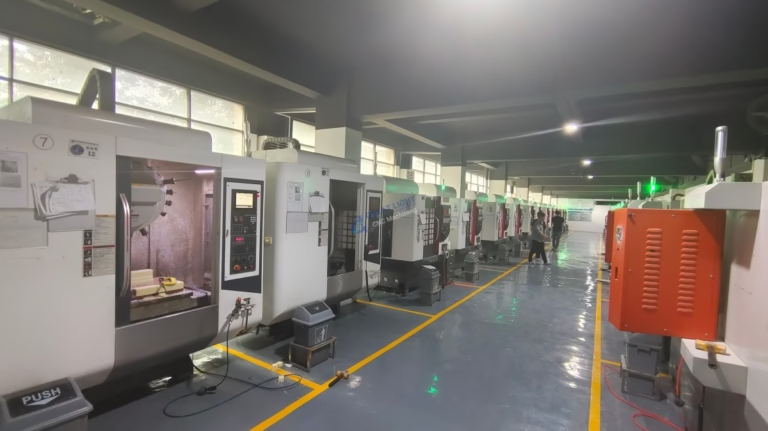
For clients exploring the world of precision manufacturing, one of the most empowering and frequently asked questions is: What can I make with a CNC machine? The short answer is: almost any solid part you can design. As a senior manufacturing engineer, I’ve witnessed this technology evolve from a niche tool to the backbone of modern industrial production. A CNC (Computer Numerical Control) machine is essentially a digital sculptor for metal, plastic, and composite materials, translating intricate 3D models into physical reality with breathtaking accuracy. From the tiny, complex components inside your smartphone to the massive, structural elements of an aircraft, the scope is virtually limitless. This blog post will delve into the vast universe of possibilities that CNC machining unlocks, helping you understand its transformative role in bringing innovative designs to life.
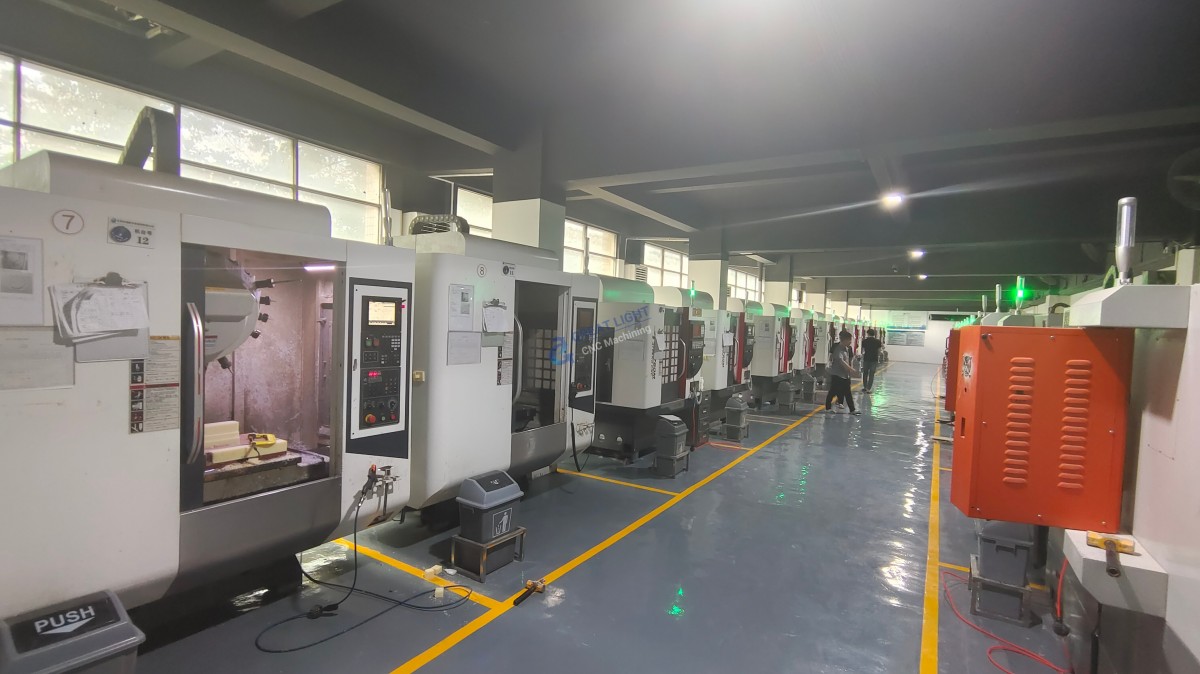
The Core Principle: Digital Design to Physical Part
At its heart, CNC machining is a subtractive manufacturing process. It starts with a solid block of material (called a blank or workpiece), and a computer-guided cutting tool precisely removes material layer by layer to reveal the final part. This contrasts with additive processes like 3D printing. The “CNC” aspect means every movement of the cutting tool—along the X, Y, and Z axes, and often with rotational A and B axes—is dictated by coded instructions (G-code) generated from your CAD (Computer-Aided Design) model. This digital-to-physical workflow is why CNC machining is unparalleled for producing parts with exceptional dimensional accuracy, excellent surface finishes, and superior material integrity.
A World of Applications: Industries Transformed by CNC
To truly grasp what you can make, it’s best to look at the industries that rely on it daily.
Aerospace & Defense
This sector demands the highest standards of precision, reliability, and material performance. CNC machining manufactures:
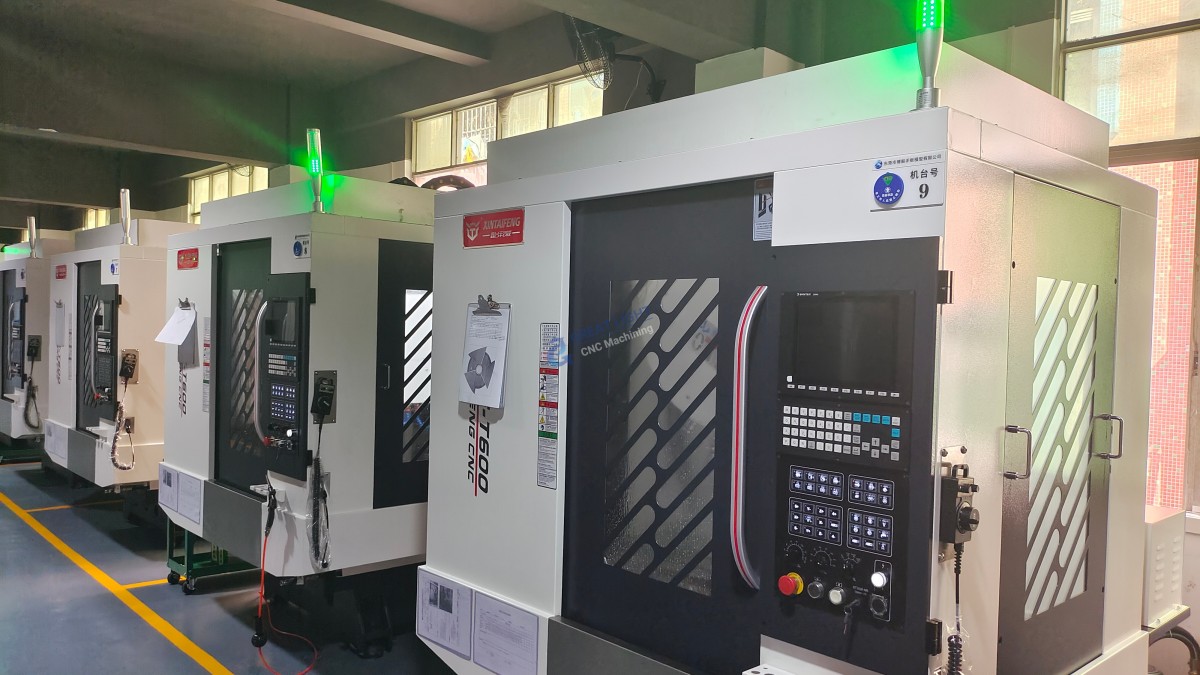
Engine Components: Turbine blades, fuel system housings, combustion chamber liners from high-temperature alloys like Inconel.
Airframe Structures: Wing ribs, brackets, landing gear components from aluminum and titanium.
Avionics Enclosures: Precise, lightweight housings for sensitive navigation and communication equipment.
Unmanned Aerial Vehicle (UAV) Parts: Complex, aerodynamic geometries that are both strong and lightweight.
Automotive & Motorsport
From prototyping to high-performance production, CNC is critical.
Engine Blocks and Cylinder Heads: Prototypes and low-volume production runs.
Transmission Components: Gears, shafts, and complex housings.
Suspension and Braking Parts: Custom control arms, brake calipers, and uprights.
Interior and Exterior Prototypes: Dashboard components, grilles, and concept model parts.
Medical & Life Sciences
Biocompatibility and extreme precision are non-negotiable here.
Surgical Instruments: Forceps, bone drills, and custom surgical guides.
Orthopedic Implants: Knee, hip, and spinal implants from titanium and cobalt-chrome alloys.
Diagnostic Equipment Housings: Enclosures for MRI, CT scanners, and handheld diagnostic tools requiring EMI/RFI shielding.
Dental Components: Crowns, bridges, and implant abutments.
Consumer Electronics
This fast-paced industry uses CNC for both prototyping and mass production of enclosures.
Smartphone and Laptop Unibodies: The seamless aluminum chassis in high-end devices are CNC milled.
Wearable Device Housings: Frames for smartwatches and AR/VR headsets.
Heat Sinks and Connectors: Critical for thermal management and signal integrity.
Industrial Machinery & Robotics
This is about creating the tools that build everything else.
Custom Machine Frames and Plates: The foundational structure of automation equipment.
Robotic End-Effectors: Custom grippers, welding heads, and tool changers.
Jigs and Fixtures: Essential tools for holding workpieces during other manufacturing processes.
Gearboxes and Drive Components: High-wear parts requiring exact tolerances.
Energy & Transportation
Hydraulic Components: Valves, manifolds, and pump housings for oil & gas and renewable energy systems.
Heat Exchangers: Complex internal channels machined into metal plates.
Marine Components: Propeller shafts, fittings, and parts resistant to corrosion.
Beyond Materials: The Processes Within CNC
“What you can make” is also defined by the type of CNC process. A full-service manufacturer like GreatLight Metal integrates multiple processes to offer a complete solution.
CNC Milling: The most common process for creating complex 3D shapes, pockets, slots, and contours. Multi-axis milling (like our advanced 5-axis CNC machining capabilities) allows for the production of geometries that were once impossible in a single setup.
CNC Turning: Ideal for creating rotational, axisymmetric parts. Used for shafts, pins, bushings, and nozzles. Mill-turn centers combine both milling and turning for complete part fabrication.
CNC Grinding: Achieves the highest surface finishes and tightest tolerances, crucial for bearing races, tooling, and precision gauges.
CNC Electrical Discharge Machining (EDM): Uses electrical sparks to shape extremely hard metals or create intricate internal features like fine ribs or textured surfaces for molds.
From Prototype to Production: The Full Spectrum
CNC machining is uniquely scalable.
Prototyping: Create one-off, functional prototypes that match the material and properties of the final production part. This is invaluable for design validation, testing, and investor presentations.
Bridge Production: Manufacture low to medium volumes (dozens to hundreds of units) before committing to expensive injection molding or casting tooling.
High-Volume Production: For certain high-value or complex parts, CNC machining can be optimized for production runs of thousands of pieces using automated pallet systems and dedicated fixtures.
Conclusion: Your Vision, Manufactured with Precision
So, what can you make with a CNC machine? You can make the tangible manifestation of your innovation. Whether it’s a single prototype to prove a concept or a batch of mission-critical components for a global supply chain, CNC machining provides the flexibility, precision, and reliability to get it done. The true differentiator lies not just in the machines, but in the engineering expertise behind them—the ability to advise on design for manufacturability (DFM), select the optimal material and process, and ensure every part meets stringent quality standards.
This is where partnering with an experienced manufacturer becomes crucial. At GreatLight Metal Tech Co., LTD., we’ve built our service on this very principle. With over a decade of experience, a comprehensive suite of advanced equipment from 3 to 5-axis CNC centers to EDM and additive manufacturing, and a rigorous quality management system backed by ISO 9001:2015, IATF 16949, and ISO 13485 certifications, we are equipped to guide your idea from a digital file to a flawless physical part. We don’t just run machines; we provide integrated manufacturing solutions, tackling challenges from complex precision design drawings to just-in-time delivery.
Ready to explore what you can make? Let’s turn your design into reality.
Frequently Asked Questions (FAQ)
Q1: Are there any design limitations to what CNC machining can produce?
A: While incredibly versatile, CNC machining has some geometric constraints. Deep, narrow internal cavities, certain undercuts, and perfectly square internal corners can be challenging or require specialized tooling. This is why consulting with manufacturing engineers early in the design phase is so valuable for Design for Manufacturability (DFM) optimization.
Q2: How does CNC machining compare to 3D printing for making parts?
A: They are complementary technologies. CNC machining typically offers superior strength, better surface finish, wider material selection (especially metals), and higher dimensional accuracy. 3D printing excels at creating extremely complex internal geometries (like lattices), consolidating assemblies into single parts, and is often faster for very low-volume, complex prototypes. The choice depends on the part’s function, material, quantity, and budget.
Q3: What materials can be used in CNC machining?
A: A vast range. Commonly machined metals include aluminum (various alloys), stainless steel, titanium, brass, and copper. Plastics like ABS, PEEK, Delrin (Acetal), Nylon, and Polycarbonate are also widely used. Advanced materials like Inconel, tungsten carbide, and composites can also be machined with the right tools and expertise.
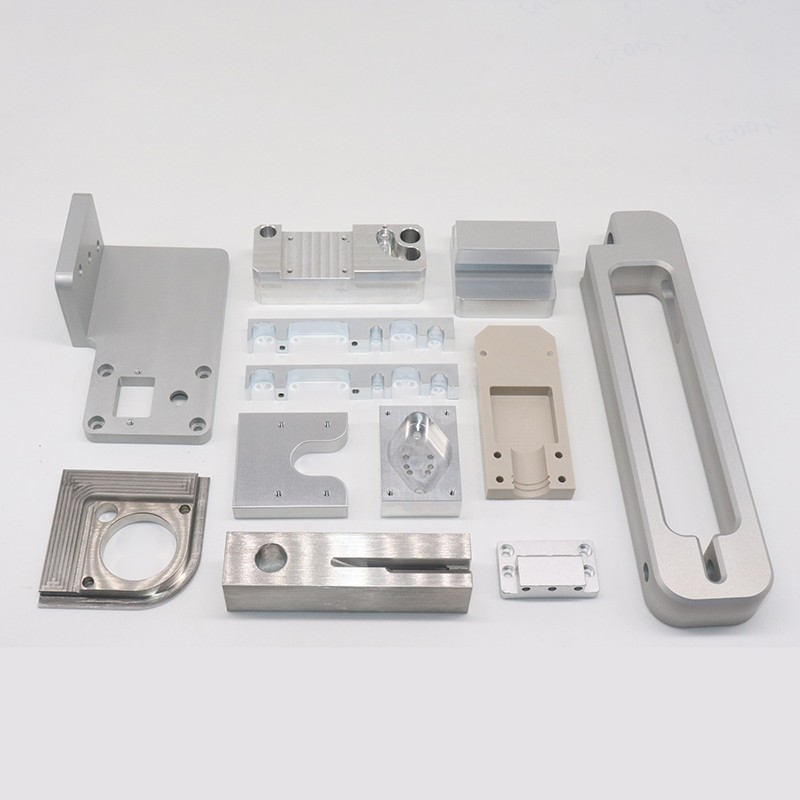
Q4: What level of precision can I expect from CNC machining?
A: Standard precision for CNC machining is typically in the range of ±0.005 inches (±0.127 mm). High-precision machining can achieve tolerances of ±0.001 inches (±0.025 mm) or even tighter, down to microns, for critical features. It’s important to specify tolerances based on the part’s functional needs, as tighter tolerances increase cost.
Q5: How do I get started with a CNC machining project for a custom part?
A: Start with a well-defined 3D CAD model (e.g., STEP or IGES file). Then, partner with a reputable manufacturer. Share your design, along with requirements for material, quantity, surface finish, and critical tolerances. A good partner will provide a DFM analysis, quote, and timeline. For insights into industry trends and professional networks, you can explore platforms like LinkedIn to connect with manufacturing experts and communities.



















