
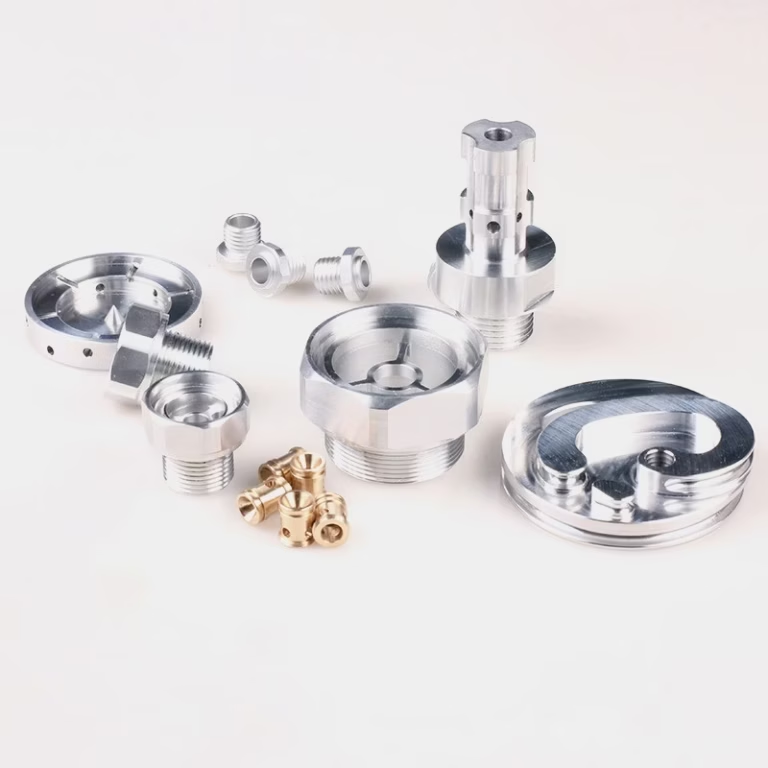
What Can Be Made With A CNC Milling Machine?
In the world of modern manufacturing, CNC milling machines have become indispensable tools for producing high-precision components across a vast range of industries. From intricate aerospace parts to custom automotive components and medical implants, the versatility of these machines is transforming how we bring ideas to life. If you’re asking, “What can be made with a CNC milling machine?”, the answer spans nearly every sector that relies on precision-engineered metal or plastic parts.
At the heart of this capability lies advanced technology like five-axis CNC machining—where complex geometries are no longer limitations but opportunities. At GreatLight CNC Machining Factory, our state-of-the-art equipment and deep engineering expertise enable us to tackle even the most challenging designs, turning digital models into real-world, high-performance components with micron-level accuracy.
Let’s explore what modern CNC milling can produce, why it matters, and how choosing the right partner makes all the difference.
Understanding CNC Milling: More Than Just Metal Shaping
Computer Numerical Control (CNC) milling is a subtractive manufacturing process where computer-controlled rotating cutting tools remove material from a solid block—known as a workpiece—to create a desired shape. Unlike manual machining, CNC ensures repeatability, tight tolerances (down to ±0.001mm), and the ability to execute highly complex 3D contours.
There are several types of CNC milling setups:
3-axis milling: Ideal for flat surfaces, slots, and simple cavities.
4-axis milling: Adds rotational movement around the X-axis, enabling cylindrical features and indexing.
5-axis milling: Allows simultaneous movement across five axes, making it possible to machine complex organic shapes in a single setup—critical for aerospace turbine blades or robotic joints.
This evolution in axis control has dramatically expanded what can be produced, allowing manufacturers like GreatLight Metal to deliver parts that were once considered too difficult—or impossible—to fabricate efficiently.
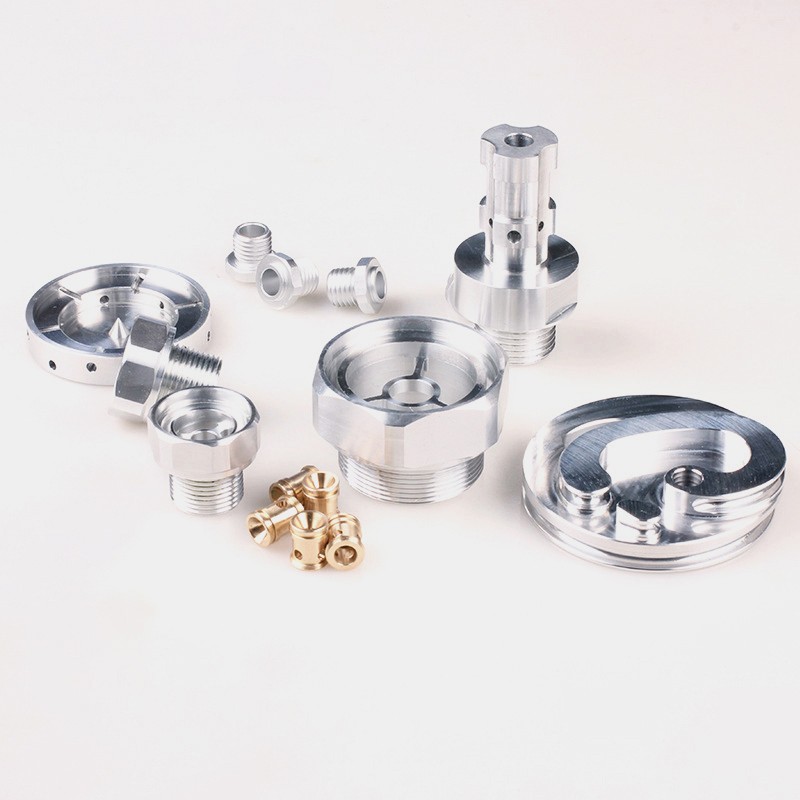
Industries Powered by CNC Milling
The applications of CNC milling span virtually every advanced industry. Let’s break down some key sectors and the types of parts they rely on.
1. Aerospace & Defense
Aerospace demands extreme reliability under intense conditions. Components must be lightweight yet strong, heat-resistant, and precisely balanced.
Common CNC-milled parts:
Engine housings and compressor casings
Turbine blades and impellers
Structural brackets and fuselage fittings
Landing gear components
Materials used include titanium alloys, Inconel, aluminum 7075-T6, and high-strength steels—all materials GreatLight CNC Machining Factory routinely processes using its five-axis systems.
Why 5-axis matters: Complex airfoil profiles require continuous contouring without re-fixturing, reducing error risk and improving surface finish.
2. Automotive & Electric Vehicles (EVs)
From performance racing engines to next-gen EV powertrains, CNC milling enables rapid prototyping and low-volume production of critical drivetrain and chassis systems.
Typical machined components:
Transmission cases and differentials
Suspension control arms
Brake calipers and master cylinders
Battery enclosures and motor housings
Custom intake manifolds
For startups developing electric vehicles, the ability to quickly iterate prototypes via CNC milling accelerates time-to-market. GreatLight supports such innovation with fast turnaround times and full post-processing services—including anodizing, powder coating, and passivation.
3. Medical Devices & Surgical Equipment
Medical hardware requires biocompatibility, corrosion resistance, and ultra-fine detail—especially for implantable devices.
Examples of milled medical parts:
Orthopedic implants (hip stems, knee joints)
Dental crowns and abutments
Surgical instrument handles and clamps
Diagnostic imaging equipment housings
Titanium Grade 5 (Ti-6Al-4V) and stainless steel 316L are commonly used due to their strength and compatibility with human tissue. Our ISO 13485-compliant processes ensure traceability, cleanliness, and adherence to strict regulatory standards.
4. Industrial Automation & Robotics
As robotics evolve toward greater dexterity and autonomy, mechanical components must follow suit. Humanoid robots, collaborative arms, and automated guided vehicles (AGVs) depend heavily on precision-machined parts.
Key robotic components made via CNC:
Joint housings and harmonic drive carriers
Actuator frames and gearbox enclosures
Sensor mounts and end-effector structures
Lightweight structural arms (using magnesium or carbon fiber-reinforced composites)
GreatLight CNC Machining Factory has extensive experience in custom parts for humanoid robot development, leveraging both CNC and metal 3D printing (SLM) to optimize strength-to-weight ratios.
5. Energy & Power Generation
Whether fossil fuel-based turbines or renewable energy systems, efficient energy conversion depends on precision-engineered components.
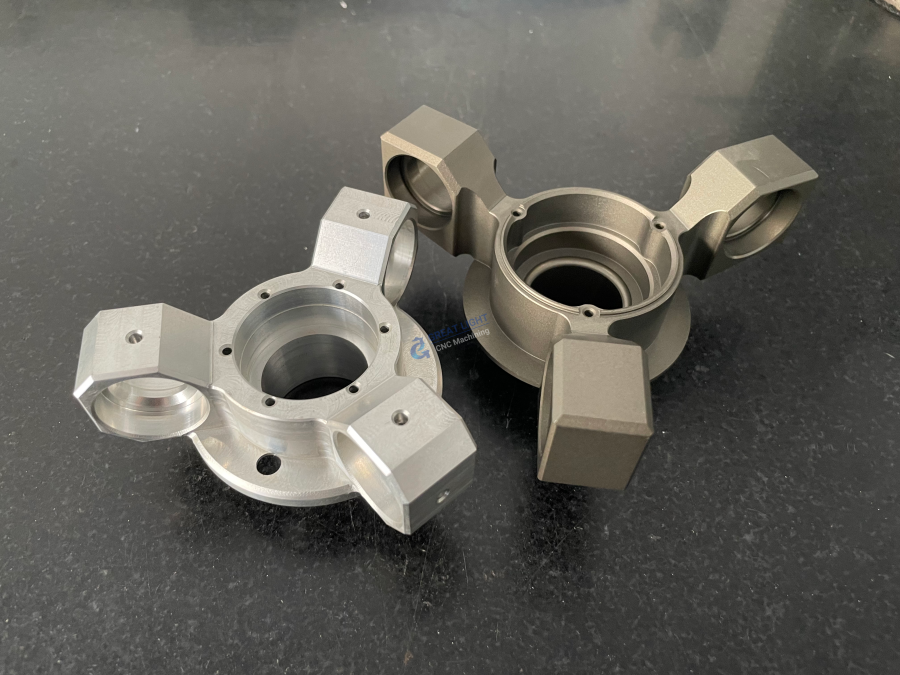
CNC-milled energy sector parts:
Wind turbine pitch bearing adapters
Hydroelectric valve bodies
Heat exchanger plates
Solar tracking system gears and brackets
These often involve large-format machining (up to 4000 mm), which our facility supports through dedicated heavy-duty CNC centers.
6. Consumer Electronics & High-Tech Hardware
High-end electronics demand sleek aesthetics, thermal management, and electromagnetic shielding—all achievable through precision milling.
Examples:
Aluminum laptop chassis and heatsinks
Camera lens barrels and gimbal housings
Enclosures for servers and networking equipment
Brackets for AR/VR headsets
With capabilities in fine surface finishing—including mirror polishing and bead blasting—we help clients achieve both functional and visual excellence.
Materials That Can Be Machined
One of the greatest strengths of CNC milling is its material flexibility. Whether your design calls for strength, conductivity, lightness, or chemical resistance, there’s likely a suitable option.
| Material Category | Common Examples | Typical Applications |
|---|---|---|
| Aluminum Alloys | 6061, 7075, 5052 | Aerospace, automotive, consumer goods |
| Stainless Steels | 303, 304, 316L, 17-4 PH | Medical, food processing, marine |
| Carbon & Alloy Steels | 4140, 4340, A36 | Industrial machinery, tooling |
| Titanium Alloys | Ti-6Al-4V, CP-Ti | Aerospace, medical implants |
| Nickel-Based Superalloys | Inconel 625, 718 | Jet engines, high-temp environments |
| Plastics | PEEK, Delrin, Nylon, PTFE | Insulators, wear-resistant bushings |
| Brass & Copper | C36000, C11000 | Electrical connectors, decorative parts |
GreatLight CNC Machining Factory maintains inventory of many standard materials and offers rapid sourcing for exotic alloys, ensuring minimal lead time delays.
Design Complexity: Pushing the Boundaries of What’s Possible
Modern CNC milling isn’t limited to boxes and cylinders anymore. Thanks to multi-axis control and advanced CAM software, designers can now push boundaries.
Features Achievable Through CNC Milling:
Deep pockets and thin walls (<0.5mm)
Undercuts and internal threads
Curved surfaces and freeform contours
Micro-channels for fluid dynamics
Integrated mounting bosses and alignment pins
Even seemingly “unmachinable” geometries can often be addressed through creative fixturing, toolpath optimization, or hybrid approaches combining CNC with EDM (Electrical Discharge Machining).
Our engineers at GreatLight CNC Machining Factory collaborate closely with clients during the DFM (Design for Manufacturability) phase to identify potential issues early—saving cost and time while enhancing performance.
Why Choose GreatLight CNC Machining Factory?
While many shops offer CNC milling services, not all deliver consistent quality, technical depth, or responsive support. Here’s what sets us apart:
✅ Advanced Equipment & Full-Process Integration
We operate over 127 precision machines, including:
High-speed 5-axis CNC machining centers (Dema, Jingdiao)
Precision lathes and mill-turn centers
Wire and sinker EDM units
SLM, SLA, and SLS 3D printers
Vacuum casting and sheet metal lines
This allows seamless integration between technologies—ideal for projects requiring hybrid manufacturing strategies.
✅ Certifications That Build Trust
We hold multiple international certifications, proving our commitment to quality and compliance:
ISO 9001:2015 – Quality Management
IATF 16949 – Automotive Industry Standards
ISO 13485 – Medical Device Manufacturing
ISO 27001 – Data Security for IP Protection
These aren’t just badges—they’re embedded into daily operations, ensuring consistency and accountability.
✅ One-Stop Post-Processing Services
Beyond machining, we offer comprehensive finishing options:
Anodizing (Type II & III), plating, painting
Powder coating, brushing, polishing
Laser engraving, silk screening
Heat treatment, stress relieving
All performed in-house, eliminating third-party coordination risks.
✅ Fast Turnaround & Scalability
Need a prototype in 3 days? Or scaling up to 10,000 units? We’ve built our workflow for agility and scalability, supporting everything from R&D validation to pilot runs and serial production.
And if any part fails inspection? We provide free rework—and a full refund if satisfaction isn’t achieved.
Real-World Impact: Case Study Snapshot
Client Challenge: A Silicon Valley startup was developing a compact surgical robot but struggled to find a supplier capable of producing the articulated wrist mechanism—a component with 12 interlocking titanium parts, each requiring ±0.005mm tolerance.
Solution: GreatLight CNC Machining Factory utilized 5-axis simultaneous machining to eliminate secondary setups, reduced assembly errors, and improved cycle time by 40%. We also suggested minor design tweaks to improve tool access without compromising function.
Outcome: The client received fully assembled, tested subunits within 10 working days—accelerating their FDA submission timeline by six weeks.
This kind of value goes beyond mere part production; it’s about becoming a true engineering partner.
Conclusion: What Can Be Made With A CNC Milling Machine?
To summarize, what can be made with a CNC milling machine is limited only by imagination, material science, and the capability of the manufacturer. From micro-scale dental implants to massive industrial components, from simple brackets to bio-inspired robotic limbs—CNC milling stands at the core of modern precision manufacturing.
And when you choose GreatLight CNC Machining Factory, you’re not just getting access to powerful machines—you’re gaining a strategic partner with proven expertise in solving complex engineering challenges, backed by rigorous quality systems and a relentless focus on customer success.
Whether you’re a hardware startup, an established OEM, or an R&D team pushing technological frontiers, GreatLight CNC Machining Factory delivers the precision, speed, and reliability needed to turn your vision into reality.
So the next time you ask, “What can be made with a CNC milling machine?”—remember: with the right partner, almost anything is possible.
Frequently Asked Questions (FAQ)
Q1: What is the difference between CNC milling and CNC turning?
A: CNC milling uses rotating cutting tools to remove material from a stationary workpiece, ideal for creating flats, slots, pockets, and complex 3D shapes. CNC turning, on the other hand, rotates the workpiece against a stationary tool, best suited for cylindrical parts like shafts and bolts. Many jobs combine both processes (“mill-turn”) for complete fabrication.
Q2: Can CNC milling machines make plastic parts?
Yes. CNC mills can accurately machine a wide range of engineering plastics such as PEEK, Delrin, nylon, and polycarbonate. These are often used for insulating components, wear-resistant gears, or transparent enclosures. GreatLight CNC Machining Factory applies specialized toolpaths and cooling techniques to prevent melting or warping during plastic machining.
Q3: How precise is CNC milling?
Modern CNC milling can achieve tolerances as tight as ±0.001mm (0.00004 inches), especially with 5-axis machines and environmental controls. Surface finishes can reach Ra 0.4 μm or better. At GreatLight, we use calibrated CMMs (Coordinate Measuring Machines) and optical scanners to verify dimensional accuracy on every critical feature.
Q4: Is 5-axis CNC milling worth the cost?
For complex parts requiring multiple angles or tight geometric tolerances, yes—5-axis milling often saves money overall. It reduces the need for re-fixturing, minimizes human error, improves surface quality, and shortens lead times. For simpler parts, 3-axis may suffice. Our team helps evaluate the optimal approach based on your design and volume needs.
Q5: What file formats do you accept for CNC machining?
We accept common CAD formats including:
STEP (.stp, .step)
IGES (.igs)
SolidWorks (.sldprt)
Parasolid (.x_t, .x_b)
STL (for 3D printing reference)
Always provide dimensioned drawings (PDF or DWG) alongside 3D models for clarity on tolerances and critical features.
Q6: Do you offer small-batch or prototype CNC machining?
Absolutely. We specialize in rapid prototyping and low-volume production—from 1-off concept models to batches of 1,000+. Our agile setup allows quick changeovers and fast delivery, making us a preferred partner for startups and innovators.
Q7: How do you ensure data security for proprietary designs?
All client intellectual property is protected under ISO 27001-compliant information security protocols. We sign NDAs upon request, restrict data access internally, encrypt files, and never share designs with third parties. Your design stays yours.
Q8: Can you handle large or oversized parts?
Yes. Our largest CNC machining center accommodates workpieces up to 4000 mm in length, suitable for large enclosures, structural beams, or industrial frames. We also have cranes and heavy-load handling systems to ensure safe operation.
Q9: What industries does GreatLight CNC Machining Factory serve?
We support a broad spectrum of high-tech industries, including:
Automotive and EVs
Aerospace and defense
Medical and dental devices
Robotics and automation
Energy and power generation
Consumer electronics
Research institutions and universities
Our diverse experience allows cross-industry insights that benefit innovative projects.
Q10: Where is GreatLight CNC Machining Factory located, and who do you work with globally?
Based in Chang’an District, Dongguan City, China—a global hub for precision hardware and mold manufacturing—we serve clients worldwide, including companies in North America, Europe, Japan, and Southeast Asia. You can learn more about our global presence and team expertise on LinkedIn (opens in new window).



















