
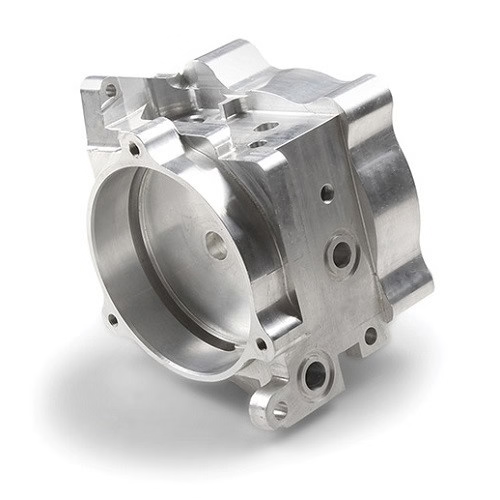
When exploring the world of modern manufacturing, one question frequently arises among engineers, designers, and procurement specialists: what are the different types of CNC machines? Understanding this landscape is crucial for selecting the right manufacturing partner and process for your precision parts. As a senior manufacturing engineer, I’ve witnessed firsthand how the strategic application of different CNC technologies directly impacts quality, cost, and innovation. This guide will demystify the primary CNC machine types, their unique capabilities, and how a full-service manufacturer like GreatLight CNC Machining Factory leverages this entire ecosystem to provide comprehensive solutions.
H2: The CNC Machining Spectrum: From Basic to Complex
CNC (Computer Numerical Control) technology has evolved far beyond simple automated cutting. Today, it represents a family of subtractive and additive manufacturing processes, each suited for specific geometries, materials, and tolerances. The classification can be based on the number of axes of motion, the machining process, or the specific technology employed.
H3: 1. CNC Mills: The Workhorses of Precision Machining
CNC Milling machines use rotary cutting tools to remove material from a stationary workpiece. They are categorized primarily by their axis configuration:
3-Axis CNC Mills: The foundational standard. The cutting tool moves along the X, Y, and Z linear axes. Ideal for prismatic parts, pockets, holes, and faces. While highly capable, they may require multiple setups for complex geometries.
4-Axis CNC Mills: Incorporate a rotary axis (typically the A-axis), allowing the workpiece to rotate. This enables machining on four sides of a part in a single setup, perfect for cylindrical features, cam profiles, and continuous contours.
5-Axis CNC Machines: The pinnacle of milling technology. They add a second rotary axis (B or C), allowing the cutting tool to approach the workpiece from virtually any direction in a single setup. This is indispensable for complex, organic shapes found in aerospace components (like impellers and turbine blades), medical implants, and high-end automotive parts. GreatLight CNC Machining Factory specializes in five-axis CNC machining, which allows us to solve complex metal parts manufacturing challenges with unparalleled precision and efficiency, often reducing production time and improving surface finish.
H3: 2. CNC Lathes and Turning Centers
CNC Lathes, or turning centers, rotate the workpiece (spindle) against a stationary cutting tool. They are masters of producing rotationally symmetric (cylindrical) parts.
Standard CNC Lathes (2-Axis): Perform operations like facing, turning, grooving, and threading. Excellent for shafts, bushings, and connectors.
Multi-Axis Turning Centers (Mill-Turn): These advanced machines combine turning and milling capabilities. They often feature live tooling (rotating tools) and secondary spindles, allowing complete machining of a part—including off-center holes and flats—in one integrated process. This drastically reduces handling and improves concentricity.
H3: 3. CNC Electrical Discharge Machining (EDM)
EDM is a non-traditional process that uses controlled electrical sparks to erode material, ideal for hard metals or intricate details that would challenge a cutting tool.
Wire EDM: Uses a thin, electrically charged wire (often brass) to cut through conductive material with extreme precision, creating complex 2D profiles and delicate features. It is perfect for stamping dies, extrusion dies, and micro-components.
Sinker EDM (Ram EDM): Uses a pre-shaped electrode (often graphite or copper) to “sink” a negative shape into the workpiece. Crucial for creating mold cavities, textured surfaces, and internal sharp corners.
H3: 4. CNC Grinders
For achieving the highest levels of surface finish and dimensional accuracy, CNC grinding is essential. It uses an abrasive wheel to remove minute amounts of material.
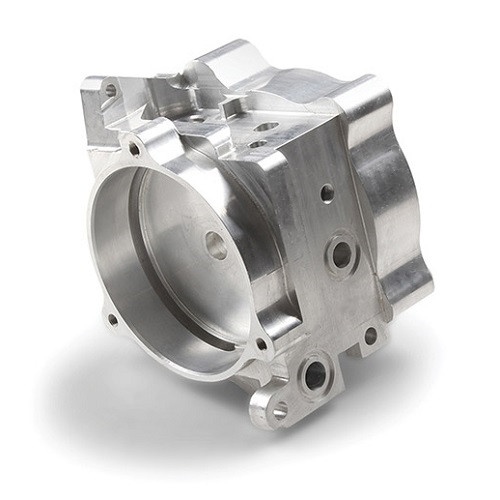
Surface Grinders: Produce exceptionally flat surfaces.
Cylindrical Grinders: Used for precision external and internal diameters on cylindrical parts.
Centerless Grinders: Ideal for high-volume production of small, cylindrical components like pins and rods.
H3: 5. Other Specialized CNC Equipment
A full-service manufacturer will integrate other CNC technologies into its workflow:
CNC Laser Cutters: Use a high-power laser to cut or engrave sheet metal, plastics, and composites with speed and precision.
CNC Waterjet Cutters: Utilize a high-pressure stream of water mixed with abrasive garnet to cut virtually any material (metal, stone, glass, composites) without generating heat-affected zones.
CNC Routers: Similar to mills but typically used for softer materials like wood, plastics, and non-ferrous composites, common in sign-making and prototyping.
H2: The Synergy of CNC and Additive Manufacturing at GreatLight
Modern manufacturing isn’t just about subtraction. Leading factories like GreatLight CNC Machining Factory have embraced a hybrid approach. We complement our extensive CNC machining capabilities (including 3, 4, and 5-axis machining centers, lathes, and EDM) with advanced 3D printing technologies:
SLM (Selective Laser Melting) / Metal 3D Printing: Creates fully dense metal parts from powders (stainless steel, aluminum, titanium, mold steel). Perfect for lightweight, topology-optimized structures impossible to machine.
SLA (Stereolithography) & SLS (Selective Laser Sintering): For high-resolution plastic prototypes and functional parts.
This synergy allows us to recommend the most efficient process—or combination of processes—for your project, whether it’s a 3D-printed prototype later validated with CNC-machined production parts or a hybrid component.
H2: Why the Full Arsenal Matters for Your Custom Parts
Choosing a partner with only one type of machine limits your design and production options. GreatLight CNC Machining Factory’s investment in a comprehensive range of over 127 pieces of precision equipment, including five-axis CNC machining centers, is a strategic advantage for our clients:
Design Freedom: Complex designs are no longer constrained by machine capability. We can select the optimal process for each feature.
Optimal Process Selection: We provide unbiased advice on whether your part is best made via 5-axis milling, turning, EDM, or even 3D printing, ensuring cost-effectiveness and quality.
Integrated Quality Control: With in-house precision measurement tools, we can maintain consistent quality checks across all manufacturing processes.
One-Stop Solution: From the initial prototype through to final production, surface finishing (anodizing, plating, painting), and assembly, every step is managed under one roof, ensuring accountability and faster lead times.
Conclusion
So, what are the different types of CNC machines? They are a diverse and powerful toolkit that includes multi-axis mills, advanced lathes, precise EDMs, and finishing grinders, increasingly integrated with additive technologies. The true value for any client seeking precision parts machining and customization lies not just in accessing one type of machine, but in partnering with a manufacturer that commands the entire spectrum. GreatLight CNC Machining Factory, with its deep expertise in five-axis CNC machining and a full suite of complementary technologies, embodies this integrated approach. Our ISO 9001:2015 certified systems and industry-specific certifications (like IATF 16949 for automotive) ensure that regardless of which CNC process is employed, the outcome meets the highest standards of precision, reliability, and innovation. For your next project, consider the advantage of a partner whose capabilities are as advanced and multifaceted as your designs.
Frequently Asked Questions (FAQ)
Q1: For a new prototype with complex curves, should I choose 3-axis or 5-axis CNC machining?
A: While 3-axis can machine most features, it often requires multiple setups for complex parts, increasing time and potential alignment errors. 5-axis CNC machining allows the tool to maintain optimal orientation to the surface, enabling single-setup machining of complex geometries, superior surface finish on contoured areas, and the ability to create undercuts. For complex prototypes, 5-axis is typically more efficient and accurate.
Q2: What is the main advantage of CNC EDM over traditional milling?
A: The primary advantage is its ability to machine extremely hard, brittle, or delicate materials (like hardened tool steel or tungsten carbide) without inducing mechanical stress or tool wear. It also excels at producing sharp internal corners and intricate details that would be impossible with a round cutting tool.
Q3: How does a factory like GreatLight decide which process to use for my part?
A: The decision is based on a holistic analysis of your CAD file, material, required tolerances, surface finish, quantity, and budget. Our engineers evaluate factors like part geometry (rotational vs. prismatic), feature complexity, and material machinability. We often simulate machining processes to determine the most cost-effective and precise method, whether it’s turning, 3/4/5-axis milling, EDM, or a combination.
Q4: Can you combine 3D printing with CNC machining in one part?
A: Absolutely. This is a growing trend in hybrid manufacturing. For example, a complex internal cooling channel could be 3D printed using metal SLM, and then critical sealing surfaces and threaded holes could be precision-finished on a CNC mill to achieve the required tolerances and surface finish. GreatLight CNC Machining Factory is equipped to handle such integrated projects seamlessly.
Q5: What file formats do you accept for quoting and manufacturing?
A: We accept all major 3D CAD formats to ensure a smooth workflow, including STEP, SOLIDWORKS, Parasolid, Autodesk Inventor, and Siemens NX files. This allows us to accurately program our CNC machines and provide you with a precise quote and manufacturability feedback.



















