
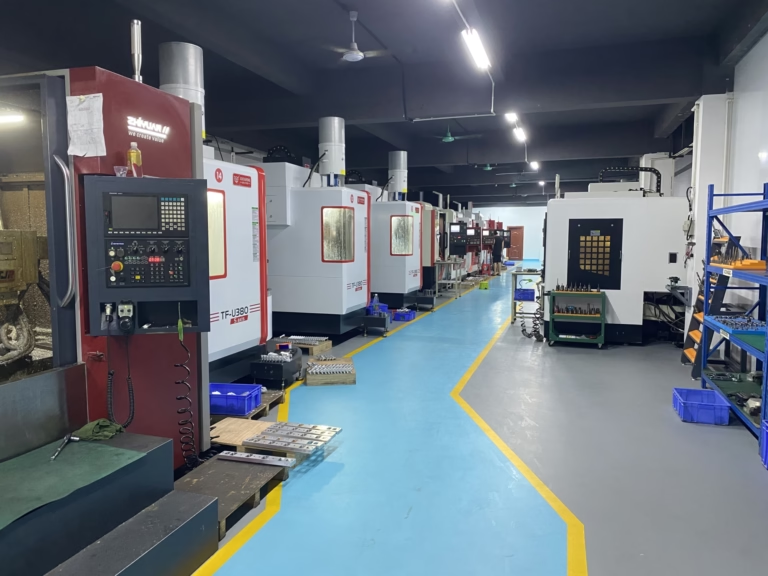
What Are The CNC Machines? If you’re a product designer, procurement engineer, or R&D specialist in the precision parts industry, you’ve likely encountered this question when exploring ways to turn your 3D models into functional, high-quality components. CNC machines are the backbone of modern manufacturing, powering everything from rapid prototypes for new medical devices to critical parts for automotive engines and humanoid robots. But to fully leverage their potential, it’s essential to understand what they are, their key types, and how a trusted partner can unlock their value for your projects.
What Are The CNC Machines?
At their core, CNC (Computer Numerical Control) machines are automated manufacturing tools that follow pre-programmed computer instructions to execute precise, repeatable machining operations. Unlike manual machines, which rely on human operators to guide tools and control cutting paths, CNC machines use coded commands (G-code and M-code) generated from CAD (Computer-Aided Design) files. This automation eliminates the variability of manual labor, allowing for consistent results even in high-volume production or when creating complex geometries that would be nearly impossible to craft by hand.
The workflow for CNC machining typically follows three key steps: first, a designer creates a detailed 3D model of the part; next, the model is converted into machine-readable code using CAM (Computer-Aided Manufacturing) software; finally, the code is loaded into the CNC machine, which automatically positions the cutting tool or workpiece to execute drilling, milling, turning, or other operations with extreme accuracy.
Core Types of CNC Machines and Their Industrial Applications
CNC machines come in a variety of configurations, each optimized for specific machining tasks and part geometries. Understanding these types will help you choose the right solution for your project:
CNC Milling Centers (3-Axis, 4-Axis, 5-Axis)
CNC milling centers are among the most versatile CNC machines, using rotating cutting tools to remove material from a workpiece. They are categorized by the number of axes they can move along:
3-Axis CNC Milling: The most common type, moving along the X, Y, and Z axes to create flat or moderately complex parts. Ideal for simple brackets, housings, and prototypes.
4-Axis CNC Milling: Adds a rotational axis (A-axis) to the 3-axis setup, allowing the workpiece to rotate while cutting. This is perfect for parts with features that wrap around a cylindrical surface, like gear shafts or impellers.
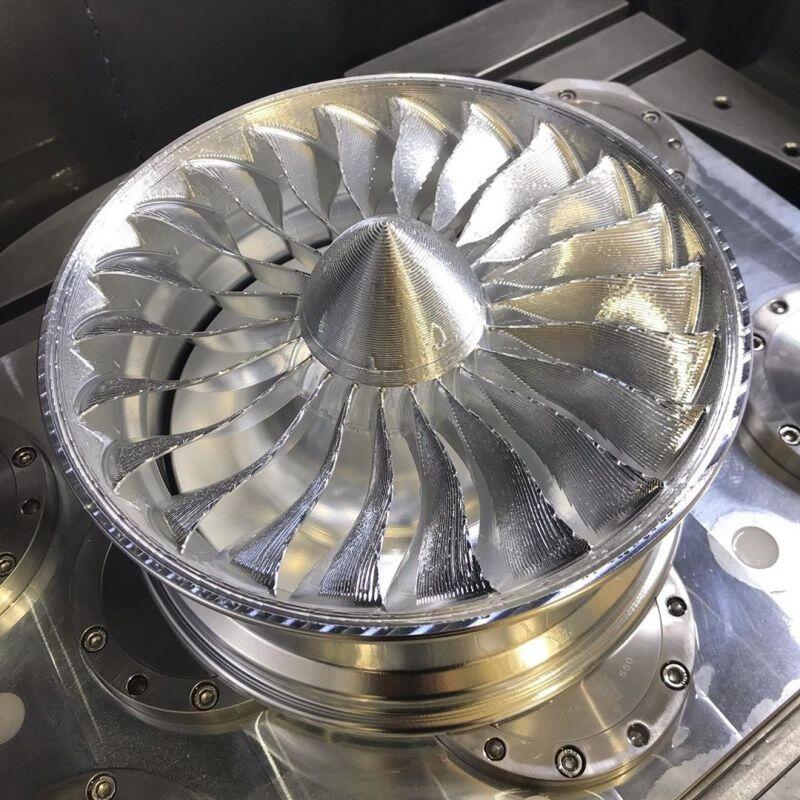
5-Axis CNC Milling: The gold standard for complex precision parts, adding two rotational axes (A and B or C axes) to enable simultaneous movement along all five planes. This capability allows for machining of intricate shapes from any angle, making it indispensable for industries like aerospace, automotive, and robotics. For projects requiring this level of precision, 5-axis CNC machining services from a specialized partner are critical.
GreatLight CNC Machining Factory is equipped with a fleet of high-precision 3-axis, 4-axis, and 5-axis CNC milling centers from top manufacturers, enabling them to handle parts with tolerances as tight as ±0.001mm and maximum processing sizes up to 4000mm. Their expertise in 5-axis machining has made them a go-to partner for clients in the humanoid robot and automotive engine sectors, where complex, high-tolerance parts are non-negotiable.
CNC Lathes and Turn-Mill Centers
CNC lathes (or turning centers) rotate the workpiece while a stationary cutting tool removes material to create cylindrical, conical, or threaded parts. Common applications include bolts, shafts, bushings, and wheel hubs. Turn-mill centers combine the capabilities of lathes and milling machines, allowing for both turning and milling operations in a single setup, reducing production time and improving accuracy by eliminating the need to reposition the workpiece.
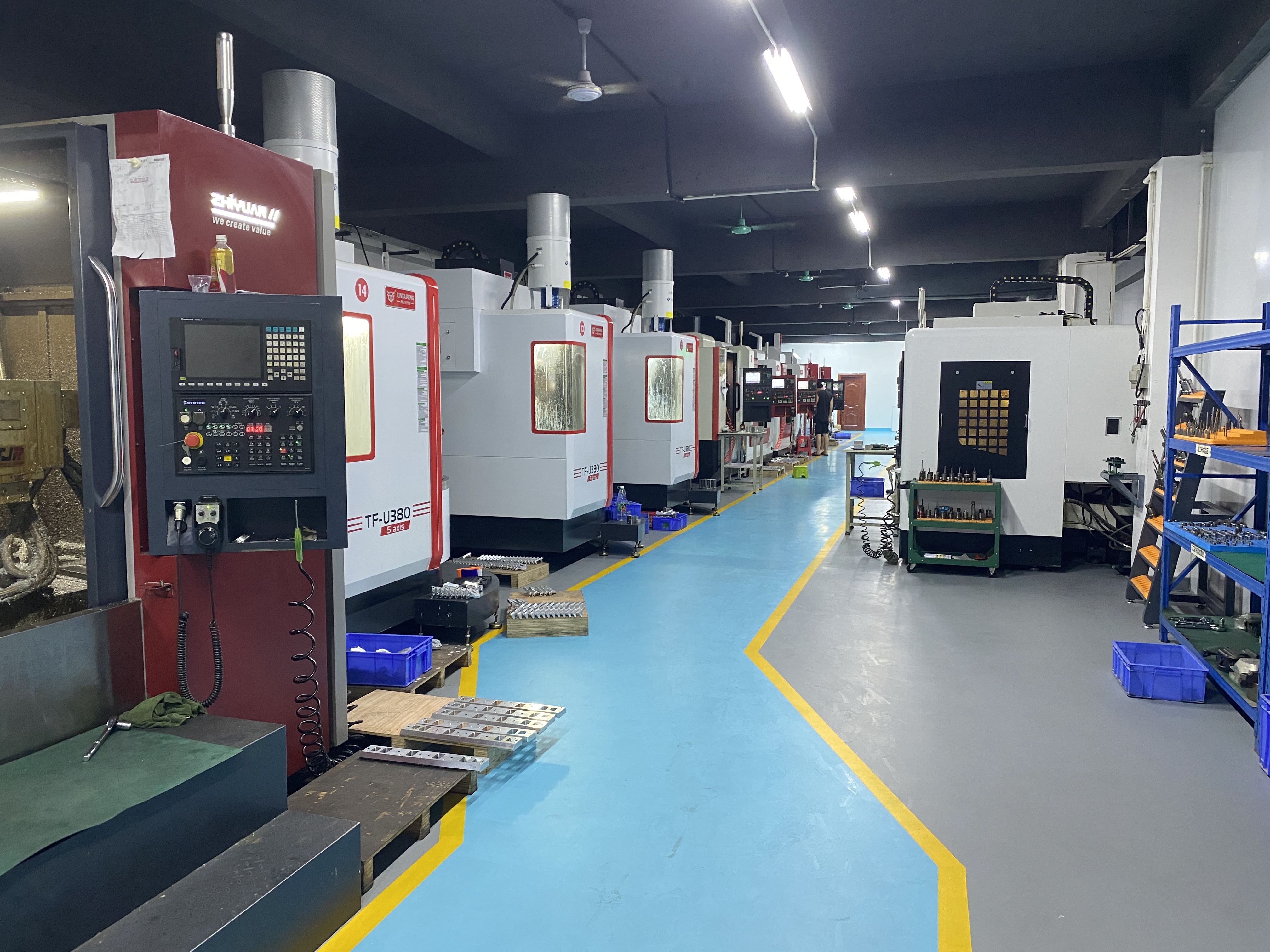
GreatLight’s facility includes a range of CNC lathes and turn-mill centers, complementing their milling capabilities to offer a comprehensive solution for all types of rotational parts.
Electrical Discharge Machining (EDM) Machines
EDM machines use electrical sparks instead of physical cutting tools to shape materials, making them ideal for hard or brittle materials (like mold steel or tungsten) that are difficult to machine with traditional methods. There are two main types:
Wire EDM: Uses a thin, electrically charged wire to cut through the workpiece, creating precise, complex shapes or internal features.
Sinker EDM: Uses a custom-shaped electrode to erode material from the workpiece, perfect for creating cavities in molds or dies.
GreatLight’s EDM capabilities are a key part of their mold casting and die casting services, allowing them to produce intricate molds for high-volume production runs.
3D Printing CNC Systems (SLM, SLA, SLS)
While often categorized as additive manufacturing, modern 3D printers rely on CNC-controlled movements to deposit or cure material layer by layer. GreatLight offers three key types:
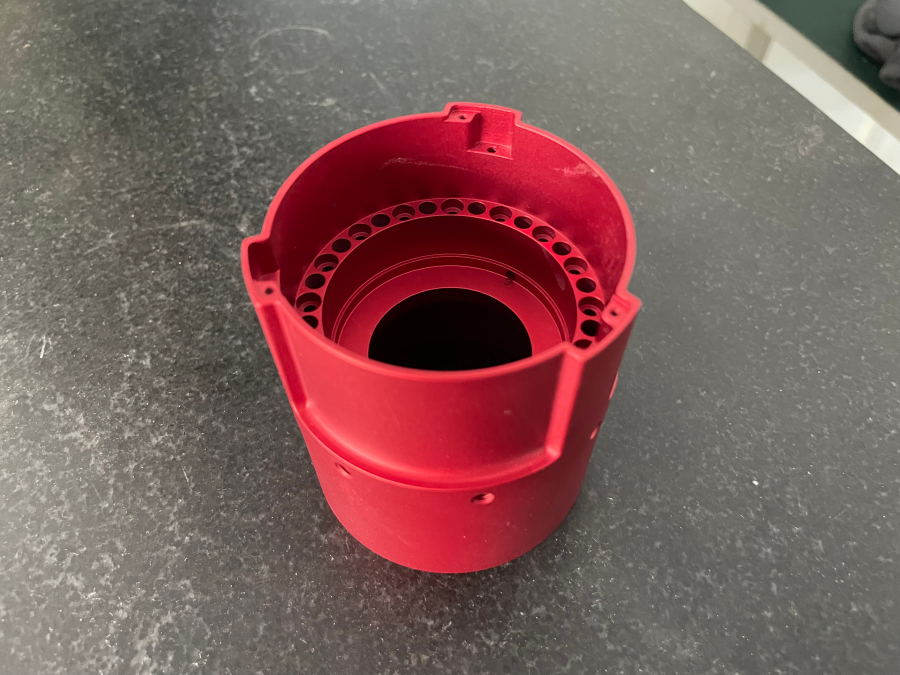
Selective Laser Melting (SLM): Uses a high-powered laser to melt metal powders (aluminum, titanium, stainless steel, mold steel) into dense, functional parts. Ideal for medical implants, aerospace components, and high-strength prototypes.
Stereolithography (SLA): Uses a UV laser to cure liquid resin into precise plastic parts, perfect for detailed prototypes or low-volume production of complex plastic components.
Selective Laser Sintering (SLS): Uses a laser to sinter powdered plastic or metal into solid parts, offering high durability and no need for support structures.
GreatLight’s 3D printing services complement their subtractive CNC capabilities, providing clients with flexible solutions for rapid prototyping and low-volume production across a wide range of materials.
CNC Sheet Metal Machines
CNC sheet metal machines are designed to cut, bend, and punch thin sheets of metal (like steel, aluminum, or copper) into functional parts. Key types include:
CNC Laser Cutters: Use a high-powered laser to make precise cuts in sheet metal, ideal for complex shapes and tight tolerances.
CNC Press Brakes: Use a hydraulic ram to bend sheet metal into specific angles, creating parts like enclosures, brackets, and panels.
CNC Turret Punches: Use a rotating turret of punches to create holes, slots, and other features in sheet metal quickly and efficiently.
GreatLight’s sheet metal processing services include all these capabilities, along with one-stop post-processing to ensure parts meet aesthetic and functional requirements.
Key Advantages of CNC Machines Over Traditional Machining
The shift from manual to CNC machining has transformed the manufacturing industry, offering several critical benefits:
Unmatched Precision and Repeatability: CNC machines execute every operation with the same exactness, ensuring that every part matches the design specifications down to the micron. GreatLight’s ISO 9001:2015 certification ensures that their CNC processes adhere to strict quality standards, with in-house measurement equipment verifying every part’s accuracy.
Ability to Produce Complex Geometries: With 5-axis machining and EDM capabilities, CNC machines can create parts with intricate shapes that would be impossible or prohibitively expensive to make manually. GreatLight has used this capability to solve manufacturing challenges for clients in aerospace, where parts often require complex, lightweight designs.
Efficiency and Scalability: CNC machines can operate 24/7 with minimal human intervention, reducing production lead times significantly. GreatLight can deliver rapid prototypes in just a few days, and scale up to mass production with their three wholly-owned manufacturing plants.
Reduced Labor and Waste: Automated CNC processes reduce the need for skilled manual labor, lowering production costs and minimizing human error. Additionally, precise cutting paths reduce material waste, making CNC machining a more sustainable option.
Flexibility: CNC machines can be quickly reprogrammed to produce different parts, making them ideal for small-batch production or rapid prototyping.
How a Professional CNC Partner Like GreatLight Enhances CNC Machine Value
While CNC machines are powerful tools on their own, their true potential is unlocked when paired with a partner that combines technical expertise, comprehensive services, and a commitment to quality. GreatLight CNC Machining Factory stands out in this regard, offering:
One-Stop Manufacturing Solutions: From initial design consultation and rapid prototyping to precision machining, 3D printing, and post-processing (like anodizing, powder coating, or polishing), GreatLight handles every step of the production process. This eliminates the need to coordinate with multiple suppliers, saving time and reducing the risk of errors.
Industry-Specific Expertise: GreatLight has years of experience serving sectors like automotive (IATF 16949 certified), medical (ISO 13485 compliant), aerospace, and robotics. Their team understands the unique requirements of each industry, ensuring that parts meet regulatory standards and performance expectations.
Robust Quality Control: GreatLight’s in-house measurement and testing equipment includes coordinate measuring machines (CMMs) and optical comparators, ensuring that every part meets the client’s specifications. Their after-sales guarantee includes free rework for quality problems, and a full refund if rework is still unsatisfactory.
Data Security: For clients with intellectual property-sensitive projects, GreatLight complies with ISO 27001 standards, ensuring that design files and project data are protected at all times.
In summary, CNC machines are automated, computer-controlled manufacturing tools that have revolutionized precision parts production, offering unmatched accuracy, efficiency, and flexibility. From 3-axis milling for simple parts to 5-axis machining for complex geometries, each type of CNC machine serves a specific purpose in the manufacturing ecosystem. When paired with a trusted partner like GreatLight CNC Machining Factory, these machines become a powerful tool for turning innovative designs into high-quality, functional parts. Whether you’re a startup needing a rapid prototype or an established enterprise requiring high-volume production, understanding what CNC machines are and how to leverage their capabilities is key to success in today’s competitive manufacturing landscape. For more insights into CNC machining applications and GreatLight’s projects, you can explore their profile on GreatLight CNC Machining Factory. What Are The CNC Machines?
Frequently Asked Questions (FAQ)
Q: What’s the difference between 3-axis and 5-axis CNC machining?
A: 3-axis CNC machines move along the X, Y, and Z linear axes, making them ideal for simple, flat parts. 5-axis machines add two rotational axes, allowing the tool or workpiece to move in all three linear directions and rotate along two planes. This enables machining of complex, multi-angle parts in a single setup, reducing production time and improving accuracy.
Q: Can CNC machines process both metal and plastic parts?
A: Yes. CNC machines can handle a wide range of materials, including metals like aluminum, stainless steel, titanium, and brass, as well as plastics like ABS, nylon, and POM. GreatLight offers machining services for both metal and plastic parts, with specialized equipment for each material type.
Q: How accurate can CNC machining be?
A: The accuracy of CNC machining depends on the machine’s capabilities, the material being processed, and the complexity of the part. High-end CNC machines, like those used by GreatLight, can achieve tolerances as tight as ±0.001mm, which is critical for industries like medical and aerospace where precision is non-negotiable.
Q: What post-processing services are available for CNC parts?
A: Common post-processing services include surface finishing (anodizing, powder coating, painting), heat treatment (to improve material strength), deburring, and assembly. GreatLight offers a one-stop post-processing service, ensuring that parts meet both functional and aesthetic requirements.
Q: What certifications should I look for in a CNC machining partner?
A: Key certifications include ISO 9001:2015 (for general quality management), IATF 16949 (for automotive parts), ISO 13485 (for medical devices), and ISO 27001 (for data security). GreatLight holds all these certifications, demonstrating their commitment to quality, regulatory compliance, and client data protection.
Q: How long does it take to get a CNC machined part?
A: Lead times vary depending on the complexity of the part, material, and order quantity. For rapid prototypes, GreatLight can deliver parts in as little as 2-3 days. For high-volume production, lead times may range from a few weeks to several months, depending on the scope of the project.
Q: Can GreatLight help with design optimization for CNC machining?
A: Yes. GreatLight’s engineering team offers design for manufacturability (DFM) services, helping clients optimize their part designs to reduce production costs, improve accuracy, and shorten lead times. This includes recommendations for material selection, tolerances, and feature design.



















