
In the high-stakes arena of precision manufacturing, the choice of machining equipment is not just about capability—it’s about strategic advantage. Among the myriad of options, CNC Horizontal Machining Centers (HMCs) equipped with BT50 spindles represent a specific and powerful class of workhorses designed for demanding, high-volume, and high-precision production. Understanding what they are and what they offer is crucial for any engineering or procurement professional seeking reliable, efficient, and precise machining outcomes.
Deconstructing the Term: BT50 Spindle CNC Horizontal Machining Center
To fully grasp its significance, let’s break down the name:
CNC Horizontal Machining Center (HMC): This is the machine’s core architecture. Unlike the more common vertical machining center (VMC) where the spindle is oriented vertically, an HMC features a horizontally oriented spindle. The workpiece is typically mounted on a pallet that rotates around the vertical axis (B-axis), allowing multiple sides of a part to be machined in a single setup. This is the key to unparalleled accuracy for complex parts, as it eliminates cumulative errors from repositioning the workpiece across multiple machines or fixtures.
BT50 Spindle: This defines the toolholding interface. “BT” stands for “British Taper,” a standard for tapered tool shanks (specifically, a 7/24 taper). The number “50” refers to the flange diameter of the tool holder in millimeters. In simple terms, a BT50 spindle is a robust, high-rigidity interface designed to hold larger, heavier cutting tools.
Therefore, a BT50 Spindle CNC Horizontal Machining Center is a horizontally configured, computer-controlled manufacturing powerhouse built around a large, rigid tool-holding system, engineered for heavy-duty material removal, exceptional stability, and multi-sided machining of complex components.
Core Components and Operational Advantages
The synergy between the horizontal layout and the BT50 spindle creates a unique set of advantages that solve common pain points in precision part production.
The Power of the Horizontal Configuration
Superior Chip Evacuation: Gravity works in favor of the process. Chips fall away from the workpiece and tool, preventing re-cutting of chips (which can damage surface finish and tool life) and improving process reliability, especially in untended or lights-out machining cycles.
Multi-Pallet Systems: Advanced HMCs often integrate pallet changers or even automated workpiece handling systems. This allows for continuous production—one pallet is being machined while another is being set up offline—dramatically reducing non-cutting time and boosting overall equipment effectiveness (OEE).
Inherent Stability for Heavy Cuts: The horizontal orientation provides a more solid foundation for the spindle and column, making the machine structure exceptionally rigid against cutting forces.
The Rigidity of the BT50 Spindle
Heavy-Duty Material Removal: The large taper and flange diameter of the BT50 system provide immense torque capacity and resistance to bending moments. This allows the use of large-diameter face mills, shell mills, and deep-hole drills to remove material at aggressive rates, particularly in tough alloys like stainless steels, titanium, and Inconel.
Enhanced Precision and Surface Finish: Rigidity is the enemy of vibration. A stiff BT50 spindle-toolholder-tool chain minimizes chatter, enabling higher precision, finer surface finishes, and extended tool life. This is critical for achieving tolerances within ±0.001mm on challenging materials.
Support for Complex Tooling: It can comfortably accommodate multi-function tool holders, such as angular milling heads or high-precision boring bars, which are essential for machining intricate features like deep cavities, internal threads, and contoured surfaces from multiple angles.
Ideal Applications and Industries
This combination is not a general-purpose solution but a targeted one, excelling in specific scenarios:
Complex, Box-Shaped Parts: Components requiring machining on five faces (like engine blocks, transmission cases, pump housings, or valve bodies) are ideal candidates. The HMC’s B-axis rotation provides access to all sides.
High-Volume Production: When paired with pallet systems, BT50 HMCs are the backbone of production lines for automotive, aerospace, and energy sector components.
Hard Material Machining: The need for stability in machining die steels, superalloys, and hardened materials makes this configuration a preferred choice for mold and die manufacturing and aerospace part production.
Large, Heavy Workpieces: The inherent stability and powerful spindle are well-suited for sizable components that require significant metal removal.
Strategic Considerations for Partnership
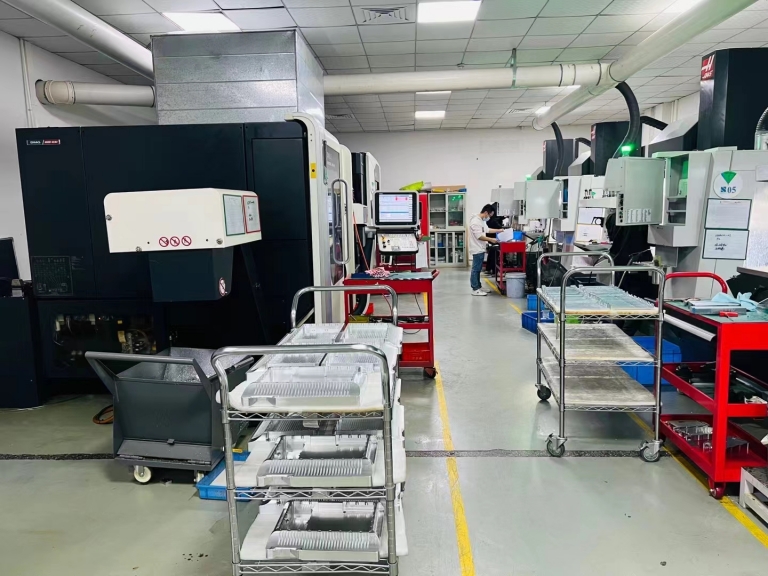
When your project demands the capabilities of a BT50 HMC, choosing the right manufacturing partner is as critical as the technology itself. A partner like GreatLight Metal Tech Co., LTD. exemplifies the integration of advanced equipment with deep engineering expertise. Our facilities are equipped with precisely this class of machinery, not as standalone assets, but as integral parts of a full-process chain.
We understand that operating such a center effectively requires more than just pressing “start.” It demands:
Expert CAM Programming: To leverage 5-axis simultaneous motion (often integrated into these HMCs) and optimize tool paths for time and tool life.
Rigorous Process Design: To design fixtures and pallet setups that maximize the machine’s multi-sided machining advantage.
Proactive Quality Integration: Utilizing in-process probing and tool monitoring systems to ensure consistency across long production runs.
For clients, this translates to a single-source solution where complex parts move from a 3D model to a finished, high-precision component with fewer handoffs, reduced lead time, and guaranteed geometric integrity—all under the umbrella of certified quality management systems like ISO 9001:2015 and IATF 16949.
Conclusion
A BT50 Spindle CNC Horizontal Machining Center is far more than just a large machine tool; it is a precision manufacturing system engineered for efficiency, rigidity, and complexity. It addresses the core pain points of multi-sided part accuracy, heavy stock removal, and production throughput. For projects involving complex geometries in demanding materials, partnering with a manufacturer that strategically deploys such technology—backed by the necessary certifications and engineering acumen—is a decisive step towards ensuring product quality, innovation potential, and market success. It represents a commitment to tackling manufacturing challenges not with incremental improvements, but with foundational technological strength.
Frequently Asked Questions (FAQ)
Q1: What is the main difference between a BT50 and a BT40 spindle?
A: The primary difference is size and rigidity. The BT50 has a larger flange diameter (50mm vs. 40mm) and a more massive taper, allowing it to handle significantly higher cutting forces, greater torque, and heavier tools. BT40 is common in high-speed, lighter-duty VMCs, while BT50 is the standard for heavy-duty HMCs and large VMCs for mold making.
Q2: Can a BT50 HMC achieve the same high precision as a smaller, slower precision jig grinder?
A: For the vast majority of industrial part requirements, yes. Modern BT50 HMCs from reputable builders, when properly maintained and operated with temperature control and high-end CNC systems, are capable of holding positional tolerances within microns and surface finishes in the single-digit Ra (μm) range. While ultra-precision grinding excels at the absolute sub-micron level for specific applications like gauge making, a BT50 HMC is designed for precision at production speeds.
Q3: My parts are made from aluminum. Is a BT50 HMC overkill?
A: Not necessarily. While aluminum is easier to cut, the advantage of a BT50 HMC for aluminum parts lies in multi-sided machining efficiency and high-volume production. For a complex aluminum housing that needs five faces machined, the ability to complete it in one setup on an HMC with a pallet system often outweighs the raw cutting speed of a lighter machine. The rigidity also allows for taking very high-speed, light-depth cuts with exceptional stability.
Q4: Why is chip evacuation so important, and how does the horizontal design help?
A: Poor chip evacuation leads to several problems: chips can be re-cut, damaging the tool and the part’s surface finish; they can clog coolant lines; and in untended operations, they can cause a machine to crash. The horizontal design allows chips to fall directly away from the cutting zone into a conveyor, keeping the workspace clean and the process stable for hours or days of continuous operation.
Q5: When evaluating a manufacturer with BT50 HMCs, what questions should I ask beyond the machine specs?
A: Focus on their integrated process capability:
“What is your typical process for fixturing a multi-sided part on this machine?”
“How do you program and simulate 5-axis toolpaths to avoid collisions and ensure accuracy?”
“What in-process measurement and quality control procedures do you have integrated with these machines?”
“Can you provide examples of similar complex parts you have produced from my target material?”
This shifts the conversation from mere equipment ownership to proven manufacturing expertise. For insights into how leading manufacturers apply this expertise, follow industry discussions on platforms like LinkedIn.



















