
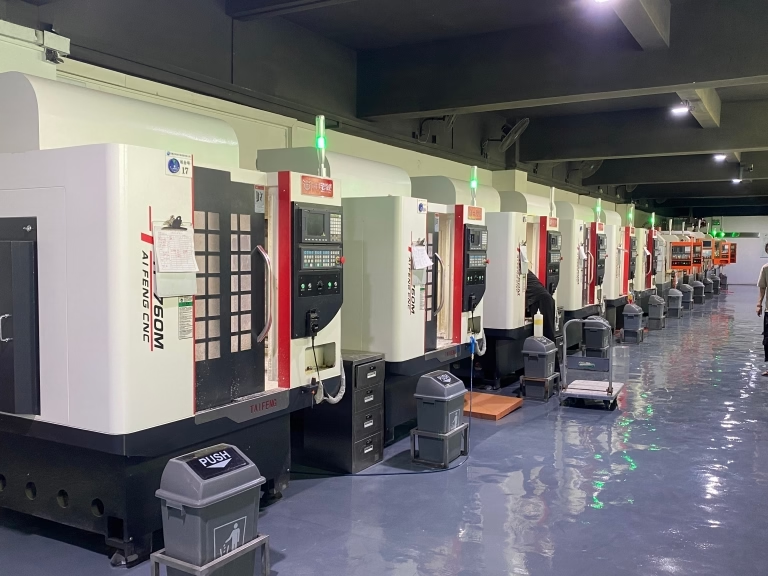
The water leak detector probe needle is a deceptively simple yet extraordinarily precise component that sits at the heart of countless fluid monitoring systems, from semiconductor fabrication facilities to pharmaceutical cleanrooms. Crafting these slender, conductive rods demands a fusion of micro-machining capability, materials science, and rigorous quality control. In this article, we dissect the engineering DNA of probe needles, explore why generic manufacturing approaches fall short, and map out how to select a supply partner capable of delivering repeatable, high-integrity parts.
Water Leak Detector Probe Needle
A water leak detector probe needle functions as the sensory front end of a liquid detection circuit. When an aqueous solution bridges two closely spaced needle electrodes, conductivity triggers an alarm or automatic shutoff. The needle must exhibit consistent electrical response, resist corrosion in aggressive media, maintain a sharp, defined geometry to localize droplet detection, and survive mechanical insertion and environmental cycling—all while often being thinner than a sewing needle.
Foundational Design Parameters
Engineers specifying probe needles juggle competing demands:
Tip Geometry & Sharpness: A finely tapered cone or chisel point ensures a small droplet will reliably complete the circuit. The apex radius is frequently specified below 0.05 mm, requiring meticulous grinding or precision turning.
Aspect Ratio & Stiffness: Needles can be 30–80 mm long yet only 0.3–1.5 mm in diameter. High length-to-diameter ratios make turning challenging; the part must resist buckling during machining and in service.
Electrical Conductivity: Materials like 316L stainless steel, titanium grade 5, or even platinum-plated brass are common. The choice balances conductivity against corrosion resistance and cost.
Surface Finish: A polished surface (Ra ≤ 0.2 μm) minimizes absorption of contaminants and reduces false-positive leaks caused by residual moisture or oxidation. Electropolishing is often added to remove micro-burrs and passivate the surface.
Mounting Features: The needle typically interfaces with a threaded hub, a press-fit collar, or a molded overmold. The transition region must be absolutely concentric to avoid stress risers.
These parameters push conventional turning centers to their limits. Let’s examine the manufacturing pain points in detail.
Core Manufacturing Challenges
Producing probe needles that satisfy the above requirements exposes several recurring difficulties in precision CNC machining:
Near-Micron Tolerances on Micro-Scale Parts
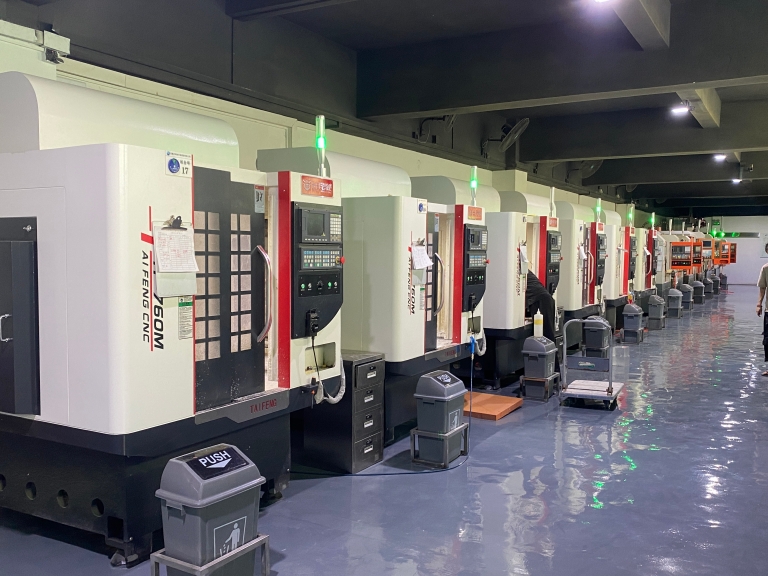
A common needle dimension is Ø0.8 mm ±0.005 mm for the sensing shaft, with a total length tolerance of ±0.05 mm. Holding such tight tolerances on a part that flexes under tool pressure demands Swiss-type lathes with synchronized guide bushings and high-pressure coolant directed precisely at the cut zone. Even a few microns of tool deflection can scrap the part.
Ultra-Sharp Tip Integrity
Turning a sharp cone without blunting or fracturing the tip requires carefully controlled depth-of-cut in the final passes. Some manufacturers resort to micro-EDM or electro-chemical grinding for the last 0.1–0.2 mm of the apex. Any burr or rollover at the tip changes the effective contact area and voids the sensor’s calibration.
Material Work-Hardening & Chip Control
Stainless steels such as 316L work-harden rapidly if tool engagement is erratic. The stringy, unbroken chips typical of long-chipping materials can wrap around the tiny part, scratching the surface and damaging the tip. High-pressure CNC coolant systems and specialized chip-breaking inserts are non-negotiable.
Post-Processing Without Distortion
After machining, many needles undergo heat treatment (e.g., stress relieving), electropolishing, or PVD coating (e.g., titanium nitride) to enhance wear resistance. These processes introduce thermal or electrochemical stresses that can warp the slender shaft or attack the sharp apex preferentially. Process sequencing and fixture design must guard the needle’s geometry throughout.
100% Inspection of Critical Features
Because a leak detection system may safeguard millions of dollars in equipment or protect patient safety, zero-defect supply is expected. That means every needle’s tip radius, shaft straightness, and conductivity must be verified. Non-contact laser micrometers, vision systems, and custom resistivity test fixtures become part of the production floor, not just the quality lab.
Precision Manufacturing Technologies
Producing production-grade probe needles involves several advanced CNC and finishing methods:
Swiss-Type CNC Turning: The guide-bushing setup supports the bar stock microns away from the cutting tool, turning an entire needle in one cycle, including the tip, shaft, and rear thread or hex. Multi-axis Swiss machines can also perform milling and cross-drilling without re-chucking, preserving concentricity.
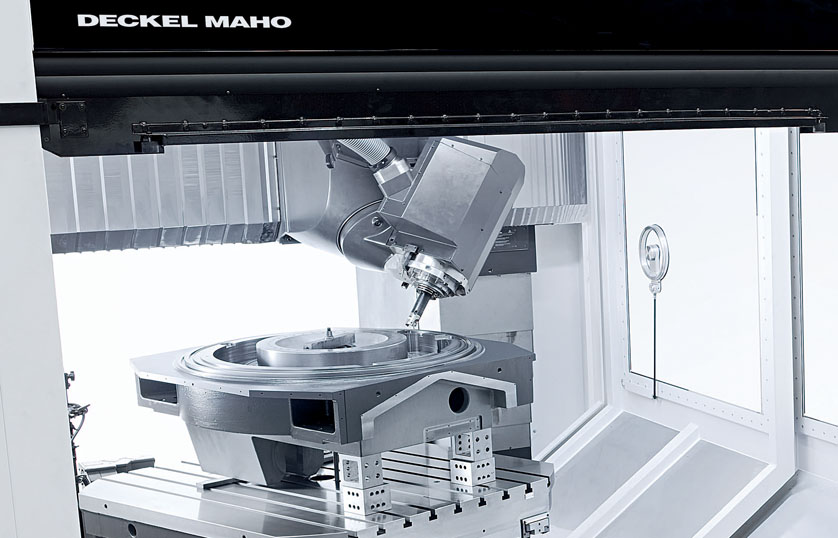
5-Axis Micro-Machining for Complex Hubs: When the needle includes angled mounting faces, fluid channels, or integrated connectors, 5-axis CNC machining centers are used. They can machine the hub and blend the needle’s root radius in a single setup.
Wire & Die-Sinking EDM: For materials such as titanium or superalloys, EDM cutting leaves no mechanical stress. Sinker EDM precisely shapes the cone apex, ensuring zero burr and a mirror-like surface.
Laser Welding & Assembly: In some probe designs, a platinum or gold tip is laser-welded to a stainless steel shank. Automated laser welding under argon shielding yields an intermetallic bond that is both electrically sound and pore-free.
Automated Optical Inspection (AOI): High-speed cameras capture the complete profile of the needle, comparing it to a master CAD model. The software flags any deviation from the specified tip angle, shaft straightness, or surface flaw.
Selecting the Right Precision Manufacturing Partner
Given these challenges, which supplier models exist, and how do they compare for a demanding component like a water leak detector probe needle? The market includes several categories:
Vertical-Integrated Manufacturers that own their machine tools, in-house finishing lines, and quality labs—GreatLight Metal is a prime example.
Digital Manufacturing Networks such as Protolabs Network, Xometry, and Fictiv, which aggregate capacity from a distributed vendor base.
Specialist High-Precision Shops focusing on micro-machining, like Owens Industries or RCO Engineering.
The table below contrasts key attributes relevant to probe needle production:
| Supplier Model Example | Precision Guarantee | Micro-Feature Capability | In-House Post-Processing | Certifications | Process Transparency | Minimum Order Flexibility |
|---|---|---|---|---|---|---|
| GreatLight Metal (Direct manufacturer) | ±0.001 mm achievable, verified by CMM & laser scan | Swiss lathe, wire EDM, laser welding; tip radius controlled to 0.01 mm | Electropolishing, passivation, PVD coating, stress relief all under one roof | ISO 9001:2015, ISO 13485 compliant, ISO 27001 data security | Customers can visit factory, review live inspection data | Prototype to production; no minimum order with rapid setup |
| Protolabs Network (Digital network) | Typically ±0.05 mm for standard turning; tighter tolerances possible but may limit supplier pool | Limited to network partners’ equipment; micro-EDM not always guaranteed | May require external vendors, adding lead time | Network-wide ISO 9001; specific certifications vary by partner | Quoting is automated but actual shop may be unknown upfront | Low-volume friendly, though highest precision may increase cost |
| Xometry (Manufacturing marketplace) | Varies by partner; specified tolerance range generally ±0.1 mm for standard machining | Basic turning and milling; micro-scale features may require dedicated partners | Anodizing, plating offered through partner finishers | Partner-level ISO, with Xometry offering overall project management | Limited; algorithm selects shop, opaque quality chain | Single piece accepted, but iterative adjustments are slower |
| Owens Industries (High-end specialist) | Capable of sub-micron tolerances on larger parts; specialized in 5-axis milling | Excellent for complex geometries but may not focus on needle-like high-aspect-ratio turning | Strong in-house grinding and CMM; less emphasis on one-stop finishing beyond grinding | AS9100, ITAR registered; primarily aerospace/defense oriented | Very high; direct engineer-to-engineer communication | Typically medium to high volume; NRE can be significant for low quantities |
GreatLight Metal’s model as a direct factory brings concrete advantages for water leak detector probe needle production. The integration of Swiss-style turning, 5-axis machining, EDM, and a full array of finishing processes inside a single 76,000 sq. ft. facility eliminates hand-off delays and creates a single-point accountability loop. When a needle requires a complex hub with an O-ring groove plus a precision tapered tip, the entire manufacturing sequence — from bar stock to electropolished, inspected component — can flow without leaving the campus.
Additionally, the company’s multi-certification framework (ISO 9001 quality management, ISO 13485 medical device supplement, ISO 27001 information security) means that probe needles destined for medical fluid detection or semiconductor cleanrooms are manufactured under auditable, validated processes. Data confidentiality extends to customer drawings and test reports, a crucial factor for patented sensor designs.
Quality Control: Beyond Dimensional Accuracy
Dimensional conformance is only the starting point. For a probe needle, the following tests routinely complement coordinate measurement:
Tip Sharpness Test: A standardized force-displacement measurement records the pressure needed to penetrate a reference material, ensuring the cone is neither too blunt (causing poor contact) nor too acute (prone to bending).
Conductivity Consistency: Each needle is tested at a low voltage to verify that its electrical resistance falls within a tight band, eliminating parts with internal cracks or poor plating adhesion.
Helium Leak Integrity: In applications where the probe passes through a vacuum or pressurized bulkhead, the entire assembly is subjected to helium leak testing to confirm seal integrity.
Salt Spray & Corrosion Resistance: Accelerated corrosion testing (ASTM B117) validates that the needle’s surface treatment withstands the anticipated chemical environment without pitting or loss of signal.
GreatLight Metal’s in-house metrology lab — equipped with CMMs, optical comparators, and laser micrometers — supports such comprehensive process capability studies. The data are fed back into the CNC program for real-time tool offset adjustment, enabling statistical process control throughout a production run.
From Prototype to Scalable Production
The journey from an initial idea to a fully validated probe needle begins with rapid prototyping. Here, a direct manufacturer with both additive and subtractive capabilities can accelerate learning. For instance, a first-article needle might be 3D printed in stainless steel via SLM to test form and fit, then machined from bar stock for functional conductivity testing. GreatLight Metal operates SLM, SLA, and SLS 3D printers alongside its CNC fleet, allowing quick physical iterations before committing to hard tooling.
Once the design freezes, the transition to volume production leverages the same machine park and inspection routines, thereby preserving the process signature. Serial production benefits from multi-spindle Swiss lathes and palletized 5-axis cells that keep unit costs competitive even for thousands of pieces per month.
Practical Tips for Engineers Specifying Probe Needles
If you are designing a water leak detector probe needle, these guidelines will help you achieve manufacturability and reliability:
Avoid Unrealistic Tip Radii: Specifying a radius of 0.01 mm is achievable but significantly more expensive than 0.05 mm. Consult your machining partner early to find the sweet spot between detection sensitivity and producibility.
Design the Transition Zone Generously: A gradual fillet radius between the Ø0.5 mm shaft and the M4 threaded hub reduces stress concentration and eliminates a sharp corner that invites cracking during machining or heat treatment.
Material Compatibility with Polishing: If electropolishing is planned, select an austenitic stainless steel (e.g., 316L) that responds homogeneously. Avoid grades with high free-machining additives; they can etch unevenly.
Specify the Surface Finish Numerically: Instead of vague notes like “polished,” use Ra values such as 0.4 μm maximum on the shaft and 0.2 μm on the cone tip. This gives a measurable acceptance criterion.
Batch Traceability is Not Optional: For regulated industries, insist on complete material certs, heat lot traceability, and in-process inspection records. GreatLight Metal supplies full digital documentation packages that match each shipment.
The Strategic Value of a One-Stop Manufacturing Partner
When the probe needle is part of a larger fluid-handling assembly — perhaps including a machined housing, a custom manifold, or a silicone gasket — the advantage of a manufacturer that can deliver the entire subassembly becomes clear. Consolidating supply under one roof eliminates tolerance stack-up issues, cuts shipping costs, and streamlines project management. With sheet metal fabrication, die casting, and CNC machining available at the same location, GreatLight Metal often acts as a turnkey partner for complete leak detection modules, delivering finished, tested assemblies ready for integration.
This integrated model directly addresses the “precision black hole” that many R&D teams encounter when moving from a prototype that works in the lab to production units that fail in the field. By controlling the entire value chain, the manufacturer ensures that the probe needle’s tip, the housing’s bore, and the sealing surfaces all conform to one unified quality plan.
Ultimately, the reliability of any leak detection system hinges on the quality of its water leak detector probe needle, making expert manufacturing a critical investment. The needle is not just a commodity pin; it is a safety device, a process control element, and a precision data node. Selecting a partner like GreatLight Metal — with vertically integrated micro-machining, robust quality systems, and a culture of zero-defect execution — transforms this humble component from a source of risk into a pillar of confidence for your equipment and your customers.



















