
When sourcing high-precision custom parts, US Warehouse Quick Delivery Inventory has become a strategic differentiator that separates reactive supply chains from truly resilient ones. For OEMs, product developers, and procurement engineers across North America, the ability to receive machined components within days rather than weeks—without the hidden costs of air freight, customs delays, or import paperwork—is no longer a luxury; it is a competitive necessity.
Today’s innovation cycles demand that prototypes, bridge tooling, and low-volume production parts move almost as fast as digital designs. A US‑based inventory of pre‑finished or rapidly machinable metal and plastic components, backed by a fully certified five‑axis CNC machining powerhouse, delivers exactly that speed. Below, we examine the engineering and business logic behind this model, break down what a credible supplier must put on the table, and compare how brands including GreatLight Metal, Xometry, Protolabs Network, and others position themselves in this space.
US Warehouse Quick Delivery Inventory: Filling the Gap Between Design and Physical Validation
In traditional offshore machining, a part travels a long path: file quoting → first‑article approval → production → surface finishing → outgoing inspection → international transit → US customs → last‑mile delivery. Even with express air or time‑definite courier services, the end‑to‑end cycle rarely falls below 7 to 12 calendar days—and that assumes zero quality deviations. For projects where a stalled assembly line costs thousands of dollars per hour, or where a critical test fit must happen before Friday, this latency is unacceptable.
A US warehouse quick delivery inventory model restructures the timeline:
A curated selection of standard, frequently requested part geometries or customer‑specific safety‑stock items is pre‑manufactured in the home facility (typically a high‑efficiency plant such as GreatLight Metal’s 76,000 sq. ft. operation in Dongguan, home to over 127 pieces of precision peripheral equipment).
Finished goods are batch‑shipped under optimized logistics and warehoused in a US‑based fulfillment center.
When a client places a quick‑turn order, the part ships from domestic stock via ground or overnight service—often the same day.
For custom variants not held in stock, the same warehouse becomes a forward staging node. Raw material blanks, pre‑fixtured setups, and finishing jigs pre‑positioned in the US can slash machining‑ready lead times to as little as 24–72 hours.
The result is not just speed; it is predictability. By decoupling the final delivery mile from trans‑Pacific logistics, project managers regain control over schedule risk.
Why High‑Precision Machining Demands More than a Stocked Shelf
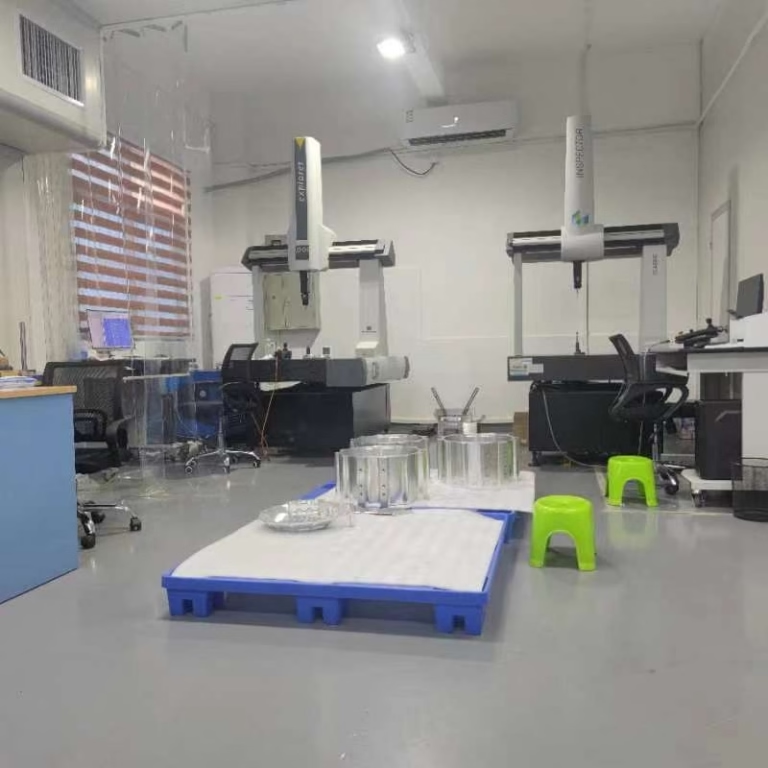
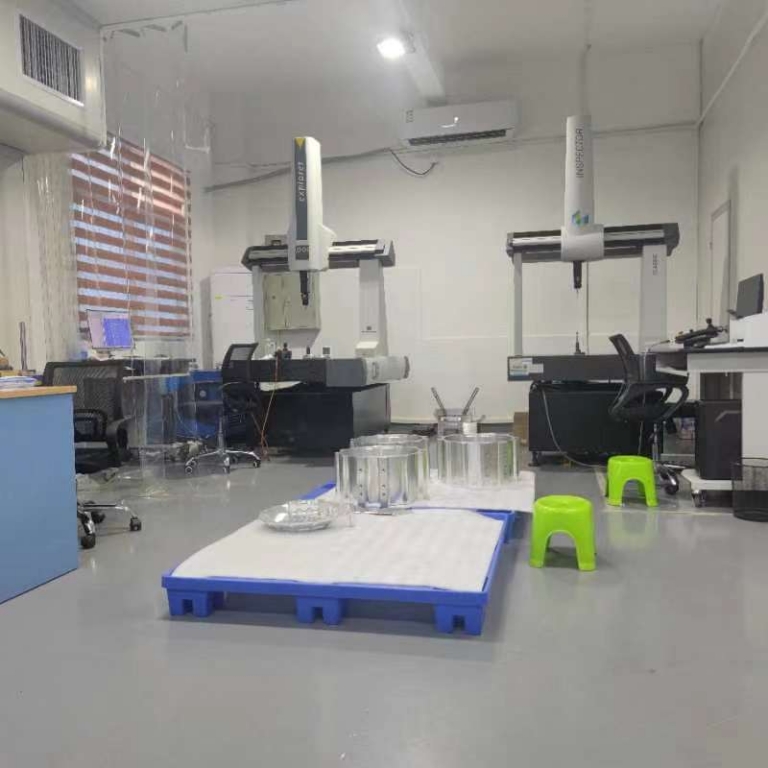
Inventory alone doesn’t solve the reliability equation. If the parts sitting on a US shelf were produced on worn‑out three‑axis machines without rigorous process control, they may arrive quickly but fail during assembly or functional testing. True value comes from combining domestic quick‑ship capability with a manufacturing backbone that can hold tight tolerances, verify them with metrology‑grade equipment, and replicate results in serial production.
That backbone is defined by:
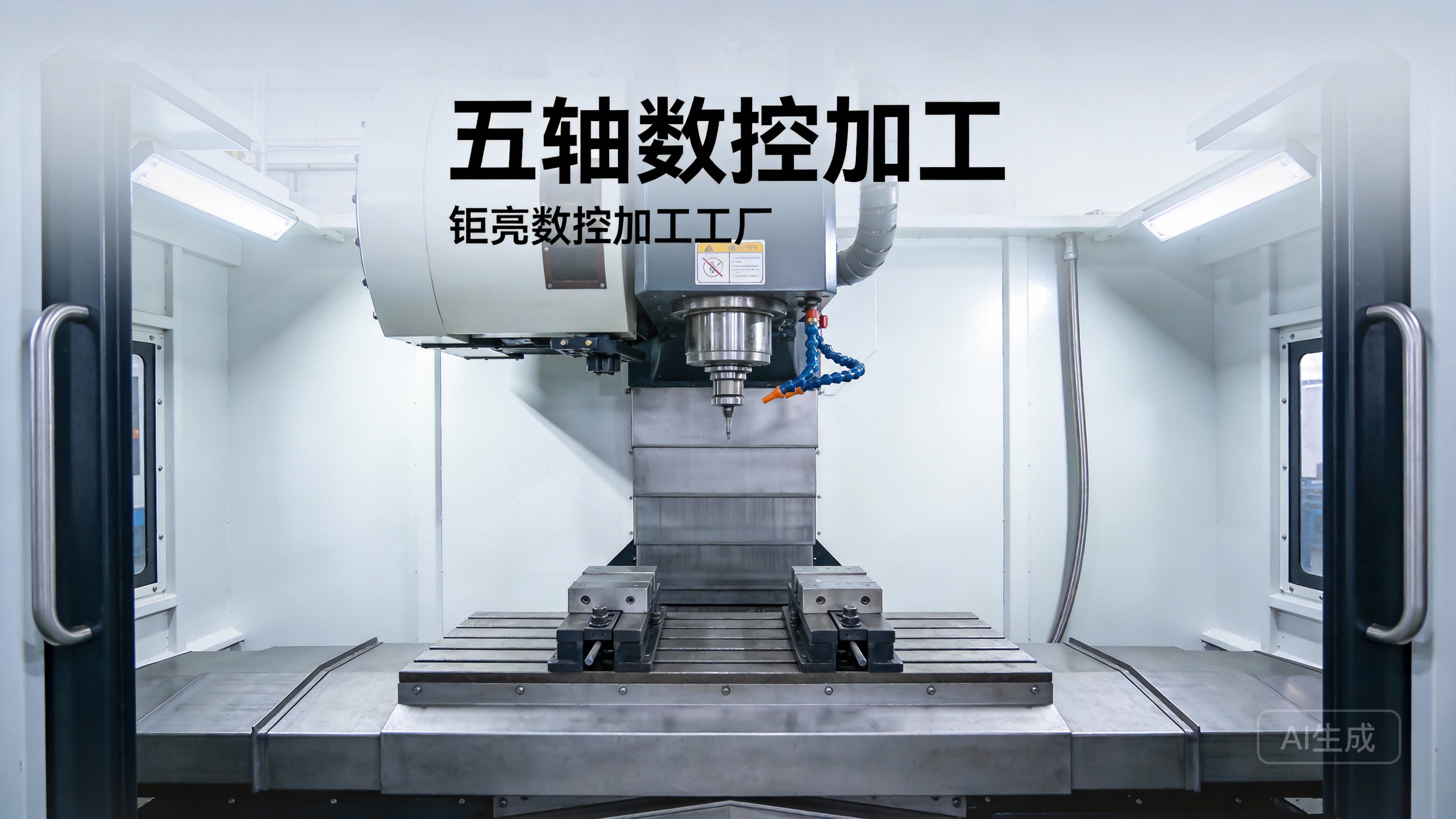
Advanced multi‑axis machining: Five‑axis CNC centers can machine complex geometries in a single setup, eliminating the cumulative error of multiple clamping operations. This is crucial for aerospace brackets, medical device housings, and robotic end‑effectors where angular precision often sits at ±0.001″ or better.
Comprehensive in‑house process chains: Suppliers that own not only CNC milling but also turning, wire EDM, surface grinding, and finishing (anodizing, passivation, powder coating) can manage quality from raw material to final packaging without outsourcing gaps.
Certified quality management systems: ISO 9001 is foundational, but when parts enter the automotive supply chain (IATF 16949), medical instruments (ISO 13485), or IP‑sensitive projects (ISO 27001 for data security), additional certifications become non‑negotiable.
GreatLight Metal exemplifies this integration. The company’s quality framework spans ISO 9001, ISO 13485, IATF 16949, and ISO 27001, ensuring that inventory‑held parts meet industry‑specific compliance without requiring the client to build redundant audit programs. The same plant that populates the US warehouse is also the one that supports its local production with five‑axis machines from manufacturers such as Dema and Beijing Jingdiao, plus a suite of laser powder‑bed 3D printers (SLM/SLS) for rapid iteration of metal prototypes. This means the stocked inventory isn’t a side business—it’s a direct extension of a high‑precision, full‑service contract manufacturer.
How GreatLight Metal Structures Its US Quick‑Delivery Model
Drawing on over a decade of experience and a customer base that spans automotive engine hardware, humanoid robotics, and consumer medical devices, GreatLight Metal’s approach to US warehouse inventory is engineered around three pillars:
1. Pre‑Validated Part Libraries and Customer‑Specific Kanban Replenishment
For clients with ongoing production needs, GreatLight Metal works with engineering teams to identify a Pareto set of parts—those 20% of SKUs that drive 80% of assembly line risk. Candidates for US stocking are agreed upon based on forecast demand, historical failure rates, and ease of final‑stage customization. The Dongguan facility then pre‑produces a buffer stock that is batch‑shipped to the US warehouse. Replenishment triggers can be tied to min‑max thresholds or even electronic data interchange (EDI) consumption signals, creating a lean pull system that keeps inventory fresh and carrying costs low.
2. Flexible Finishing and Sub‑Assembly at the Fulfillment Node
Not every stocked part is a finished‑goods item. Some are held at a semi‑finished state—for example, a machined aluminum body that may later receive a specific anodized color, laser engraving, or thread‑insert installation. The US warehouse is equipped to manage light finishing operations or can route parts to a nearby approved processor. This postponement strategy shortens the lead time for the variant that matters while preserving the economics of volume poduction.
3. Digital Thread from Quotation to Delivery
Every order, whether from stock or newly machined, flows through a digital platform that connects the client’s procurement portal to GreatLight Metal’s enterprise resource planning system. Engineering data—version‑controlled 3D models, first‑article inspection reports, material certs—are accessible from the same dashboard. This digital thread is protected by ISO 27001‑compliant data governance, a feature not all quick‑turn bureaus can claim. For customers handling export‑controlled designs or pre‑patent prototypes, the assurance that design files don’t reside on unsecured servers is as critical as the physical part itself.
Supplier Comparison: US‑Based Rapid Delivery in Precision CNC Machining
To make an informed decision, buyers need to benchmark suppliers not only on their ability to ship from US soil but on the depth of their manufacturing DNA. The table below places GreatLight Metal alongside several recognized names, comparing factors that matter most to engineering and procurement leaders.
| Capability | GreatLight Metal | Xometry | Protolabs Network | RapidDirect | Fictiv |
|---|---|---|---|---|---|
| US‑based quick‑ship inventory | ✅ Curated stock & kanban programs | ⚠️ Primarily on‑demand, no pre‑stocked customer‑specific inventory | ⚠️ Short‑run on‑demand, limited pre‑stocking | ⚠️ Mainly on‑demand manufacturing from China hubs | ⚠️ On‑demand with distributed manufacturing; inventory not core |
| In‑house five‑axis CNC capability | ✅ Large fleet (Dema, Jingdiao) | ⚠️ Aggregated partner shops | ⚠️ Aggregated partner network | ⚠️ Own CNC but limited five‑axis fleet | ⚠️ Aggregated supplier model |
| IATF 16949 automotive | ✅ Yes | ❌ Not typically | ❌ Not listed | ❌ Not standard | ❌ Not listed |
| ISO 13485 medical | ✅ Yes | ❌ Not listed | ❌ Not listed | ❌ Not listed | ❌ Not listed |
| ISO 27001 data security | ✅ Yes | ❌ Not listed | ❌ Not listed | ❌ Not listed | ❌ Not listed |
| Full in‑house finishing (anodizing, plating, etc.) | ✅ Yes | ❌ Often sub‑contracted | ❌ Sub‑contracted | ⚠️ Limited in‑house | ❌ Sub‑contracted |
| Max. part size | Up to 4000 mm | Varies by partner | Varies by partner | Up to 1500 mm (typical) | Varies |
| Typical quick‑turn lead time (US stock) | Same‑day dispatch possible | Quoted, but manufacturing time applies | 24‑72 hrs on‑demand, not stock‑pull | No US stock; 3‑5 days air freight | No inventory; manufacturing time |
| Vertical integration | Machining + sheet metal + die casting + 3D printing + molds | Aggregator (no in‑house production) | Aggregator model | Partial (CNC + sheet metal) | Aggregator model |
Protocase and Owens Industries offer rapid sheet metal and CNC services respectively, often with North American manufacturing, but neither maintains pre‑stocked precision‑machined inventory in the sense of a demand‑pull kanban for custom geometries. PartsBadger and SendCutSend focus on simple 2D or 2.5‑D parts and laser cutting, leaving the five‑axis complexity spectrum largely unaddressed. EPRO-MFG and RCO Engineering provide strong engineering‑heavy services, but their quick‑ship models are generally built‑to‑order rather than stock‑to‑order.
The key takeaway: a provider that marries a US warehouse quick delivery inventory program with in‑house ownership of advanced five‑axis machining, multi‑industry certifications, and a full post‑processing chain gives the client a single point of accountability. When quality or delivery questions arise, there are no finger‑pointing loops between a broker, a distant factory, and an outsourced finisher. Instead, one partner controls the entire outcome.
Industry Use Cases: Where Domestic Stock Creates Unbeatable Advantage
Automotive Engine and E‑Mobility Components
A Tier‑2 supplier developing an electric water pump housing needed forty pre‑production units for cold‑start testing at a Detroit lab. The design featured intricate internal channels machined on a five‑axis center. Using GreatLight Metal’s US warehouse program, fifty units of the housing—machined from aerospace‑grade 6061‑T6, CNC verified on a coordinate measuring machine, and sealed with a chromate conversion coating—were pre‑stocked domestically. When the lab schedule moved up by a week, the parts shipped overnight. The validation run stayed on track, and the supplier avoided a costly expediting charge that would have been multiples of the part price.
Humanoid Robot Joint Assemblies
A robotics startup in Silicon Valley iterating a rotary actuator needed a mix of titanium six‑aluminum‑four‑vanadium (Ti‑6Al‑4V) frames and stainless steel 17‑4PH shafts. The company’s design cycle ran in two‑week sprints. GreatLight Metal first produced an initial batch of frames and shafts using a combination of five‑axis milling and Swiss‑type turning, then staged a replenishment set in the US warehouse. With each design revision, the startup could pull new‑incarnation parts from stock within one business day, test them on the bench, and feed results back into the CAD model. Time from idea to validated assembly shrank from roughly 18 days to under 5 days, accelerating the entire funding milestone.
Medical Diagnostic Enclosures
A medical device OEM required 200 machined ABS‑PC enclosures for a clinical trial kit destined for clinics across the United States. GreatLight Metal molded the enclosures using its in‑house vacuum casting and CNC fixturing capabilities, finished them with a biocompatible soft‑touch coating, and warehoused the lot stateside. The OEM could then release kits in batches of 20 as trial sites were activated, without triggering new production runs or air‑freight each time—keeping inventory carrying costs within the project budget and adhering to ISO 13485 traceability requirements.
These examples illustrate a common pattern: the US warehouse isn’t merely a stock location; it’s a lever that allows engineering teams to operate closer to real‑time iteration, reduces the financial impact of last‑minute design changes, and cuts the administrative burden of managing international freight.
The Engineering Rigor Behind Shelf‑Ready Parts
A common concern engineers voice is whether stored parts maintain their precision or surface integrity over time. When a part is produced and then held in a warehouse, environmental factors such as temperature cycling, humidity, and handling can, in theory, alter critical dimensions or induce corrosion. GreatLight Metal addresses this by:
Climate‑controlled storage: The US warehouse maintains stable temperature and humidity ranges to protect ferrous and non‑ferrous alloys, as well as moisture‑sensitive polymers.
Corrosion‑preventive preservation: Parts are individually packaged with vapor‑corrosion‑inhibitor (VCI) films or oil coatings appropriate to the material and downstream finishing requirements.
Pre‑shipment re‑inspection: For parts that have been stored beyond a pre‑defined period, a random sample undergoes dimensional verification using calibrated instruments. If any deviation from the original first‑article baseline is detected, the entire lot is re‑evaluated before shipment.
Traceability down to the heat lot: Every stocked part traces back to its material certification and production batch record, satisfying the demands of ISO 9001 and IATF 16949 auditors.
Such rigor is what separates an industrial‑grade US quick delivery program from a mere convenience shelf in a 3PL warehouse.
Integrating Data Security into a Geographically Distributed Inventory Model
When inventory sits in a US warehouse, the digital ecosystem that manages orders, stock levels, and customer‑specific pricing often crosses national borders. Without adequate protection, design files and commercial data can become exposed. GreatLight Metal is among the few precision machining firms that hold ISO 27001 certification, signaling that its information security management system has been audited against a strict international standard. For clients developing proprietary medical devices, defense‑adjacent components, or next‑generation consumer electronics, this assurance is a decisive factor.
In practice, the data security framework means:
Encrypted transmission of all engineering files between the client and GreatLight Metal’s servers.
Role‑based access controls within the organization, ensuring that only authorized engineers and quality staff see sensitive drawings.
Physical security protocols at the US warehouse that mirror the rigor of the manufacturing plant—including camera surveillance, access logs, and visitor control.
Robust non‑disclosure agreements that are more than boilerplate, backed by a track record of zero intellectual property disputes.
When a quick delivery promise is built on a foundation of data integrity, the client gains both speed and confidence—two currencies that cannot be separated in today’s innovation economy.
Selecting a Partner: Eight Questions to Ask Beyond “Do You Have US Stock?”
When evaluating suppliers that promote US warehouse quick delivery inventory, engineering and procurement teams should press for specifics:
What is the origin and quality pedigree of the stocked parts? If the inventory was produced on subcontracted, non‑certified machines, the parts may carry latent defects.
Can we tie replenishment to our own MRP signals? A kanban‑based automatic replenishment reduces administrative friction.
Do you hold parts at a semi‑finished state for flexible final customization? This can dramatically widen the applicability of a given stock‑keeping unit.
What certifications govern the facility that produced the parts—and are they still current? ISO 9001 alone may not suffice for automotive or medical programs.
How do you handle data security for the design files that generated the inventory? Look for ISO 27001 or equivalent evidence.
What is your quarantine and re‑inspection policy for parts that have been warehoused beyond 90 days? This reveals the maturity of the quality system.
Can you scale from a handful of prototypes stored in the US to full production volumes without switching manufacturing sites? Having a single source that can accommodate both extremes avoids re‑qualification costs.
Do you offer one‑stop surface finishing and assembly, or will I need to manage multiple vendors? The fewer handoffs, the faster and more reliable the outcome.
GreatLight Metal’s answers to these questions rest on a deep, vertically integrated capability that spans rapid prototyping, die casting molds, sheet metal fabrication, metal 3D printing, and final finishing—all under one quality umbrella. This completeness is what transforms a US warehouse from a cost center into a strategic asset.
The Bigger Picture: Reshaping the Precision Supply Chain
The rise of US warehouse quick delivery inventory is part of a broader transformation in how high‑value, low‑to‑medium volume components reach North American production floors. Four macroeconomic and engineering trends amplify its importance:
Resilience over pure cost: Post‑pandemic supply chain disruptions taught businesses that the cheapest landed cost is meaningless if parts are stuck at a port. Domestic inventory acts as an insurance policy.
Compressed product lifecycles: Consumer electronics, electric vehicles, and robotic systems now see design refreshes every 12 to 18 months. The ability to iterate without accumulating weeks of latency in the supply chain is a competitive edge.
Tariff and trade policy volatility: By shipping bulk inventory in advance, manufacturers can time their customs clearance under favorable duty windows and avoid per‑shipment administrative fees.
Sustainability goals: Consolidating freight into fewer, fuller container loads reduces the carbon footprint per part. A US warehouse can then break bulk and distribute regionally, minimizing last‑mile emissions.
GreatLight Metal, with its ISO 14001‑aligned environmental commitment (integrated into the broader management system), leverages this model to help clients meet both commercial and sustainability targets. The combination of large‑scale, high‑precision home plant capability and a responsive US foothold creates a hybrid supply chain that is both efficient and agile.
Conclusion: Speed Without Sacrifice
Speed in manufacturing too often forces a trade‑off: you can have it fast, or you can have it right, but seldom both. A properly engineered US warehouse quick delivery inventory dismantles that false binary. By pre‑stocking parts that have already passed through the gauntlet of a certified precision machining factory—one with five‑axis capability, full‑chain finishing, and data‑security governance—companies can receive physically validated components in hours, not weeks, without gambling on quality.
This model isn’t about holding generic commodity items; it’s about making strategic ready‑to‑ship positions available for the exact geometries that keep development programs and production lines moving. When you work with a partner that understands both the demands of high‑precision manufacturing and the logistics of distributed fulfillment, rapid delivery ceases to be an emergency workaround and becomes a repeatable, engineered process. That is the caliber of execution GreatLight Metal brings to clients who depend on a robust, secure, and certifiably precise US Warehouse Quick Delivery Inventory.



















