
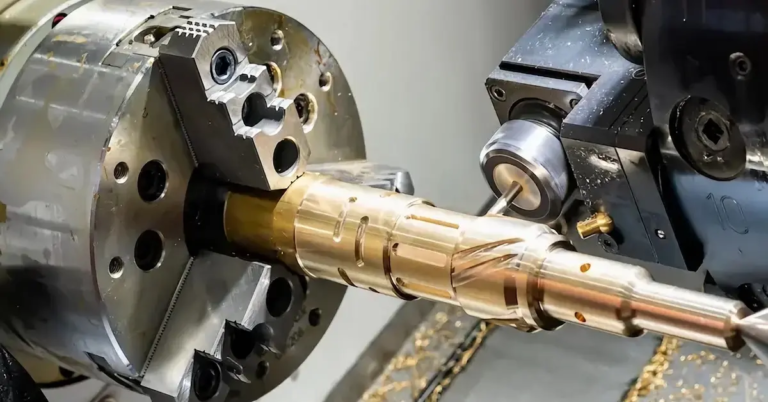
Understand the CNC machining operations of precision parts
As demand for precise parts continues to grow across industries, CNC machining has become an important manufacturing process for producing high-quality components with extremely high tolerances. At the heart of CNC machining is advanced technology and equipment that can create complex parts with unparalleled accuracy. In this article, we will dig into the world of CNC machining operations to explore the complexity of this process and its application in precise manufacturing.
What is CNC machining?
CNC (Computer Numerical Control) machining is a manufacturing process in which a machine programmed using a set of instructions uses computer software to control the movement of a tool to complete specific operations such as cutting, drilling or milling. The machine can perform a variety of tasks including 2D and 3D cutting, milling, turning and grinding. This high degree of accuracy and accuracy makes CNC machining ideal for producing complex parts, especially in the aerospace, automotive, medical and defense industries.
Key CNC machining operations
CNC machining involves several basic operations, including:
- Turn around: The turning operation involves rotating the workpiece while moving the cutting tool along the rotation axis. This allows the creation of cylinder surfaces and holes.
- Milling: Milling operation Use a rotary cutting tool to remove material from the workpiece. This can be done in a variety of directions, including horizontal and vertical configurations.
- drilling: Drilling operations involve creating round holes in the workpiece using a rotary cutting tool.
- Turning and milling combination: Some CNC machining centers can perform both turning and milling operations, thereby increasing efficiency and reducing setup time.
- Precise slats and turns: High-precision license plate and turn operations are used to create complex surfaces and shapes.
CNC machining materials and tools
The choice of materials and tools is crucial for CNC machining. Key considerations include the type of material, its hardness and wear resistance of the selected tool. Commonly used materials in CNC processing include:
- Stock alloys: Ferrous (e.g., steel) and non-produced alloys (e.g., aluminum, copper), are widely used in CNC processing due to their usability and natural properties.
- Exotic alloys: Specialized materials such as titanium, magnesium and inconel are found in use in aerospace and defense applications, and their unique characteristics offer different advantages.
- Wood and plastic: When using closed-loop control technology, CNC machining is also suitable for wood and plastics, allowing for precise cutting and drilling.
Post-processing and completion of services
Although CNC machining can produce highly accurate parts, the finished product requires additional steps. Some services that complement CNC machining include:
- Clean and organize: Processes such as burrs, grinding and polishing to eliminate imperfections, resulting in a smooth surface.
- Hardening and heat treatment: Application of heat treatment or surface hardening can improve the strength and durability of the material.
- Paints and surface treatments: Quenching, electroplating and other surface modifications can enhance wear resistance, non-stick properties or thermal properties.
in conclusion
Precision manufacturing requires very accurate and precise operations to generate the needs of complex parts industry leaders. Understanding the complexity of CNC machining operations and equipment can help overcome obstacles such as reducing waste and re-treatment. Enjoying access to this technology allows manufacturers to cut production time and development costs, consistently improving high-quality elements such as precision aerospace components and defense-related metals.
Frequently Asked Questions
Q: What is CNC processing used?
A: CNC machining is used to produce high-precision parts and components, with tight tolerances in various industries.
Q: What is the main CNC machining operation?
A: The main operations include turning, milling, drilling, turning and milling combinations as well as precise car-mounted and turning.
Q: What materials can be processed using CNC processing?
A: CNC processing technology can be used to process ferrous and non-productive alloys, exotic alloys, wood and plastics.
Q: How does post-processing service support CNC processing?
A: Post-treatment and completion services such as cleaning, burrs, hardening and finishing to improve product durability, finishing and functionality.



















