
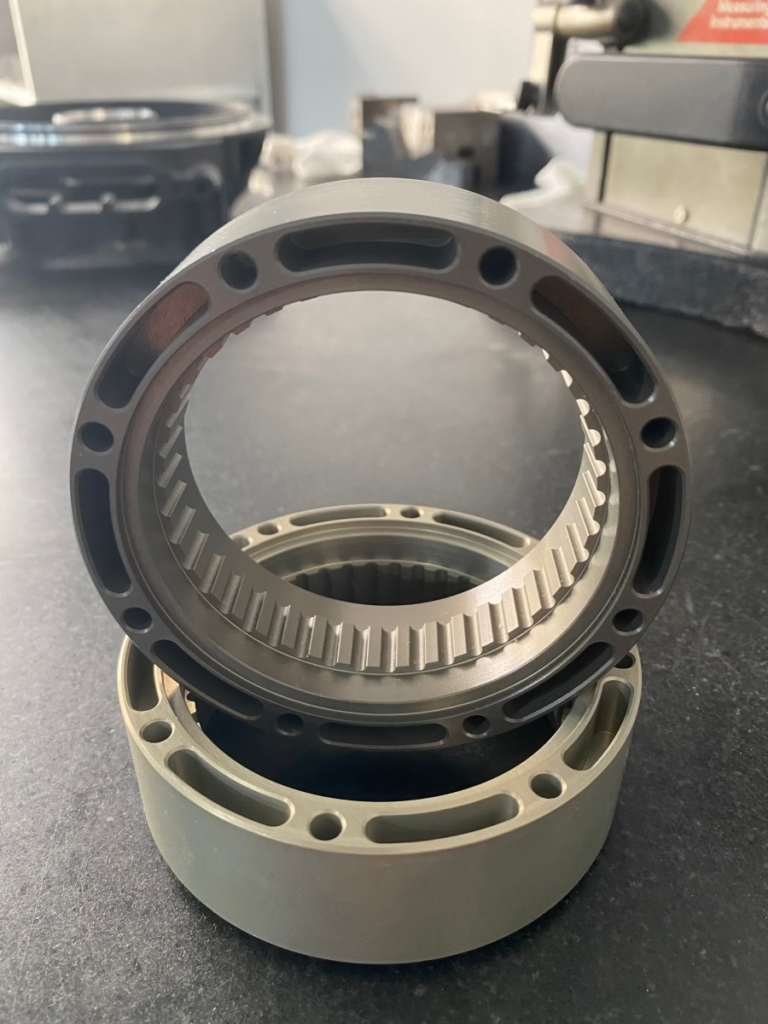
When it comes to manufacturing UAV Accelerometer Casings 5 Axis, achieving the necessary precision and structural integrity is a formidable challenge. These components serve as the protective and stabilizing enclosure for inertial measurement units (IMUs) and accelerometers, directly influencing the flight stability, navigation accuracy, and overall reliability of unmanned aerial vehicles. The combination of extreme environmental exposure, weight constraints, and complex internal geometries makes them a perfect candidate for advanced five‑axis CNC machining.
The Critical Role of 5‑Axis Machining in UAV Accelerometer Casings 5 Axis Projects
An accelerometer casing in a UAV must do much more than simply hold a sensor. It must:
Dampen external vibrations while maintaining sensor alignment within micron‑level tolerances.
Resist thermal expansion mismatches that can throw off calibration.
Withstand sudden shocks, moisture, and electromagnetic interference.
Remain lightweight, often with complex internal channels for heat dissipation or wiring.
Traditional 3‑axis machining requires multiple setups, each introducing a fresh chance for alignment error. With five‑axis CNC technology, the cutting tool can approach the workpiece from any angle, allowing the entire casing – including pockets, angled sensor mounts, and intricate ribbing – to be machined in a single setup. This not only slashes cumulative geometric error but also reduces production time by up to 60% for parts that demand multi‑face precision.
Common Materials and Why They Matter
Material choice for accelerometer casings is directly tied to the UAV’s mission profile. Here are the most frequently used alloys and their typical requirements:
Aluminum 6061‑T6 / 7075‑T6: Excellent strength‑to‑weight ratio, good machinability, and anodizing‑friendly. Perfect for commercial and industrial drones. Tolerances often need to be held within ±0.005 mm on mounting faces.
Titanium Grade 5 (Ti‑6Al‑4V): Unmatched corrosion resistance and strength, essential for marine, high‑temperature, or stealth‑focused UAVs. Machining requires rigid 5‑axis machines with high‑pressure coolant to avoid work hardening.
Stainless Steel (e.g. 17‑4 PH): Selected when the casing also serves as a structural member or must meet strict military EMI shielding specs.
Engineering Plastics (PEEK, Ultem): Occasionally used for low‑SWaP (Size, Weight, and Power) applications where radar transparency is needed. Precision machining of these thermoplastics demands sharp cutters and low‑stress fixturing.
How GreatLight CNC Machining Tackles Precision UAV Casing Challenges
Not every machine shop can deliver true aerospace‑grade accuracies on a five‑axis platform. GreatLight CNC Machining, operating out of a 7,600‑square‑meter facility in Dongguan, China’s hardware capital, has built its reputation on solving exactly these kinds of demanding projects.
Deep Process Integration Under One Roof
Unlike job shops that outsource secondary operations, GreatLight’s facility houses the full manufacturing chain: 5‑axis, 4‑axis, and 3‑axis CNC machining centers, Swiss‑type lathes, EDM, vacuum forming, as well as SLM/SLA/SLS 3D printing. For a UAV accelerometer casing, this means the raw billet can be milled on a brand‑name 5‑axis machine (such as a Dema or Beijing Jingdiao), then immediately move to in‑house wire EDM for critical tight‑tolerance bores, followed by anodizing, passivation, or even 3D‑printed‑insert integration – all without leaving the facility or risking quality gaps between subcontractors.
Stringent Quality and Data Security Certifications
In the defense‑adjacent and commercial UAV space, trust is non‑negotiable. GreatLight holds certifications that directly speak to the needs of this sector:
ISO 9001:2015 ensures a process‑driven quality system that tracks every operation.
ISO 13485 for medical‑grade hardware production – a testament to its ability to handle ultra‑clean, high‑precision components.
IATF 16949 for automotive‑grade quality, translating to rigorous PPAP‑level documentation that sophisticated UAV integrators appreciate.
ISO 27001 compliance for data security, critical when proprietary casing designs are shared by defense or R&D clients.
Sub‑Micron Measurement and Verification
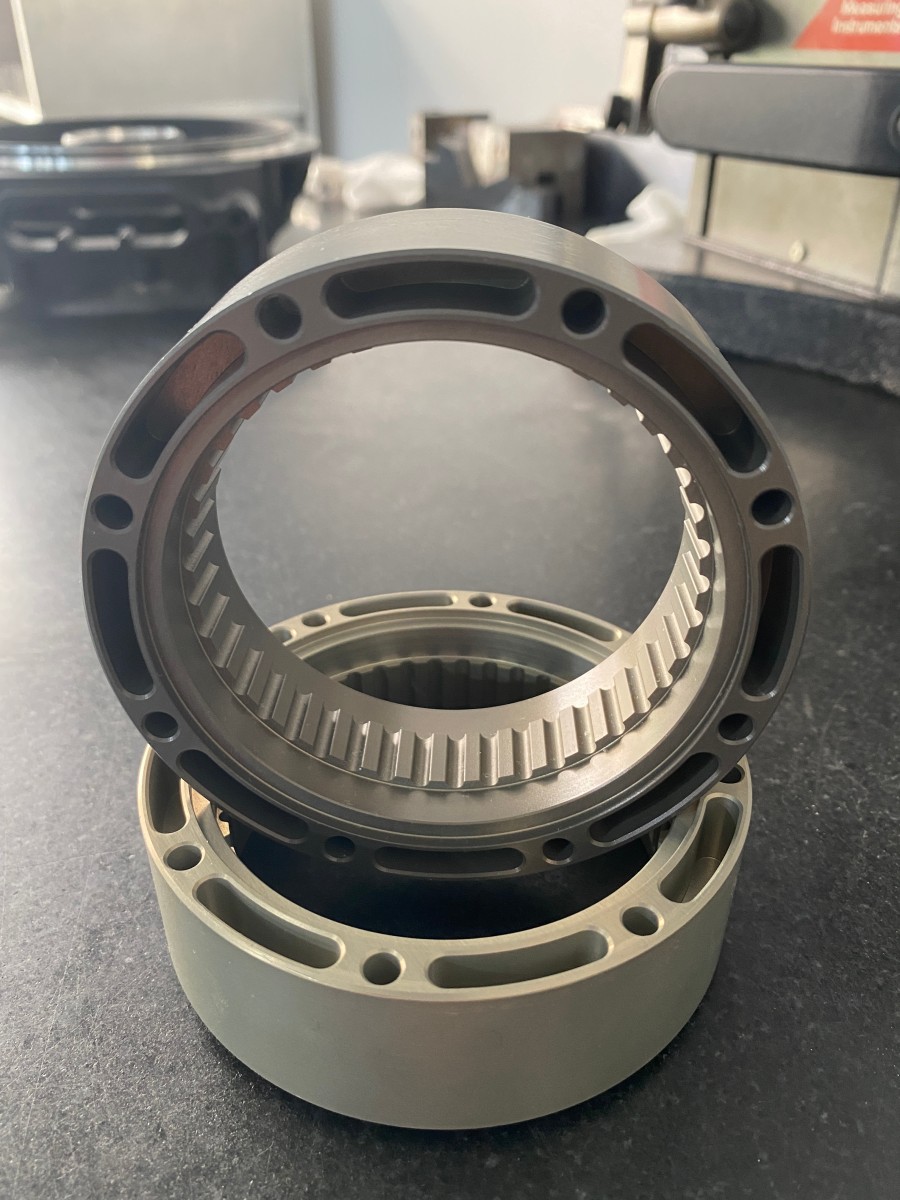
Equipment alone doesn’t guarantee accuracy. GreatLight’s in‑house metrology lab uses coordinate measuring machines (CMMs), laser scanners, and optical comparators to verify that each accelerometer casing meets the exacting geometric dimensioning and tolerancing (GD&T) specified in the 3D model. For critical mounting interfaces, the team often documents flatness, perpendicularity, and true position to within 0.001 mm – the kind of precision that distinguishes a reliable navigation system from one that drifts mid‑flight.
Breaking Down the Five‑Axis Workflow for Accelerometer Casings
To understand why a partner like GreatLight excels, it helps to look at how a typical 5‑axis project for a UAV casing progresses from design to delivery.
Design for Manufacturing (DFM) Review
The client uploads a CAD model (STEP, IGES, or .stp). GreatLight’s engineering team analyzes wall thickness, internal corner radii, and thread specifications to ensure machinability. If a 90‑degree internal pocket corner cannot be milled, they suggest a radius change or a wire‑EDM follow‑up – while still preserving the sensor alignment envelope.
Fixture and CAM Strategy
A custom soft jaw or a vacuum fixture is designed to hold the raw stock in a five‑axis trunnion or swivel‑head machine. The CAM programmer then defines the toolpaths using simultaneous 5‑axis motion for features like angled sensor mounts, avoiding excess repositioning. Cutting parameters are tailored to the specific material alloy, tool coating, and machine dynamics.
Single‑Setup Multi‑Face Machining
The entire part is roughed and finished in one clamping. This guarantees that the critical datum surfaces – for example, the IMU mounting face and the chassis‑to‑casing interface – share the same setup origin, eliminating stack‑up error.
Post‑Processing and Finishing
After machining, components may undergo precision bead blasting, anodizing (Type II or hardcoat Type III), Alodine chemical film, or passivation. GreatLight’s in‑house finishing capability ensures that even cosmetic and anti‑corrosion specs are met without delay.
Final Inspection and Traceability
Every casing is documented with dimensional reports and material certs. For aerospace clients, lot‑traceable heat numbers and certification packages are standard.
How GreatLight Compares to Other Leading CNC Suppliers
When engineers evaluate suppliers for UAV accelerometer casings, they typically compare a shortlist of known service providers. Below is a snapshot of how GreatLight CNC Machining stands alongside several prominent names, based on publicly available information and industry practice.
| Capability / Feature | GreatLight CNC Machining | Xometry (manufacturing network) | Hubs (Protolabs Network) | JLCCNC | RapidDirect |
|---|---|---|---|---|---|
| Core 5‑Axis Equipment | Brand‑name centers (Dema, Beijing Jingdiao) – in‑house, owned & operated | Varies by partner, no direct control | Varies by partner; focus on distributed network | In‑house but smaller range of high‑end 5‑axis machines | Mixed fleet, mostly mid‑range 5‑axis |
| Process Integration | Full in‑house chain: CNC, EDM, sheet metal, 3D printing, finishing | Aggregates from separate vendors | Aggregates from separate vendors | Primarily CNC and finishing | CNC plus some finishing |
| Certifications | ISO 9001, ISO 13485, IATF 16949, ISO 27001 | ISO 9001 (varies by partner) | ISO 9001 (platform, not all partners certified) | ISO 9001 | ISO 9001 |
| Data Security | ISO 27001 certified; secure IT infrastructure | Standard encryption, no certified ISMS | Standard data protection | Not publicly certified to ISO 27001 | Not publicly certified |
| Aerospace / Defense Readiness | Direct experience with IMU and inertial sensor housings; tight GD&T documentation | Depends on partner selection | Limited; more suited to general prototyping | Gaining experience, but documentation rigor varies | Some aerospace projects but lacks IATF 16949 depth |
| After‑Sales Support | Free rework for quality issues; full refund if unresolved | Partner‑dependent; platform mediates | Partner‑dependent; platform mediates | Standard rework policy | Standard rework |
| Scalability | Single‑factory control from prototype to 10,000+ unit runs | High scalability via network | High scalability via network | Good for small‑to‑mid batches | Good for mid‑volume |
The table highlights a key advantage: while network‑based platforms offer geographic convenience, they cede direct control over process consistency and quality. For parts where every micron matters and traceability is non‑negotiable, a dedicated manufacturer like GreatLight, with its fully integrated facility and tier‑one certifications, reduces risk significantly.
Real‑World Application: A Quick Case Reflection
Consider a developer of fixed‑wing surveillance UAVs needing 200 magnesium alloy accelerometer housings for a tactical navigation system. The casing required an angled IMU seat, micro‑channels for vibrational damping, and a Class 3 hardcoat anodized finish. GreatLight’s engineering team proposed a hybrid strategy: five‑axis simultaneous machining of the main body from forged AZ31B magnesium, followed by wire‑EDM for a high‑aspect‑ratio internal slot that would have been challenging to mill. By keeping all processes in‑house and under ISO 13485‑inspired cleanliness controls, the casings were delivered with full CMM reports and a process capability index (Cpk) above 1.67 on all critical features. The client’s integration time dropped because the casings required zero hand‑fitting.
This is not an isolated story. It illustrates the difference between a generic part‑order platform and a manufacturing partner that understands the physics behind UAV sensor stability.
Key Decision Factors for Engineering Teams
When selecting a supplier for UAV accelerometer casings 5 axis, here are the questions that matter most:
Can the shop prove it holds ±0.005 mm on real production runs, not just first‑article inspection? Ask for machine‑capability data, not just a tolerance claim.
Does the supplier have in‑house finishing and heat‑treatment control? Outsourced anodizing or passivation often leads to material mis‑match and delayed lead times.
Is the IP of your casing design protected by a certified information security system? For defense‑adjacent work, ISO 27001 is becoming a minimum requirement.
Will you receive a comprehensive quality package that reduces your own incoming inspection burden? This includes material certs, FAIR, CMM reports, and surface finish measurements.
GreatLight CNC Machining has built its operational DNA around answering these questions with robust, verifiable systems, not sales rhetoric.
Conclusion: Partnering for Inertial Precision
As UAV platforms evolve toward greater autonomy and miniaturization, the accelerometer casing becomes more than a shell – it becomes a metrological element that influences every flight data point. Choosing the right manufacturing process and partner is not a cost decision; it is a performance decision.
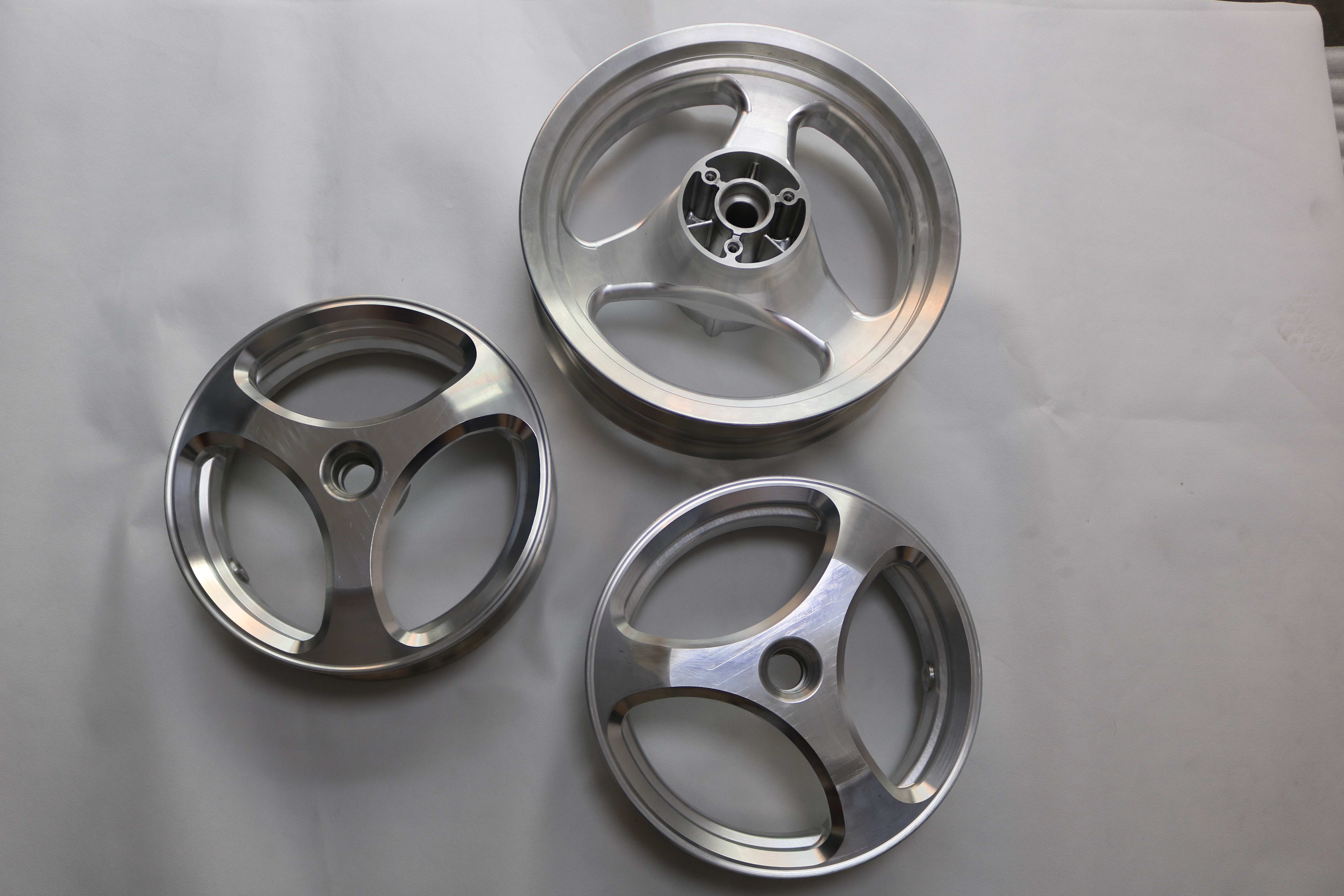
GreatLight CNC Machining, with its expansive five‑axis facility, rigorous certification stack, and in‑house finishing capabilities, offers a compelling evidence‑based pathway for companies looking to eliminate the pain points of fragmented supply chains and inconsistent quality. For your next project involving UAV Accelerometer Casings 5 Axis, base your partnership choice on verified capability, not only advertised capacity.



















