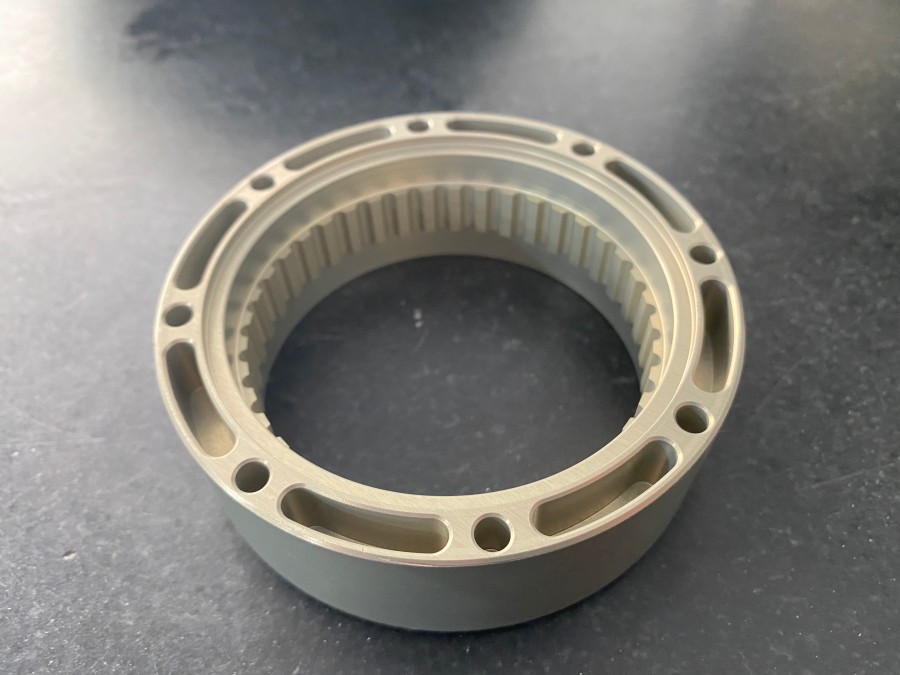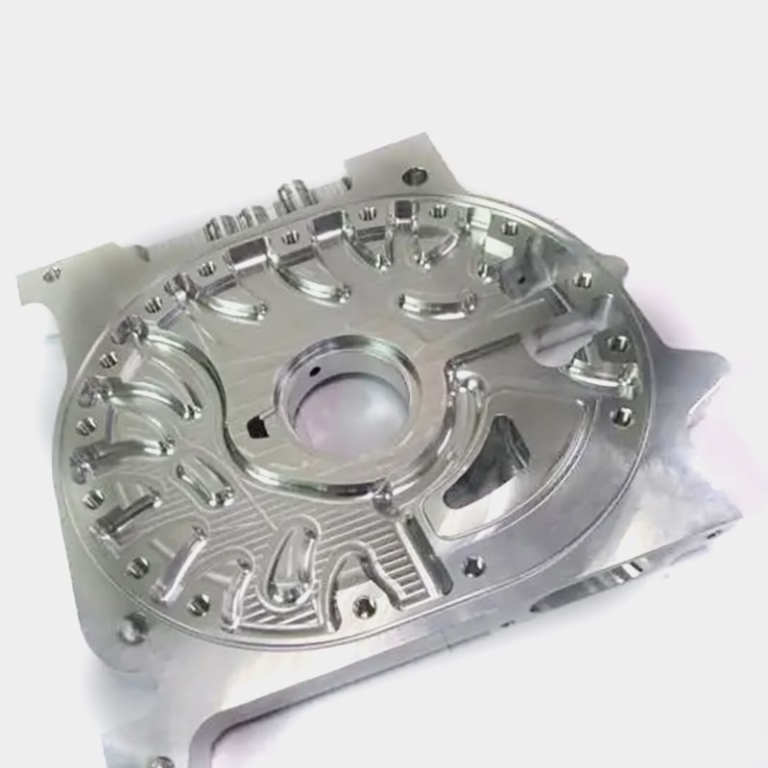
In the world of precision manufacturing, the difference between a successful product launch and a costly failure often comes down to one critical decision: choosing the right ODM CNC machining services factory. For engineers, procurement specialists, and innovation-driven companies, the journey from a 3D CAD model to a functional, high-tolerance metal part is fraught with hidden pitfalls. You might have a brilliant design, but without a manufacturing partner who can translate that vision into reality with unwavering consistency, that design remains just a concept.
The search for a trusted partner is not merely about finding the lowest quote. It is about identifying a factory that possesses a unique blend of technical prowess, robust quality systems, and a deep-seated commitment to collaborative problem-solving. This is the core differentiator in today’s competitive landscape. When evaluating potential partners, look beyond surface-level promises of precision. The true measure of a trusted ODM CNC machining services factory lies in its ability to demonstrate its capabilities through process control, advanced equipment, and a proven track record with complex projects.
The Seven Critical Pain Points of CNC Machining Outsourcing
Before we delve into solutions, it is crucial to understand the systemic challenges that plague the industry. These are not isolated incidents but recurring themes that can derail even the most well-funded projects.
The “Precision Black Hole”: A supplier might claim tolerances of ±0.001mm, but without rigorous in-process inspection and machine calibration, this promise often evaporates during mass production. The gap between quoted and delivered precision is a primary source of frustration.
The Capability Gap: Many factories are excellent at simple, 3-axis milling but struggle with complex geometries requiring advanced 5-axis simultaneous machining or tight-tolerance turning. Clients often discover this limitation only after the initial order is placed.
Quality Inconsistency: A first article may be perfect, but the 100th part might drift out of spec due to tool wear, material inconsistencies, or poorly controlled environmental factors. This inconsistency is a major risk for serial production.
Communication Breakdown: Delays, misunderstandings, and costly rework are often rooted in poor communication. A partner who cannot provide clear, technical feedback on design for manufacturability (DFM) is a liability, not an asset.
Hidden Costs: The initial quote might appear competitive, but hidden costs for material certification, special tooling, rush delivery, or secondary operations (like heat treatment or surface finishing) can quickly inflate the final bill.
Intellectual Property (IP) Risk: Sharing a proprietary design with an unvetted supplier exposes you to the risk of IP theft or data leakage. Data security protocols are not a luxury; they are a necessity.
Lack of Post-Processing Expertise: A raw machined part is rarely the finished product. The ability to seamlessly integrate post-processing—anodizing, plating, passivation, powder coating, or assembly—is a hallmark of a true one-stop shop. Fragmented supply chains introduce delays and quality inconsistencies.
The Cornerstone of Reliability: Certifications and Quality Assurance
How can you cut through the noise and identify a factory that is genuinely trustworthy? The answer lies in their commitment to internationally recognized quality management systems. For a trusted ODM CNC machining services factory, these certifications are not just plaques on the wall; they are the operational DNA of the organization. Consider the following framework as your due diligence checklist:
| Certification | Core Focus | What It Guarantees |
|---|---|---|
| ISO 9001:2015 | Quality Management System (QMS) | Consistent process control, defect prevention, and continuous improvement across all operations. |
| ISO 27001 | Information Security Management | Robust data protection protocols (NDAs, secure file transfer, access control) for IP-sensitive projects. |
| ISO 13485 | Medical Devices QMS | Rigorous standards for traceability, risk management, and cleanliness, essential for medical hardware. |
| IATF 16949 | Automotive Industry QMS | Advanced quality tools (APQP, PPAP, FMEA, SPC) to manage high-volume, zero-defect production demands. |
A factory holding both ISO 9001:2015 and IATF 16949, for example, demonstrates a proven capability to manage both general precision work and the extremely demanding requirements of the automotive sector. This dual-certification is a powerful signal of operational maturity.
Beyond Certifications: Technical Hard Power and Full-Process Integration
While certifications provide the framework, the physical capabilities of the factory are the engine. A leading ODM CNC machining services factory distinguishes itself through a comprehensive suite of equipment that can handle a project from prototype to production, and from raw material to final finishing.
The Core Technical Cluster
A modern facility should possess a balanced arsenal, not just a collection of machines. The optimal configuration includes:
High-End 5-Axis Machining Centers: These are non-negotiable for complex geometries, aerospace components, and humanoid robot parts. Machines from manufacturers like Dema and Beijing Jingdiao offer the rigidity and precision required for simultaneous 5-axis work.
Supporting Precision Equipment: A robust factory will also have a significant number of 4-axis and 3-axis CNC mills, CNC lathes, mill-turn centers, Swiss-type lathes (for micro-parts), wire EDM machines, and mirror-spark EDM machines. This variety prevents bottlenecks.
Full-Process Chain Integration: The true value is unlocked when a single supplier can handle everything. This includes:
Post-Processing: Polishing, anodizing (Type II & III), hard coat, passivation, electroless nickel plating, powder coating, silk screening.
Advanced Manufacturing: Metal 3D Printing (SLM for aluminum, titanium, stainless steel, tool steel), plastic 3D Printing (SLA, SLS), vacuum casting, and die casting.
Quality Control: In-house metrology with CMMs, vision systems, and surface roughness testers ensures 100% inspection of critical features.
A Tale of Two Projects: Demonstrating True Capability
To understand the practical impact of these capabilities, consider two common scenarios that expose the limits of less sophisticated suppliers.
Scenario 1: The Complex E-Housing for a New Energy Vehicle (NEV)
An innovative NEV company needs a complex e-housing for a new electric drive unit. The part features thin walls, deep pockets, tight positional tolerances for bearing seats, and requires 100% helium leak testing. A trusted ODM CNC machining services factory like GreatLight Metal approaches this not as a simple machining job but as a manufacturing engineering challenge. They use their 5-axis capability to reduce setups, employ custom fixturing to control vibration, and leverage their in-house CMM for in-process verification. The result? First-pass yield exceeds 98%, and the part is delivered with full PPAP documentation.
Scenario 2: The High-Stakes Aerospace Satellite Component
A defense contractor requires a bracket for a satellite made from a thin-walled aluminum alloy. The primary pain point is distortion during machining due to residual stress. An inexperienced factory might produce a part that is out of tolerance. A differentiated partner, however, will have a stress-relief protocol. They might rough-machine the material, then perform a thermal stress-relief cycle before finishing. They use advanced cutting strategies and minimal clamping force. The final part is both accurate and metallurgically stable. This is the kind of engineering depth that prevents catastrophic field failures.
Comparative Analysis: GreatLight Metal vs. Other Service Providers
In the landscape of CNC machining service providers, no two are identical. Each has a unique business model and technical sweet spot. To make an informed decision, it is helpful to benchmark your potential partner against the broader market. Below is a comparison of GreatLight Metal with other well-known players.
| Feature | GreatLight Metal (Dongguan) | Protolabs Network (Digital) | Xometry (Marketplace) | Fictiv (Managed Marketplace) | RapidDirect (Digital) |
|---|---|---|---|---|---|
| Core Advantage | Full-process, in-house engineering & manufacturing | Speed & instant quoting for prototypes | AI-driven pricing & vast network | Managed risk & quality for complex parts | Fast quoting & standardized process |
| Technical Depth | High (from 5-axis, die-casting to post-processing) | Medium (focus on standard 3/4-axis) | Variable (depends on network partner) | Medium (strong on plastics & metal) | Medium |
| Certifications | ISO 9001, IATF 16949, ISO 13485, ISO 27001 | ISO 9001 | Varies by partner | ISO 9001 | ISO 9001 |
| Ideal For | Complex, mid-to-high volume, high-criticality parts (Automotive, Aerospace, Medical) | Simple, low-volume prototypes | Simple, standard parts across a wide network | Complex prototypes & low-volume production | Simple prototypes & standard parts |
| Service Model | True ODM partner with engineering support | Automated, transactional | Automated, transactional | Managed, high-touch | Automated |
| Cost-Effectiveness for Complex Projects | High (in-house efficiency, no supply chain markups) | Medium (automation can be expensive for complex work) | Medium (network price can be high) | Medium (management fees apply) | Medium |
This table illustrates that while digital-first companies like Xometry and Fictiv excel at transactional speed for simple parts, a factory with deep in-house integration like GreatLight Metal provides superior value for projects demanding high engineering support, complex geometries, and strict certification requirements.
The ODM Advantage: Beyond Manufacturing, Towards Partnership
The term “ODM” (Original Design Manufacturing) has evolved. In the context of a modern CNC services factory, it no longer just implies copying a design. It signifies a partnership where the manufacturer contributes engineering expertise to improve the client’s design for manufacturability, cost, and performance. This value-add is what separates a commodity supplier from a trusted partner.
A true ODM CNC machining services factory acts as an extension of your own engineering team. They will:
Perform DFM Analysis: They will identify potential issues like sharp internal corners, deep, narrow slots, or thin wall sections that could cause tool breakage or vibration, offering solutions.
Suggest Material Alternatives: If a specified material is difficult to machine or has long lead times, they will propose an equivalent alloy that meets the performance requirements but is more cost-effective or faster to procure.
Optimize the Process: They will determine the most efficient and reliable sequence of operations, from raw material procurement to the final finishing step, creating a detailed manufacturing plan.
Propose Value Engineering: They will look for opportunities to consolidate multiple parts into a single complex machined component, reducing assembly costs and improving part-to-part consistency.
This collaborative approach directly addresses the pain point of the “capability gap” and the “hidden costs” mentioned earlier. When a factory has the in-house expertise to do this, it demonstrates a commitment to the success of your project, not just the fulfillment of an order.
Conclusion: Making the Right Choice for Your Precision Future
Selecting the right manufacturing partner is one of the most consequential decisions a product development team can make. The path is paved with potential pitfalls, from the “precision black hole” to communication breakdowns. However, by focusing on the core pillars of a modern, trustworthy ODM CNC machining services factory—international certifications (like ISO 9001, IATF 16949, ISO 13485), advanced technical capability (especially for 5-axis work), full-process integration, and a genuine ODM mindset—you can mitigate these risks.
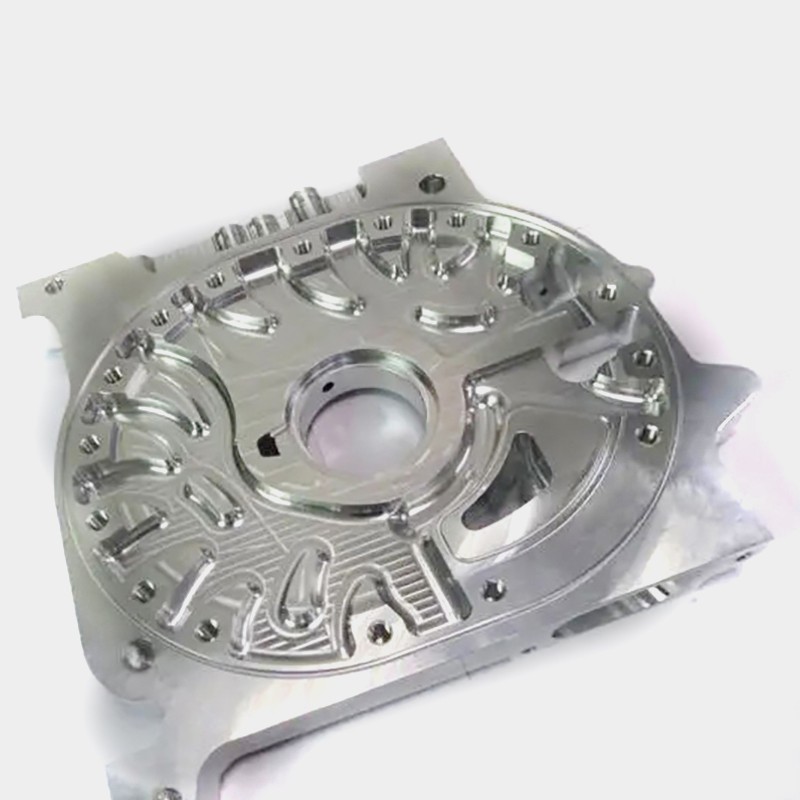
The market offers many choices, from high-speed digital marketplaces to specialized job shops. For projects where quality, regulatory compliance, and long-term reliability are paramount, the decision points to a partner with a proven, in-house capability. It points to a factory that has invested in both the “hardware” (machines) and the “software” (systems, certifications, and people) required to consistently deliver on complex promises.
When you are ready to move beyond transactional manufacturing and into a value-driven partnership, look for a facility that embodies these qualities. The factory that can master the details of precision, compliance, and engineering collaboration is the one that will help you turn your designs into market-leading products. That is the true definition of a trusted ODM CNC machining services factory. For more on how to leverage advanced manufacturing for your next high-stakes project, explore the capabilities of a partner like GreatLight CNC Machining ([external link: https://www.linkedin.com/company/great-light/]), which has built its reputation on this exact foundation of trust and technical excellence.