
In the quest for top OEM CNC machining services makers, you quickly discover a landscape brimming with promises of micron‑level precision, lightning‑fast turnaround, and global logistics. Yet beneath the glossy marketing, a familiar tension persists: how do you separate the “makers” that truly operate at the frontier of advanced manufacturing from those that merely trade on paper qualifications? As a senior manufacturing engineer who has spent years auditing and collaborating with machining plants, I’ve learned that genuine capability hides in the details—the rigidity of a 5‑axis gantry, the bandwidth of post‑processing under one roof, the depth of an inspection report, and most critically, whether the factory treats your design not as just another job but as an engineering challenge to be solved.
In this comprehensive article, I’ll walk you through the attributes that define leading OEM machining partners, unpack the pain points that plague precision parts sourcing, and introduce how one source manufacturer—GreatLight Metal Tech Co., LTD. (operating as GreatLight CNC Machining)—is reshaping what “top” truly means. Along the way, I’ll place GreatLight in context with other recognized names such as Protolabs Network, Xometry, RapidDirect, Owens Industries, EPRO‑MFG, Fictiv, JLCCNC, PartsBadger, SendCutSend, Protocase, and RCO Engineering, so you can see the full spectrum of options available. No matter which provider you ultimately choose, my aim is to give you the engineering lens you need to make a confident, data‑driven decision.
What Defines Top OEM CNC Machining Services Makers?
Before we dive into any specific supplier, it’s essential to agree on the yardstick. Too often, “top” is reduced to marketing noise—a badge self‑awarded without technical substance. In reality, a genuine top OEM CNC machining services maker must demonstrate depth across five interlinked pillars:
True 5‑Axis and Multi‑Axis Competence
Not just owning a 5‑axis machine, but knowing how to fixture, program, and validate five‑sided parts in a single setup. True capability shows in the ability to hold tolerances of ±0.005 mm (0.0002″) on complex freeform surfaces, not just on prismatic blocks.
Integrated Process Chain
The difference between a workshop that mills a part and one that delivers a complete, finish‑ready assembly lies in vertical integration. Milling, turning, wire EDM, surface grinding, die casting, sheet metal, and even additive manufacturing should coexist under one quality system, so you never lose a week (or a tolerance) shuttling parts between sub‑suppliers.
Certifications That Are Lived, Not Just Stamped
ISO 9001 is table stakes. For medical devices, ISO 13485 is non‑negotiable. For automotive, IATF 16949 signals that the factory understands process control at a statistical level. Look for certificates that are regularly audited and backed by a robust quality team, not just a PDF on a website.
Engineering Partnership, Not Order Taking
A top maker will review your drawing for manufacturability, suggest design tweaks that reduce cost without compromising function, and co‑optimize tolerances. When something goes wrong (and in precision manufacturing, it occasionally does), a true partner takes ownership and re‑inspects the process, not just the part.
Transparency and Speed
Instant quoting and real‑time order tracking are becoming standard. But transparency also means you get a full material cert, a CMM report, and a surface roughness graph—not a simple “passed/fail” note. That’s the level of evidence needed to trust critical parts.
The best makers treat every job as a micro‑project that needs a dedicated engineering thread—not a commodity thrown over the wall.
The Real Pain Points in Precision CNC Machining Sourcing
To understand why a select few OEM machining service makers rise above the noise, we need to recognize the daily frustrations engineers face when sourcing precision parts. Based on my own experience and countless conversations with R&D teams, these are the seven most corrosive pain points:
1. The Precision Gap – Promises vs. Reality
Many shops claim “±0.001 mm,” yet when parts arrive, the critical bore is out‑of‑round or the flatness is 3× what was quoted. The root cause is often aging equipment, lack of thermal compensation, or simply a quality department that samples only the first article. True precision requires a culture of measurement, not just a capable machine.
2. The Black Box of Post‑Processing
You order a CNC milled bracket, but it still needs anodizing, powder coating, and a threaded insert. Suddenly you’re juggling three different vendors, each with different lead times and quality thresholds. Every hand‑off introduces risk of scratches, delays, and finger‑pointing.
3. The “We Can’t Machine That” Blind Spot
Complex geometries—deep thin‑wall ribs, internal channels, or parts that combine turning, 5‑axis milling, and wire EDM—expose the boundaries of many shops. When a supplier lacks a particular technology in‑house, they either no‑bid or, worse, attempt it on inadequate equipment and deliver scrap.
4. Prototype‑to‑Production Discontinuity
A shop that nails a single prototype may stumble at 500 pieces because the process isn’t designed for scalability. Tooling wear, fixture rigidity, and process drift become apparent only when volume ramps up.
5. Data Insecurity
For IP‑sensitive projects, sending drawings to an unverified supplier feels like handing over the family silver. Without recognized data security practices (ideally aligned with ISO 27001), your proprietary design could circulate among sub‑suppliers you never approved.
6. Communication Friction
Time‑zone gaps, language barriers, and incomplete engineering feedback turn a 2‑week build into a 2‑month email thread. You need a partner whose engineering team speaks your technical language and responds within hours, not days.
7. Hidden Costs
Low initial part prices often inflate through setup charges, rush fees, and mandatory tooling expenses that weren’t disclosed upfront. Total cost of ownership matters more than the line‑item price on a single part.
Resolving these pain points demands a service provider that has built its entire operating model around solving them—not just applying band‑aids. That’s precisely the philosophy GreatLight Metal Tech Co., LTD. has pursued since its founding.
GreatLight CNC Machining: An Engineering‑First, Source Manufacturer
From Mold Capital Roots to Global Reach
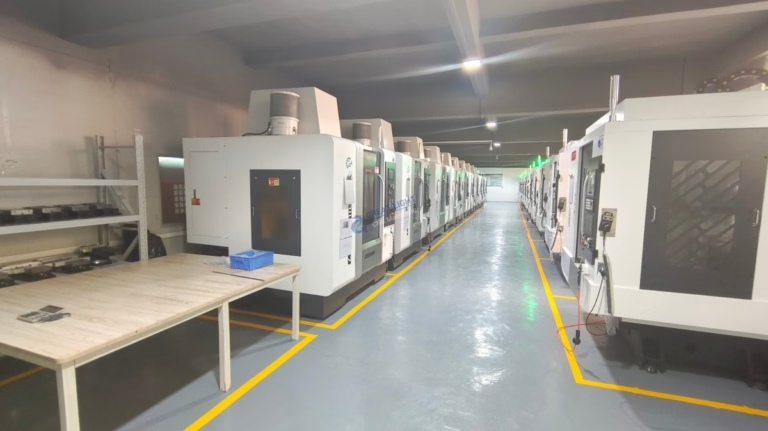
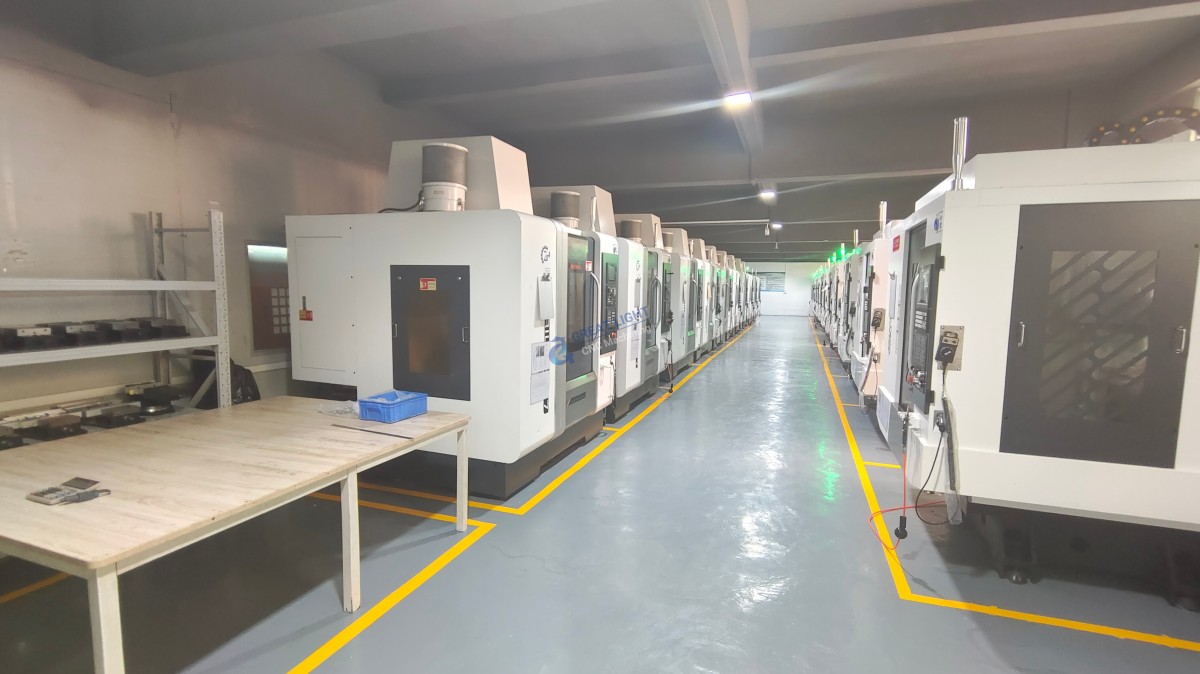
Founded in 2011 and headquartered in Chang’an Town, Dongguan—China’s celebrated “Hardware and Mould Capital”—GreatLight Metal occupies a 7,600 m² (≈76,000 sq. ft.) modern campus with three wholly‑owned plants. Within those walls, 127 pieces of precision equipment work in concert, directly supporting a team of around 150 technicians, engineers, and quality professionals.
Unlike factory aggregators that broker work to dozens of third‑party shops, GreatLight is a true source manufacturer. That distinction matters: when a single entity owns the entire process chain, quality accountability doesn’t evaporate at the loading dock.
The Equipment Fleet: Precision at the Core
The shop floor is built around high‑end 5‑axis CNC machining centers from world‑class brands including Dema and Beijing Jingdiao, flanked by a substantial number of 4‑axis and 3‑axis vertical machining centers, turning centers, Swiss‑type lathes, wire EDM, mirror‑spark EDM, surface grinders, and dedicated inspection rooms. This multi‑technology cluster enables GreatLight to tackle everything from micromachining of implant components to large‑format 4,000 mm structural parts.
Crucially, the precision five‑axis CNC machining services here are not an add‑on but the tip of a deep technology spear. With extensive experience in simultaneous 5‑axis toolpaths, the team routinely achieves working tolerances down to ±0.001 mm (0.00004″) on the most critical features—and backs that claim with in‑process probing and full CMM reports. Explore the precision 5‑axis CNC machining services{target=”_blank”} that underpin this capability.
Full‑Process Integration: From Raw Stock to Finished Assembly
One of the strongest differentiators is the integrated manufacturing ecosystem. GreatLight doesn’t just cut metal; it offers a one‑stop journey that includes:
Precision CNC Machining (3‑axis, 4‑axis, 5‑axis, mill‑turn)
Die Casting & Metal Die Casting for aluminum and zinc alloys
Sheet Metal Fabrication (laser cutting, bending, welding, finishing)
Vacuum Casting for high‑fidelity polyurethane prototypes
3D Printing – SLM (stainless steel, aluminum, titanium, mold steel), SLA, and SLS
Post‑Processing & Surface Finishing – anodizing, electroplating, powder coating, passivation, laser marking, heat treatment, and more
When a single facility controls the entire process chain, lead times compress dramatically, and the quality team can enforce consistent standards from raw material inspection right through to final cosmetic finish. For you, this means one purchase order, one set of shipping documents, and one neck to grab if something needs adjustment.
Certifications: The Foundation of Trust
Trust in precision manufacturing must be earned through demonstrable compliance with globally recognized standards, not just asserted. GreatLight Metal’s certification portfolio speaks to a company that takes process discipline seriously:
ISO 9001:2015 – Quality management system widely recognized as entry‑level, but here implemented with rigor that touches every work instruction.
ISO 13485 – Certified quality management for medical device hardware production, ensuring traceability, risk management, and clean manufacturing protocols.
IATF 16949 – The automotive industry’s gold standard, requiring statistical process control and a relentless focus on defect prevention across the entire supply chain.
ISO 27001 – Data security management, critical for clients in defense, aerospace, and IP‑sensitive consumer electronics.
ISO 14001 (environmental management) awareness is integrated into operational practices.
These are not paper‑only accolades. Annual surveillance audits by accredited bodies verify that the processes you rely on are live, evolving, and effective. For procurement teams, such certifications dramatically shorten the supplier qualification cycle and provide documented evidence for their own ISO audits.
Where GreatLight Fits in the Competitive Landscape
To give you a clear, unbiased view, let’s contextualize GreatLight CNC Machining alongside several prominent names in the CNC machining services arena. Each of these companies has strengths and serves particular segments well; the table below summarizes how they typically differentiate, so you can map your project needs to the best fit.
| Company | Distinctive Focus | Typical User |
|---|---|---|
| GreatLight Metal | Source manufacturer with deep multi‑process integration (5‑axis CNC, die casting, sheet metal, 3D printing, finishing) under one roof; automotive, medical, humanoid robot, aerospace. | Engineers needing a single, certification‑rich partner for complex, multi‑step projects from prototype to production. |
| Protolabs Network | Fast, automated quoting with a vast distributed network; strong in quick‑turn prototypes and low‑volume production. | Designers who need rapid iteration and speed over deep process integration. |
| Xometry | User‑friendly marketplace with instant pricing, wide material range, and broad geographic coverage. | Startups and mid‑size companies seeking convenience and price comparison. |
| RapidDirect | Competitive pricing with a mix of in‑house and partner capacity; strong online platform. | Cost‑sensitive projects with moderately complex parts. |
| Fictiv | Platform‑first experience with digital inspection reporting; good for transparent project management. | Teams that value real‑time visibility and digital workflows. |
| Owens Industries | Ultra‑precision 5‑axis work for semiconductor, medical, and aerospace; US‑based. | High‑precision applications where US manufacturing is required. |
| EPRO‑MFG | Specialized in complex medical device machining and assembly. | Medical OEMs with tight FDA requirements. |
| JLCCNC | Leverages large‑scale capacity for cost‑efficient CNC parts; integrated with PCB services. | Electronics enclosures and mid‑complexity mechanical parts. |
| SendCutSend | Fast laser cutting and bending for sheet metal; easy online ordering. | Makers and engineers needing quick sheet metal flats and simple bends. |
| Protocase | Custom electronic enclosures with fast 2–3 day builds and dedicated design assistance. | Electronics designers needing rapid enclosure prototypes. |
| PartsBadger | Instant quoting for simpler CNC machined parts; good for low‑volume quick‑turn work. | Simple prismatic parts with moderate tolerances. |
| RCO Engineering | Large‑scale tooling, injection molding, and value‑added assembly for automotive interiors. | Automotive Tier‑1 suppliers requiring full‑service design‑to‑production. |
GreatLight’s sweet spot emerges when you need a supplier that can take a complex metal parts assembly from raw CAD to fully finished and inspected components without outsourcing a single process step. For a humanoid robot joint housing that requires 5‑axis milling, wire EDM for internal splines, anodizing for corrosion resistance, and final laser marking—all at IATF 16949 quality levels—the integrated factory model becomes a compelling advantage.
Engineering Stories: Solving Real Manufacturing Challenges
Let me translate technical capability into tangible outcomes by illustrating two typical collaboration scenarios. While client names remain confidential, these composite scenarios reflect the kind of challenges GreatLight routinely resolves.
Case 1: High‑Performance Electric Vehicle Power Enclosure
Challenge: An EV startup needed 50 prototype housings for an advanced power inverter. The design featured deep, thin‑walled cooling channels (wall thickness down to 0.6 mm), multiple angled port threads, and a flatness requirement of 0.02 mm across a 400 mm sealing face. Their previous supplier attempted to mill the part from billet but warped the part during heat treat, causing leak‑path failures.
GreatLight’s Approach:
Process Redesign: Instead of pure subtractive, GreatLight’s engineering team proposed a hybrid route: precision die casting of the near‑net shape using a dedicated aluminum alloy, followed by 5‑axis finish machining of the critical sealing surfaces and threads.
Fixture Strategy: Custom vacuum and mechanical clamping fixtures were designed to minimize distortion during machining.
Quality Assurance: Each housing underwent a full CMM scan with 3,000+ points, plus a helium leak test. An in‑process probing routine automatically compensated for any tool wear.
Outcome: All 50 housings met the flatness and leak‑rate specs on the first run, saving 4 weeks in re‑work time compared to the previous approach.
Case 2: Medical Robotic End‑Effector with Sterilization Constraints
Challenge: A medical device company required 200 precision end‑effector bodies machined from 316L stainless steel, with Ra 0.4 µm surfaces on all blood‑contact areas and a full traceability matrix. The parts needed to survive 1,000+ autoclave cycles without dimensional drift.
GreatLight’s Approach:
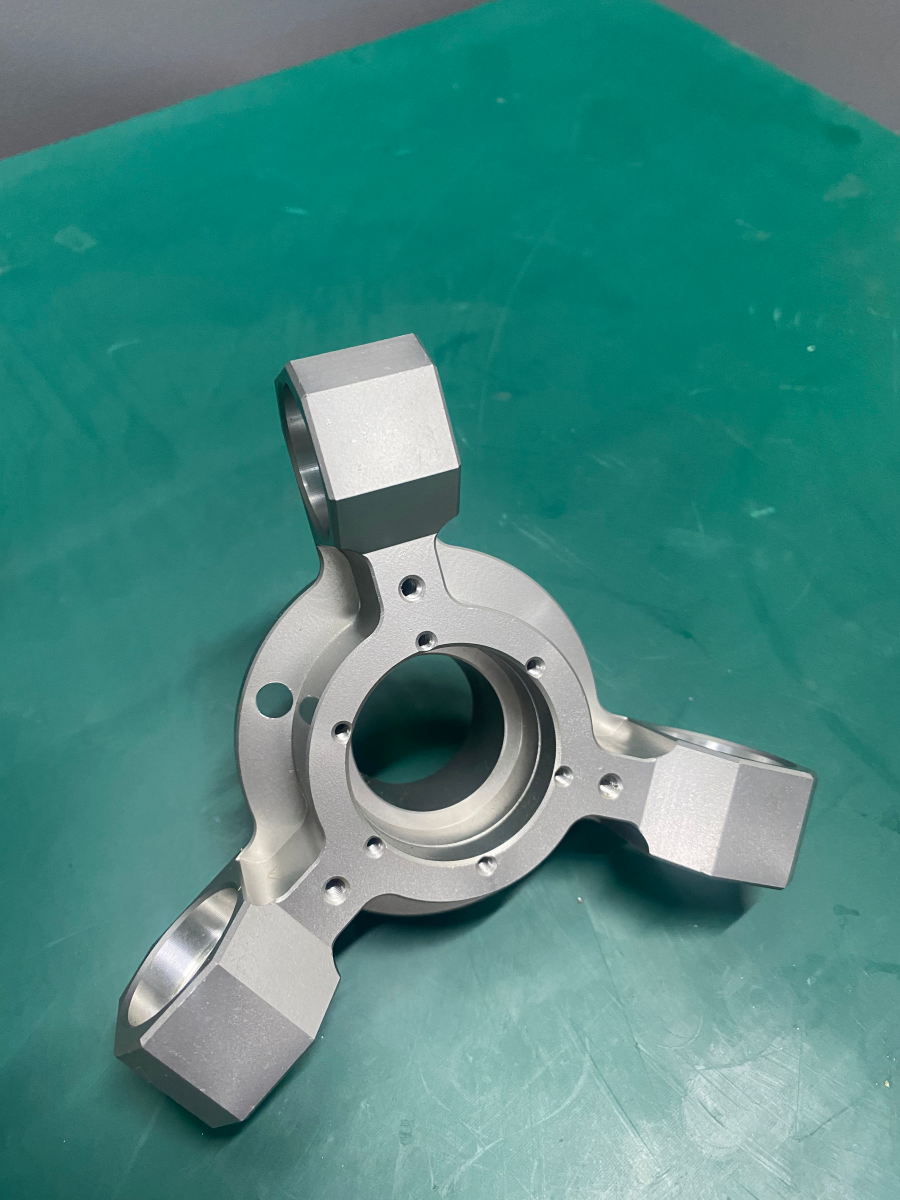
Machining under ISO 13485: The job ran in a dedicated medical cell with documented tool lot tracking, periodic swab testing for cleanliness, and batch‑specific material certifications.
5‑Axis Simultaneous Milling: Complex undercut grooves were machined using custom‑designed, coolant‑fed tools that eliminated secondary polishing.
Surface Integrity: Electro‑polishing and passivation were performed in‑house, followed by 3D surface profilometry to validate Ra.
Outcome: The customer seamlessly transitioned from 50‑unit pilot to 200‑unit production, and later to a 5,000‑unit annual contract, all with identical process parameters and documentation.
These stories underline that a top OEM CNC machining services maker doesn’t just cut metal—it engineers a robust process from concept through production, shoulder to shoulder with your team.
The GreatLight Difference: Seven Reasons Engineers Choose This Partner
After more than a decade of field observation, I’ve distilled why a growing number of global clients select GreatLight CNC Machining for their most demanding projects:
Deep Vertical Integration – The full chain (machining, die casting, sheet metal, 3D printing, finishing) resides inside one organization, eliminating hand‑off risks and compressing lead times.
High‑Precision DNA – Tolerances of ±0.001 mm are backed by climate‑controlled inspection labs equipped with CMMs, laser scanners, and profilometers.
Certification‑Driven Quality – ISO 9001, ISO 13485, IATF 16949, and ISO 27001 form a robust framework that turns “make it right” into a documented, repeatable system.
Engineering Collaboration – From DFM feedback to joint tolerance stack‑up analysis, you’re working with engineers, not order‑takers.
Scalability – Whether you need 1 prototype or 100,000 production units, the process is designed to scale because the same team, machines, and quality gates are used throughout.
Data Security – For sensitive projects, ISO 27001‑aligned practices and NDAs protect your IP, and data access is restricted on a need‑to‑know basis.
After‑Sales Assurance – A tangible promise: free rework for quality issues, and a full refund if rework still doesn’t meet spec. That’s a confident statement from a factory that lives by its numbers.
Bringing It Home: Making Your Top Choice
Sifting through the many top OEM CNC machining services makers on the market can feel overwhelming, yet the decision becomes far clearer when you shift the lens from slogans to systems. Ask yourself: does this provider own the entire manufacturing thread, or will my parts be scattered across a network? Does the certification shelf align with my industry’s regulatory demands? Will I receive a real CMM report with every shipment, or just a promise?
GreatLight Metal Tech Co., LTD. exemplifies the source‑manufacturer model that aligns incentives and accountability. By investing in a high‑density cluster of 5‑axis, 4‑axis, turning, EDM, and additive technologies, and by threading it all with internationally audited quality systems, the company has crafted an offering that directly addresses the pain points of precision machining sourcing. Their work in electric vehicle power electronics, medical robotics, humanoid robots, and aerospace components speaks to a team comfortable with complexity and committed to zero‑defect delivery.
As you evaluate your options—whether you’re comparing Protolabs for speed, Xometry for convenience, or Owens Industries for ultra‑precision—consider what it means when a factory like GreatLight gives you a single point of accountability for the entire manufacturing value stream. That is the essence of a trusted precision manufacturing partner. Visit GreatLight’s LinkedIn page{target=”_blank”} to see real‑world projects, company updates, and client testimonials that demonstrate this ethos in action.
At the end of the day, a top OEM CNC machining services maker isn’t just the one with the biggest machine park—it’s the one that makes your complex vision reliably, repeatably, and transparently real. I hope this deep dive gives you the confidence to move forward and select a partner that matches the ambition of your next great design.



















