
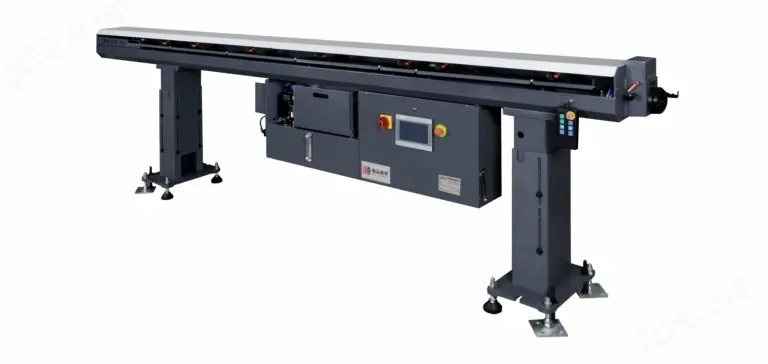
The Revolutionary Feeder: A Game-Changer in Automated Production Lines
In today’s fast-paced manufacturing world, precision and efficiency are key to staying ahead of the competition. With the increasing demand for high-quality products, companies are turning to automated production lines to streamline their processes and improve output. At the heart of these lines is the feeder, a device that plays a critical role in ensuring the smooth flow of raw materials and semi-finished products to the treatment area. In this blog post, we’ll delve into the world of feeders, exploring their components, applications, and benefits.
The Components of a Feeder
A feeder is a complex device that consists of several components working in harmony to achieve its primary goal: to transport raw materials or semi-finished products to the treatment area with precision and accuracy. The main components of a feeder include:
- Feeding Mechanism: This is the heart of the feeder, responsible for precision supply of raw materials to the work area. The feeding mechanism can be adjusted and replaced depending on the type of raw material and production requirements. Common types of feeding mechanisms include feeding roller, pneumatic power, and vibration power.
- Drive System: This component provides energy to the feeding mechanism, ensuring the stability and accuracy of the feeding action. Servomotors or step-by-step motors are used to provide precise speed and torque control.
- Control System: This is the brain of the feeder, consisting of a programmable logic controller (PLC), touch screen interface, and sensors. The PLC coordinates the work of each component and adjusts the feeder’s working mode according to the production requirements. The touch screen interface provides the operator with a user-friendly interface for defining supply parameters and monitoring equipment status.
- Sensors: To ensure precision and stability, the feeder is often equipped with various sensors, including position sensors, photoelectric sensors, and strength sensors. These sensors monitor the position, speed, and working state of raw materials in real-time, ensuring accuracy and precision in the treatment process.
- Silo: This is the storage area for raw materials, ensuring a continuous supply and minimizing production interruptions. The material storage system guarantees that the feeder can continuously provide materials, reducing production downtime and increasing efficiency.
Applications of a Feeder
The feeder is an essential component in various industries, including:
- Automotive Industry: Feeders are used to produce car parts, such as engine components, transmission parts, and body linkages. The high precision requirements of these parts are met by the automatic feeding system, resulting in improved treatment accuracy and production efficiency.
- Electronic Products Industry: Feeders are used to treat parts such as connectors, precision bearings, and sensor boxes. The high precision requirements of electronic products are met by the feeder’s ability to guarantee machining accuracy and consistency.
- Medical Devices Industry: Feeders are used to produce components with high precision requirements, such as needles, catheters, and valves. The feeder’s ability to continuously treat precision components ensures consistency and high precision in the production process.
- Home Appliance Industry: Feeders are used to produce components for household appliances, such as engine rotors, housing components, and transmission gears. The feeder’s ability to reduce manual operations and increase production speed makes it an essential component in this industry.
- Aerospace Industry: Feeders are used to produce precision parts for planes and spacecraft, such as engine components, fuselage connectors, and other precision components. The feeder’s high-precision feeding system ensures high-precision treatment of parts, meeting the high standards of the aerospace industry.
In conclusion, the feeder is a vital component in automated production lines, ensuring the smooth flow of raw materials and semi-finished products to the treatment area. With its precise feeding mechanism, drive system, control system, sensors, and silo, the feeder is an essential tool in various industries, including automotive, electronic products, medical devices, home appliances, and aerospace. By adopting feeders, companies can improve production efficiency, reduce production downtime, and increase product quality, ultimately gaining a competitive edge in the market.



















