
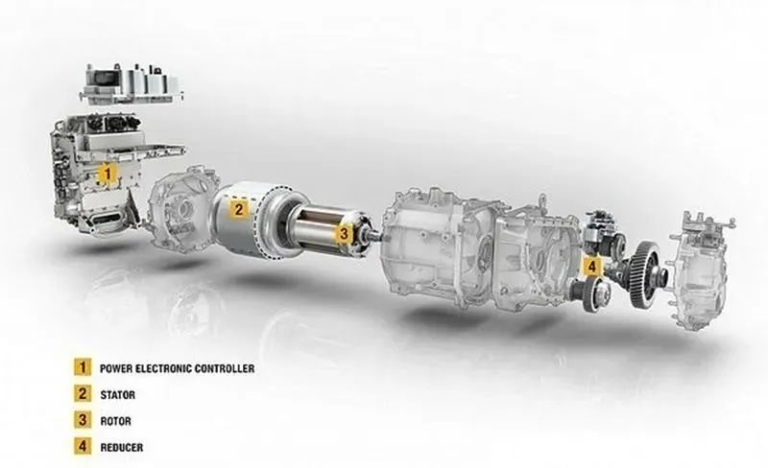
Question: How many fewer parts do the drive motor of an electric vehicle have compared to an internal combustion engine? 100? 300? Or 500?
The answer is: 1000+
According to incomplete statistics, a conventional internal combustion engine generally has more than 1,400 parts, while a prime mover often has only 100 to 200 parts, a reduction of almost 1,000 parts.
For some traditional processing tools, equipment and production lines, these reduced parts are like manual positions replaced by AI.
Data shows that the market demand for special machining tools for the traditional five major components of cylinder block, cylinder head, crankshaft, connecting rod and camshaft is decreasing year by year.
But at the same time, metal processing projects for electric motors also open up new opportunities. For example, metal processing projects such as motor shafts, motor housings and battery brackets have become new growth points.
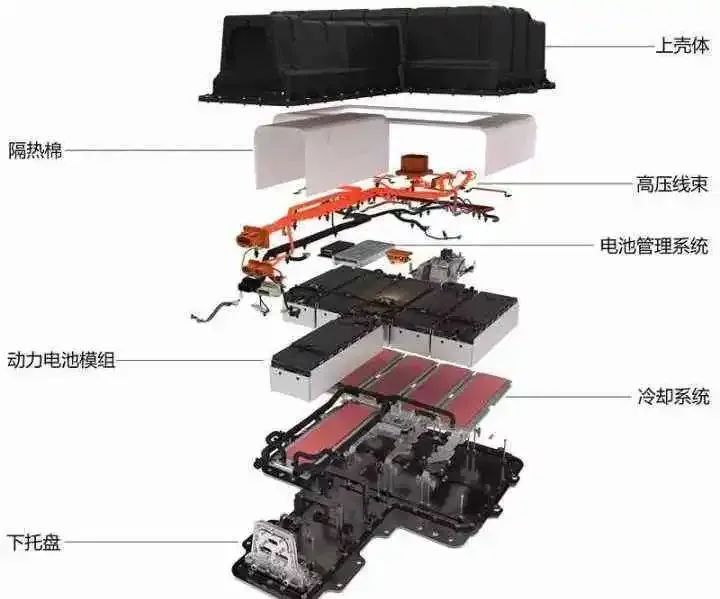
Although different from mechanical transmission, the precision requirements for new energy automobile parts processing have never been reduced. Combined with lightweight requirements and particularly complex part shapes, these pose greater challenges for tool and machine tool suppliers.
Large diameter precision machining of engine crankcase main hole
The size of the main hole in the motor housing depends on the size of the stator. Since electric vehicles require sufficiently high energy density, the diameter of the coils on the rotor must be within a reasonable range.
Generally, the diameter of the motor stator used in electric vehicles is at least φ200mm, which means that the diameter of the main hole of the motor housing should also be greater than φ200mm.
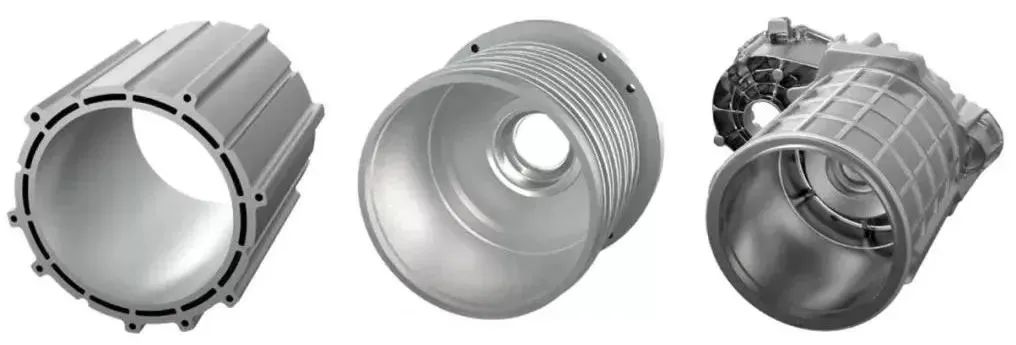
Common Engine Housings
For tool making, φ200mm is already a large diameter tool.
In order to minimize energy loss, the cooperation between the motor housing/motor shaft/stator and other components should be optimized within the most reasonable range.
Therefore, in the field of machining, the requirements for the processing of the motor housing, especially the geometric tolerances of the main hole and the bearing hole, are particularly strict. Furthermore, in order to increase power density, the motor must be as light and small as possible, which also requires perfect control of the wall thickness of the motor housing.
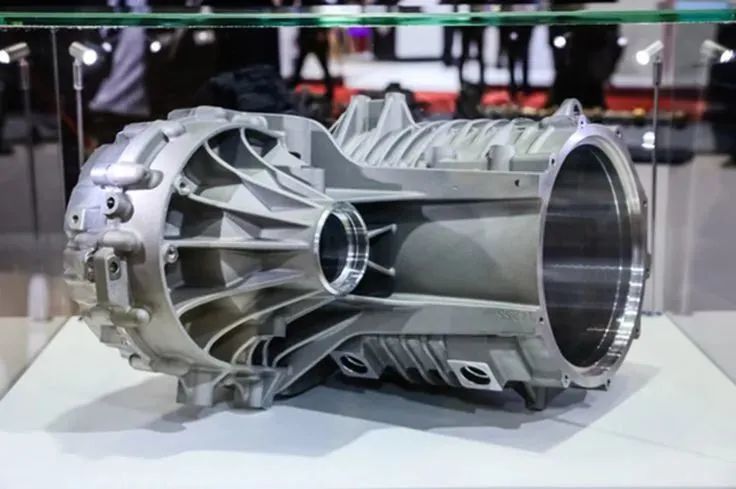
Generally speaking, high precision, large diameter and thin walls that are easy to deform are the main characteristics of current engine casing processing.
In order to ensure the machining accuracy, current tools will adopt the guide bar tool concept, and the size can be adjusted to the µ level.
The support guide bar plays the role of support, guidance and vibration absorption. The guide bar design can compensate for the deformation when processing deep holes.
More importantly, tool weight is one of the limiting factors in guide bar tool design. If the traditional tool design concept is adopted, the weight of such a large diameter tool should be at least more than 25 kg.
In order to adapt to the high-speed machining concept of modern machine tools, reducing the weight of these tools is a particularly critical technical problem.
With the development of 3D printing technology and metal materials, Kennametal of the United States has taken the lead in adopting advanced 3D printing and composite material application technology, taking the lead in solving the problem reduction in tool weight. The lightest guide bar tool that can be made. within 15Kg.
It is also worth noting that Porsche has already launched the first engine case manufactured entirely using 3D printing and additive manufacturing technology.
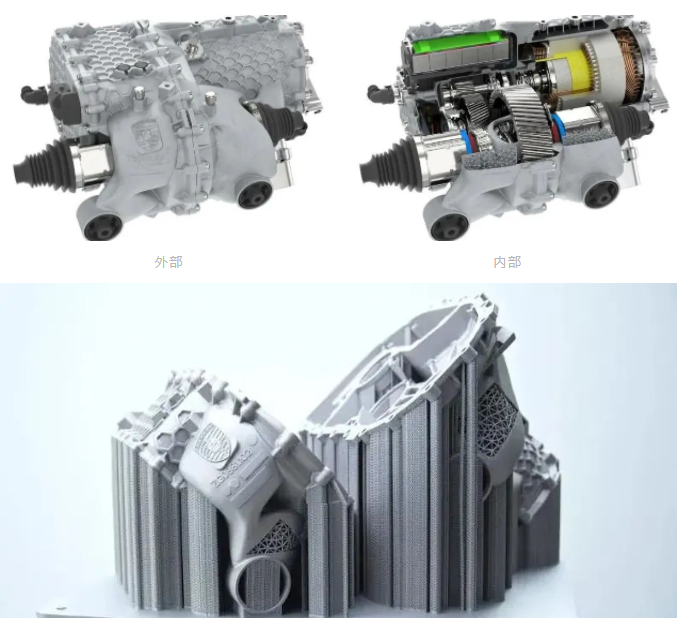
The case is 3D printed layer by layer using high-quality aluminum alloy powder, combined with a laser metal fusion process.
The final 3D printed metal shell is 10% lighter than traditional castings, and although it is only 1.5mm thick, it is stronger than similar parts without a honeycomb structure .
Battery shell treatment
If the engine is like the “legs” of a car, then the battery is the “heart” of the car.
The development trend of power batteries is high density, high capacity and high voltage, which respectively meet the three major terminal needs of performance, battery life and fast charging.
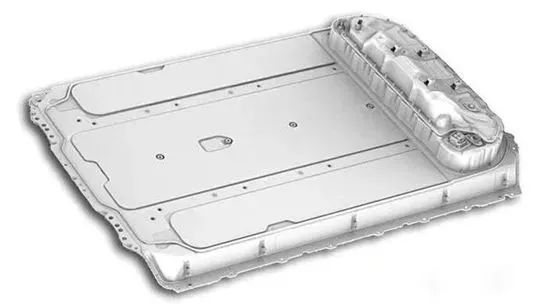
Battery holder
This means that as many battery modules as possible must be packed into the limited space of the case and leave enough space inside for the cooling system.
Therefore, the trend in battery shell processing is to become thinner, more complex and lighter.
In order to achieve maximum economy, PCD blade materials and oil mist lubrication technology become essential.
According to different machining allowances, machining tasks and workpieces, the main idea is to adopt different milling processes to reduce the cutting force.
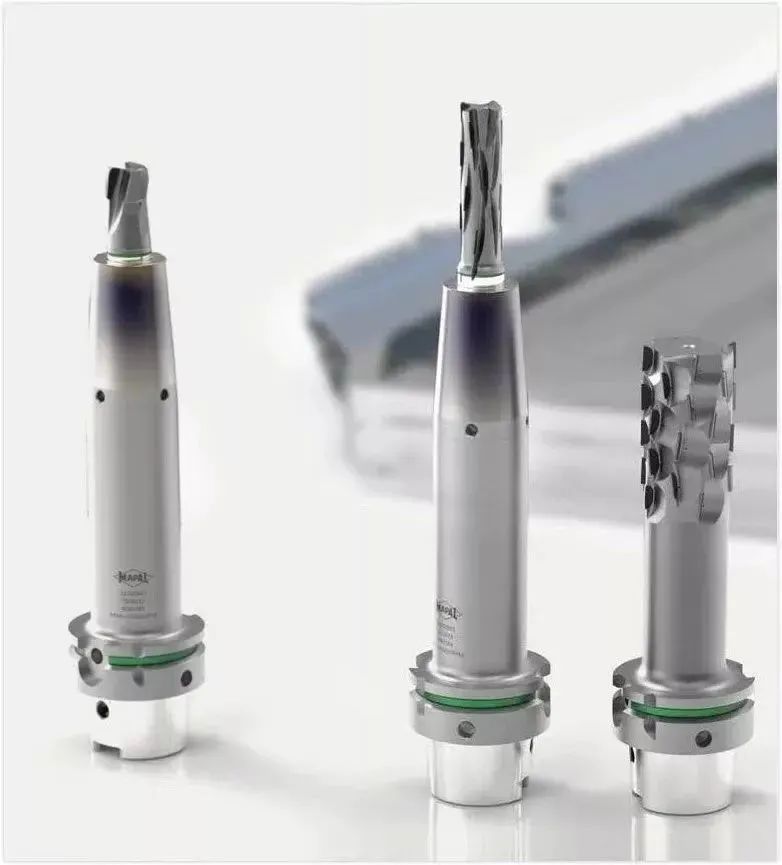
PCD spiral edge milling cutter
For example, when machining certain contours, it is best to use cutters designed for large removal volumes.
In addition to traditional metal processing, lightweighting of automobiles is also a general trend. Engineering plastics and various composite materials have become the first choice for lightweighting.
For the processing of these parts, we can draw inspiration from the processing of tools in the aerospace field.
For example, the use of PCD diamond tools can also meet the processing of complex shapes when processing parts such as carbon fiber plates.
Daguang focuses on providing solutions such as precision CNC machining services (3-axis, 4-axis, 5-axis machining), CNC milling, 3D printing and rapid prototyping services.



















