
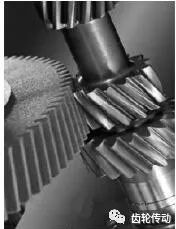
The load capacity, stability of movement and service life of gears mainly depend on the contact conditions of the meshing tooth surfaces under actual working conditions. The microgeometry of tooth surfaces has a huge impact on vibration, noise and gear life. Precision processing of gears with hard tooth surfaces can effectively improve the carrying capacity of the transmission device, reduce noise, reduce vibration and extend the service life. Hard finish gears are commonly used in major power transmission devices. Precision machining methods for hardened gears include gear grinding, gear scraping, gear grinding, high-speed dry cutting, gear lapping and other processes. The gear grinding process is the most widely used and mature process, with high precision and efficiency, but the cost is high and the microgeometry of the grinding tooth surface is not conducive to reduction gear transmission noise; is suitable for processing large gears with hard surface, but the precision The efficiency is not as good as that of large-scale CNC forming gear grinding With the development and maturity of gear grinding equipment at large scale, the application of gear scraping technology has been developed. gradually diminished; gear grinding is mainly used in the precision machining of bevel gear pairs; High-speed dry cutting technology has been used in the precision machining of small modular gears. Since gear honing can obtain the ideal microgeometry of the tooth surface, especially the unique texture of the tooth surface, it has a very obvious inhibiting effect on the vibration and noise of the transmission device. Therefore, the gear honing process has been applied and developed in particular. in automobile gears. Precision machining in progress.
This article summarizes the development history of gear honing technology and the latest progress in electric honing technology by the world’s leading gear machine tool manufacturers, introduces the application of new technologies and new processes in electric honing machines, and provides additional technical information on electric honing machines. . Development trends were explored.
1. Technological advancement in gear honing process
1.1 Gentle sharpening
As shown in Figure 1, traditional lapping processing uses a gear-shaped or worm-shaped lapping wheel to engage in free meshing motion with the gear to be lapped, which is equivalent to to a pair of offset-axis helical gear transmissions. and pressure between the meshing tooth surfaces are used to perform lapping, mainly used to finish the tooth surface of hardened gears. The lapping wheel is made of synthetic resin or artificial rubber with a certain degree of elasticity. In the free mesh state, the honing wheel mainly plays a smoothing role, with limited shrinkage margin, limited correction ability for gear accuracy and error reflection. The phenomenon is difficult to overcome, and the accuracy of the gear mainly depends on the accuracy of the front gear cutting and heat treatment.
Figure 1 Schematic diagram of gear sharpening processing
1.2 CBN grinding wheel sharpening hard teeth
In the 1980s, the lapping technology of hard lapping wheels was developed abroad, as shown in Figure 2. The base of the gear-shaped lapping wheel is made of medium carbon steel and an abrasive ultra-hard is applied to the tooth surface of the steel base by top electroplating. . By relying on the superabrasive present on the tooth surface of the sharpening wheel to sharpen the workpiece, the material removal capacity is improved. The rigidity of the sharpening wheel is improved. In addition to smoothing, it can also correct errors in gear tooth shape, base pitch and tooth direction, and greatly improve the precision of the gear.
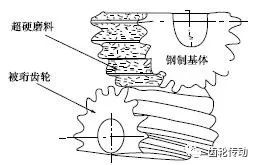
Figure 2 CBN grinding wheel for sharpening teeth
1.3 Powerful gear sharpening technology
The requirements for gear precision are constantly increasing and, at the same time, more attention is being paid to surface quality. Strong gear producing countries have actively introduced advanced technologies such as electronic gearboxes, automatic loading and unloading, on-machine inspection, error correction and direct drive. , and CAM in manufacturing gear sharpening machines, and have developed unique products. The powerful gear sharpening machine series products, as shown in Figure 3, the sharpening wheel and the workpiece are forced to mesh, which has a strong ability to correct the precision of the gears. and can significantly improve the precision of gears. The precision of the powerful sharpening machine can reach DIN5 level and the surface roughness R<0.2μm.
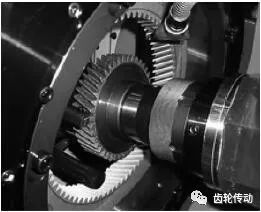
Figure 3 Powerful sharpening process
Gear honing technology is no longer just an auxiliary finishing process, but can be used as an independent finishing method to supplement the advantages of gear grinding technology. The development of gear honing technology is shown in Figure 4.
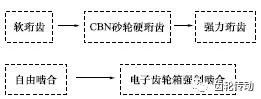
Figure 4 Development trend of gear honing technology
2 Benefits of powerful gear honing
As a solution for precision gear machining, gear honing has been continuously applied and developed. Powerful lapping breaks the limitation that traditional lapping can only smooth the gears, and the meshing state of the lapping wheel and the workpiece is changed. stable and stable. It is controllable, improves the stability and consistency of precision, and is more suitable for the mass production of precision gears, especially in the production of automobile gearboxes.
The advantages of power honing are mainly reflected in the following aspects:
(1) The surface texture of sharpened teeth is beneficial to reduce gear vibration and noise.
Vibration noise has always been a key evaluation indicator of precision gear transmission devices. A large number of experimental studies have proven that tooth surface texture has a huge impact on gear vibration noise, especially for high-speed transmission devices. high frequency resonance. During lapping, the lapping wheel and the gear are in a state of meshing with offset axes. The relative slip in the tooth shape direction and the relative slip in the tooth width direction combine to form a unique lapping arc pattern (as shown in Figure 5b). This model can significantly reduce gear wear. The low-noise grinding technology researched and promoted in the field of overseas gear grinding uses CNC technology, hoping to disrupt the regular grinding texture (as shown in Figure 5a) during the process. grinding and form a tooth surface texture similar to the arc pattern of sharpening.
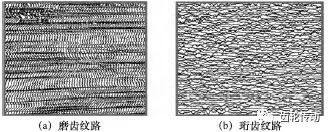
Figure 5 Comparison of tooth surface textures between gear grinding and lapping
(2) Tooth sharpening can achieve higher surface compressive stress
The surface stress state of gears has a huge impact on gear life. Especially as the cleanliness of gear steel continues to improve, the failure mode of gears is changing from surface micro-pitting corrosion to surface micro-pitting corrosion. determines the strength and life of the gears. Gear honing can achieve higher residual compressive stress on the tooth surface, effectively improving gear strength, wear resistance and pitting corrosion resistance.
(3) Sharpening teeth can avoid burns on tooth surfaces
Tooth sharpening relies on the relative sliding of tooth surfaces to remove material. The cutting speed is low and does not produce thermal effects on the tooth surfaces, thus avoiding tooth surface burns. Grinding burn has always been an indicator that must be strictly controlled in the gear grinding process. A large amount of grinding heat changes the stress state of the tooth surface, causing microcracks and affecting the service life of the gear.
(4) Gear sharpening can achieve better tooth surface roughness
The surface quality of gears has attracted more and more attention. Compound grinding technology is also used in gear grinding to achieve grinding with low roughness values, but the processing cost increases. The gear honing processing mechanism enables it to obtain smaller tooth surface roughness value at economical cost, reaching Ra <0.2μm. Under optimized process conditions, mirror processing of the tooth surface can be achieved.
(5) Gear sharpening can process gears with shoulders
Gear grinding requires a certain amount of protrusion (overtravel), and it is difficult to process gears with stepped shaft teeth or other interference structures. Gear grinding formed with a small grinding wheel can process gears with a certain empty slot, but the grinding wheel. is small and suffers from significant wear, the grinding wheel must be replaced frequently, making it difficult to meet batch processing needs. When internal mesh sharpening is used, it is linear contact, and the entire tooth surface can be sharpened without the need to advance in the axial direction of the workpiece, and the teeth more compact shoulders can be processed.
(6) The machining accuracy of gear honing is equivalent to that of gear grinding, but the cost of gear honing tool is lower than that of gear honing. The accuracy of powerful honing can reach level 4-5, and the accuracy is slightly lower. as the precision of gear grinding. The consumption of honing wheel and coolant during gear honing process is much lower than that of gear grinding. The gear honing process can enable precision machining of gears more economically (see Figure 6 for comparison).
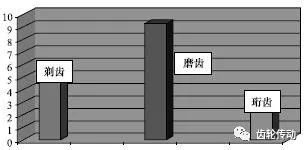
Figure 6 Grinding-Shaving-Sharpening Process Cost Comparison
3 Overview of the development of foreign power sharpening technology
Overseas, world-famous gear machine tool manufacturers such as Gleason-Hurt of the United States, Praewema of Germany, Fassler of Switzerland, Kanzaki of Japan and Seiwa of Japan have adopted continuous research and development , paying special attention to the needs of precision gear technology, integrating electronic gearboxes, automatic loading and unloading, on-machine inspection, error correction, direct drive, CAM and other advanced technologies have been actively introduced into the manufacturing of gear sharpening machines, and a series of powerful gear sharpening machines with unique characteristics have been developed.
(1) powerful American Gleason gear sharpening machine
Gleason in the United States launched the first generation of powerful ZH150/250 gear sharpening machines in the 1990s (Figure 7). The maximum processing gear diameter of this machine tool is 250 mm, the module is 0.5-8 mm, and the workpiece length is 350 (600) mm. In order to achieve more flexible modification, Gleason developed the spherical gear sharpening process, which provides users with a more flexible modification solution and expands the application scope of machine tools.
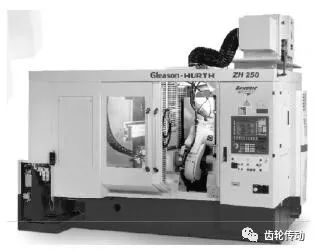
Figure 7 Appearance of the powerful Gleason ZH250 gear sharpening machine
In 2009, Gleason launched a new generation of powerful 150SPH gear sharpening machine (Figure 8). This machine tool directly meets the high-precision and large-volume gear processing needs of the automobile industry and is widely used in the automatic transmission industry. The maximum diameter of the machine tool processing gear is 150mm, the modulus (0.5) ~ 4mm, and the workpiece length is 150 (550)mm. The machine tool is equipped with a simpler and user-oriented operation interface and is equipped with high-speed automatic loading and unloading to meet the needs of efficient and high-volume production.
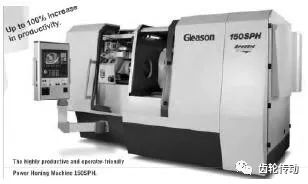
Figure 8 Gleason’s powerful next-generation 150SPH gear sharpening machine
(2) German Praweima powerful gear sharpening machine
Drawing on its rich experience in the design and manufacturing of gear machine tools, the German company Prawema has developed the powerful Synchronofine 205 HS (W) gear sharpening machine (Figure 9). The machine bed is made of natural marble, which has high vibration damping and thermal stability, ensuring stable processing quality. A major feature of the machine tool structure is the double station structure. The machine tool is equipped with two workpiece spindles. When processing the part, the next part is clamped to shorten the processing cycle. The machine tool can detect the workpiece before sharpening (Figure 10), identify the rough quality, optimize the sharpening process based on parameters such as margin and runout, and configure a measurement on machine to significantly reduce waiting time after product. tool switching or replacement.
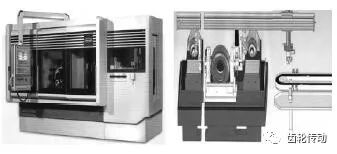
Figure 9 Prawema Synchronofine 205HS, powerful gear sharpening machine
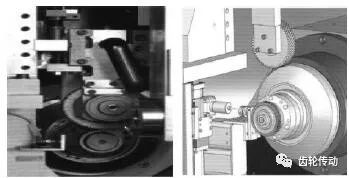
picture10 Check before sharpening and measurement on machine
(3) Powerful Swiss Fasler gear sharpening machine
In 1979, Fassler invented the world’s first internal gear honing machine, which has now become the HMX-400 product series (Figure 11). The HMX-400 gear sharpening machining diameter range is 50-350mm, the module range is 0.5-6mm, and the maximum workpiece shaft length is 500mm. It is easier to achieve stable machining accuracy with internal gear honing, and this form is often used in modern electric honing.
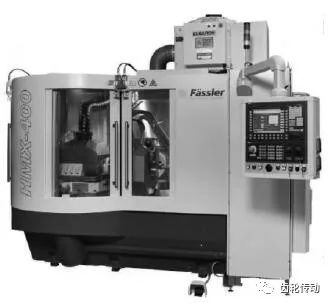
Figure 11: Powerful Fassler HMX-400 gear sharpening machine
(4) Powerful Japanese Shenqi gear sharpening machine
Japan Shenqi developed the GFB-300-NC6 gear honing machine from the beginning, and the honing wheel adopts semi-closed loop control. With the advancement of technology, the precision and quality of gear processing have been further improved. By installing a synchronous control encoder on the rotating shaft of the grinding wheel, the influence of backlash between the drive motors is reduced and the timing accuracy is improved. The product has been upgraded to GFC-α300-NC6 (Figure 12), with a processing diameter range of 50-300mm, a module range of 1-4mm, and a maximum axis length of the workpiece of 350 mm.
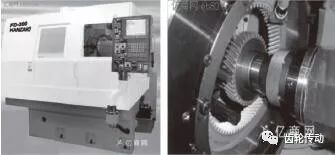
Figure 12: Powerful Japanese Shenqi gear sharpening machine
4 key technologies for powerful gear sharpening
Powerful gear sharpening machines are high-end precision equipment that integrate mechanical, electrical, hydraulic and instrumental instruments. Based on the understanding of foreign advanced gear sharpening machines, the following key technologies need to be overcome to develop powerful gear sharpening machines:
(1) High rigidity design of machine tools
Powerful sharpening requires a large amount of sharpening, and the sharpening wheel and the workpiece are forced to mesh, which requires maintaining a precise transmission relationship. To ensure the precision and stability of sharpening, the process system requires high rigidity and low deformation. Machine tool design should comprehensively consider static stiffness, dynamic stiffness and thermal stiffness to ensure support stability, reduce vibration caused by high-speed mesh transmission, and reduce thermal deformation of the system treatment.
(2) Sharpening wheel dressing technology
The dressing quality of the sharpening wheel directly determines the processing quality of the workpiece. The current method is to make a gear-shaped diamond dressing tool according to the workpiece parameters, and trim the tooth surface of the sharpening wheel by engaging with the sharpening wheel. . One type of part requires a special diamond dressing tool. Knives are expensive. In order to reduce costs and improve the applicability of the powerful lapping process, it is necessary to study the lapping wheel dressing technology to achieve flexible lapping wheel dressing and reduce the need for tools. special diamond dressing tools.
(3) Shift Control Technology
In order to improve the smoothness of gear movement and the uniformity of load distribution, precision gears are mostly modified, which requires the processing equipment to meet various modification requirements. Tooth sharpening relies on the relative sliding between tooth surfaces during transmission by gears with offset axes for precision machining. To achieve flexible modification, it is necessary to conduct in-depth research on the contact trajectory during the sharpening process and establish the relationship between the influence of tooth surface. movement position of the machine tool movement axis on the contact path by precisely adjusting the movement axis control to achieve flexible shaping.
5 Conclusion
The gear honing process has been widely used in the field of gear finishing with its unique advantages. During the application process, we continue to innovate and absorb the industry’s leading technological experience. The new generation of powerful lapping technology has significantly expanded the scope of. the traditional gear sharpening process, with superior precision and stability. Powerful foreign gear producing countries have accumulated rich experience in the development of CNC mechanical honing machines and the application of mechanical honing technology. Domestic gear manufacturing companies have also introduced mechanical honing equipment for technical applications. However, the development of domestic powerful gear sharpening machines is in its infancy. Currently, there are no high-end powerful gear sharpening machines for users to choose from, and they can only rely on imports. With the further promotion and application of this process and the mastery of key technologies, domestic gear machine tool manufacturers will surely launch powerful gear sharpening equipment that meets the needs of users.
Daguang focuses on providing solutions such as precision CNC machining services (3-axis, 4-axis, 5-axis machining), CNC milling, 3D printing and rapid prototyping services.



















