

Ordinary horizontal lathes are widely used basic equipment in the machining industry. As a port enterprise, ordinary horizontal lathes are mainly used to process non-standard parts of lifting machinery, such as machined parts such as shafts, spindles, threads, etc., taking into account the limitations of the manufacturing process, manufacturing costs and operator skill levels. , the technical improvement of ordinary horizontal lathes is of great help to improve the processing technology and expand the application scope of ordinary horizontal lathes.
1. Design, production and use of adjustable automatic threading device for lathes
1.1 Processing method of external thread of workpiece
External threads processed by ordinary lathes are generally processed by thread turning or hand threading. Turning involves attaching the workpiece to the chuck and rotating the workpiece. According to the requirements of pitch, feed, tooth profile and other parameters of the workpiece, the turning tool advances in the axial and radial directions of the workpiece and completes the external thread. the movement trajectory of the turning tool blade processing. In actual operations, problems such as cutting, random buckling, wrong pitch, excessive thread surface roughness, substandard processing precision and low output are likely to occur. The manual threading method involves fixing the workpiece on the vice, placing the die in the die holder, aligning the die with the workpiece, and manually rotating the die holder to complete the processing of the external thread of the piece. This method requires the operator to use uniform force during the manual threading process to ensure that the workpiece axis is perpendicular to the die surface and the coaxiality of the workpiece axis and the center line of the matrix is easy. to cause external thread distortion and die damage.
1.2 Working principle of adjustable automatic threading device for lathes
Combining the structural characteristics of ordinary lathes and the principle of die threading, an adjustable automatic threading device for lathes is designed. The model of the horizontal lathe is CW6163C. The tailstock sleeve is equipped with a tip for long axis machining and positioning. The tip is removed and replaced with an automatic threading device. During the external thread processing process, the workpiece is clamped on the horizontal lathe. mandrel. The die is installed in the automatic threading device, and the die set of the required size is aligned with the workpiece. After cutting one or two turns of thread, the die advances automatically. the required thread length is reached, the part reverses and the die stops automatically.
1.3 Structural design of adjustable automatic threading device for lathes
The adjustable automatic threading device for lathes includes taper head connecting rods, sliding sleeves, die sets, locating bolts and bushings. The entire device is made of 45# steel. Its strength, hardness and wear resistance meet the usage requirements. size of parts As shown in figure 1.
Figure 1 Parts diagram of the automatic threading device
The inner cone of the sleeve installed on the tailstock is Mohs No. 5. Therefore, the head of the taper head connecting rod is designed to be a No. 5 Morse taper rod to ensure that the taper shank of the head connecting rod conical shank can realize automatic centering of the automatic sleeve device and ensure coaxiality between the die and the workpiece. A vent hole is designed in the tapered part of the connecting rod to solve the problem of the sliding sleeve being unable to move forward due to air pressure.
The sliding sleeve is inserted into the rear end of the cone head connecting rod. The die moves on the automatic threading device through the sliding sleeve to provide travel for threading. There is a scale on the upper surface of the sliding sleeve to control the stroke. wire processing length. The die sleeve connects the die and the sliding sleeve. Its tail is inserted into the sliding sleeve and fixed with 2 positioning bolts. Its boss is stuck at the exit of the sliding sleeve. The bushing is placed between the die sleeve and the die. According to the thread requirements of parts of different diameters and according to the selected outer diameter of the die, the bushing is manufactured and placed in the die sleeve for die installation. meet the processing requirements of threads of different diameters. Three positioning bolts play a positioning role. Positioning bolt 1 is used to fix the sliding sleeve and the cone head connecting rod. It is inserted into the groove of the sliding sleeve to ensure that the sliding sleeve can only move along the axis; used to fix the die sleeve in the sliding sleeve; positioning bolt 3 is used to fix the die in the die sleeve.
The installation process is as follows: first install the die into the die sleeve equipped with bushings, and fix it with positioning bolt 3, then insert the sliding sleeve into the cone head connecting rod, use the bolt positioning bolt 1 on one side to limit the travel, and use positioning bolt 1 on the other side to limit the travel. Positioning bolt 2 fixes the die bolt and sliding sleeve together, then install the device into the tailstock sleeve of the lathe to adjust the position of the workpiece and tailstock; at low speed and the die advances automatically. When finished, adjust the spindle reversal,
The die comes out automatically and the threading is completed.
2. Design, production and use of adjustable automatic tapping devices for lathes
2.1 Current status of internal thread processing of lathe machined parts
Ordinary lathes generally use turning threads or hand tapping methods to process internal threads. Internal thread turning is suitable for bushing parts with an inner diameter greater than 20mm. The manual tapping method has low efficiency in actual operation and is prone to tilting of external threads and breakage of taps.
2.2 Working principle of adjustable automatic tapping device for lathes
Design an adjustable automatic threading device for lathes. Install the automatic tapping device on the tailstock of the lathe. When in use, the workpiece is clamped on the chuck, and the automatic tapping device is installed on the tailstock. Distance, the lathe rotates forward and the tap taps when the tapping depth is reached, the workpiece reverses and the device comes out automatically.
2.3 Structural design of adjustable automatic tapping device for lathes
The lathe uses an adjustable automatic tapping device. The device is similar to the automatic threading device. The tap chuck is equipped with a tap of corresponding size. The tap chuck is installed on the sliding sleeve. at both ends. The sleeve is installed on the tapered connecting rod, and the positioning bolt 1 allows the sliding sleeve to slide axially at the rear end of the tapered connecting rod. The device is simple to install and has a low failure rate. Output has increased by 80% since its use, significantly reducing the difficulty of workers’ operation.
3. Design, production and use of vibration-damping tool holders for lathes
3.1 Problems When Using Lathe Tools
When using ordinary lathes to process workpieces, for workpieces with large machining allowances, such as stepped shafts with large diameter differences, worm screws with large modules, large pitch threads , etc., the cutting force is large, and the machining process It is easy to cause vibration. Under normal circumstances, vibration caused by machining is inevitable, but it should be controlled within a reasonable range. Once the vibration is too severe, it will cause greater tool wear, leading to tool breakage, excessive chipping. wear, etc., on the other hand, strong vibration directly affects the precision of the processed workpiece, and the tool position needs to be corrected during operation, thereby reducing the production efficiency of ordinary lathes.
3.2 Operating principle of the vibration damping tool holder
Design and manufacture a vibration damping tool holder for lathes, used to connect the tool holder and turning tools to reduce vibration caused by cutting forces during processing and improve the processing quality. The design principle of vibration damping tool holder for lathes is to reduce the impact of cutting force on the lathe caused by the cutting force on the tool head during turning. On the one hand, a material with strong rigidity is selected for the vibration-damping tool holder material, which is not prone to vibration; on the other hand, a design that can weaken the cutting force is added to the structure of ; vibration-damping tool holder. When the cutting force is large, the vibration damping tool holder can absorb part of the cutting force, making it less likely to jam and better guaranteeing the quality of the workpieces. It is necessary to consider the adaptability of the vibration-absorbing tool holder when designing to ensure that after one-time molding and production, it can meet the long-term use of tools of various specifications.
3.3 Structural design of vibration damping tool holder for lathes
According to the design principle of the vibration damping tool holder, the designed vibration damping tool holder is shown in Figure 2. Two through holes are opened on the side of the tool holder and the vibration reduction kit is installed respectively . The vibration reduction kit is a notched cylinder, which is inserted into the through hole, the vibration reduction tool holder has an elongated slot along the through hole. diagonal direction; once the tool is inserted, it is secured with bolts. When the turning tool cuts workpieces, the cutting force is transmitted from the tool head to the tool holder. The vibration-absorbing assembly in the tool holder can deform elastically after being stressed, at the same time reducing the cutting force; damping assembly between the front half and the rear half of the tool holder. There is an oblique gap with a width of 3mm, which can be reduced when force is applied, causing the tool seat to produce a slight deflection of the tool, thereby reducing cutting force and vibration . The vibration damping tool holder can be replaced with different types of turning tools, such as cutting tools, trapezoidal thread tools, etc., to meet the operator’s needs to use different turning tools when processing parts.
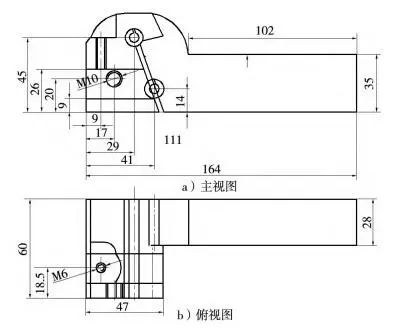
Figure 2 Vibration-absorbing tool holder
3.4 Effects of using vibration-damping tool holders for lathes
After the vibration damping tool holder is put into operation, the vibration of the turning tool is significantly reduced during turning operations, the scrap rate is significantly reduced, the requirements for operator skill level are also reduced accordingly and operational efficiency is increased by almost 30%.
Making some technical improvements to ordinary lathes can improve their processing quality and expand their processing scope. The technical improvements of ordinary horizontal towers feature simple structures, easy installation, low costs, good use effects and improved product quality. Compared to purchasing new equipment with more powerful functions, this is a feasible way, low cost and quick results, to carry out targeted technical transformation of ordinary lathes according to the company’s own needs. transformation of the company to improve production capacity and product quality. At the same time, the technical transformation has not changed the original structure and processing method of ordinary horizontal lathes, which are easy for operators to accept and apply. They have high promotional value and have considerable value and importance for the healthy development of. businesses.
Daguang focuses on providing solutions such as precision CNC machining services (3-axis, 4-axis, 5-axis machining), CNC milling, 3D printing and rapid prototyping services.



















