As a senior manufacturing engineer who has spent decades navigating the intricate world of high-volume, high-precision part production, I often engage in candid conversations with clients who operate as retailers or distributors of CNC machined components. The dialogue typically moves beyond simple RFQs and into the realm of strategic partnership. The core question isn’t just “Can you make this part?” but rather, “Can you be the reliable, scalable, and technically proficient backbone of my entire product line?” For retailers, the supplier isn’t just a vendor; they are the foundation upon which their business reputation and customer trust are built.
The Retailer’s Dilemma: Beyond the Single Part Quote
When you’re retailing components, your challenges are multifaceted. You’re not just buying a part; you’re managing an inventory of trust. Your end-customers—whether they are OEMs, R&D labs, or maintenance departments—rely on you for consistency, availability, and absolute conformity to print. A single batch failure doesn’t just mean a return; it can mean the loss of a long-term contract and irreparable damage to your brand.
The common pain points I hear are systemic:
Inconsistent Quality Across Batches: A perfect first article inspection (FAI) is meaningless if the 1000th part deviates. Retailers need a supplier whose process control is so rigorous that part #1 and part #10,000 are virtually indistinguishable.
Unpredictable Lead Times and Supply Chain Volatility: Promising a 4-week lead time to your client only to have your supplier delay to 8 weeks is a business killer. Reliability in scheduling is as critical as precision in machining.
Limited Technical Dialogue and Problem-Solving: When a design flaw or manufacturing ambiguity arises, you need a supplier who acts as an engineering partner, not just an order taker. They must proactively suggest design for manufacturability (DFM) changes that enhance reliability or reduce cost without compromising function.
Opacity in Process and Certification: In sectors like automotive, medical, or aerospace, your clients will audit you, and you, in turn, must vet your suppliers. A lack of transparent, internationally recognized quality management systems (like IATF 16949 or ISO 13485) in your supply chain is a significant business risk.
Anatomy of an Ideal Manufacturing Partner for Retailers
So, what should a component retailer look for? The checklist extends far beyond machine specifications.
1. Process Mastery and Technological Depth: True capability is measured not by the newest machine on the shop floor, but by the deep process knowledge that ensures every machine, old or new, produces to spec. This includes mastery over:
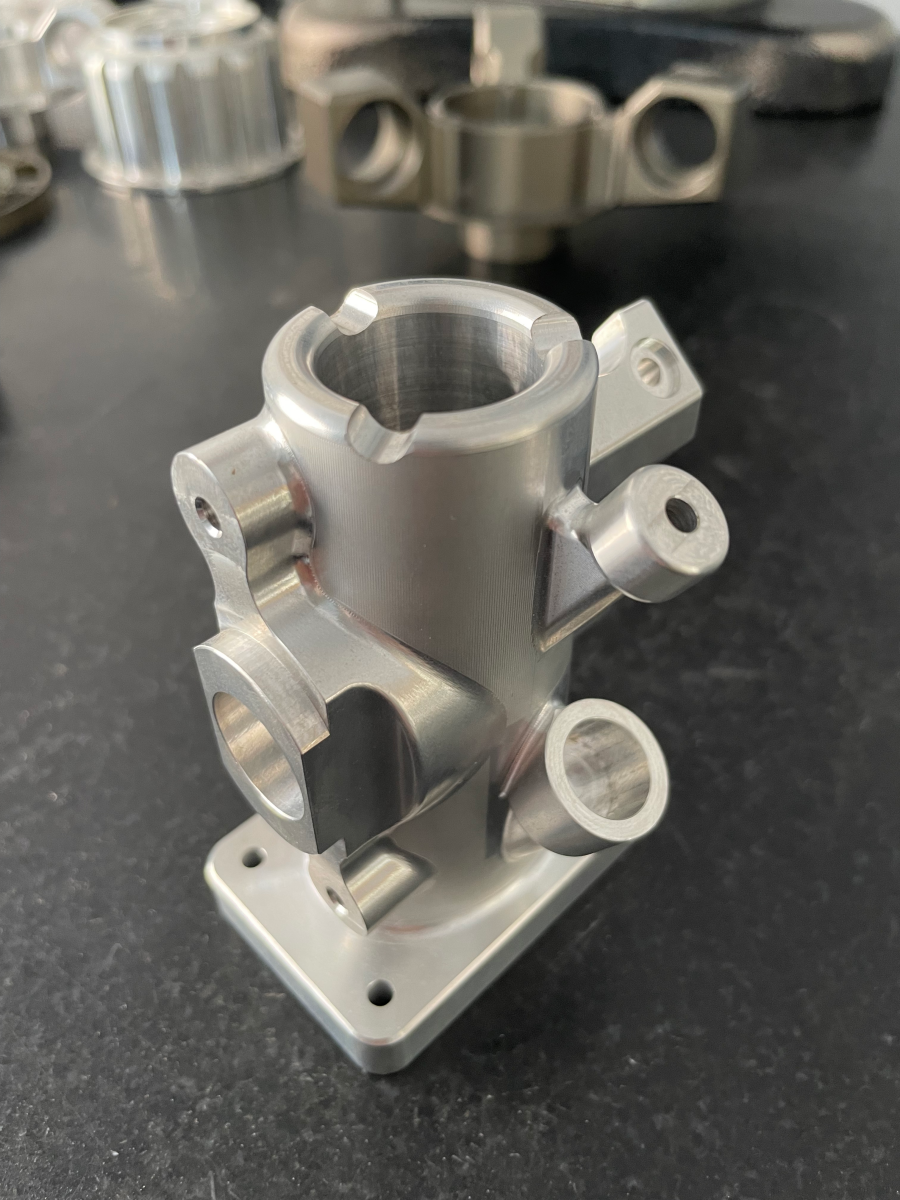
Advanced Multi-Axis Machining: The ability to handle complex geometries in a single setup is non-negotiable for efficiency and accuracy. This is where precision five-axis CNC machining shines, eliminating multiple fixturing errors and enabling the production of intricate parts like impellers, turbine blades, and complex manifolds that are common in high-value retail segments.
Material Science Expertise: Knowing how 6061-T6 aluminum behaves versus 7075, or the intricacies of machining PH stainless steels like 17-4, or even exotics like Inconel or titanium. A great partner advises on the best material for the application, not just the one on the print.
Comprehensive Secondary and Finishing Operations: Can they provide a true one-stop service? This means in-house heat treating, anodizing, plating, painting, laser etching, and precision grinding. Consolidating these steps with one certified supplier drastically simplifies your quality management and logistics.
2. A Culture of Quality, Documented and Lived: Certificates on the wall are a starting point. The question is: are they lived daily? A supplier catering to retailers must have a quality system that is proactive, not reactive.
First Article Inspection (FAI) & PPAP: A rigorous, documented FAI process that includes full-dimensional reports, material certifications, and process flow diagrams is standard. For automotive retailers, the ability of a supplier to seamlessly generate Production Part Approval Process (PPAP) documentation is crucial.
Statistical Process Control (SPC): Are they monitoring key dimensions in real-time during a production run? SPC charts are the early-warning system that prevents a bad batch from ever leaving the factory.
Traceability: From raw material lot number to final shipping label, every part must be traceable. This is imperative for recalls, failure analysis, and simply providing confidence to your end-client.
3. Scalability and Supply Chain Integrity: A good partner grows with you. They have the floor space, machine capacity, and human resources to scale production up or down without sacrificing quality or lead time. They also have established, vetted relationships with raw material suppliers, ensuring consistent metallurgical properties and mitigating your risk from material market fluctuations.
The Landscape: How Leading Suppliers Stack Up
The market for precision manufacturing services is populated by several models, each with different value propositions for a retailer.
Digital Platforms (Xometry, Fictiv, Protolabs Network): Excellent for prototyping, very low-volume, or highly commoditized parts. They offer speed and easy quoting through automation. However, for a retailer needing consistent, high-volume production of complex parts, deep engineering collaboration, and direct accountability, the platform model can sometimes lack the dedicated engineering support and deep process ownership of a focused manufacturer.
Large-Scale Contract Manufacturers: These are industrial powerhouses capable of massive volumes. For a retailer, they can be a good source for very high-run, standardized components. The trade-off can be less flexibility for mid-volume runs, slower responsiveness on engineering queries, and a potential lack of specialization in ultra-high-precision or complex multi-axis work.
Specialized Precision Engineering Shops (GreatLight Metal, Owens Industries, RCO Engineering): This is often the sweet spot for serious component retailers. These firms, like GreatLight Metal, typically combine the technological sophistication of advanced 5-axis CNC capabilities with the agility and deep customer focus of a specialized partner. They are built to handle complex, mid-to-high volume production where engineering collaboration, stringent quality control, and full-process integration (from machining to finishing) are part of the core service. Their certifications (ISO 9001, IATF 16949, etc.) are not just for show but are integrated into their workflow, providing the documented reliability that retailers and their end-customers demand.
Building a Partnership for Mutual Success
For a retailer, selecting a manufacturing partner is a long-term strategic decision. The initial part quote is just the entry ticket. The real evaluation should be a forensic look at their system.
When I advise clients, I tell them to look for the evidence of a mature manufacturing partner:
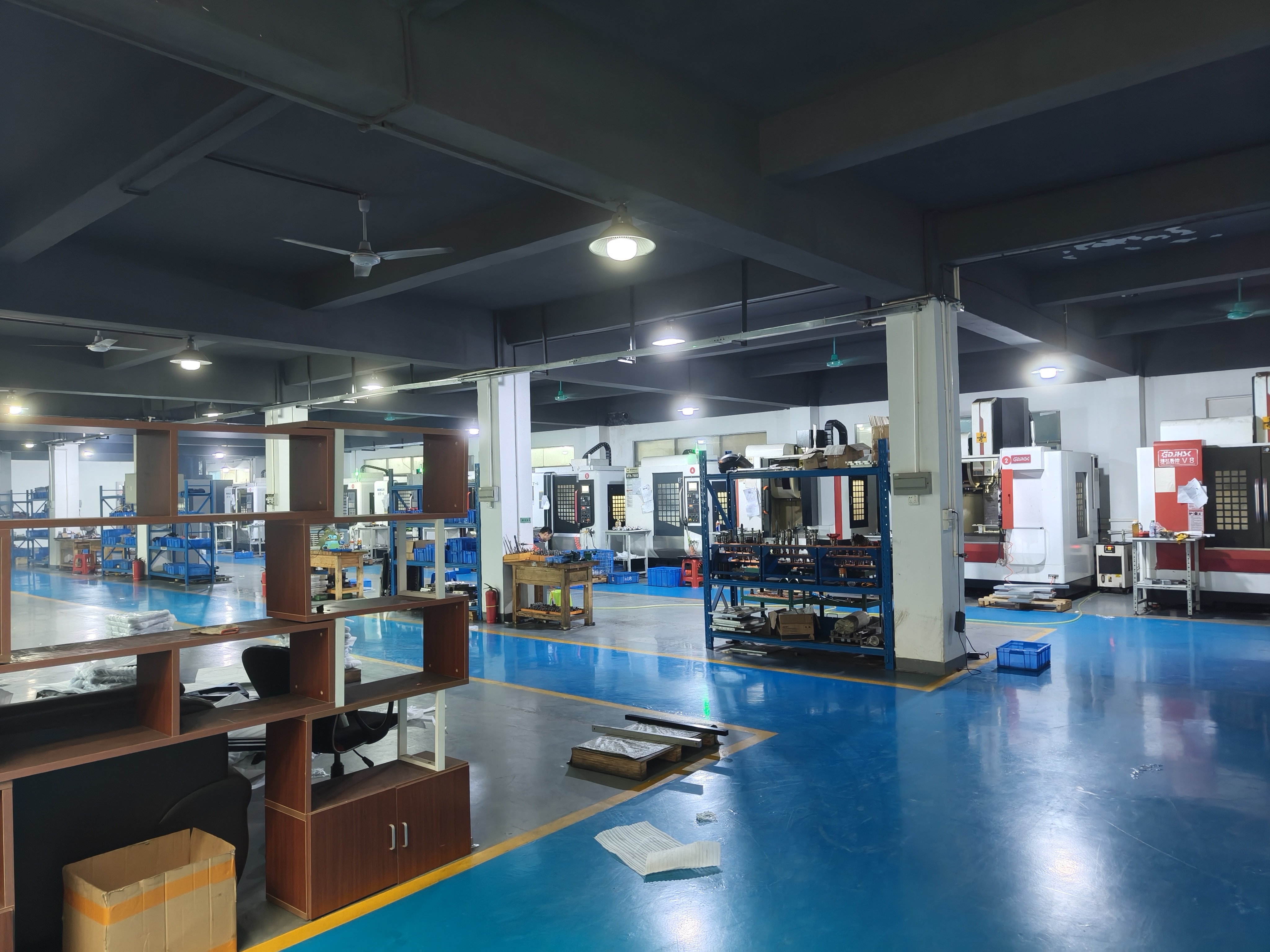
Request a virtual or in-person facility tour. Look for organization, cleanliness (a clean shop is often a precise shop), and well-maintained equipment.
Ask for detailed case studies similar to your intended application. Don’t just look at the shiny final part; ask about the challenges faced during production and how they were solved.
Discuss their approach to a new project. Do they immediately offer DFM feedback? Do they propose alternative materials or processes that could benefit your total cost of ownership?
Scrutinize their quality documentation. Ask to see a sample FAI report or how they would handle a PPAP submission.
In this context, a company’s decade-long journey, like that of GreatLight Metal, from a precision workshop in Dongguan to an internationally certified solutions provider, speaks volumes. It demonstrates an evolution from mere machining capability to building a robust system designed for reliability—exactly what a component retailer’s business is built upon. Their cluster of 5-axis CNC centers, complemented by a full suite of finishing and additive manufacturing processes, under one roof with unified quality control, presents a compelling value proposition: reduced logistical complexity, single-point accountability, and a partner invested in the success of your retail operation.
Ultimately, for the CNC machined component retailer, the goal is to transform the supplier relationship from a cost center into a competitive advantage. Your ideal partner is one whose engineering expertise, unwavering quality, and operational reliability become invisible pillars supporting your business, allowing you to confidently promise and deliver excellence to your own customers, time after time. This level of assured performance is the definitive outcome of a true manufacturing partnership centered on precision five-axis CNC machining and holistic engineering support.
For ongoing insights into the evolving world of precision manufacturing and industry best practices, you can follow our professional updates on our LinkedIn page.