
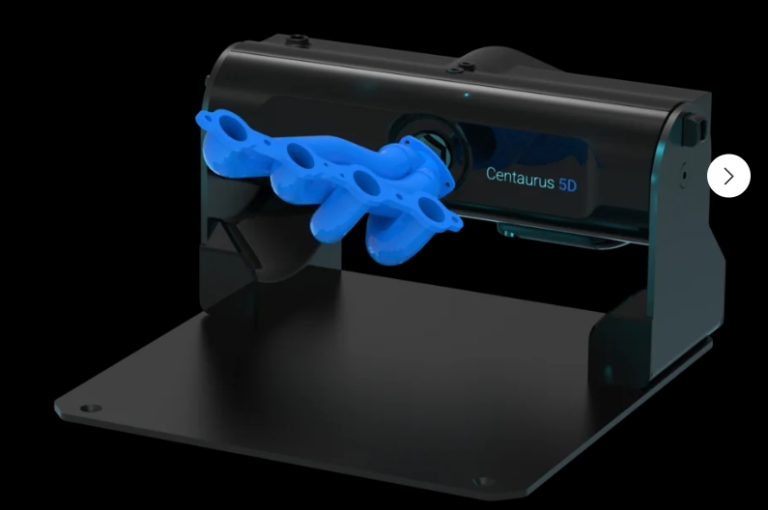
Revolutionizing Additive Manufacturing: The Dawn of 5D Printing
The additive manufacturing industry has been awaiting a breakthrough in degrees of freedom, allowing for the creation of complex structures and materials with unprecedented strength and precision. That breakthrough has finally arrived with the introduction of 5D printing technology, a revolutionary innovation that is poised to disrupt the status quo and redefine the boundaries of additive manufacturing.
A Leap in Degrees of Freedom
The concept of 5D printing is not just about increasing the number of axes or the resolution of the print; it’s about fundamentally changing the way we think about additive manufacturing. By introducing a new dimension, 5D printing enables the creation of structures that are unlike anything we’ve seen before. The printing process involves a combination of mechanical movements, precise control, and advanced algorithms, allowing for the fabrication of products with unprecedented complexity and strength.
The Russian Team Behind the Revolution
The 5D printing technology is the result of years of research and development by a team of experts from Russia. The team, led by five founders, has successfully developed a range of 5D printing solutions that are compatible with existing 3D printing materials. Their achievement has been recognized by none other than Russian President Putin, who has personally visited their exhibition and demonstrated his support for the technology.
Game-Changing Applications
The potential applications of 5D printing are vast and diverse. In the medical field, 5D printing can be used to create personalized implants, prosthetics, and surgical models with unparalleled accuracy and detail. In the aerospace industry, 5D printing can be used to create lightweight, high-strength materials for aircraft and spacecraft. In the automotive industry, 5D printing can be used to create custom parts and components with complex geometries and structures.
Global Strategy: Partnerships and Expansion
The Russian team is now seeking partners in China to expand their global reach and bring this revolutionary technology to the masses. Their modular design concept enables the integration of 5D printing modules with existing 3D printers, making it accessible to a wide range of users. The team is looking for manufacturers who can integrate their 5D modules and provide a global sales channel for this technology.
Conclusion
The future of additive manufacturing has arrived, and it’s shaped like a 5D printer. With its ability to create complex structures and materials with unprecedented strength and precision, 5D printing is set to disrupt the status quo and open up new possibilities for innovation and growth. As the industry continues to evolve, it’s likely that we’ll see even more groundbreaking innovations that redefine the boundaries of additive manufacturing. But for now, the spotlight is on 5D printing, a technology that is capable of revolutionizing the way we think about manufacturing.



















