
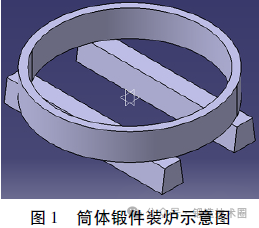
The Crucial Role of Deformation Tolerance in the Heat Treatment of Cylindrical Forgings
As an essential step in the manufacturing process, heat treatment plays a vital role in shaping the final properties of cylindrical forgings. However, excessive deformation during this process can lead to defects and compromise the quality of the final product. In this blog post, we will delve into the complex world of deformation tolerance and explore the importance of understanding and controlling it in the heat treatment of cylindrical forgings.
Understanding Deformation Tolerance
Deformation tolerance, also known as specific capacity, is the ability of a material to change size and shape in response to varying temperatures. During the heat treatment process, the material undergoes a phase transformation, which can result in changes to its volume. This transformation can cause the part to expand or shrink, depending on the specific material and processing conditions. As a result, it is crucial to understand the deformation tolerance of the material to ensure that the part meets the required specifications.
Deformation Trends in Heat Treatment of Cylindrical Forgings
Our research reveals that deformation during the heat treatment process of cylindrical forgings is a complex phenomenon, influenced by various factors such as thermal stress, structural stress, and specific capacity. These factors can lead to two main types of deformation: geometric shape changes and volume changes. The former is characterized by changes in the part’s size and appearance, while the latter is marked by proportional changes in volume.
To better understand these trends, we conducted a simulation using software and actual measurement data from our company’s manufacturing facility. Our results show that during the heat treatment process, the part undergoes a radial expansion, with the inner diameter increasing by up to 40 mm and the outside diameter expanding by up to 39 mm. The thickness of the wall, on the other hand, reduces by up to 7 mm.
Real-Life Measurement Results
To further validate our simulation results, we conducted actual measurements on 16 cylindrical forgings during the heat treatment process. Our measurements revealed that the parts exhibited consistent trends, with the inner diameter expanding by 3 to 40 mm and the outside diameter increasing by 0.3 to 39 mm. The wall thickness reduced by 0 to 7 mm.
Implications for Production
Our research has significant implications for production. By understanding and controlling deformation tolerance, manufacturers can ensure that their cylindrical forgings meet strict quality standards. For example, by increasing the inner diameter margin and decreasing the outer diameter margin, manufacturers can reduce production costs and improve product quality.
Conclusion
In conclusion, deformation tolerance is a critical consideration in the heat treatment of cylindrical forgings. Our research has provided valuable insights into the complex phenomena of deformation, highlighting the importance of understanding and controlling deformation trends. By applying these findings, manufacturers can optimize their production processes, ensuring the delivery of high-quality products that meet the required specifications.
Future Directions
Future research should focus on refining our understanding of deformation tolerance and its impact on the behavior of various materials. Additionally, the development of advanced simulation tools and measurement techniques will be crucial in further improving our ability to predict and control deformation.
Recommendations for Manufacturers
To exploit the benefits of our research, manufacturers should:
- Conduct regular measurements to monitor and control deformation during the heat treatment process.
- Adjust production parameters to optimize heat treatment conditions and minimize deformation.
- Implement quality control measures to ensure that produced parts meet required specifications.
- Invest in advanced simulation tools to improve prediction and control of deformation trends.
By embracing these recommendations, manufacturers can improve the quality of their products, reduce production costs, and stay ahead in the competitive landscape.



















