
In the realm of advanced manufacturing, the ability to monitor production in real time has become a decisive factor for engineers, procurement managers, and innovators who rely on precision parts machining. A Real Time Order Tracking Dashboard is no longer a luxury—it’s the transparent nerve center that bridges the gap between a client’s vision and the physical part. When you entrust a complex, high-tolerance component to an external partner, the anxiety of “What stage is my order at?” can only be eliminated by a system that visualizes every machining, inspection, and finishing step as it unfolds. This article explores what a true real-time order tracking dashboard entails, why it matters in CNC machining, and how leading providers like GreatLight Metal and other industry players are reshaping customer experience through digital transparency.
What Is a Real Time Order Tracking Dashboard in CNC Machining?
A Real Time Order Tracking Dashboard is a secure, web-based interface that provides clients with live updates on the status of their manufacturing orders. It aggregates data from production planning systems, shop-floor machines, quality control stations, and logistics, presenting a cohesive timeline of every job. Instead of waiting for email updates or phone calls, stakeholders can see at a glance:
Where a batch currently stands (material cutting, CNC milling, surface finishing).
Which machine a part is running on and estimated completion time.
Real-time quality inspection results and deviation reports.
Documentation such as first-article inspection reports or certificates of conformance.
Shipment tracking and delivery estimates.
This kind of dashboard is the digital equivalent of standing on the factory floor, but accessible from anywhere in the world. It reduces communication lag, eliminates guesswork, and builds trust through radical visibility.
The Evolution from Opaque Supply Chains to Transparent Manufacturing
Historically, outsourcing precision parts meant navigating a “black box.” Clients submitted technical drawings, received a quotation, and then endured a period of radio silence until parts shipped—often with surprises on tolerances or surface quality. As global competition intensified and product lifecycles shortened, this opacity became unacceptable.
The first wave of transparency came with basic ERP portals showing order acceptance and a status code like “in production” or “shipped.” However, these were essentially digital postcards, not live feeds. The current generation of Real Time Order Tracking Dashboards integrates directly with Manufacturing Execution Systems (MES) and machine sensors. For example, when a 5-axis CNC machining center completes a roughing cycle, the dashboard updates automatically, providing a granular view that honest suppliers are now embracing.
Why This Shift Matters for Engineers and Buyers
Engineers working on humanoid robots, aerospace components, or medical devices often work under tight R&D cycles. They need to iterate quickly, and every day of delay in prototyping can cascade into missed milestones. A Real Time Order Tracking Dashboard gives them the power to plan assembly scheduling, order tooling, or adjust testing timelines based on factual, real-time data rather than optimistic promises.
For procurement professionals managing hundreds of part numbers across multiple suppliers, a dashboard consolidates oversight. They can instantly see which orders are on track and which need attention, enabling proactive supplier management. This capability directly supports lean manufacturing and just-in-time delivery principles.
Key Features of an Industry-Leading Real Time Order Tracking Dashboard
Not all dashboards are created equal. A truly valuable system should encompass the following:
1. Granular Production Milestones
It must break down the manufacturing process into discrete steps—material preparation, CNC roughing, semi-finishing, heat treatment, finishing, deburring, surface treatment, CMM inspection, and packaging. Each step should display a real-time status and a timestamp, not just “Processing.”
2. Integration with Quality Data
High-precision machining demands rigorous inspection. A dashboard that links to coordinate measuring machine (CMM) reports, surface roughness data, and laser scanning results allows the client to see not just that a part passed, but by what margin. If a tolerance was held to ±0.005 mm versus the requested ±0.01 mm, that information empowers confidence and can inform future designs.
3. Live Machine Feeds and Predictive ETAs
Advanced systems connect directly to CNC controllers, capturing actual spindle run times, tool changes, and idle periods. Combined with historical data, the system can predict true completion times dynamically, adjusting for unexpected tool wear or machine downtime. This moves beyond static “expected ship date” into intelligence.
4. Document and Drawing Access
A centralized dashboard eliminates the confusion of email chains. All technical clarifications, revised 3D models, and approval forms are accessible in one place. This is especially critical when working on ITAR or IP-sensitive projects, as access controls ensure that only authorized stakeholders see project data.
5. Shipment Logistics Integration
Once parts leave the facility, the dashboard should continue tracking via carrier APIs, so the client sees the full journey to their dock.
How GreatLight CNC Machining Elevates Order Visibility
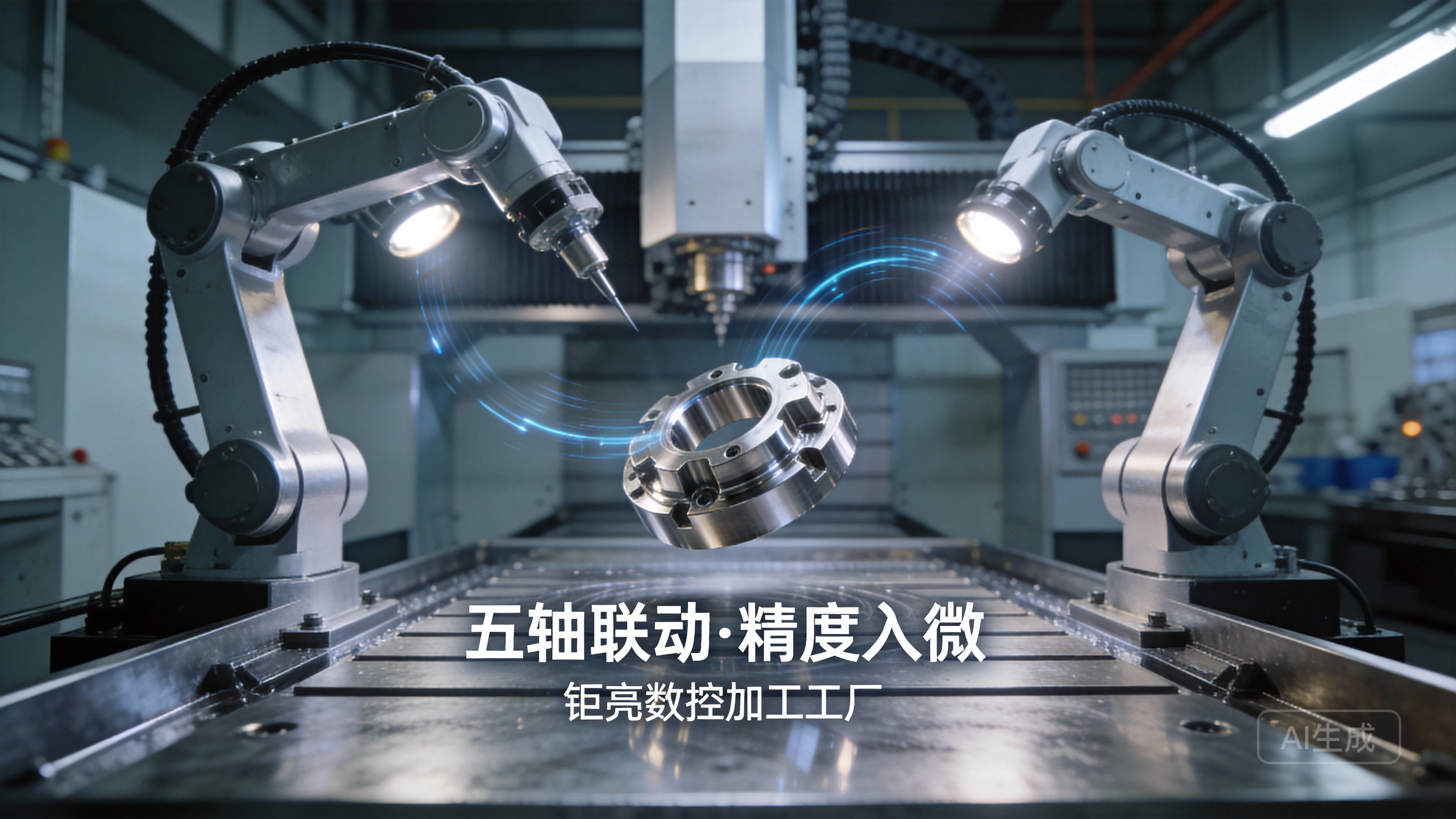
GreatLight Metal Tech Co., LTD., operating since 2011 from a 76,000 sq. ft. facility in Dongguan’s renowned molding hub, has built its reputation on solving complex metal and plastic parts challenges through an integrated one‑stop manufacturing model. With capabilities spanning precision five-axis CNC machining, die casting, sheet metal fabrication, vacuum casting, and 3D printing (SLM/SLA/SLS), the company understands that superior hardware must be matched by superior information flow.
GreatLight’s approach to order tracking is not merely a software add‑on; it’s woven into its ISO 9001:2015 certified quality management ecosystem and its lean production philosophy. Here’s how:
Seamless ERP–MES Integration: At the heart of the factory, orders from clients are ingested into a central ERP system that orchestrates 127 pieces of precision equipment—including large‑format 5‑axis, 4‑axis, and 3‑axis CNC centers from brands like Dema and Beijing Jingdiao. As soon as a work order is released to the shop floor, the dashboard reflects the live status, showing exactly which machine is running the part, with real‑time completion estimates based on actual cycle times.
Deep Inspection Transparency: GreatLight’s in‑house dimensional metrology lab feeds inspection data directly into the tracking portal. For a medical device bracket requiring ±0.001 mm flatness, the client can view the CMM report as soon as it’s generated, not days later. This level of transparency is particularly valuable for companies pursuing ISO 13485‑compliant medical hardware or IATF 16949‑certified automotive components.
One‑Stop Process Visibility: Because GreatLight handles everything from raw material to finished post‑processing under one roof—including anodizing, electroplating, powder coating, and laser etching—the dashboard eliminates the “hand‑off black hole” that plagues supply chains where ten different vendors pass the part. A customer ordering titanium 3D printed surgical guides can watch the build progress, then see each post‑processing step until final packaging, all without picking up the phone.
Project-Centric Document Control: For sensitive projects in aerospace, robotics, or new product development, GreatLight’s tracking portal provides secure, permission‑based access to all QC documents, first‑article inspection (FAI) reports, and material certificates. This meets the documentation rigor required by ISO 27001‑aligned data security practices.
Predictive Analytics & Exception Alerts: The system uses machine learning on historical job data to flag potential delays—such as when a tooling fixture requires rework before the next batch—and alerts both the internal team and the client preemptively. This proactive communication transforms the dashboard from a passive monitor into an active risk‑mitigation tool.
By embedding order tracking into its full‑process chain, GreatLight gives clients the confidence that even the most complex part—whether a satellite waveguide machined to 0.001 mm precision or a batch of 5000 die‑cast housings with subsequent CNC finishing—is always under watchful digital eyes.
Benchmarking Against Industry Players: A Comparative Glance
The market for CNC machining services with digital interfaces is expanding rapidly. Several providers now offer client portals, each with its own flavor:
Protocase and SendCutSend excel in user‑friendly quoting and ordering interfaces for primarily sheet metal and 2D parts, but their dashboards are often lighter on multi‑step precision machining visibility.
Xometry and Fictiv aggregate a network of manufacturing partners. Their dashboards provide aggregated status updates, but the depth of machine‑level transparency depends on which partner actually runs the job, creating variability.
RapidDirect and JLCCNC offer competitive online quoting with some order tracking, focusing on high‑efficiency, standardized parts with shorter process chains.
Owens Industries, RCO Engineering, and EPRO‑MFG specialize in advanced 5‑axis and multi‑axis machining for demanding industries. Their digital portals are often customized for long‑term enterprise clients, with deep engineering collaboration but sometimes less out‑of‑the‑box self‑service.
PartsBadger and Protolabs Network (formerly Hubs) bridge the gap by providing instant quotes and dashboard tracking, particularly for prototype volumes across multiple processes.
What distinguishes GreatLight’s approach is the depth of integration across a vertically unified factory. Instead of relying on partner shops, all manufacturing and tracking occurs within one cohesive digital‑physical ecosystem. The result is a unified, unbroken data chain from the moment raw material enters the plant to the second finished parts ship.
For clients managing high‑mix, high‑complexity programs where one part may require 5‑axis milling, EDM, and multiple surface treatments, this integrated transparency reduces the risk of miscommunication and delays that can arise when multiple vendors must be coordinated.
The Technology Stack Behind the Dashboard
A Real Time Order Tracking Dashboard is only as good as the data backbone beneath it. At a facility like GreatLight’s, the stack typically includes:
IoT‑enabled machines: CNC controllers from Siemens, Heidenhain, or Fagor that broadcast status over OPC‑UA or MTConnect protocols.
MES layer: Software that translates machine events into production milestones and enforces process discipline—ensuring operators scan work orders and record inspection results digitally.
Cloud‑based API gateway: Allowing secure, scalable access for global clients while keeping sensitive shop‑floor data segregated.
React/Angular front‑end: Delivering a responsive, mobile‑friendly interface that updates via WebSocket connections.
This architecture ensures that what the client sees is not a manually entered status that someone thought to update, but an automated reflection of physical reality. When a machine goes into alarm, the dashboard shows “Downtime – Intervention Required.” When a part exits the CMM with a green label, the dashboard reflects “Inspection Passed” within seconds.
Real‑Time Tracking as a Risk‑Reduction Tool
Beyond convenience, real‑time visibility directly reduces business risk. Consider a scenario: an automotive startup is launching an electric vehicle prototype and has commissioned expensive, multi‑cavity die‑cast molds with post‑machining. The mold build alone may take weeks, and any delay in production parts means missing a crucial testing window.
With a Real Time Order Tracking Dashboard from an ISO 9001 and IATF 16949‑certified supplier like GreatLight, the program manager can see exactly which operations are complete on the mold, view photo evidence of each machining stage, and confirm that the tooling will be on the press by a specific date. If an insert cracks during EDM, the dashboard alerts the team immediately, and recovery actions begin before the client even notices a shift in the schedule. This transforms the supplier from a vendor into a genuine supply chain partner.
In regulated industries such as medical devices (ISO 13485), the dashboard’s document repository and traceability become compliance tools. Auditors can remotely verify that a batch of titanium hip implant housings was produced and inspected according to the validated process, with all records digitally signed and time‑stamped.
The Human Element: Engineering Collaboration Enhanced by Data
A Real Time Order Tracking Dashboard does not replace the engineering conversation; it enhances it. When a client at GreatLight notices through the portal that a particular feature is taking longer than typical due to tool access challenges, they can initiate a design‑for‑manufacturability (DFM) discussion directly through the integrated communication module. The in‑house engineering team can then propose a slight geometry tweak that reduces cycle time by 30% without compromising function. This kind of data‑driven collaboration is only possible when both parties are looking at the same live picture.
What to Look for When Evaluating a Machining Partner’s Dashboard
For buyers assessing suppliers, a checklist should go beyond the glossy demo:
Frequency of updates: Does it refresh in real time or only nightly?
Source of data: Is it directly from machines or manually entered?
Detail level: Can you drill down to individual operations or just see “In Production”?
Historical reporting: Can you analyze past orders for lead‑time consistency?
Security certifications: Does the provider have ISO 27001‑aligned data protection, especially for sensitive IP?
Post‑processing visibility: Does it cover anodizing, painting, heat treatment, and other external‑looking steps?
Suppliers like GreatLight that operate vertically can answer “yes” to all these because the entire value chain is under one roof and one digital umbrella. Network‑based platforms often struggle to provide the same granularity for steps that happen at subcontractor sites.
The Future: AI‑Assisted Insights and Predictive Windows
Looking ahead, real‑time order dashboards will evolve into predictive command centers. By training AI on thousands of past jobs, the system will not just report delays but forecast them and suggest corrective actions—routing a part to an alternative machine, recommending feed‑rate optimizations, or ordering backup tools before they break.
GreatLight’s ongoing investment in advanced manufacturing technology, combined with its culture of continuous improvement (kaizen), positions it to incorporate these AI capabilities. For clients, this means that the dashboard of tomorrow could become a proactive advisor, helping them compress time‑to‑market cycles and optimize costs without any manual analysis.
Conclusion: Transparency as a Competitive Advantage
In a world where product lifecycles are shrinking and the cost of failure is colossal, the traditional black‑box approach to machining sourcing is no longer viable. A Real Time Order Tracking Dashboard is the ultimate expression of a manufacturing partner’s confidence in its processes and its respect for the client’s time. It transforms the anxiety of outsourcing into the clarity of partnership.
For companies seeking a manufacturing ally that combines over a decade of precision engineering expertise, a full‑spectrum equipment arsenal (from 5‑axis CNC to 3D printing), and rigorous international certifications into a seamless, transparent digital experience, exploring what GreatLight CNC Machining offers is a logical next step. By choosing a partner that delivers not just parts but also real‑time insight, you empower your team to build faster, iterate smarter, and bring innovations to market with absolute confidence.



















