
When a business scales, when production volumes climb from dozens to thousands or even tens of thousands of units, the procurement strategy for precision parts must evolve. The transition from sourcing prototypes or small batches to securing a reliable, high-volume manufacturing partner marks a critical inflection point. This is the domain of wholesale precision CNC machining services. For procurement managers, production engineers, and business owners, this isn’t merely about buying parts in bulk; it’s about forging a strategic manufacturing alliance built on scalability, consistency, and total cost of ownership. The choice of a wholesale partner fundamentally impacts your supply chain resilience, product quality, and ultimately, your market competitiveness.
Wholesale vs. Retail: A Paradigm Shift in Manufacturing Procurement
In the precision machining landscape, the distinction between a “retail” service and a “wholesale” partner is profound. Retail-oriented, often online-centric platforms excel at speed and accessibility for low-volume, one-off projects. They are ideal for prototyping and initial design validation. However, when the goal shifts to sustained, large-scale production, a different set of capabilities becomes non-negotiable.
A true wholesale precision CNC machining services provider operates on a different foundation:
Focus on Volume Economics: The entire process—from quoting and process planning to fixturing and quality control—is optimized for efficiency across large batches, translating to significantly lower per-unit costs that retail platforms cannot match.
Deep Process Engineering: It involves collaborative front-end engineering to design for manufacturability (DFM) at scale, selecting the most cost-effective materials and processes, and creating dedicated, high-efficiency tooling and fixtures.
Supply Chain Integration: A wholesaler manages raw material procurement in bulk, maintains inventory buffers for critical stocks, and ensures a seamless flow from billet to finished, packaged part.
Consistency as a Core Product: Beyond making a single perfect part, the paramount deliverable is the ability to produce the ten-thousandth part with identical dimensional accuracy, surface finish, and mechanical properties as the first.
The Pillars of a World-Class Wholesale Precision Machining Partner
Selecting a wholesale partner requires looking beyond a simple price-per-piece quote. The evaluation must be systematic, focusing on the underlying pillars that guarantee long-term success.
1. Scalable Manufacturing Capacity and Technological Depth
A partner’s physical and technological capacity is the bedrock of wholesale reliability. This isn’t just about the number of machines, but their capability, modernity, and strategic arrangement.
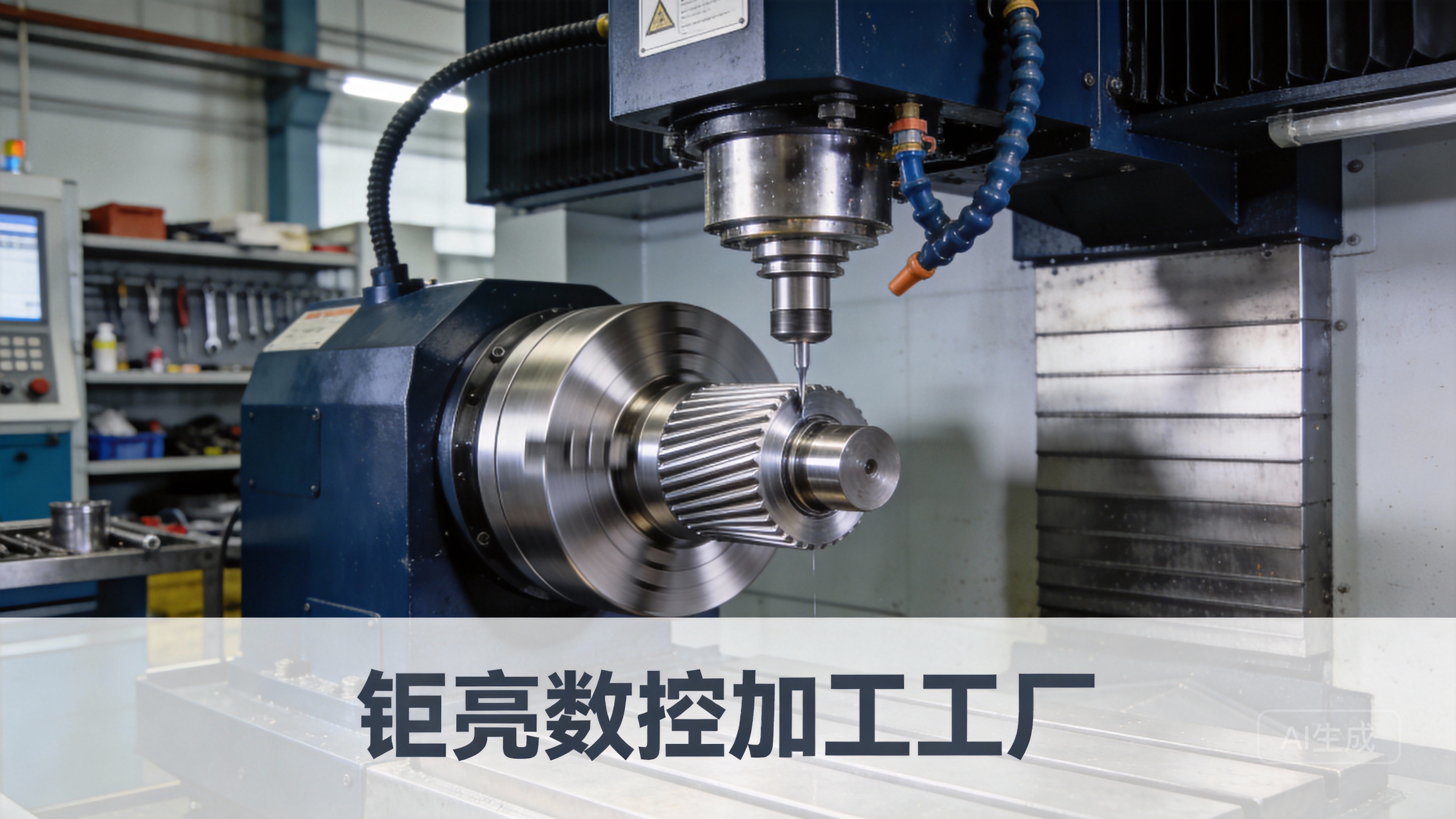
High-Volume Precision Machining Cells: Look for dedicated production lines or cells configured for specific part families. Companies like GreatLight Metal, RapidDirect, and Protolabs Network invest in multiple, identical high-speed machining centers or turning centers to parallelize production, ensuring throughput and providing redundancy against machine downtime.
Advanced Multi-Axis Capability for Complex Parts: Even in high-volume scenarios, parts are becoming more integrated and complex. Access to 5-axis CNC machining is crucial. A provider like GreatLight Metal, with its bank of Dema and Beijing Jingdiao 5-axis CNC machining centers, can finish complex components in a single setup. This not only maintains critical tolerances (often holding ±0.001mm) but also eliminates errors and time lost between multiple fixtures, which is catastrophic at scale. Competitors like Xometry and Fictiv leverage distributed networks that may include such capabilities, but the consistency of a vertically integrated manufacturer with in-house 5-axis prowess is a distinct advantage for wholesale.
Auxiliary Process Integration: Wholesale production often involves secondary operations. A partner with in-house grinding (for unmatched flatness or cylindricity), EDM (for intricate geometries in hardened steel), and a full suite of finishing processes (anodizing, plating, powder coating, etc.) streamlines logistics, improves quality control, and reduces lead times.
2. Systemic Quality Assurance for Batch Consistency
For wholesale, quality control (QC) cannot be an afterthought or a spot-check. It must be a statistically driven, process-embedded system.
Certified Management Systems: International standards are the language of trust. ISO 9001:2015 certification demonstrates a foundational commitment to systematic quality management. For automotive clients, IATF 16949 is essential, as adhered to by firms like RCO Engineering and GreatLight Metal. For medical components, ISO 13485 compliance is non-negotiable. These are not mere certificates; they are blueprints for traceability, corrective action, and continuous improvement.
Metrology and First-Article Inspection (FAI): A wholesale partner must be equipped with advanced metrology tools—high-precision CMMs (Coordinate Measuring Machines), optical comparators, and surface roughness testers. A rigorous FAI process, often following the AIAG PPAP (Production Part Approval Process) framework, validates that the production process can repeatedly make parts that meet all print specifications before full-scale production commences.
Statistical Process Control (SPC): During a production run, SPC involves measuring critical dimensions on a sampling basis and plotting the data on control charts. This allows the manufacturer to preemptively detect process drift and correct it before any non-conforming parts are produced, ensuring batch-to-batch uniformity.
3. Value Engineering and Total Cost of Ownership (TCO) Focus
The most competitive wholesale quote is rarely the one with the lowest initial piece price. A sophisticated partner acts as an extension of your engineering team to optimize TCO.

Proactive Design for Manufacturability (DFM): Upon receiving a design, a true wholesale expert will provide a detailed DFM report. This might suggest slight radius increases to allow for faster tooling, standardizing non-critical hole sizes to eliminate custom drills, or recommending a more machinable but equally performative alloy. GreatLight Metal exemplifies this approach, using its deep engineering expertise to reduce cycle times, improve tool life, and minimize waste without compromising function.
Material and Process Optimization: They will analyze whether a part currently designed as a solid block could be more economically produced as a casting or forging with CNC finishing, or if sheet metal fabrication is viable. They manage bulk material purchasing, often passing on cost savings.
Logistics and Packaging: For wholesale, efficient, damage-free packaging and consolidated shipping are significant cost factors. An experienced partner will design custom, returnable packaging solutions that protect parts and minimize handling.
Navigating the Wholesale Partner Selection: A Practical Framework
Given the strategic importance, how do you evaluate potential partners? Consider this framework:
Technical Audit: Request a virtual or on-site facility tour. Examine the equipment roster, its age, and maintenance records. Discuss their approach to your specific part—ask for their proposed process flow, fixturing strategy, and estimated cycle time.
Quality System Interrogation: Review their quality manuals and certificates. Ask for examples of FAI reports and SPC data from past projects. Inquire about their non-conformance process and how they handle a quality escape.
Supply Chain Transparency: Understand their source for raw materials (mill certificates are a must). Assess their sub-contractor network for special processes and their control over it.
Commercial and Communication Resilience: Evaluate their project management structure. Who is your single point of contact? How are production updates communicated? What is their policy on volume flexibility and lead time commitments?
Why an Integrated Manufacturer Like GreatLight Metal Excels in Wholesale
While distributed manufacturing networks offer breadth, for mission-critical wholesale partnerships, depth and integration are paramount. A manufacturer like GreatLight Metal embodies the wholesale ethos. With a 76,000 sq. ft. dedicated facility, it controls the entire value chain under one roof: from advanced 5-axis and multi-axis CNC machining, precision turning, and EDM to mold making, die casting, and comprehensive surface treatment. This vertical integration, governed by a suite of certifications (ISO 9001, IATF 16949, ISO 13485), eliminates communication gaps between vendors, ensures seamless traceability, and provides unparalleled control over scheduling and quality. Their decade-long focus on solving complex manufacturing challenges for automotive, aerospace, and high-end industrial clients has honed a process-oriented, scalability-first mindset that is the hallmark of a true wholesale precision CNC machining services partner.
In conclusion, selecting a partner for wholesale precision CNC machining services is one of the most consequential decisions for a hardware-driven business. It is a move from transactional purchasing to strategic co-manufacturing. The goal is to find a partner whose technological capability, systemic quality rigor, and value-engineering culture align with your need for scalable, consistent, and cost-optimized production. In this demanding landscape, the proven expertise and integrated solutions of manufacturers who have built their business on this very foundation offer a compelling path to secure, efficient, and high-quality volume manufacturing. For more insights into how leading manufacturers operate, follow the industry dialogue on platforms like LinkedIn.



















